Ashera Aeon update: unexpected consequences.

Last month I posted a review of the Ashera Aeon fountain pen. The pen had been sent to me on loan, to try out (for as long as needed to familiarise myself with it) and then to review and return to Ashera in Germany. All very normal, you might think, except that in my case in eight years of pen-blogging, this was the first time that I had entered into such an arrangement.
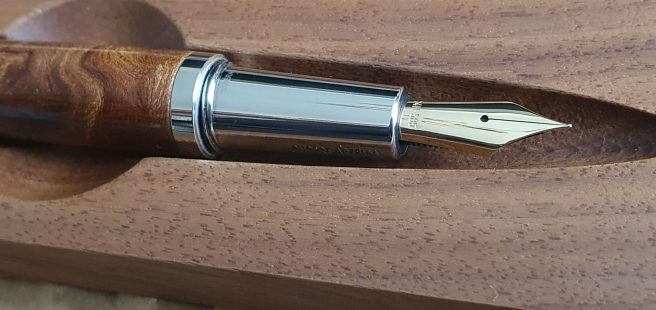
Ashera Aeon.

After my review had been up for about three weeks, I thought that it was probably time to get the pen back to Ashera. I dropped them an email to check a few details and also enquired on what terms they might be prepared to sell the review pen to me. I received a warm and friendly reply. Indeed, all my correspondence from Ashera has been courteous and friendly and it has been a real pleasure dealing with them. They had considered my suggestion and offered me a generous discount, if I wished to buy the pen.

At this point, my wife reminded me, fairly emphatically, that I already have more than enough fountain pens for her to deal with after my demise and that another pen was the last thing we needed. Accepting her line of argument, albeit under duress, I replied to Ashera’s email and reluctantly declined their kind offer.

That could have been an end of my Ashera journey. However I was not prepared for quite how bereft I felt in the following few days. Whilst the pen was with me, I had used it at every opportunity with many different inks and read all I could find about it, to write an informed review. The pen was like nothing else in my collection in many ways – its hand polished wood body, its long tapering profile (reminiscent of a desk pen or art pen), its titanium grip section and the unsigned 14k gold nib from Bock. From showing the pen and its wooden box/pen tray to friends I was familiar with potential danger areas: “Be careful – the box lid is held on by magnets; yes it’s a screw-cap; no, don’t try to post it; be careful screwing the cap back on” etc. My review pen, having the elm burl wood body, has a very pretty grain although there are numerous small “holes” in the grain of the cap, seen by shining a light from outside the cap, whilst rotating the cap and peering inside. These all have to be filled when the wood is lacquered and polished, one reason why the elm burl version costs more than the holly or olive wood models.

I felt that I may never have such a good opportunity again, to buy such a high quality pen with the luxury of testing it first, for some two months! Knowing the pen so well, it almost felt as though I should write some care instructions for its eventual owner: “It likes Pilot Iroshizuku asa-gao and Stalogy paper” and “Don’t let it roll off the table!”

Around this time, I went to see Wagner’s opera “Die Walküre” from the Ring Cycle. In the protracted scene when the God Wotan expresses his emotion at having to banish his favourite but rebellious daughter, Brünnhilde, I could think only of my own, imminent separation from the Ashera (a Goddess in ancient Semitic religions, associated with sacred trees). In short, I had a bad case of non-buyer’s remorse.

In my case, the remedy was rather simpler than for Wotan. I tip-toed onto the subject again with Mrs A, who listened to my closing arguments for the defence. After some admonishing to “learn to control yourself” etc, she conceded that, if I felt so strongly about it, then she would not stop me. I wasted no time in notifying Ashera that I had changed my mind (cough) and asked for the bank details to send payment!

I was thrilled to receive their confirmation once payment had gone through. It was good to know that the pen was officially mine – although it does literally have my name on it!
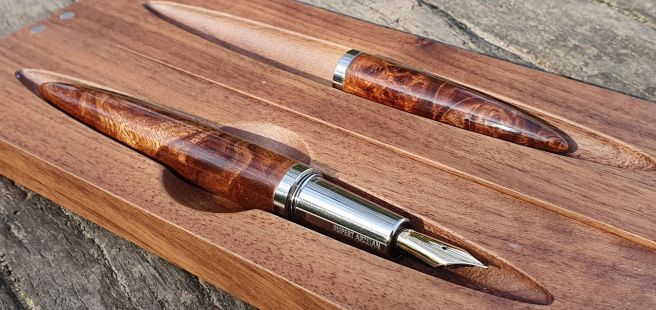
Ashera Aeon in elm burl, with its walnut wood box.

Aside from this brief, emotional roller-coaster ride, the other unexpected effect of the Ashera upon me has been to give me a taste for wood varnishing. The Ashera features a natural wood cap and barrel, turned and smoothed and then lacquered. The eventual deep gloss finish is a result of the wood being lacquered, dried and polished again and again, over a number of weeks, for eight layers. The finished pen is joy to hold with the long, smooth, cigar-like ellipsoid, interrupted only by the titanium rings flush with the cap and barrel.

This work is done by artisans and not a skill that you can acquire in five minutes. However, I found that it is possible to achieve some very pleasing results by sanding some wood and applying some varnish to it. Recently, I came across a little wooden, lidded box in a charity shop. It comprised a single tray on the bottom layer, then a separate middle layer divided longways into two further trays. It was about 13½” long by 5″ high. It was in white, bare wood and at just £10.00, I thought that it should have a new life as a pen box. I bought myself a small tin of wood varnish, (walnut, gloss) from our B&Q store and a few brushes.
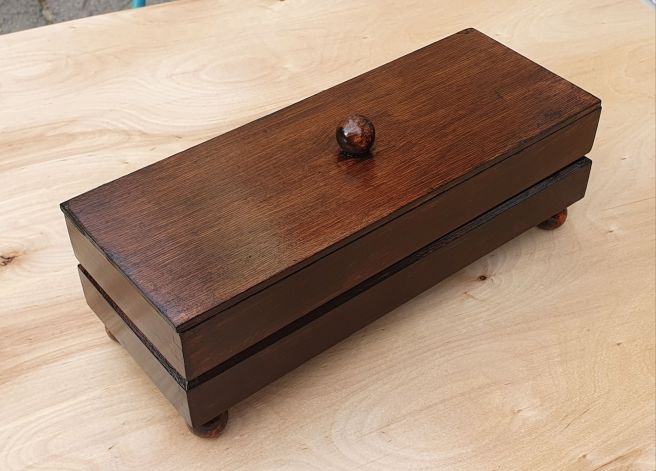
A two-layer pen box, newly varnished.

It was surprisingly satisfying and a bit addictive, to watch the box being transformed into a rather elegant, glossy dark chest. My varnish was quick-drying, and just tacky after 30 minutes and dry after 4 hours. The instructions recommended using three or more coats allowing each coat to dry before applying the next. Theoretically, you could apply all three coats in a day, but I rather enjoyed doing the varnishing late in the evening and then leaving it to dry overnight.

Once I had applied three coats all over, I added some green felt to the three trays. Rather than stick the felt directly to the wood, I stuck it to some card stock to have the option of changing these easily in the future.
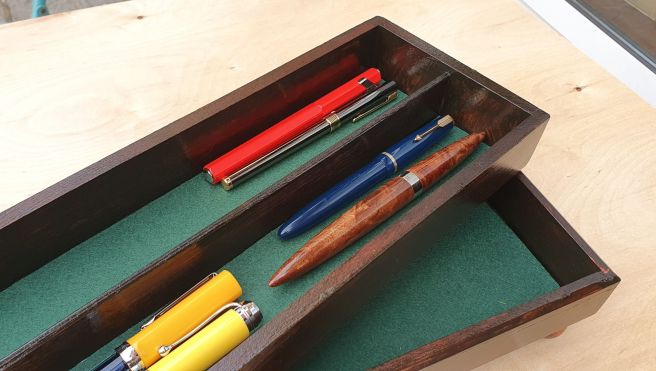
Upper deck of my pen box.

Encouraged by my early efforts, I browsed some more charity shops and found a small wooden bowl, slightly marked but having potential to be restored with some sandpaper, varnish and TLC. This was much smaller and quicker than the pen box project. I use the word “project” to keep up with my wife, who is currently embarking on a project of her own to convert her mother’s garage into a day-room or office space.

My bowl project went well, thanks. I used the same walnut gloss finish for the outside but a clear gloss varnish for the inside to show the natural wood grain. The first coat of varnish did cause the grain to rise and become rough and so it was necessary to sand it smooth again before the next coat. I am rather chuffed with the result! I did find a long crack or split, about ½” below the rim, which appears to go all the way through suggesting that the bowl might have been dropped at some time in its life. It is no longer easily visible on the inside but is prominent on the outside. A younger me might have been put off by this flaw but now it actually gives me more affection for the bowl – just as we all pick up some scars, physical or mental, as we go through life.
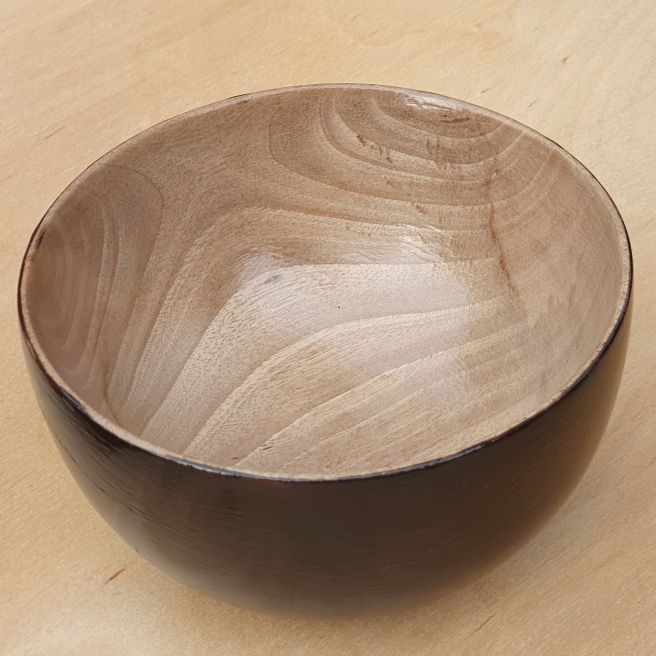
Varnished wooden bowl. (Walnut gloss outside, clear gloss inside).

Currently, I am on my third wood varnishing project! This is another very cheap knick-knack from a local charity shop, bought with no apparent wood protection and I am now advancing through my three-coats procedure. I think this may be another candidate for my self-adhesive, holly-green felt.
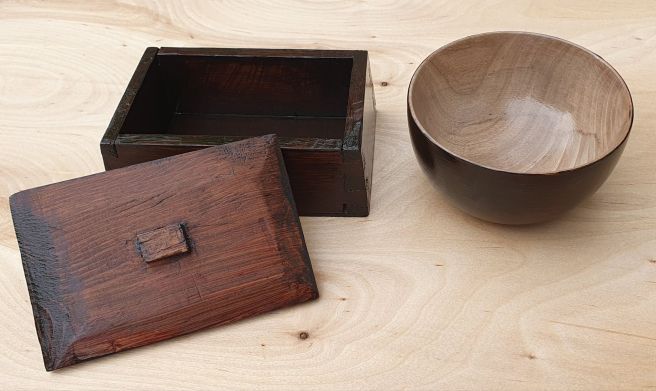
Wooden bowl (finished) and a lidded box (work in progress).

It is possible that but for the Ashera fountain pen, I might never have discovered my inner artisan (LOL). I cannot promise that an Ashera will have the same effects on everyone. I appreciate that it is an expensive pen. Even with the generous discount that I received, it was still one of the costliest pens I have bought and one of only a tiny number on which I have broken my £400.00 barrier. I am happy to report that I have no regrets and that it continues to be in daily use. I am grateful to Ashera for entrusting me with the pen, initially for a review.

For anyone reading this who is still thinking of ordering an Ashera, there is still (at the time of writing) a discount available via a link in my last post, and repeated here, which results in a 20% reduction. The link takes you to a page created by Ashera referring to a “Rupert Arzeian Edition.” This indicates to Ashera that the purchaser comes via my blog, triggering the discount and a commission. It does not mean that I designed the pen or that you have to have my name on it!

To order, (1) chose one of six wood options, (2) select either gold or platinum for the Bock nib ; (3) chose a nib width of either Fine or Medium, and (4) indicate your chosen name for the engraving. The price is then adjusted automatically, albeit shown only in US dollars or Euros at present. When you click “Add to basket”, the 20% discount price shows in the Summary. You then have the option to “Proceed to Checkout” or to delete the pen from the basket. The choice is yours.
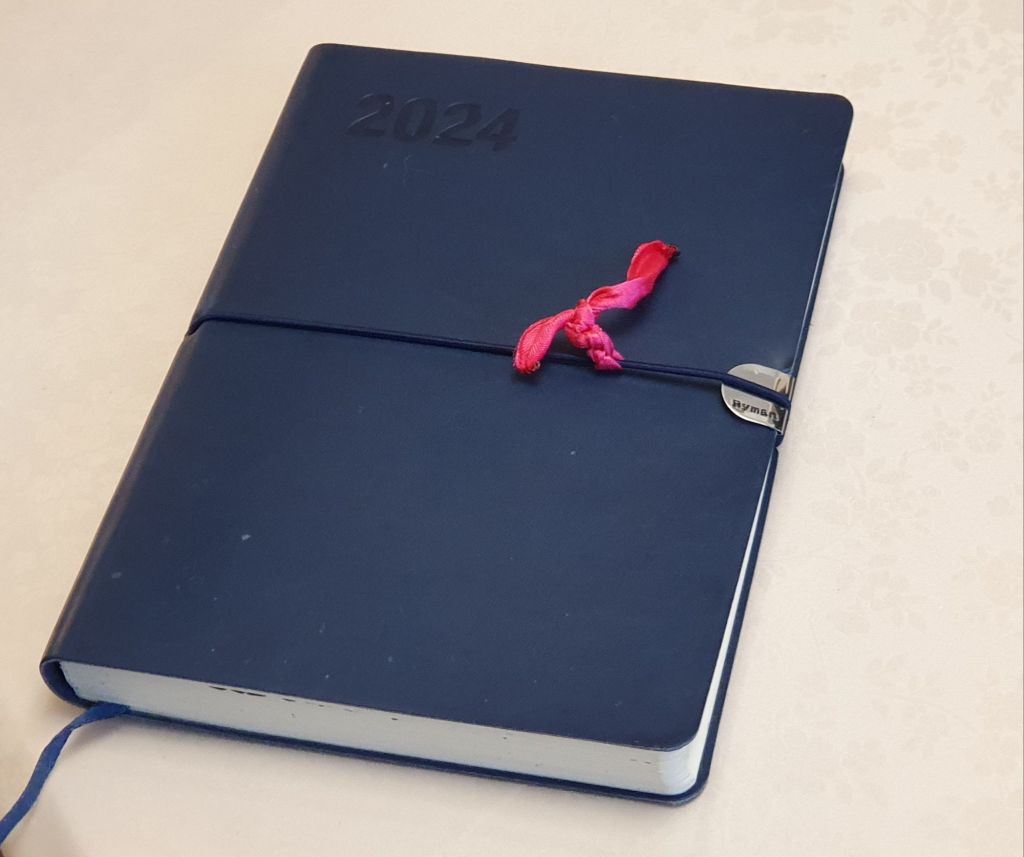
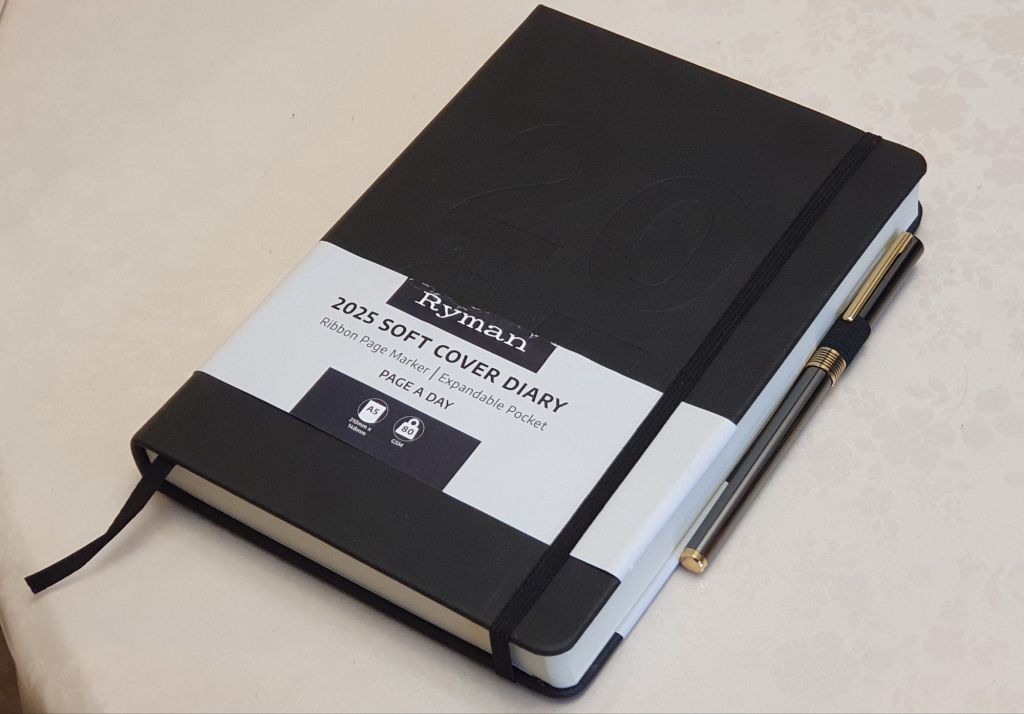
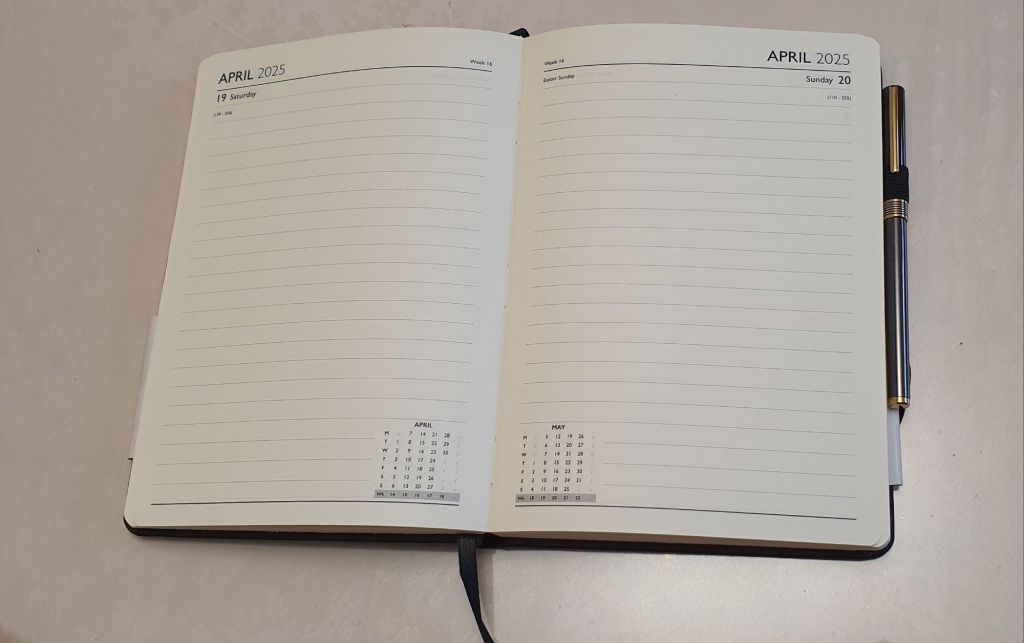
The new year diary, 2025.

It’s time to wake up this blog for another year and, where better to start than with a brief review of the diary that I plan to use?

For 2024, I used a Ryman A5, soft cover, flexi, Page A Day diary for my daily journaling, summarising what I did with the previous day. Occasionally, this might include a list of things I am grateful for (if I can be unselfish enough for a few moments, to remember). My post on the new year diary, 2024 can be re-read here.

This year, I went for the closest equivalent that I could find, which was again from my local Ryman stationers. Whilst seemingly much like last years, I was glad to notice several subtle improvements have been introduced. These are as follows:-

  • Instead of last year’s horizontal thin elastic closure, we now have a more conventional, vertical ribbon elastic closure. I disliked the old style, since with short finger nails, it was fiddly to lift the elastic to open the book – an issue for which I designed a simple hack, namely tying a piece of pink ribbon to the elastic.
  • Whilst retaining the same soft texture of the covers, last year’s flexible cover has been replaced with a stiffer cover, which I like. It also does away with the need for the little metal reinforcement tab on the edge of the front cover to protect it from being worn by the elastic. Over the year, that piece of metal had lifted, leaving a sharp edge which was a danger to adjacent books.
  • A Pen loop has been added, to the back cover. I don’t actually use it (other than for this photo) but it could be useful.
  • Something that I have only today noticed, the row height has been increased very slightly from 7.6mm to 7.9mm. I must admit, I was assuming that they were both 8mm until I checked.
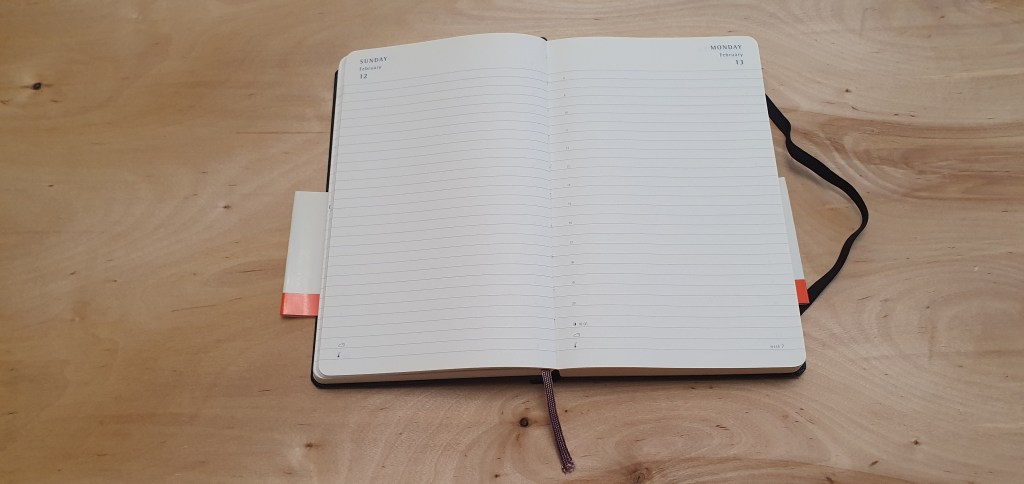
  • Best of all, the 2025 edition now includes a Page A Day for Saturdays and Sundays, whereas last year they shared a page.

Otherwise, the two editions are much the same, with a ribbon page marker, cream paper which is fountain pen friendly and with sewn binding, to open flat without damage.

This suits my needs very nicely. For longer entries, such as holiday journaling, I use a separate Leuchtturm A5 notebook, with either plain paper or dot grid. Day to day pen and ink sampling and therapeutic pen time is done in a Stalogy A5 Editor Series 4mm grid, 365 page note book, a product which I have now used and enjoyed for several years.

For bullet-journaling, I upgraded my old Ryman A4 notebook to a WHSmiths Moderna Ruled A4 Leather Notebook, with 96 ivory sheets of 100gsm paper. I have set this up with monthly spreads, for the years 2024 to 2029 inclusive. It is very useful to log dates which are a year or more in advance, such as car and house insurance renewals, guarantee expiry dates, or investment product maturity dates. As well as these grown-up uses, I also like to include books read, albums listened to, trips to the gym and other day to day life admin.

So there you have it. Here’s wishing everyone a Happy New Year and hoping for happy events to plan and record in our diaries for 2025!

A vintage Conway Stewart “Dinkie” 550 gets a new sac.

Last week, I enjoyed a week’s holiday in the heart of the Lincolnshire Wolds, a rural landscape in the east of England. We had rented a cottage which was formerly a blacksmith’s forge, in a tiny village.

We had been advised to visit the Hemswell Antiques Centre, said to be Europe’s largest antiques centre, occupying a former bomber airbase (of which there are many in Lincolnshire). Spread over four large buildings, each with many rooms of antiques of all descriptions, particularly furniture, there was a lot to explore.

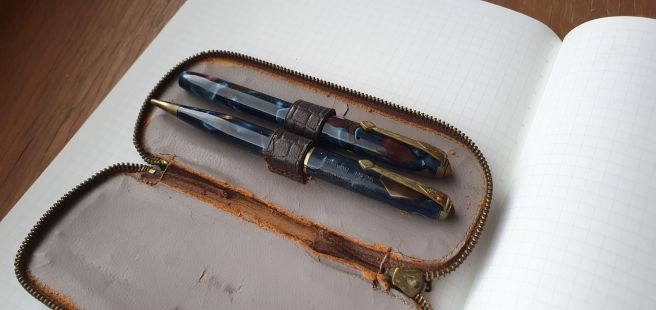
A quick google search beforehand, had indicated a few vintage fountain pens for sale, including a Conway Stewart fountain pen and pencil set, which looked tempting. Once I had tracked it down, I found it to be a “Dinkie” 550 lever filler, barely four inches long, with a matching “Conway” No. 25 mechanical pencil. The Centre sells items from around 400 vendors and, unlike at a pen show, they are not on hand to answer questions. Whether rightly or wrongly, I made a hasty decision to buy the set. (This was only one search away from being an impulse buy).

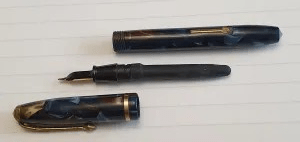
Conway Stewart “Dinkie” 550 fountain pen and No 25 pencil.

After making payment, I was able to inspect the items at more length. I am ashamed to say that, in my excitement I had looked only at the body of the pen and the nib. I had not even thought to try operating the lever. When I did so, I found that it could only be raised to about 30 degrees from the barrel. Also, the barrel could not easily be removed to see what was going on inside. I had purchased a “project.”

A friend from our pen club kindly offered to replace the sac for me, having undertaken the WES (Writing Equipment Society’s) Pen Repair course and advised me not to try doing it myself. But, as she was about to go on holiday, I decided to have a go myself. I watched a video or two and read up on the procedure. Basically, you take off the barrel, take out the old sac, fit a new one and put the barrel back on. What could possibly go wrong?

First, removing the barrel was not as easy as on a Lamy Safari. I assumed (wrongly as it turned out) that the barrel was on screw threads but glued with shellac, requiring gentle heat to soften the adhesive. I borrowed my wife’s hair dryer, with a nozzle attachment to warm the barrel slowly, where I assumed the threads and the glue would be. I paused frequently to twist and pull the barrel off, conscious of the need to apply enough force to get it off but not so much as to crack the barrel.

Once the barrel started coming away it was evident that it was not threaded, but friction fit. With a bit more warming and pulling, the barrel was off! This felt like a major milestone.

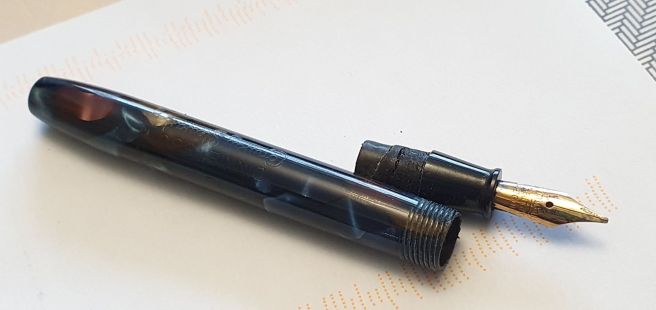
Barrel removed!

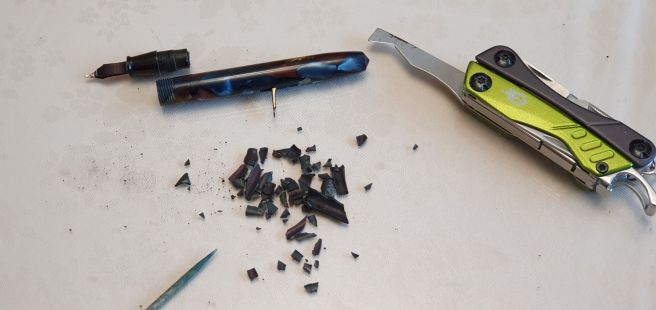
The existing sac had become hard and brittle. I tipped out the contents of the barrel, forming a sorry pile of black dust and debris. I poked inside the barrel with a tooth-pick to get out any residue.

Definitely time for a new sac.

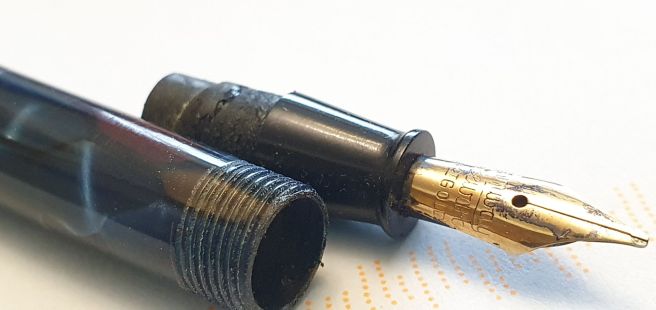
The good news, was that the lever mechanism then moved freely, through 90 degrees and I could see the pressure bar being lowered and raised again. This looked promising. I washed the nib and feed section and cleaned up the 14k gold nib with an old toothbrush.

Dinkie nib.

I was then able to measure the diameter of the sac peg, the lower step of the section, on which the sac fits. From information I found online, I would need a size 15 sac.

I ordered the latex sac and a small bag of pure French Chalk, to dust the sac after fitting to help it slide into the barrel and stop it from sticking. The sacs came in packets of two, 8cm long and to be cut to length as required. They arrived a couple of days later, from The Pendragons Partnership. They had a slight dusting of French Chalk already but it was good to add more.

I measured that I needed the sac to be about 5cm long and so cut off the excess. I then practiced pulling it over the sac peg. This was fiddly and awkward to do by hand. I believe you are supposed to use reverse needle-nose pliers to open the sac but in the absence of these, I simply held one side the sac against the peg with my thumb nail, whilst pulling at the other side of the sac to stretch it and pull it over the peg. Several times, it jumped off. Also, the opening of the sac became ragged such that I had to trim a bit more off.

Once I had practiced this, I applied some shellac to the sac peg. I managed to get the sac on the peg, but the leading edge had rolled inwards over itself. Being unable to unpick this, I decided to roll the whole sac a bit further up the pen and then slice off the excess, back to the start of the sac peg, using a craft knife. This worked and I hoped that there had still been sufficient shellac on the peg to secure the sac. A little more wriggling of the sac had been needed, to line it up straight. I then let it sit for almost 24 hours for the shellac to set fully.

The following day, I was ready to replace the barrel. This stage was also difficult! The sac (now a little shorter than I had intended) went into the barrel easily but the barrel was a very tight fit over the sac peg. I had not wanted to glue the barrel on but it was clear that this would not be necessary. With the aid of some French Chalk for lubrication, I eventually managed to push the tiny barrel all the way home, all the time afraid that it would break under the strain. Perhaps I should have filed down the sac a little, before replacing the barrel, although this would risk puncturing it.

Once reassembled, I could at last fill the pen. I chose Waterman Serenity Blue. I decanted some into an ink miser so that I could check that the pen was filling. To my relief, the pen drew up ink nicely. When I expelled the ink again a couple of times, I found that it amounted to only about 11 drops of ink. But to be fair, this is similar to the capacity of a Sailor converter.

It was exciting to have carried out my first sac replacement and to have got this vintage pen working again. It now writes smoothly and, luckily is not a gusher.

I suspect that I made many mistakes, both in the buying and restoring process although, perhaps with some beginner’s luck, it worked out all right in the end. However, I have since enrolled for the WES Pen Repair course starting in November and look forward to finding out how it should be done.

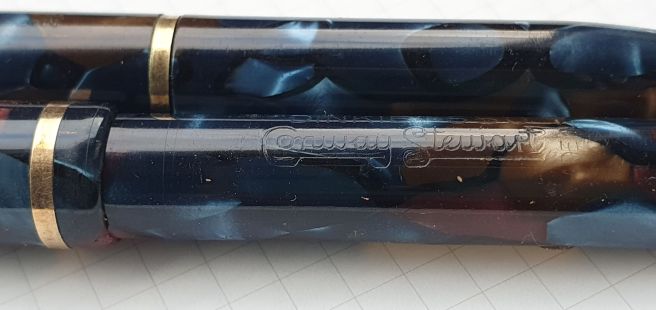
Barrel markings

Vision Aid headband magnifier – early thoughts.

One of the enduring pleasures of the fountain pen hobby is watching fresh ink on the page as you write. If you happen to be in a room with spot-lamps in the ceiling, you may even watch the wet ink gleaming before it dries.

This simple pleasure is enhanced if observed through a magnifying glass, especially if it has a light. However, it can be awkward to write with a magnifying glass in the other hand, especially if the focal length is such that you need to bring your eye close to the lens.

Tinkering with fountain pens also entails cleaning, nib adjustment (or “tuning”), maintenance and repair, which are also occasions when a magnifying glass is helpful. If you find a hands-free solution, so much the better.

Over the years, I have accumulated many magnifying glasses of various types and quality. There is no single solution: you may require some to use at home (with differing magnifications) and a portable one to carry easily.

Some magnifying glasses accumulated over the years.

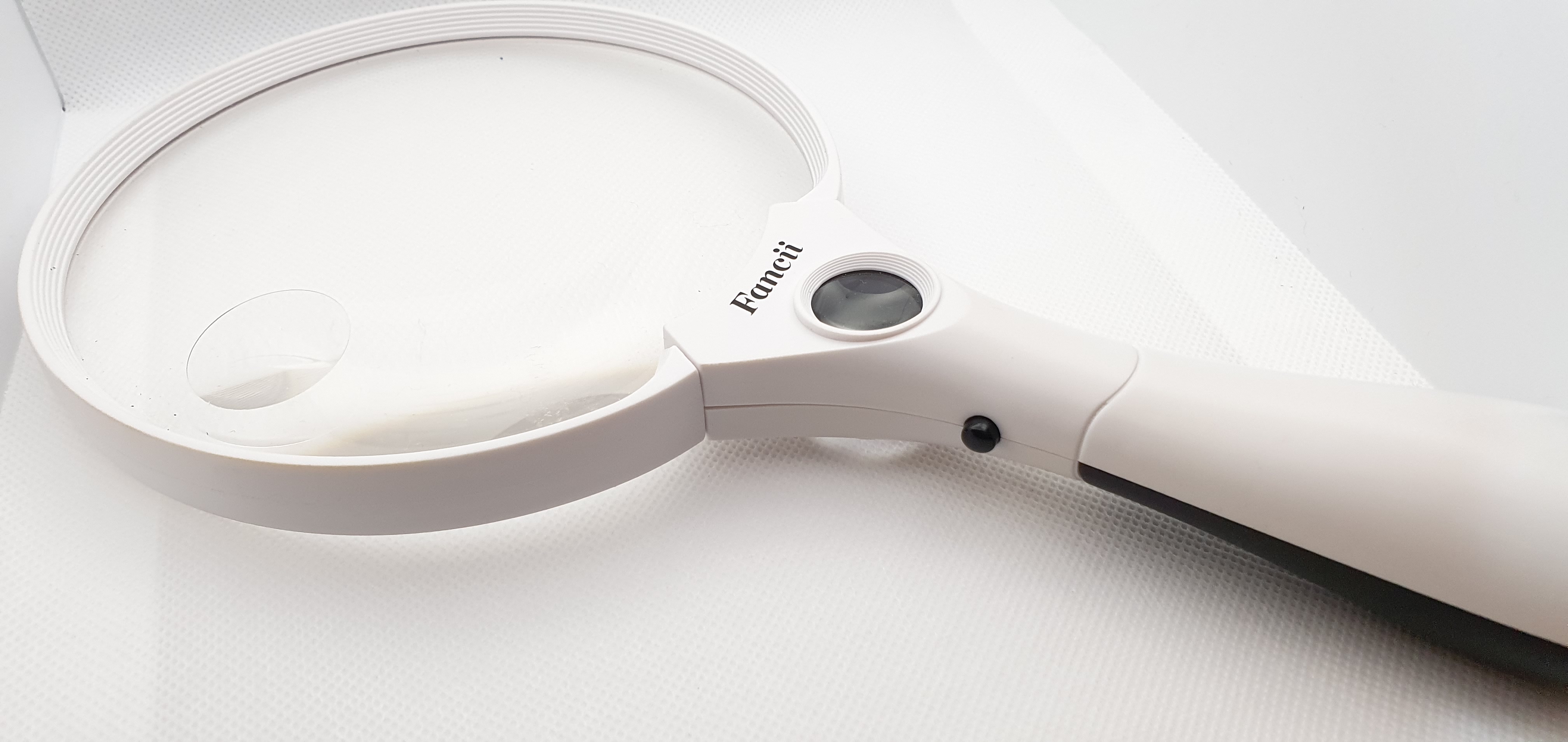
There are pro’s and con’s to all of these and some prove more successful than others. Glass lenses may be superior to plastic, but are heavier. The large white “Fancii” model above offers an unusually large diameter lens, fortunately acrylic and lightweight, which is good for maps and reading but suffers from pincushion distortion such that a page appears to have a bulge or bubble in the middle. Those with LED lights are useful but carry a risk of the lights being switched on accidently whilst being carried which will drain the batteries.

Of those pictured above, the black and white Eschenbach Mobilux, 7 x 28 D 60, made in Germany has been the most successful and also the most expensive (currently £70.56 on Amazon). I have had mine for years and use it almost every day. It came with a slip-on protective lens cover but I also secure the LED on/off switch with an elastic band when travelling with it.

“Loupes I did it again.”

These metal and glass jeweller’s loupes are very handy, and came with plastic boxes. The larger one has LED lights.

Over the years I have tried some hands-free solutions, such as the one below on a flexy stem and which also has a smaller lens with higher magnification in one area of the main lens. This is essential for two-handed tasks, such as flossing a nib with brass shims. The other, folding model below was supposedly for knitting and crochet and such like and can be held around the neck whilst propped up on your chest for hands free close work. It also has an LED light.

The flexy-stem model sees regular use and lives permanently on my desk. I use an envelope to cover the lens when not in use, in case of sunlight causing a fire.

There are numerous hands free, inexpensive headband magnifiers available on Amazon. If you plan to wear one over spectacles, this must be taken into account when choosing. A few years ago I ordered a very simple headband magnifier complete with four, slot-in lenses for under £10.00 but did not find it very satisfactory and used it only a few times.

The most basic of headband magnifiers, supplied with four different lenses.

Does the job but there are better options.

It is against this background, that I saw the Vision Aid magnifier on Amazon, with over 4,200 reviews, an overall rating of 4.4 stars, in the “Amazon’s Choice” recommendations and with a slight discount, to £29.99. I read some of the reviews and decided that it was worth a go.

Vision Aid headset magnifier with lens storage box and a carry case.

As always, there were some negative reviews too and I noted the issues that some buyers had, to pay particular attention to these when it arrived but was encouraged by the many accounts of good customer service in the event of problems.

When it was delivered the following day, my initial impressions were very positive. This is a headset magnifier with LED lights and lenses in five different powers. To list its features:

  • Acrylic lenses of 1.0x, 1.5x, 2.0x, 2.5x and 3.5x. (a 1.0x magnification power is 100% increase in the magnified object’s size. For example a 1 inch object at 1.0x magnification would appear to be 2 inches);
  • Plastic storage box for five lenses with slots for each lens;
  • The lens are quick and easy to fit; they just click into place; a spring clip automatically clamps the lens into place;
  • Headset supplied with folding, removable plastic arms and an adjustable elastic strap which is preferable for users who wear spectacles;
  • The headset has rubber-covered nose pieces, to rest on the bridge of the nose; to use the headset with your own spectacles, allow the nose-pieces of the headset to rest on the bridge of your nose, behind your eye-glasses, (that is, BETWEEN your eye-glasses and your face);
  • Headset has lens mount which can pivot up and down, slide forward and backwards (for optimum focus) and tilt inwards or outwards to suit the position of the object.
  • Two LED lights are mounted; the direction of the lights can be adjusted up and down in four steps;
  • The LED switch alternates with each press for low, high and off;
  • The version I chose has a rechargeable battery, charged via a USB cable supplied; a red light on the headset shows when it is charging which turns green when fully charged; (mine was partially charged on arrival but charging fully took about 40 minutes); a version requiring batteries is also available but I presumed that the rechargeable option may be lighter;
  • Accessories supplied are the USB charging cable, extra rubber covers for the nose brackets, a soft lens cleaning cloth, a User Manual and a very nice, zippered clam-shell carrying case with a nylon mesh accessory pouch and a moulded clear plastic insert, which can be kept to hold the items snugly in place, or discarded if preferred.
  • The carry case has a tough plastic handle over the nylon strap and plastic covered tabs for the double-end zip, which are nice touches (and nice to the touch).

After charging the LEDs fully and reading the large-print User Manual I was ready to slot in a lens and try it out. I started with the 1.0x magnification, the lowest power, but was immediately impressed that items on my desk were suddenly clearer! I picked up a pen and examined its barrel and then the nib. All crystal clear and hands free! All other lenses were equally good but with each increase in magnification requiring a shorter distance between the eye and the object.

Trying some reverse writing. My “Year of the Dragon” plush toy keeps to himself.

I then tried writing with the headset on. This is no problem at all. No more need to hold a magnifying glass in one hand! Bright illumination when needed! The Amazon description claims that the lights can provide non-stop use for 7 hours. I have not tested this and presume that it would be at the lower brightness setting.
I looked again at my list of issues that a few negative reviewers had mentioned. These included complaints that nose clips were not included; nose clip screws were loose, the arms snapped off, the lenses did not clip in and the battery did not charge. I am glad to report that I did not have any of these problems with my set.

Finally, I read in one of the reviews that the product is made in more than one factory and that quality control standards were variable. I also noticed similar-looking products on Amazon, some considerably cheaper, but with brand names like a series of random letters rather than Vision Aid. I cannot vouch for these.

All in all, though early days, I think this is a great product and great value. And I am speaking as someone who has bought his fare share of magnifying glasses in his time.

Too good a pun to leave out.

Goodbye to Paperchase.

In recent weeks we have witnessed the disappearance of another well-loved chain of shops from our high streets and shopping malls. Now the UK’s Paperchase stationery stores have closed.

This means the loss of 106 stores, 28 concession stands (in shops such as Next and Selfridges) and the loss of some 820 jobs. As well as being a familiar presence in the shopping centres, there were Paperchase shops at some railway stations too.

At the eleventh hour, the supermarket giant Tesco stepped in and acquired the Paperchase brand. It remains to be seen what they will do with it. The Paperchase shops are gone. If you click on Paperchase’s web site, you are now diverted to Tesco and greeted with a message that Paperchase online and UK Paperchase stores are now closed and that “we look forward to bringing this well loved brand to Tesco.”

Paperchase was founded in 1968 and grew to be a familiar sight, along with stationers Rymans and WHSmiths. The branches were not all identical but were bright and inviting to browse in, featuring a large selection of greeting cards, shelves offering numerous styles of notebooks in all shapes and sizes, tables of toys and novelty products appealing to children, loads of stationery accessories, pots of colourful pens and, in some stores, displays of fountain pens in glass cabinets. These might included Parker, Cross and Kaweco and a few others although generally none too expensive for an impulse buy.

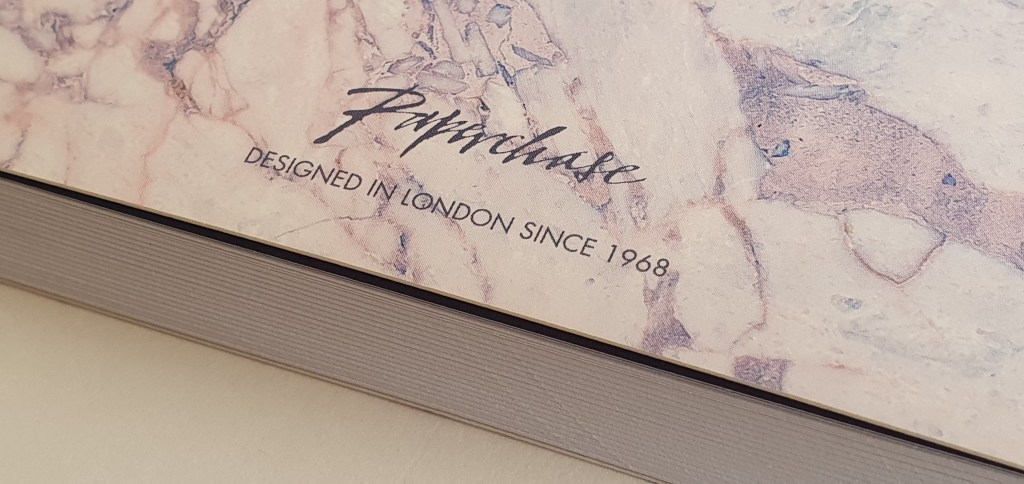
The Paperchase logo on the back of a journal.

Over the years, I visited Paperchase a lot. If my wife and I came across a Paperchase we would pop in for a look round and often buy something.

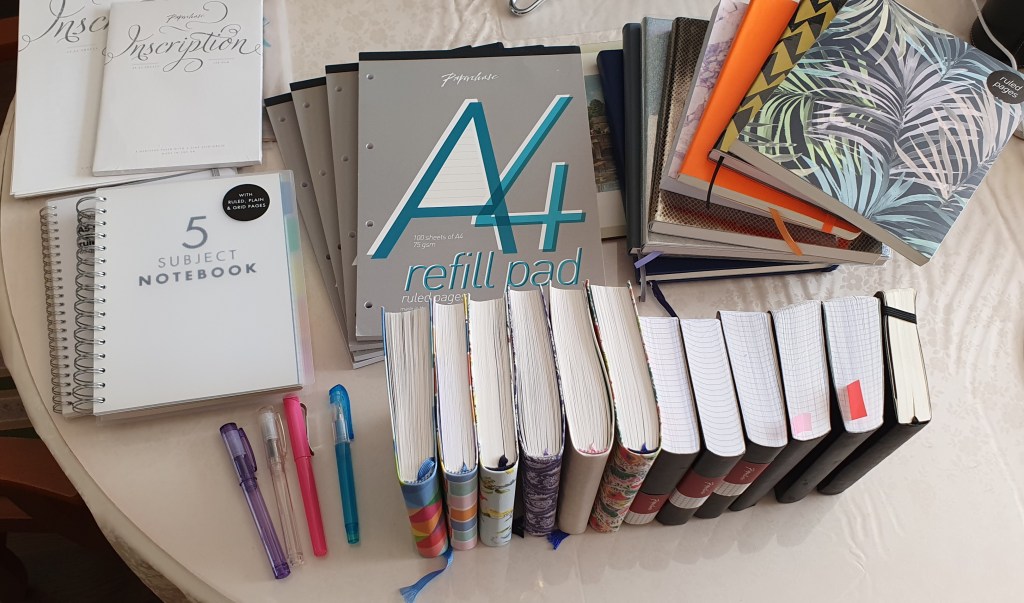
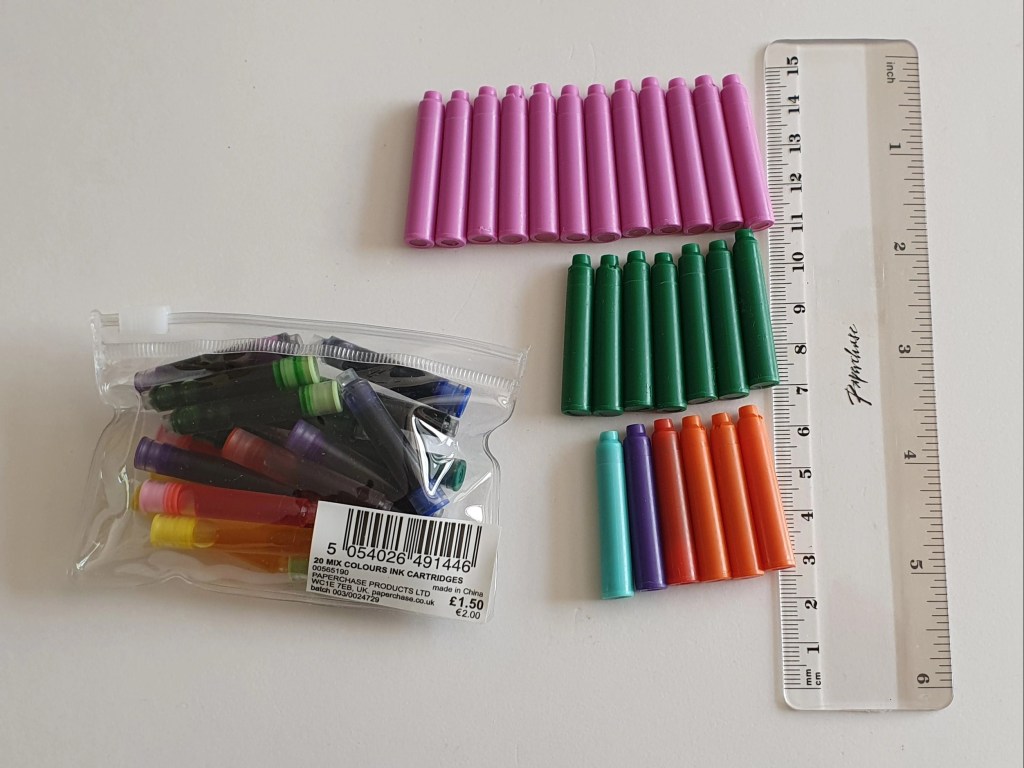
Today, looking around my writing space (aka the dining room) I rounded up just some of the products that had come from Paperchase, for a team photo. These ranged from packets of standard international cartridges in a variety pack (I seem to remember that they had once cost £2.50 for a bag of 50), through literally dozens of notebooks, pads of writing paper and file paper, to a few memorable pen purchases.

A quick round up of just some of my Paperchase purchases over the years.

If you chose a fountain pen from the display cabinet, the staff often struggled to locate the box. My favourite Paperchase story (told here before) is of once buying a handsome Cross Century II fountain pen in black with a chrome cap, at the price marked on the display. Several months later, I was in the same shop and saw the matching Cross ball pen and asked to buy it. This time, they were unable to find the box and its code in order to sell it. Eventually, it transpired that it could be sold only as part of a set with the fountain pen. After proving that I had bought the fountain pen already, they agreed that the ball pen was mine too!

Loose cartridges from my first variety pack. I have a lot of pinks left.

I remember where I was when I bought my first Kaweco Perkeo: it was the Paperchase shop in St Peter Port, Guernsey. The pen was a success and I later stocked up on about five more, in various colours. This pre-dated my same behaviour with the Cross Bailey Light, although those were not from Paperchase.
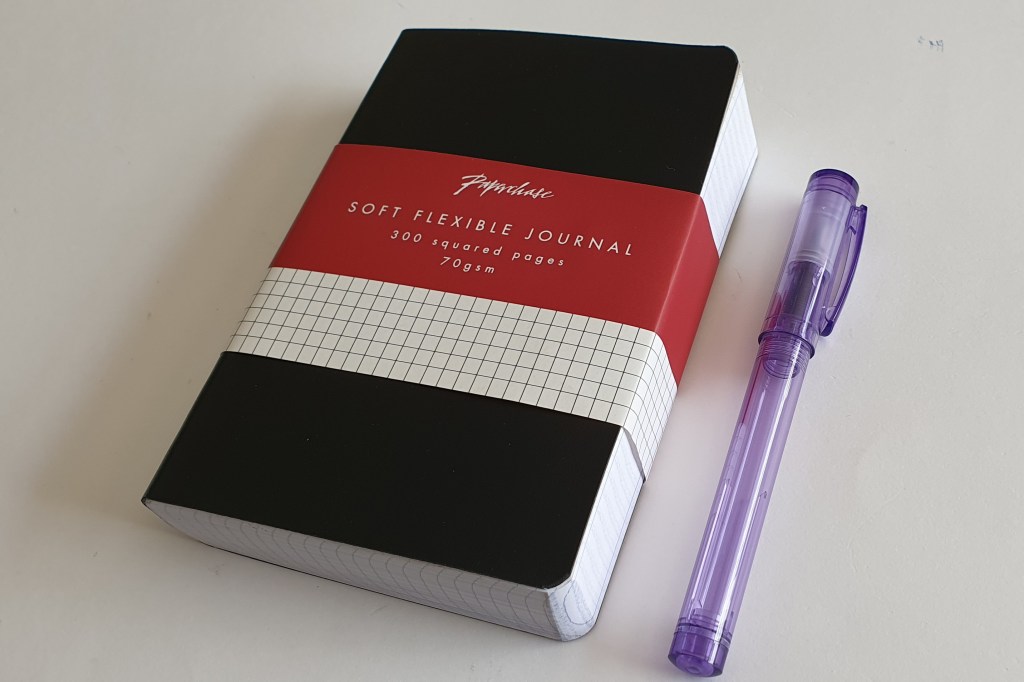
However, my greatest dependence on Paperchase, was for notebooks and journals. I remember discovering the little chunky black A6 journals with a staggering 600 pages of squared, fountain pen friendly paper. I bought a couple of those and was sorry when on a later visit, they seemed to have ceased selling them. But then I later found them back in stock again a year or two later, I binged on another three! They were great, such as for jotting down trivia when watching tv or listening to music online. They would last for ages.

One of my favourite Paperchase products. Actually 600 pages.

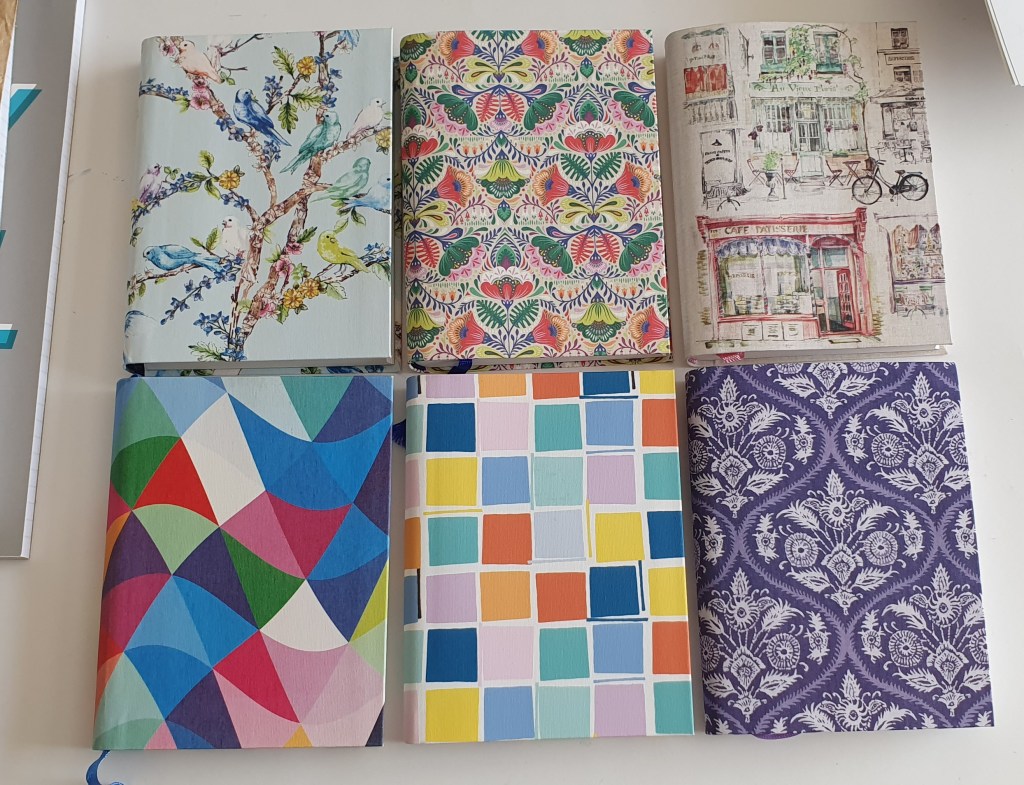
Paperchase had a wide choice of journals. Some had paper that was not fountain pen friendly. I liked the A6 flexi-covered books, nicely stitched, with 320 pages of either lined paper (8mm line spacing) or plain paper, both of which were great for fountain pens. They were usually £8.00 each and occasionally reduced in a sale. I tended to buy more than I needed (an understatement).

Paperchase A6 journals, of various designs.

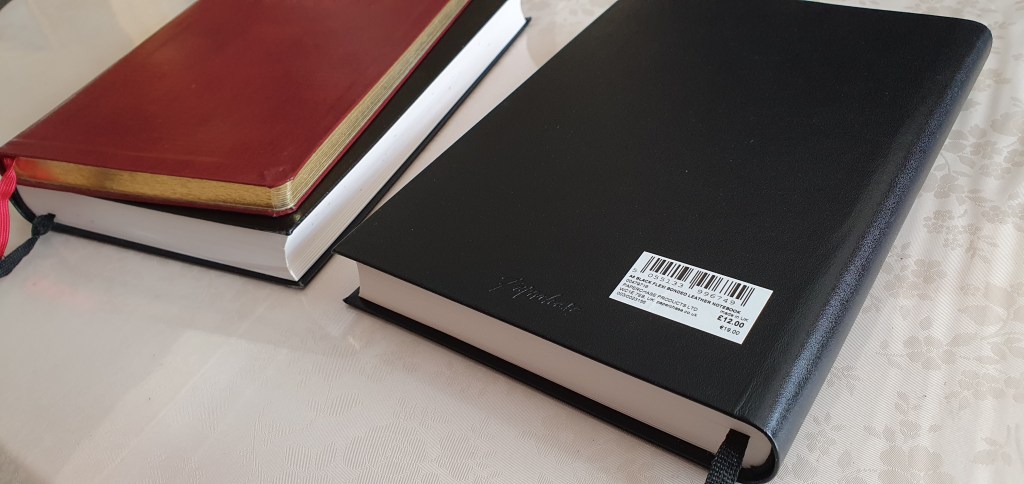
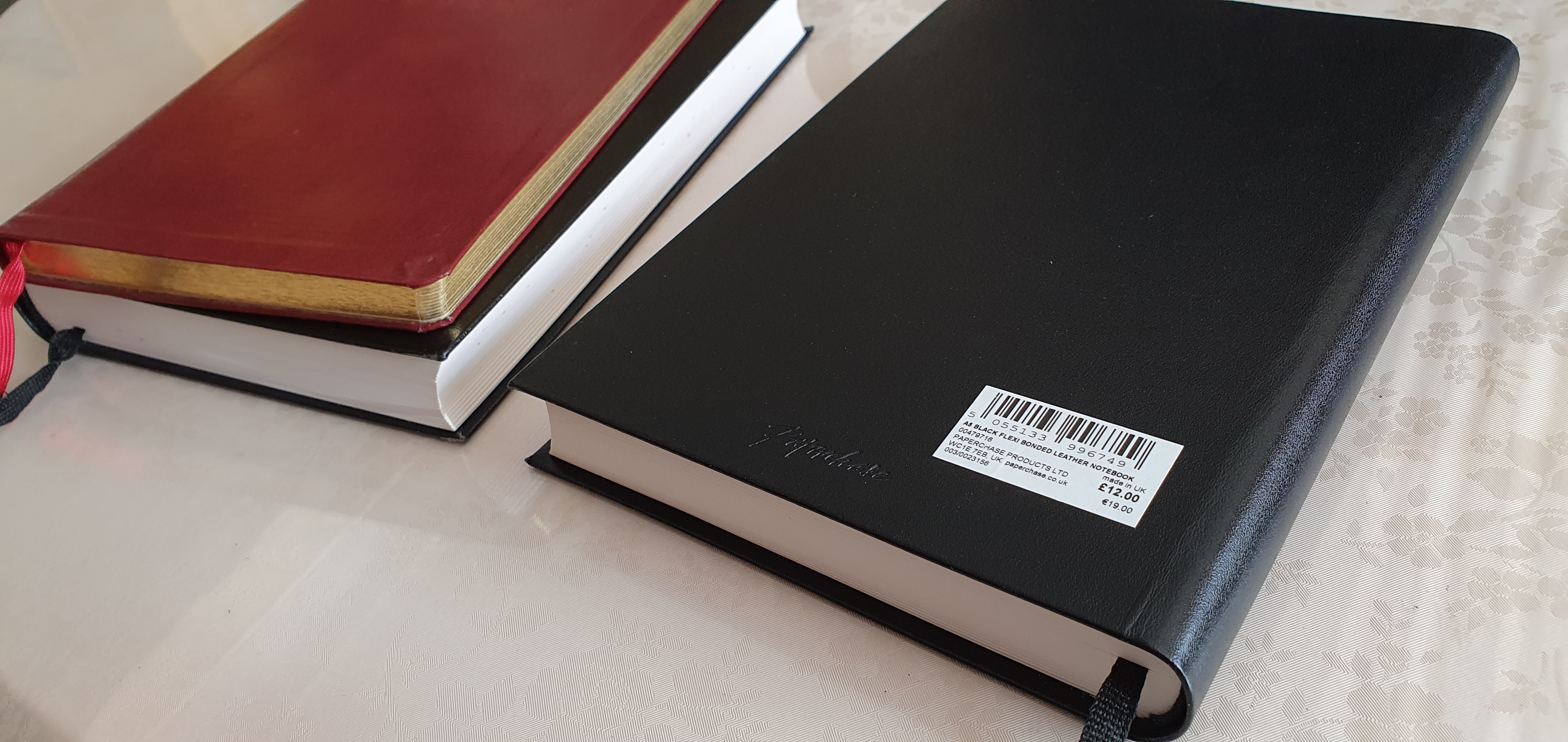
For larger, A5 journals, Paperchase once sold journals with bonded black leather covers, with 384 pages of smooth, lined paper, with a generous 10mm row height. I used these for more lasting projects, such as memories of my school days and would enjoy writing in these with various fountain pens and inks.

A few of the more luxurious, bonded leather covered journals.

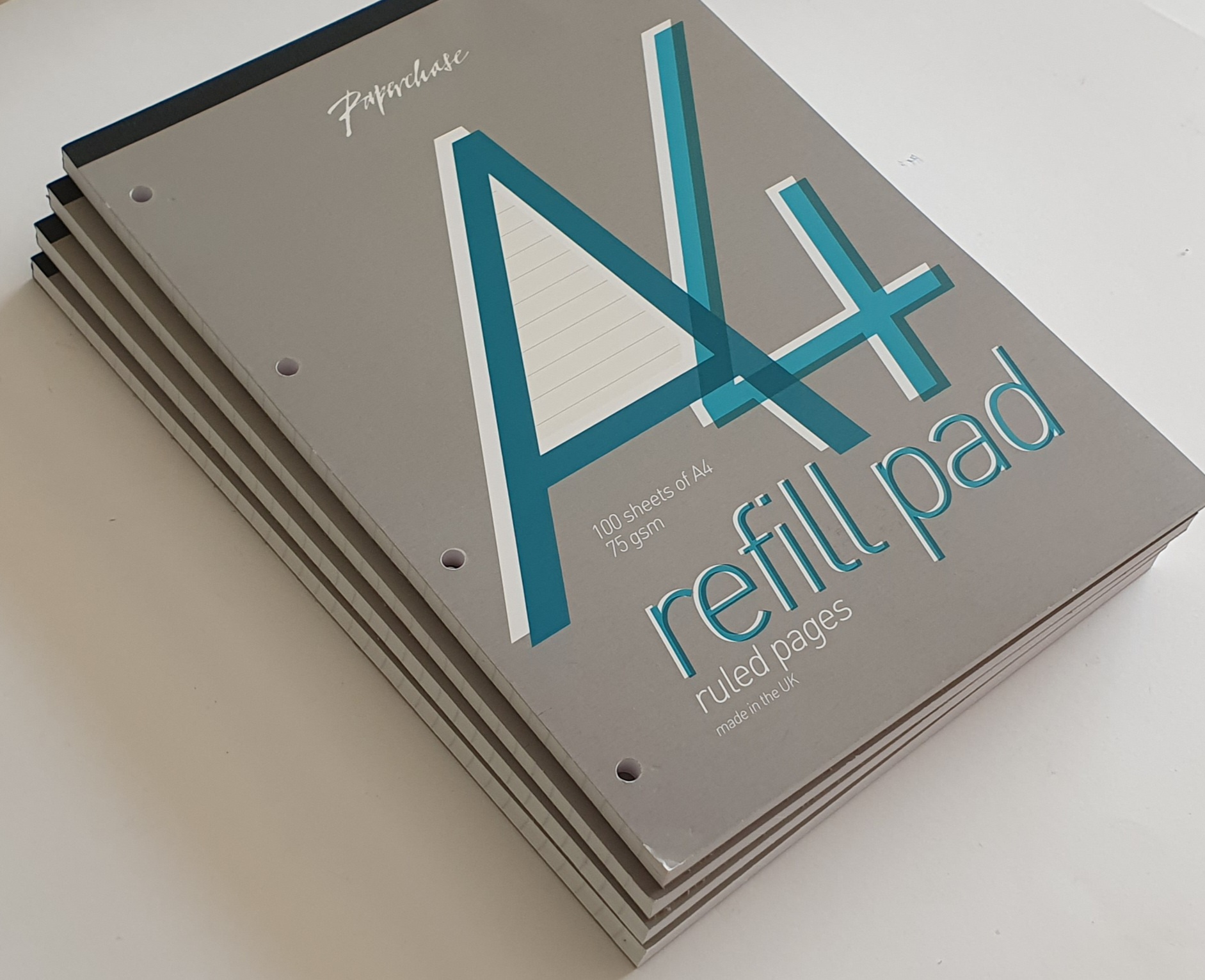
Paperchase also had an online service, although I did not use it as I was well served with branches in London. But I did make use of their loyalty card. If presented when making a purchase, you would be given an offer with your receipt, for a discount on your next purchase, subject to various conditions. I once bought some pads of file paper, only to be told that there was nothing to pay as it was all covered by accrued benefits. I was very fond of their pads of file paper, which I use at home and at work. Not only was the paper of good quality but also, the pages could be torn off the pad easily without ripping the paper, unlike some I have used.

Paperchase pads of white A4 file paper. They also had yellow paper.

The final months of Paperchase’s departure have been sad to see. I visited the branch in Windsor and bought a few more pads of file paper. The staff had just heard the news of the closures and did not know what the future held for them.

I was at the O2 Centre in Swiss Cottage when I saw the massive black-on-yellow posters in the shop window, announcing the closing down sale. I went in to look round, but most of the stock had gone. What was left was all discounted and it was unclear what the final price would be. I picked up a few small items, such as Lamy ball pen M16 refill, marked at £3.75 but which came to only fifty pence when rung on the till. Similarly, a clear plastic ruler was only a few pence.

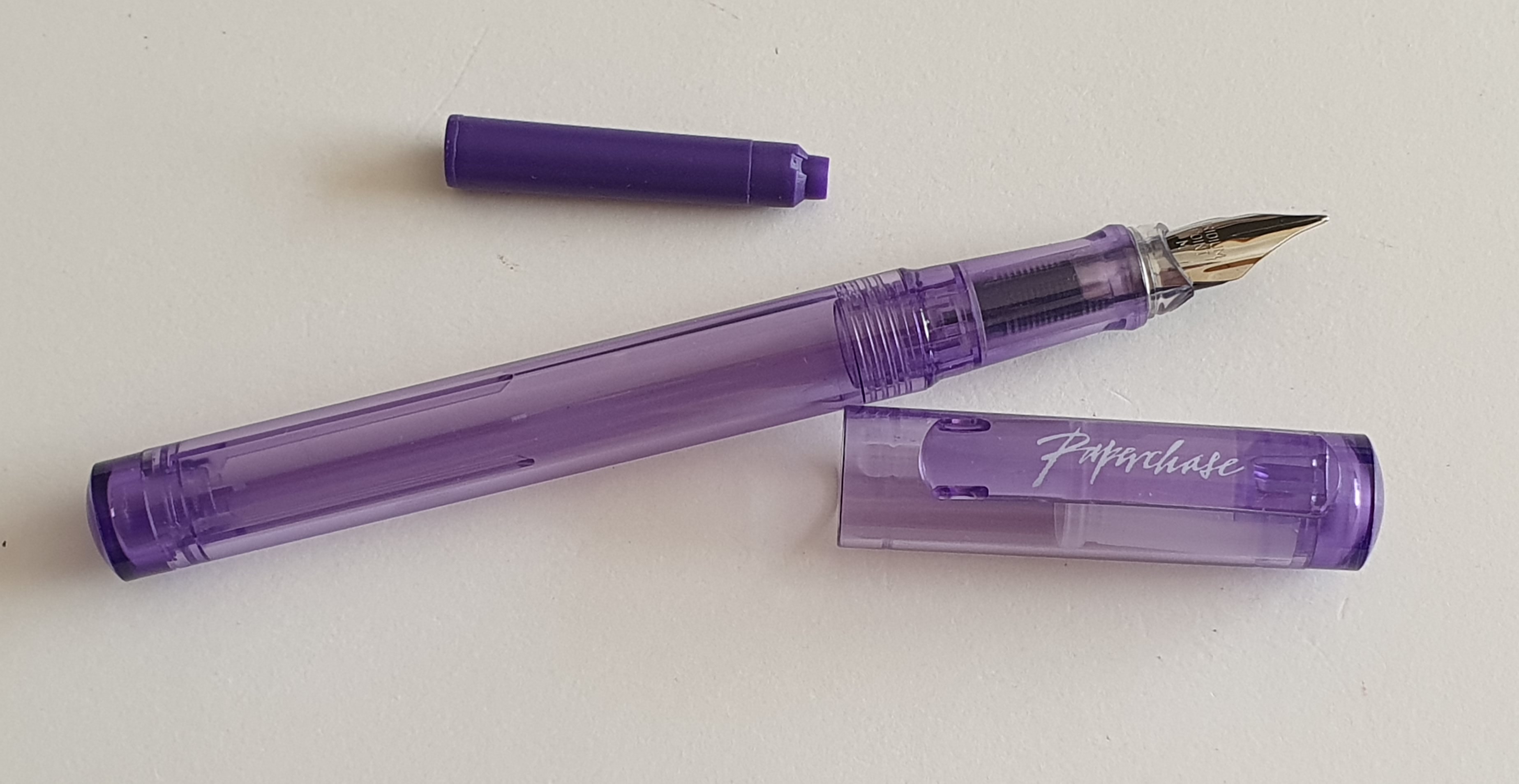
One of Paperchase’s occasional, own-brand cartridge pens.

On visiting Bracknell recently, and also Southampton, the Paperchase stores were dark with their shutters down. I almost took a photo of the sad looking shop fronts, but it seemed like gloating.

I have been sorry to see Paperchase go. I will miss them. I read that the company had suffered years of plummeting sales and soaring costs and was a victim of the Covid lockdowns and the growing shift to online shopping.

But we had many good years. I will wait to see what becomes of Tesco’s involvement. If some of the better notebooks and journals can be offered through Tesco’s many stores, this will be some consolation.
A few peripheral fountain pen accessories.
Wouldn’t it be nice if our fountain pen hobby could be condensed down to a single pen, a bottle of ink and one current journal? There is an attraction to a more minimal, less wasteful lifestyle as we grow older. Perhaps it is also a subconscious desire to rediscover our ten-year old selves.
However a glance around my writing space reveals that this is not where I am at, at least not yet. Over the years of acquiring fountain pens and blogging about them, I find myself surrounded by a host of extra items, more or less related to the use and enjoyment of the pens themselves. Here is a quick A-Z of some which spring to mind.

1. Apps.

These do not take up any space, other than on my phone. I use one called Memento Database to keep a virtual card-index record of my fountain pens, with dates of purchase and price, nib details and a record of when they were inked and with what. The records can easily be sorted alphabetically by brand or in order of dates of purchase. I use ColorNote, a long-term favourite, to make lists and sort them. This could be of writing prompts, memories of something or someone sorted by key words, or just a list of points such as for this blog post. Also, a Magnifier app can be very useful to inspect pen nibs and also has a camera facility.

2. Book stand.

If you aspire to transcribing a book by fountain pen, it is useful to have a means to prop it up and hold it open. I bought one when I decided to tackle Marcus Aurelius’ Meditations, inspired by Kimberly of @allthehobbies on Instagram.

3. Bulb blower.

This device was purchased originally to blow dust off camera lenses, but has since been re-purposed as a means of flushing nib sections with warm water.

4. Brass shims.

Thin sheets of brass, in various thicknesses, used to floss the tines of a nib to clean out accumulated paper fibres and dried ink. Also useful if widening tines to improve ink flow.

5. Craft knife.

The next step, when you become frustrated that the brass shim flossing is not widening the tine gap and decide that more extreme action is called for. Sometimes inserting a blade from the breather-hole end and lowering it into the tine gap and giving it a gentle wiggle, is what is needed.

6. Dremel 3000.

Ok, this is stretching it a bit, to list under fountain pen accessories. This is a rotary, power tool used for drilling, grinding, cutting, or polishing and lots more. Mine was bought in an extreme case of Gear Acquisition Syndrome with the intention of smoothing the rough end of the deliberately broken-off pocket clip on my Pilot Capless. I have not yet dared attempt it though as I will very likely damage the surrounding area of the pen body.

7. Ferrero Rocher chocolate boxes.

The square, clear plastic lidded boxes are very handy for keeping fountain pens if not in current circulation. Someone does need to eat the chocolates first.

8. Glass nib dip pens.

Excellent for sampling a number of inks in quick succession. A quick dip in water and a wipe with a tissue and it is ready for the next ink. I have two: one is an all-glass design with a long slender glass handle: the other has a plastic body and screw cap meaning it is easy to transport.

9. Grippy material.

A sheet of rubbery material, sometimes sold to help unscrew jars, but which can be useful when pulling out a friction-fit nib and feed from a section, for cleaning or maintenance.

10. Ink bottles.

Empty bottles can be useful. The tall, square Aurora bottles are good to hold the barrel of an eye-dropper pen, for filling.

11. Kitchen roll.

For drying nibs and other parts of a pen after cleaning. The absorbent paper wicks away the moisture from the nib and feed. Alternatively you may wrap the whole section in several layers of paper and give it a few deft shakes to get the water out by centrifugal force (pro tip learned from Brad of the Pen Addict). Large rolls of blue paper from hardware stores, are cheap and last for ages.

12. Loupe.

A powerful magnifier, to closely examine a nib before attempting adjustment. My favourite is an “Eschenbach Mobilux 7x28D 60” with an LED light. Lives permanently on my desk and is used frequently.

13. Magnifying glass.

I have lost count of how many I have bought now, in all shapes and sizes. The newest, called Fancii, has a huge, 130mm diameter lens in lightweight plastic, an LED light and a powerful x10 lens in the handle. It can be used to hold in one hand, while you write with the other, to observe the exquisite sensation of glistening wet ink and shading on the page. Unfortunately it suffers from pin-cushion distortion in the centre area, which makes you want to smooth-down a bulge in the paper which is not really there.

Fancii magnifying glass. 130mm diameter lens.

14. Micro-mesh craft kit.

A box of grinding pads of assorted grades, used for smoothing nibs.

15. Pen cases and pouches.

Mine range from zippered faux-leather cases holding 24 pens to leather pouches to carry one, two or three pens. I use a Waterman two-pen pouch mostly.

16. Pen cups.

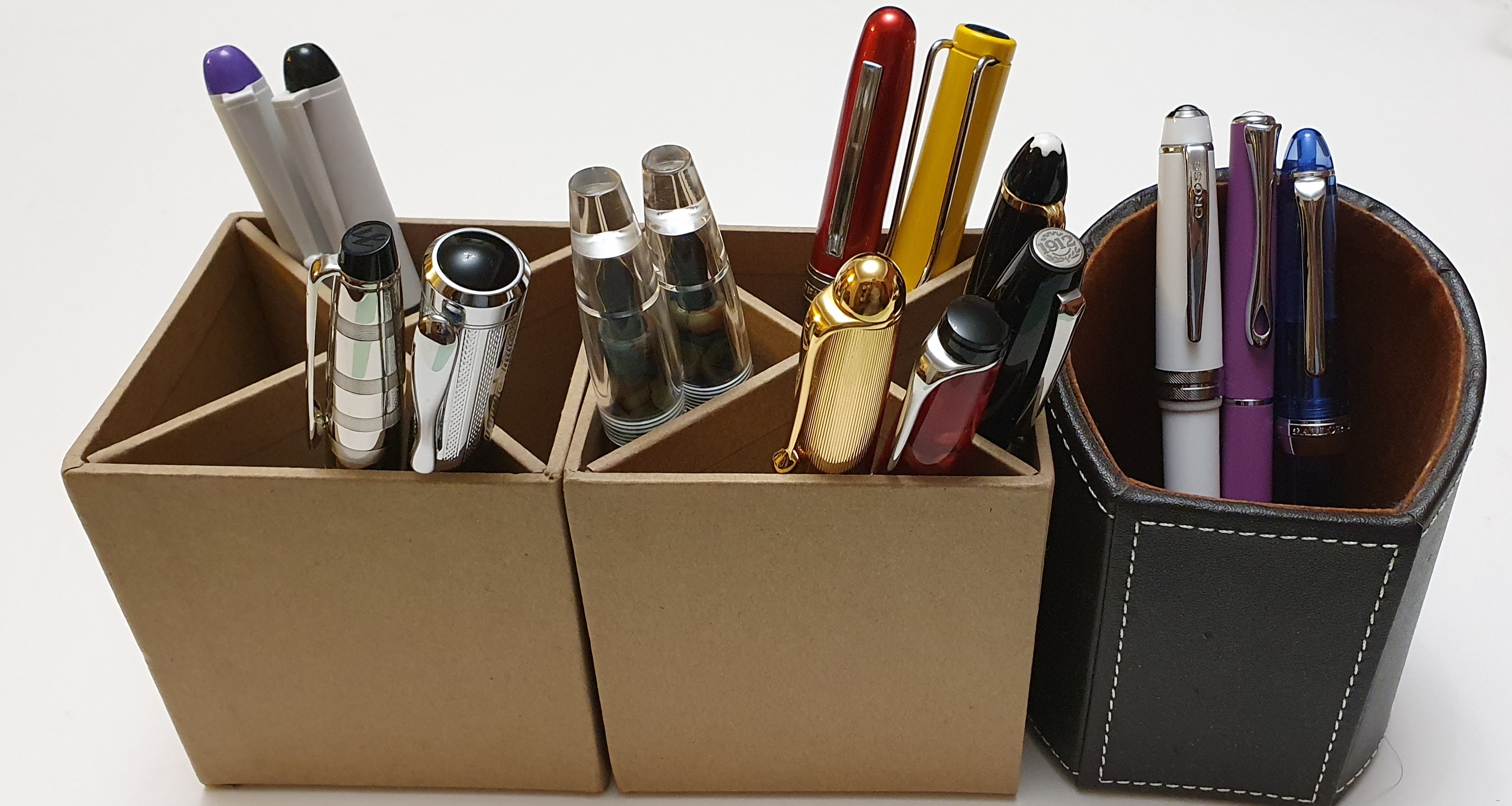
I keep a couple of these, in stiff cardboard, each divided into four quadrants, on my writing desk – just for the inked fountain pens. All other writing implements have their own cups.

Pen cups for the currently inked.

17. Pen rest.

An essential desk accessory in which to place an uncapped pen so that it will not roll off the table. Mine are handmade from the blocks of black squashy sponge material that come with certain ink bottles – Pelikan Edelstein I think.

18. Pen roll.

A rolled up pen storage pouch, to hold around 6 – 10 pens. Good for pen club meet-ups.

19. Pen tray inserts.

These are moulded plastic trays, with a sort of felty surface, in which to keep pens apart when in storage (eg in a Ferrero Rocher box as above). They can be cut to size.

20. Pipette.

A handy “eye-dropper” type device to transfer ink from a bottle, directly into the barrel of an eye-dropper pen.

21. Portable photo-studio.

A white plastic foldable box with one open side, and a ring of LED lights in the top, usually powered by a USB charge pack and so can be used away from a mains power socket. Great for small product photography such as pens, at any time of day or night when you need a stable light source for photos.

22. Self-seal clear plastic envelopes.

Small clear envelopes to keep tiny bits and pieces, such as fountain pen converters, cartridge adaptors, spare nibs etc.

23. Silicone grease.

A grease to lubricate a piston, in a piston-filling pen such as a TWSBI or Lamy 2000. Purchased from a diving shop.

24. Storage chest.

A chest of drawers, as a storage solution for pens, bottles of inks and even the note-book stash. Mine is a plastic tower unit of four, deep drawers. The bottom two are ink.

25. Travelling ink well.

A means of transporting a smallish quantify of ink. Mine is a Pineider, and holds up to 10cc of ink. Useful to fill a pen on the go if you do not wish to carry a whole bottle. Visconti also make one.

26. Weighing scales.

Digital scales to weigh pens, for descriptive and comparative purposes in blog posts. Bought from a kitchen supply shop.

So it can be seen, that the pen that you bought yourself as a present, itself needs a present, and so it goes on. There are no doubt many more accessories that I have missed in this quick round up. Let me know some of your favourites in the comments!

Moderno B5 Charcoal notebook review.

Our local WH Smith stationery shop in Brent Cross shopping centre has had another revamp recently and is looking a bit more inviting and spacious as you enter. Whilst browsing, and after circling the racks of roller-balls and fine-liners to check out the fountain pens (mostly Lamy, Parker and Sheaffer), I ventured on to the shelves of journals.

My eyes were drawn to their Moderno B5 notebook, with 96 ruled ivory sheets (192 pages) of 80gsm paper. It has the ubiquitous inside back pocket and an elastic closure.

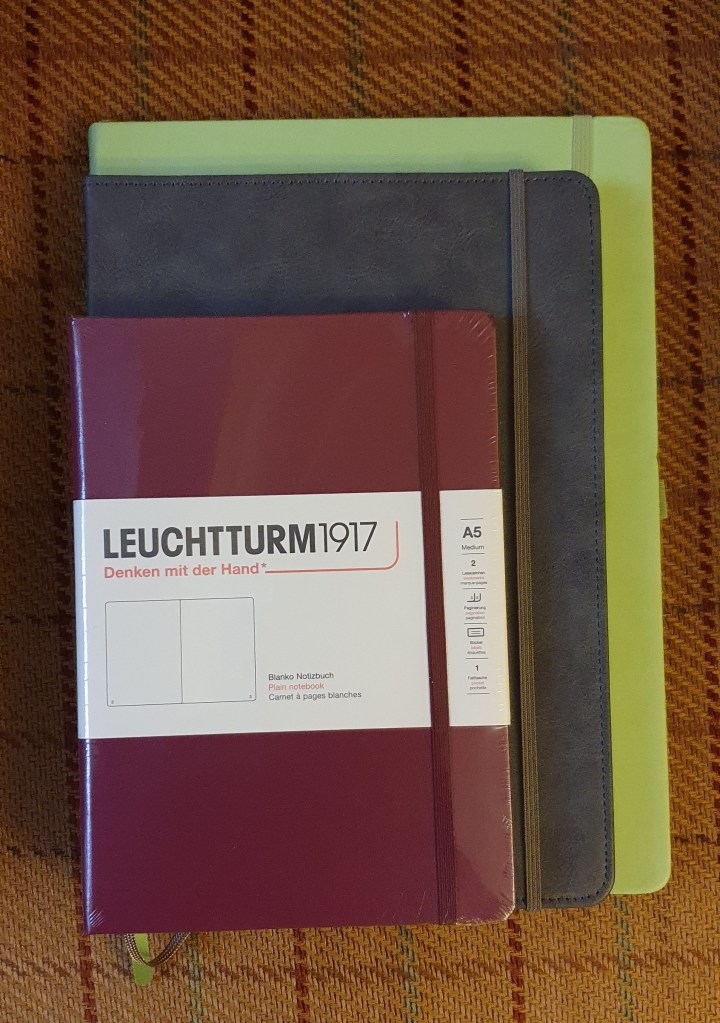
Moderno B5 journal, next to an A5 Leuchtturm for size comparison.

I did not have any immediate need of a notebook (an understatement, tbh) but was nevertheless tempted by this one, mainly I think due to the interesting B5 size which sits as a nice compromise between A4 and A5. I had no idea whether the paper would be fountain pen friendly or not (which is partly why I am writing this brief review: spoiler alert – yes it is) but found myself making my way to the self-service checkouts to part with £11.99. The lure of a new journal is a strong one.

The notebook has a pleasing grey plastic leather-look cover. I do not yet know whether this plastic will crack and flake in the long term. The book is stitched. The lyrics of Paul Simon pop into my head – every page is neatly bound, “for a poet and a one-man band”, or something.

Nice strong open-flat binding.

Getting it home, I could examine the features more closely:

  • 96 ruled ivory sheets; (not paginated but I do that myself);
  • 80gsm paper;
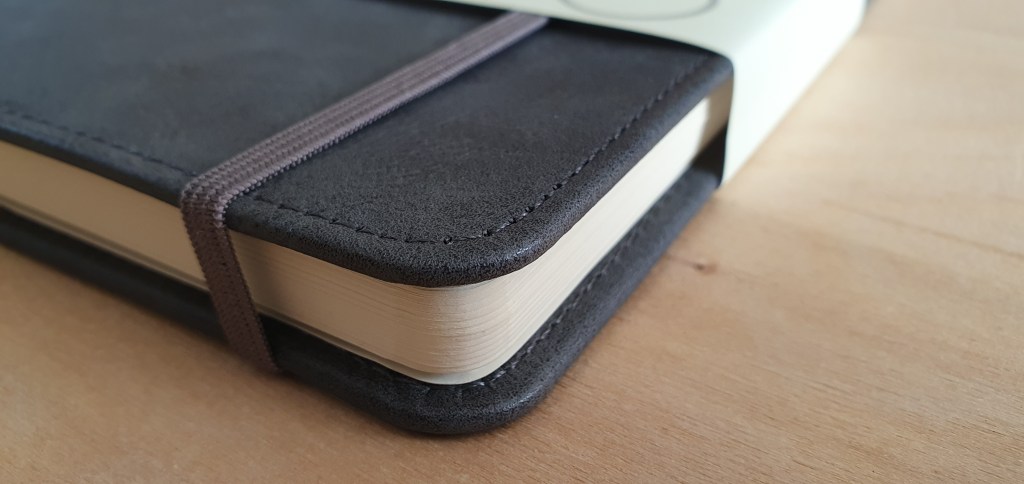
  • rounded corners;
  • inside back pocket;
  • elastic closure: (a bit slack but usable);
  • 8mm row height; (Yay! my favourite)
  • 29 rows to the page; (close, but not quite a month’s worth of days);
  • one ribbon bookmark;
  • produced in China.

One of the first things to be done of course when trying a new notebook, is to test the paper for fountain pen ink. I usually select a handful of pens from my “currently inked” pots and write a line or two with each, to see how the pen feels on the paper, whether it feathers, and crucially whether it bleeds through the paper or shows through too much. I am happy to report that with all the inks I tried, these tests were a success. There was no bleed-through with any of them and very little show-through either.

Plastic leather-look cover in smart charcoal colour and neatly rounded page corners.

In terms of usefulness, a B5 journal is rather nice to have. It could be used as a bullet-journal or “bu-jo”. The only caveat is that with 29 rows to the page, you are a couple of days short of a month (or a few sandwiches short of a picnic) but you could add an extra row at the top and another at the bottom of the page, if this is your chosen use. I have done this before on another book, in which I created a three year bu-jo with a double page spread for each month.

I am not one for stickers and washi-tape but do find a bu-jo very useful. For example, unlike a one year diary, you can insert dates for a future year, or even two or three years ahead, such as car insurance renewal dates, MOT expiry dates, or maturity dates for ISAs or fixed term saving accounts.

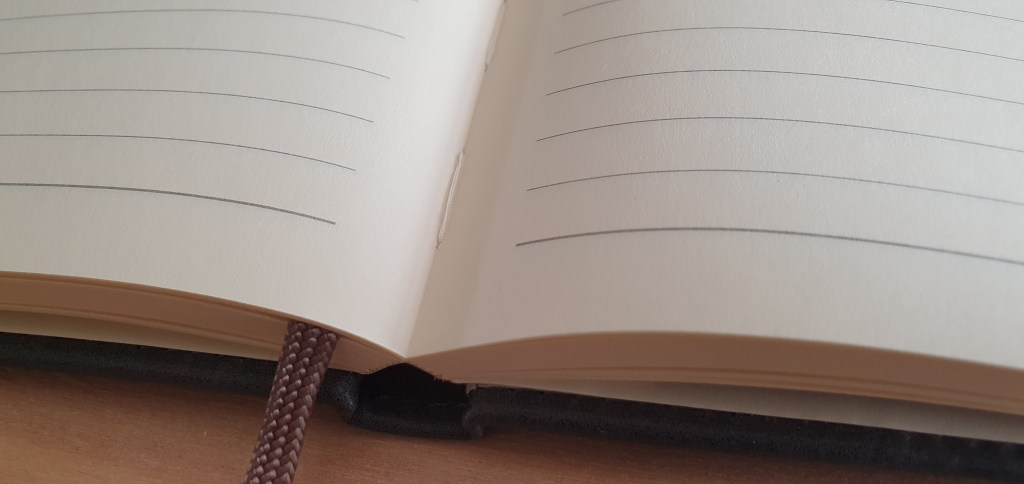
A double page spread with 29 rows per page.

Then there are the rest of the pages, not allocated to monthly views, which you can use for all sorts of other things. For example I like to make lists of albums from particular artists, and then tick them off after I have listened to them, – which I find so much more satisfying than track-hopping on Spotify.

Above all, I am pleased that I can use fountain pens with the book. The 8mm row height hits the spot for me. I do not think I will use this one for a bu-jo as I am already set up for that, but I shall enjoy having it in stock until a suitable function presents itself. I realise that one should have a NEED of a notebook before buying one, not the other way round, but such is the life of a stationery addict.

My notebooks fall into two broad categories: those which I would want to keep once they are full, and those which I would not (which are typically full of pen and ink samplings and notes of no lasting interest). Having a book which has a durable cover would tend to indicate that it should be used as a “keeper”. In the past I used a Ryman A4 journal as a bu-jo but after several years’ service, the cover material is now flaking off and leaving bits everywhere on my table. If planning to use a notebook for a multi-year bu-jo, then it is wise to consider how the cover might wear.

The B5 size has the advantage of giving you more space on the page than an A5 journal, (of which I use a lot of Leuchtturms) whilst not needing as much space in a bag as an A4 if you wished to take it out and about, to do some writing in a coffee shop, as I like to imagine myself doing, but have not done much of late.

When I next need a B5 journal, which is suitable for fountain pens, I will be ready.

This picture might be more useful, to show the B5 size, in between an A5 and an A4 notebook.

The new year diary, 2023.

I have been in the habit of keeping a diary since I was about 18. For about the last 10 years, I have used A5, page a day diaries and usually write my entry after breakfast the next day.

In recent years, I have bought these from Rymans stationers, which had 23 rows per page, with a row height of 7.9mm. These are still available for £13.99. My new year diary 2022 was reviewed here.

However, for 2023 I have tried something different. I am now using a Moleskine 2022-23 Daily Diary / Planner. Again this has a day per page and is ruled. A big difference is that it covers 18 months, from July 2022 to December 2023.

My Rymans page a day diary for 2022 and the Moleskine 18 months’ diary 2022-23.

This was an impulse buy, on visiting the Moleskine store in London’s Covent Garden, in early November. Admittedly, I was lured by the fact that it was reduced in a sale, from £24.99 to £17.50. I presume that this was due to the fact that it was November and over four of the 18 months covered by the diary had already passed. This did not worry me as I was quite happy to start the diary in January and to have the previous six months’ pages free to use like a notebook, as I wished.

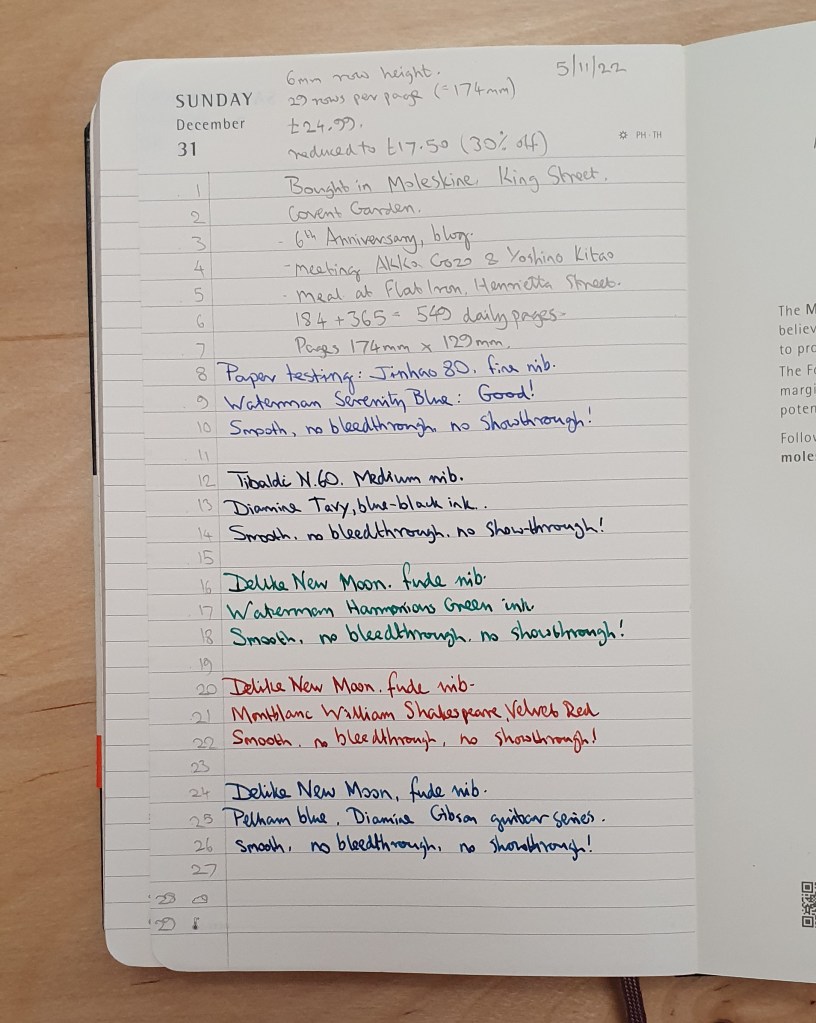
I did have some reservations, first as to the paper quality. My experience of Moleskine A5 notebooks had been that the paper was generally not fountain-pen friendly, as most inks bled through the paper making the other side unusable. However, I thought that I might overcome this by finding an ink which would not bleed. My other concern was as to the line spacing. This Moleskine diary pages have 29 rows, with a row height of 6mm which is much narrower than my preferred spacing of around 8mm. On the other hand, you get more rows per page. Also, I often use balloon diagrams in my diary entries for work days, and so the row height is a bit less important.

Narrower pages and narrow line spacing (6mm) than I would like.

Ultimately, the reduced price, extra notebook pages, as well as the rather pleasing chunky proportions of the diary, sealed in its shrink wrap, made me overcome my reservations and I bought it.

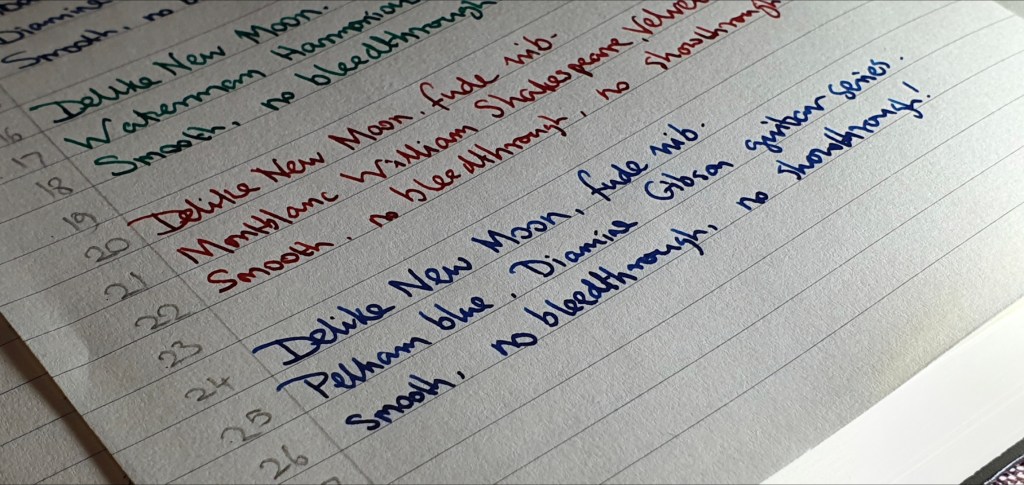
When I got it home and had the opportunity to test the paper, I was pleasantly surprised and relieved to find that the paper is not the same as I had seen in Moleskine A5 notebooks. The paper in the diary IS fountain pen friendly and very pleasant to write on! I tried writing a paragraph with five different inks (Waterman Serenity blue, Diamine Tavy, Waterman Harmonious green, Montblanc Velvet Red and Diamine Pelham blue. All performed beautifully on the silky smooth paper with no bleed through and very minimal show through.

Testing the paper for fountain pen friendliness. Success!

As for the line spacing, whilst I still prefer to have a bit more breathing space, I think I can manage with it. I noticed that the Moleskine diary page is quite a bit narrower than the Rymans diaries, (130mm instead of 145mm) but the shorter length actually helps make up for the narrower row height. (I sometimes rule a page into two columns, in notebooks with narrow line spacing).

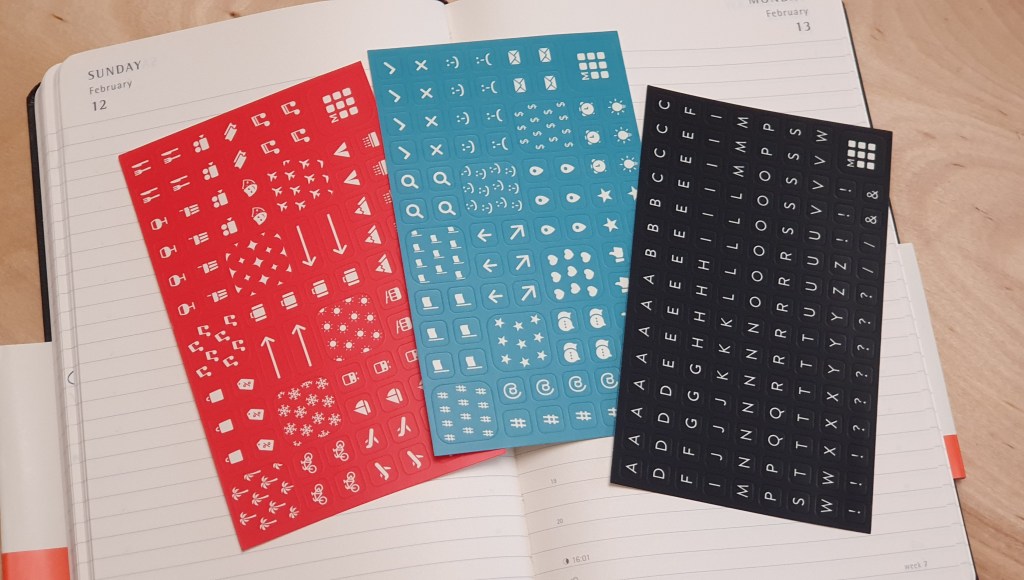
Three sheets of stickers included.

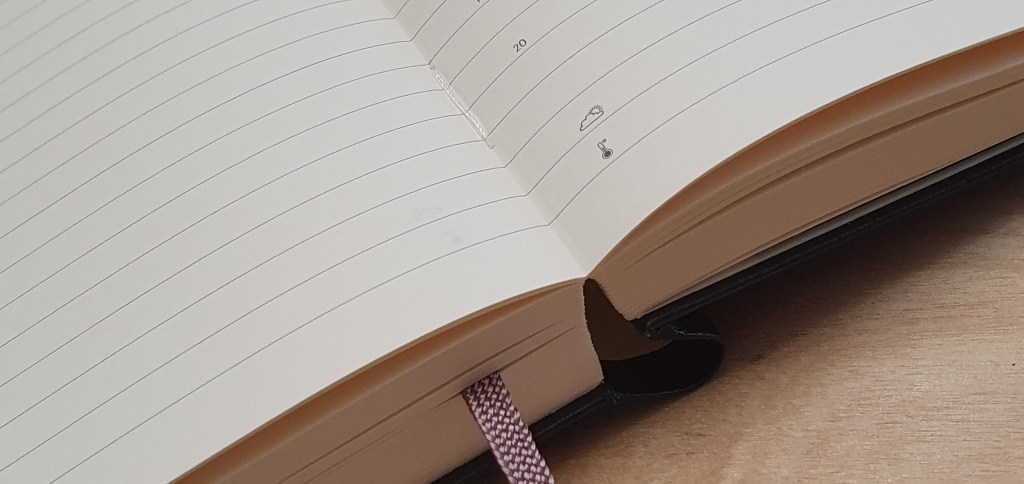
Other features of the Moleskine diary include neatly sewn binding and so the book lays open flat, without risk of pages falling out. There is a ribbon bookmark, an expanding pocket in the back cover, an elastic closer, and three sheets of sticker symbols which can be used in the diary, or elsewhere. There are plenty of information pages at the beginning, with yearly calendars and monthly planning pages, world time zones, national holidays and dialing codes.

Nice stitched binding.

So, off we go again for another year. Already 2023 looks set to be marked by the awful continuing war in Ukraine, industrial action for pay disputes and the current fall-out of Prince Harry’s tell-all biography, plus challenging times for household finances. We all live in hope for better days ahead.

Crucially, the paper in the Moleskine 18 months’ diary is very fountain pen friendly.

The Semikolon Grand Voyage notebook; a brief review.

With the London Autumn Pen Show just a week away, it is natural that my thoughts may turn to what I might buy there.

In London we are fortunate to have two pen shows a year. At the Spring show on 6 March 2022, my modest haul included a notebook from a brand that was new to me, called Semikolon. It was a chunky A5-ish size, offered in a selection of colours and for a tempting show price of £10.00.

Specifications.

  • 152 sheets (304 pages) of Swedish, fine laid watermarked, plain, cream-coloured paper;
  • Page size: 135mm x 180mm;
  • Stiff board covers, and cloth-bound;
  • Stitched spine – opens flat;
  • Two ribbon bookmarks (matching the cover);
  • Elastic closing loop;
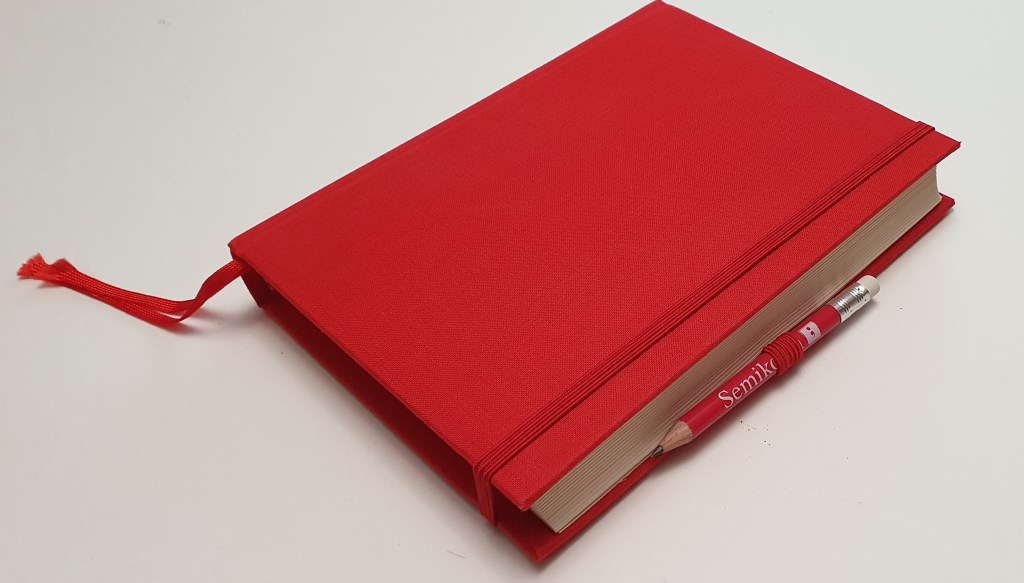
  • Elastic pen loop with a Semikolon pencil;
  • Expandable pocket in the back cover;
  • World map with time zones, inside the front cover.
Semikolon Grand Voyage notebook.

I was informed that Semikolon is a sister brand of Leuchtturm, whose hardback A5 notebooks I have used a lot. However the cloth-bound notebook from Semikolon feels rather more luxurious in comparison and the paper feels heavier (although I have not found a reference to the weight in gsm).

How have I used mine?

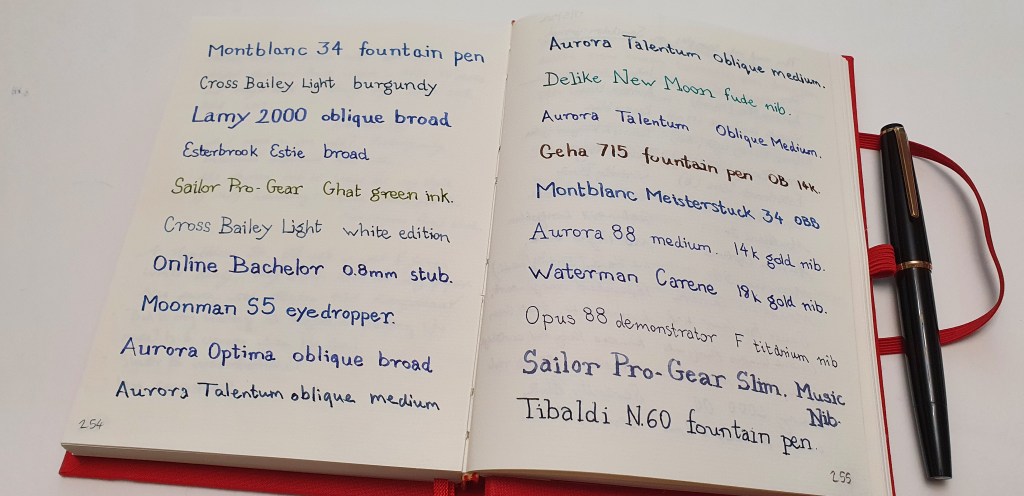
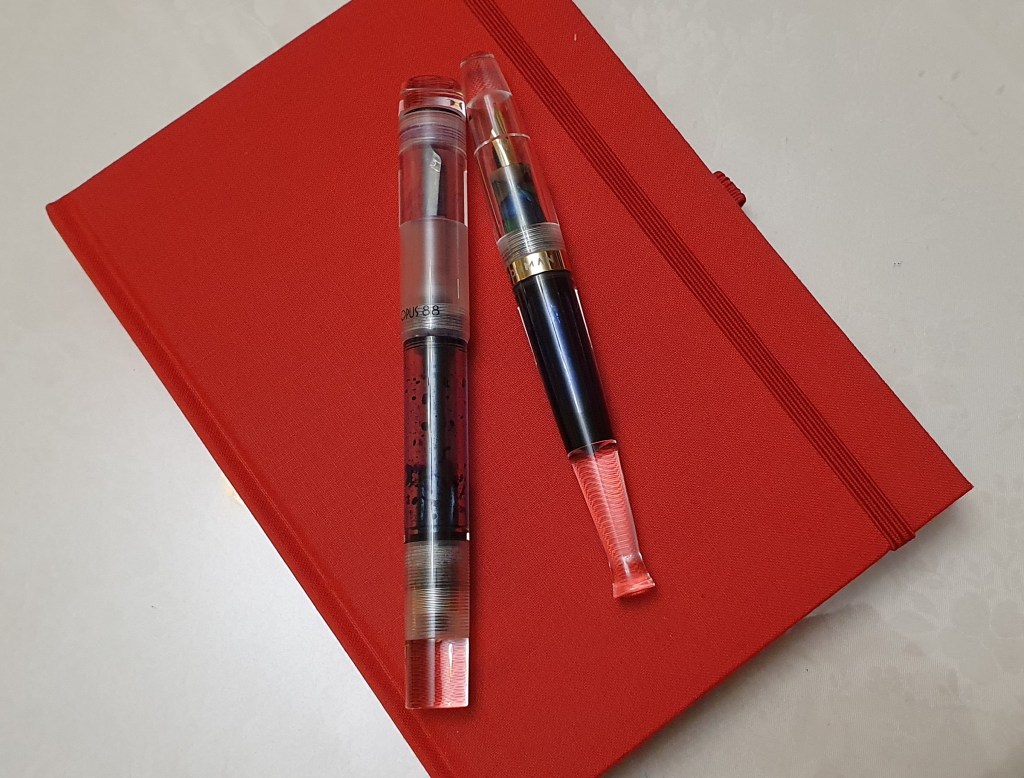
Naturally, I began by paginating the book, in pencil. I sampled the paper by trying one of my purchases from the same pen show: an Esterbook Estie Nouveau Bleu with a broad nib filled with Waterman Serenity Blue. I also tried an Opus 88 demonstrator pen, in which I had installed a new Jowo-fit Titanium nib in an ebonite feed and housing, from the London pen show last year. This was (and still is) filled with Graf von Faber-Castell Cobalt Blue ink. I would be keen to pick up another of these nibs, in a Bock fit housing next time to upgrade another steel nibbed pen.

Replacement Titanium fine nib with ebonite feed, installed in my Opus 88 demonstrator.

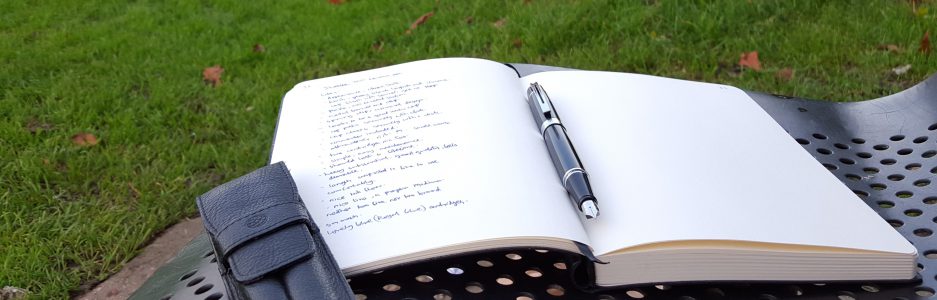
I was very pleased with the notebook. There was no bleed through from my fountain pens and also very little show through. I generally use a row guide sheet behind the paper, used from a pad of Basildon Bond writing paper. Flicking back through the pages, I see that I started with the paper-testing writing samples on the back pages and then just carried on with the pen and ink sampling, working from the back of the book all the way down to page 72 which is where I am now. The page numbers therefore tell you the number of pages remaining. This was not intentional, but illustrates that this is a notebook that I pick up often when just wanting to write a paragraph or two from whatever pen catches my eye in the pen cups. My tally of currently inked pens at home is at twenty (after flushing three this morning).

A few pen and ink samples in the Semikolon notebook.

I have also started filling the book from the front too, where I had the idea of inserting the date at the top and writing a page about the events of the day, using a different pen and ink each time. For example, on 2 June I wrote down some reflections on HM The Queen’s birthday parade – the Trooping of the Colour in Horseguards Parade, watched on TV. Little did I know that she was to pass away a little over three months later.

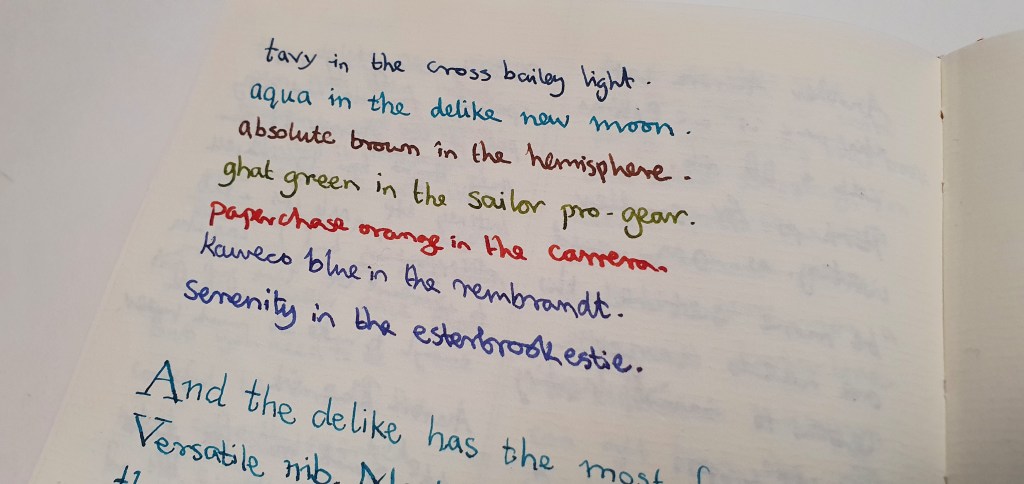
Admittedly I have filled far more pages with idle paragraphs of pen and ink sampling from the back, than I have with any meaningful writing from the front, but then it has been a source of recreation, reached for often when tired from the working day and in need of some pen-time escapism, writing simply for the joy of using a fountain pen on nice quality paper and seeing paragraphs of handwriting from different pens, nibs, and inks and in different writing styles.

A colourful paragraph from the currently inked pen cups.

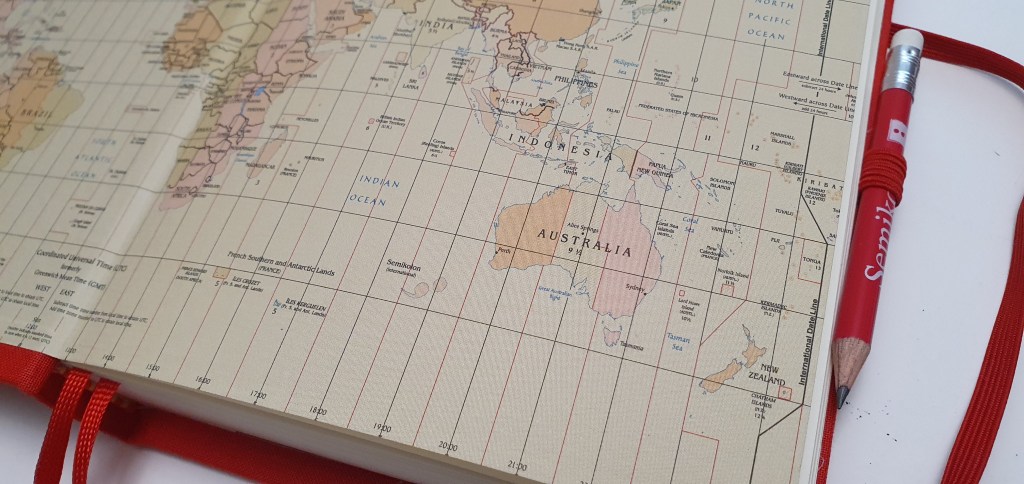
The “Grand Voyage” theme is supported by the expandable pocket inside the back cover for tickets, post-cards or travel souvenirs, and by the world map in the front cover. I had not studied the map closely and it was literally only today, that I noticed the Semikolon Islands lying to south west of Australia! This is a notebook that does not take itself too seriously.

With a casual glance, you could easily miss the Semikolon Islands, and their punctilious inhabitants.

I am looking forward to next weekend’s pen show and would be happy to pick up another of these notebooks if the opportunity arises and in a different colour next time. How would you use yours?

Observe how these demonstrator pens cleverly adopt the colour of their surroundings.

A look back at Basildon Bond writing paper.

As a child at a boarding school in Reading in the 1970’s, our Sunday morning routine included an hour of letter writing. Every boy was expected to write a letter home.

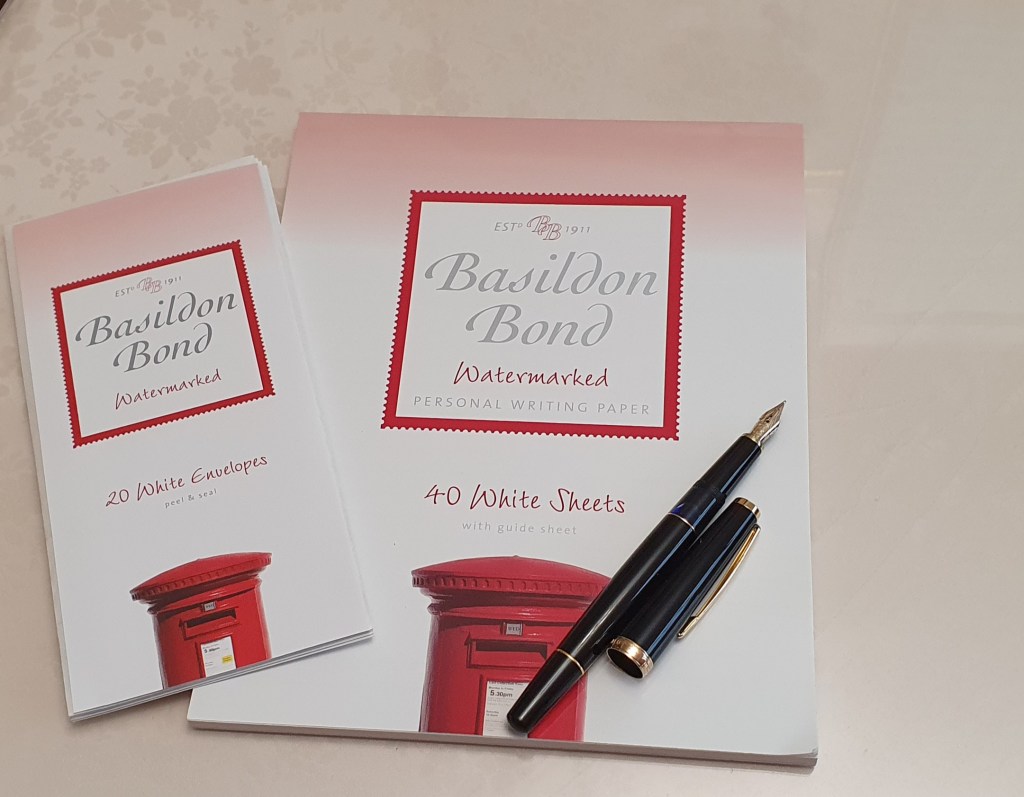
Throughout my seven years there, I used Basildon Bond writing paper and envelopes. I have done so ever since. That means I have been a customer for over 50 years.

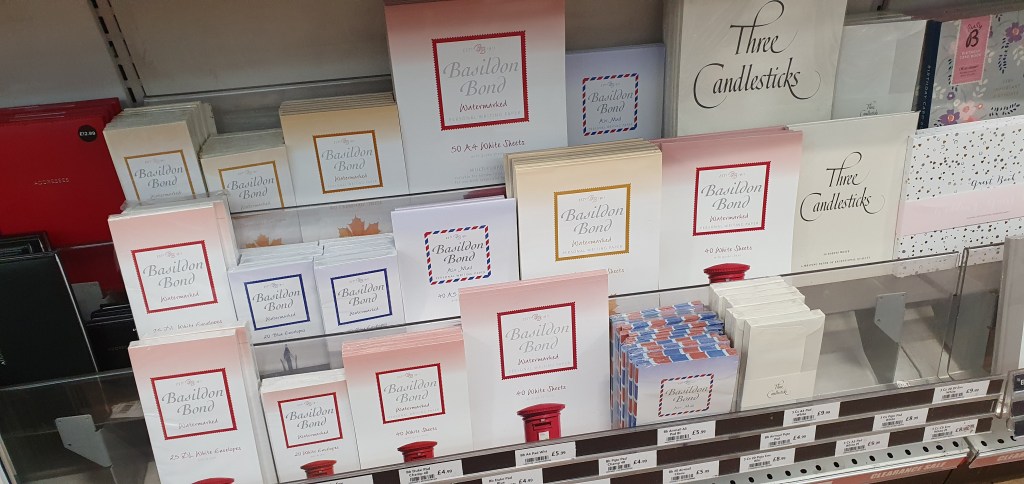
Today in the UK, Basildon Bond pads of letter writing paper and matching envelopes are still readily available, in stationers and book shops such as Rymans and WH Smiths. Basildon Bond is a now part of Hamelin Brands Limited, a French, family-owned business. However, many will remember Basildon Bond as a John Dickinson & Co Ltd product, along with Lion Brand exercise books.

Basildon Bond writing paper and envelopes at WH Smiths.

John Dickinson & Co Ltd.

I have just finished reading an excellent book called “The Endless Web” by Joan Evans, published by Jonathan Cape, which tells the story of John Dickinson & Co Ltd from 1804 – 1954. The book was first published in 1955. I think my new copy of the book is a facsimile of the first edition, as the blue dust jacket still bears the price in our old, pre-decimal currency, as 32s. 6d. net.

It is quite a heavy book, in both senses. First, as befits a book about a successful manufacturer of paper, it is beautifully bound and printed on Croxley Antique Wove paper, with text set in Monotype Caslon Old Face. Secondly, it is a detailed work packed with facts and figures, names and dates, and inside stories only available from family letters and diaries and the paper mills’ records. It provides a chronological account of the rise of this company and the characters who built and ran it. The inside front cover contains a vast family tree of the John Dickinson dynasty. The author Joan Evans was John Dickinson’s great-niece and wrote the book to celebrate the company’s 150th anniversary.

I bought my copy of the book at the Frogmore Paper Mill gift shop, while away for a weekend last month, staying at Shendish Manor Hotel, in Apsley, near Hemel Hempstead, Hertfordshire. Apsley had been the site of one of John Dickinson’s vast paper mills. It turns out that the nearby Shendish Manor had belonged to John Dickinson’s business partner Charles Longman, who in 1853 bought the Shendish estate on the western side of the valley in Apsley and built the house there in 1854-56.

Later, in 1936, the house and grounds were bought by the firm and opened in 1937 as the Dickinson Guild of Sport. This was a club-house for the workers and their families, with facilities for football, cricket, tennis, hockey, bowls and swimming with parks and gardens. In 1948 a new Sports Pavilion was opened.

Shendish Manor Hotel

Basildon Bond

I was keen to find some background in the book, to my favourite letter writing paper. There are a handful of references, towards the end of the period covered. In brief, in 1911 a rival company, Millingtons (founded in 1824) introduced under the name “Basildon Bond”, the first “bond” notepaper to be marketed at 1 shilling a unit. It comprised about 30% fine quality rag content. According to Joan Evans’ book, the notepaper was remarkably good value and was an immediate success. Another of Millingtons’ achievements was that in 1905 they acquired the UK rights in “window envelopes” and were their only manufacturers. I had no idea that these had been around for so long.

In 1918, Dickinsons agreed to buy Millington’s shares, in return for debenture stock and shares in Dickinsons allotted to the Millington shareholders and directors. Joan Evans writes that the Millington business “remained practically autonomous” and that Basildon Bond steadily increased in popularity, stimulated by an advertising campaign authorized in 1924. Later, she writes, in 1932 Basildon Bond was the best-selling notepaper in the UK. There was another advertising campaign in 1934.

Today, the website of hamelinbrands.com states simply that Basildon Bond is the leading brand in personal stationery in the UK, was established in 1911 by Millington & Sons, then acquired by John Dickinson’s in 1918.

The paper, 90gsm and featuring the Basildon Bond (BB) watermark is said to be of the highest quality, and the web site states that “our smooth paper allows the pen to glide effortlessly across the page, creating a more enjoyable writing experience.”

For my part, as a consumer, I can vouch that the paper is indeed smooth and pleasant to write on with fountain pens without feathering or bleedthrough. I learned that the size I now buy, is called “post quarto”, (abbreviated to “P4TO”) and is an old imperial size, (178mm, x 229mm). The pad contains 40 sheets of paper, plus a guide sheet. I tend to save the guide sheets, after the pad is finished. The current ones give an 8mm row height. I sometimes use 9mm. They used to include a sheet of blotting paper too but this seems to have been dropped. I also buy the packs of 20 matching envelopes.

The familiar branding of Basildon Bond, established in 1911.

I have had very little trouble using Basildon Bond paper, with a variety of pens and inks, over the years. I recall that my Waterman Carene skipped badly on the paper, as its very smooth nib could not get a grip on the equally smooth paper. But generally, the paper has served me well.

It is good to know that Basildon Bond notepaper is still available and still thriving, over 110 years since it began, albeit under different ownership now.

Visitors to Apsley can visit Frogmore Paper Mill, which claims to be “Birthplace of paper’s industrial revolution” and tours are available on certain days. Or, for some rest and relaxation and to feel closer to the John Dickinson history, you may book a stay at the Shendish Manor Hotel.