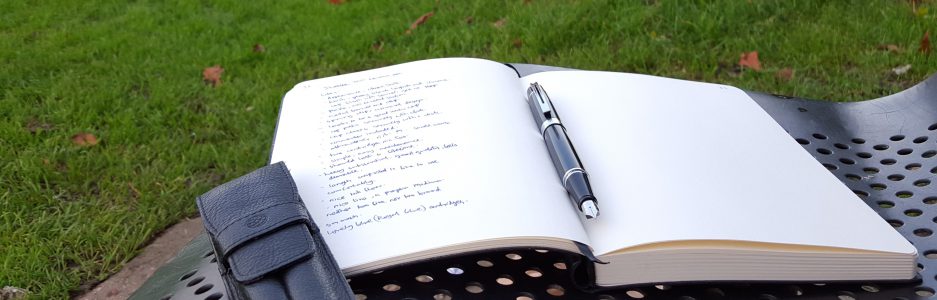
This post is unashamedly about an entry-level school pen for those who enjoy trying fountain pens from the lower end of the spectrum.
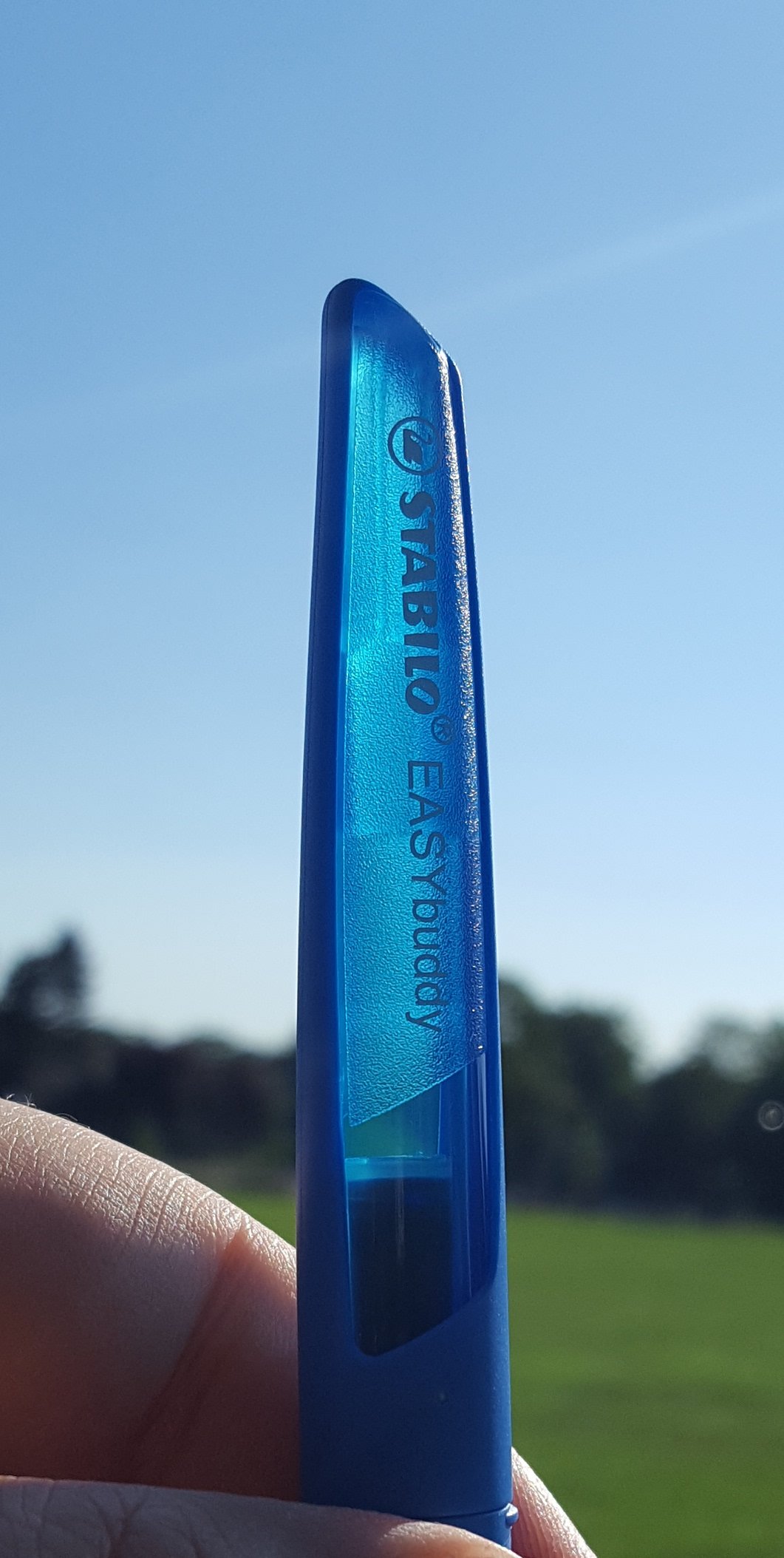
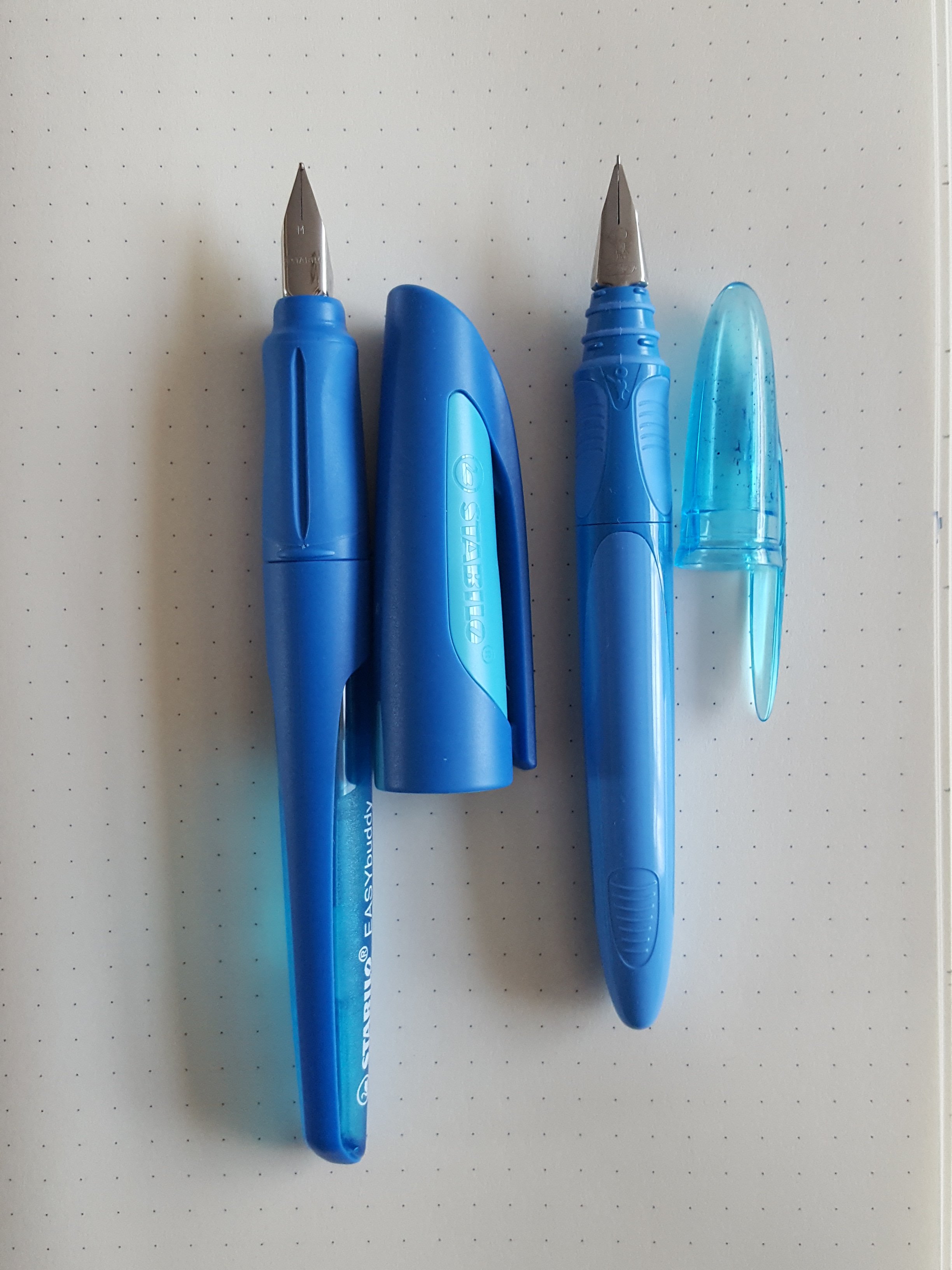
It is getting on for six years since I wrote a post on the Stabilo EASYbuddy, a chunky, robust, plastic fountain pen designed for children. The EASYbirdy looks very similar but has some important differences.
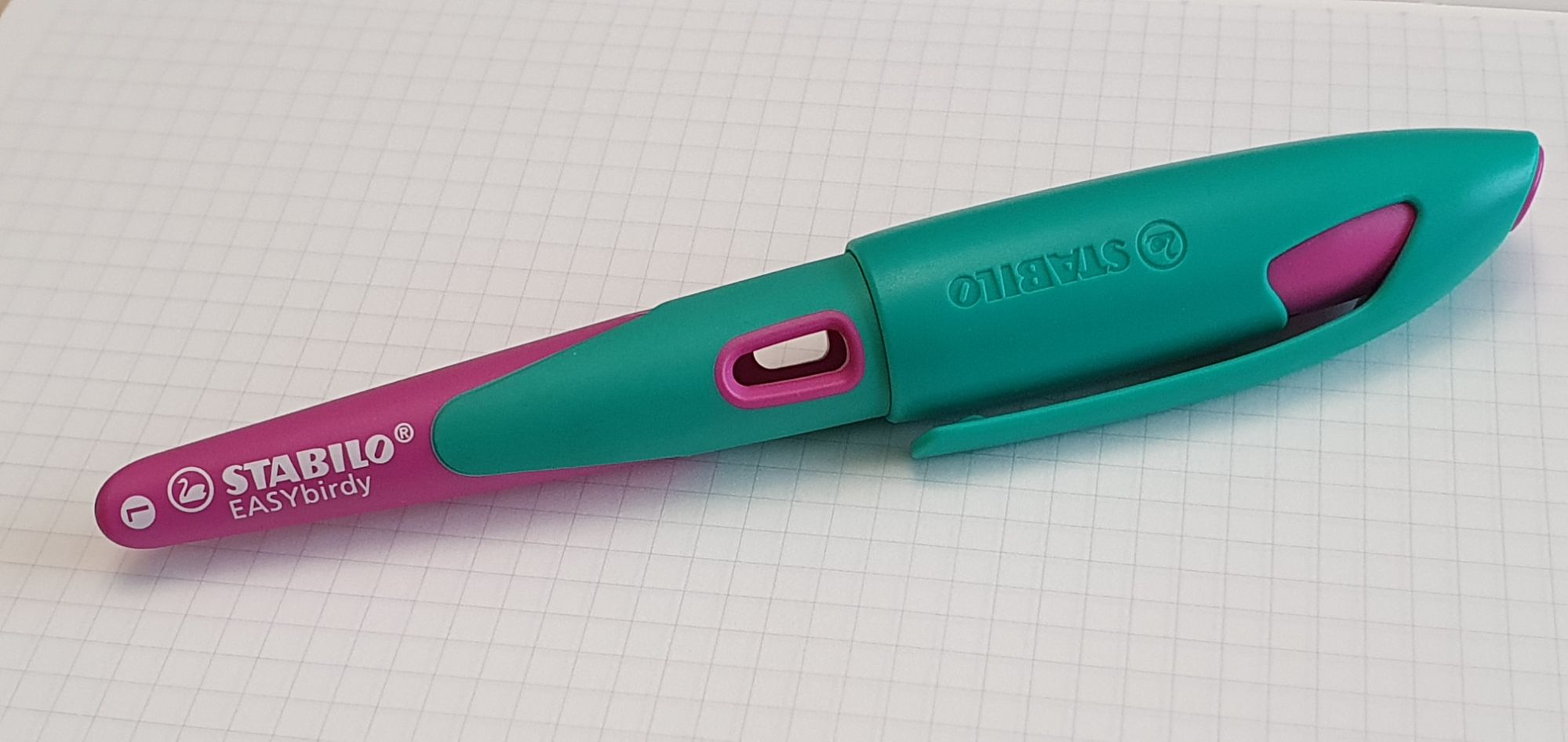
Examined side by side, the EASY birdy is about 10mm shorter when capped, yet the same length as the EASYbuddy when uncapped. The EASYbirdy has a shorter barrel, a longer section, a smaller and “unglazed” pair of ink windows, unequal length facets for the thumb and forefinger, and a semi-hooded nib.
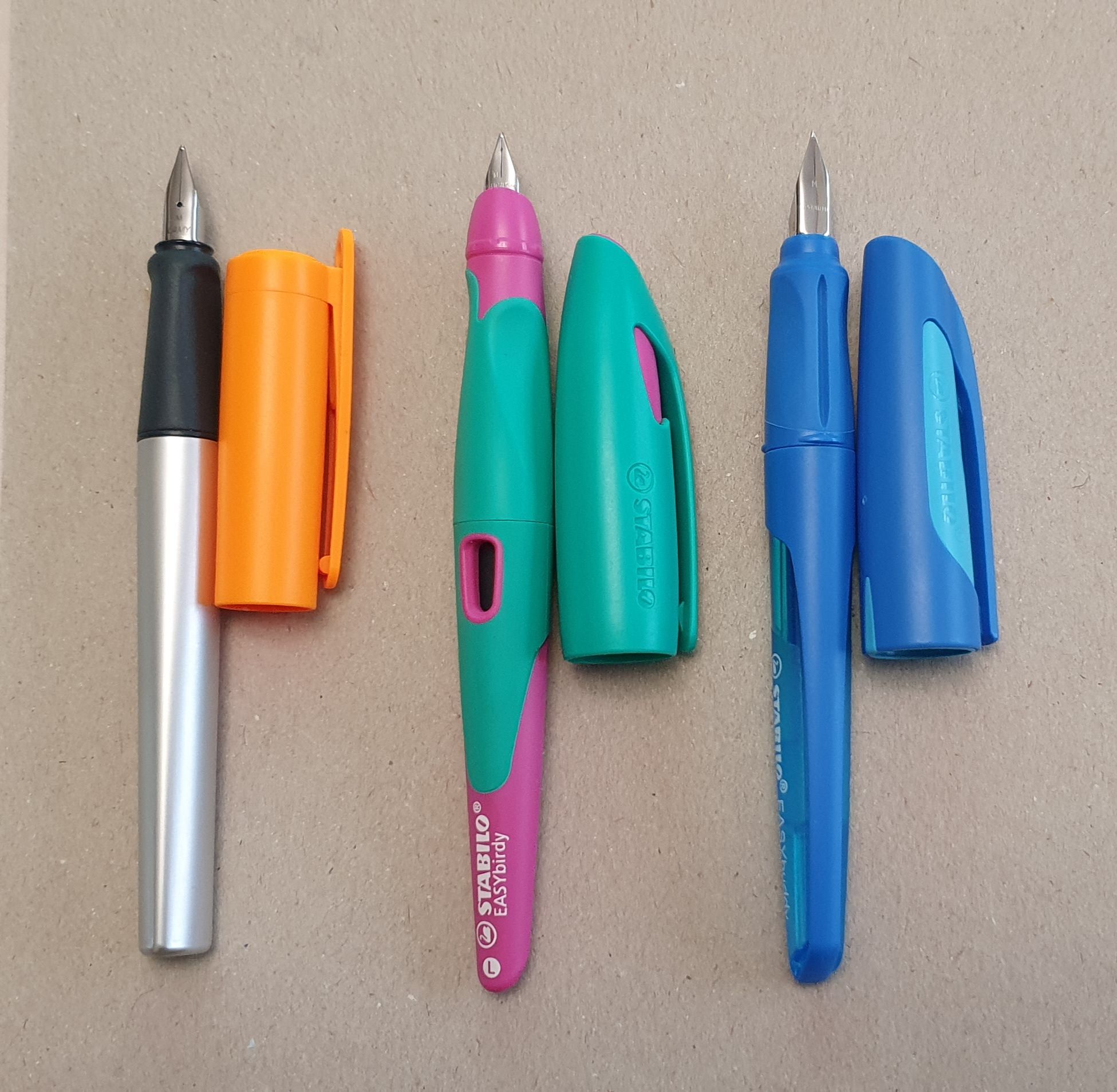
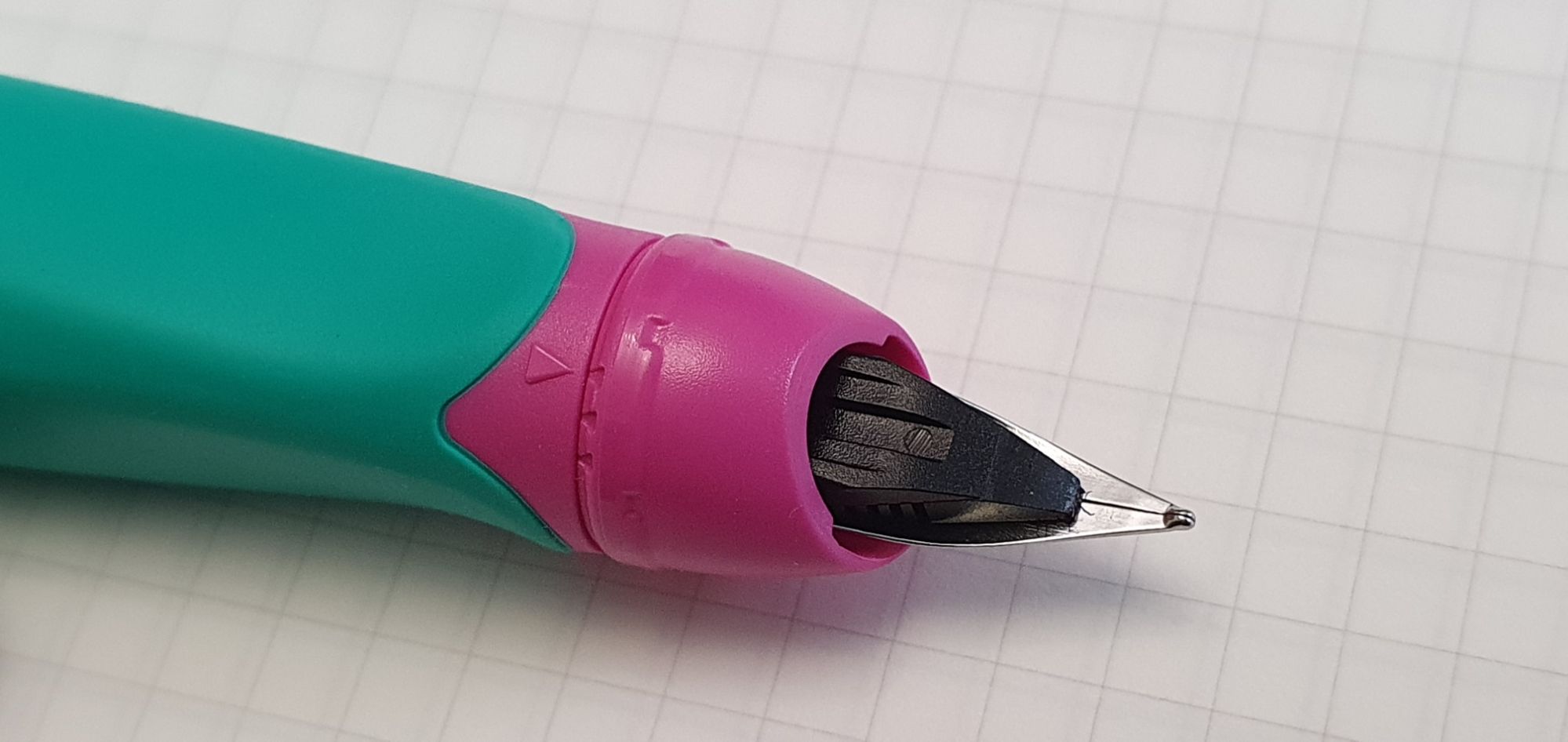
But the most significant distinctions are that (a) the EASYbirdy is available in Left or Right handed versions and (b) has an adjustable nib-housing, allowing the nib to be rotated either left or right, or centred, in relation to the grip facets.
As a lefty-overwriter myself, I was intrigued by this design. I was keen to see how it worked and whether it was of any benefit to me. I spotted a half-hidden display of these pens in a local stationery/computer repair shop, on a shelf behind numerous boxes of roller-ball and gel pens.
The EASYbirdy sample tray contained six pens: three for left-handers and three for right-handers. The pens for lefties were all in pink and green with “L” at the tip of the barrel. The pens for righthanders were green and blue with “R” on the barrel.
It took me a while to spot how the left and right hand versions differed, before eventually noticing that the facet for your forefinger came down a little further than the facet for your thumb. This hardly seems necessary but I suppose it helps towards a grip whereby the forefinger is flatter against the section instead of being bent at a right-angle.
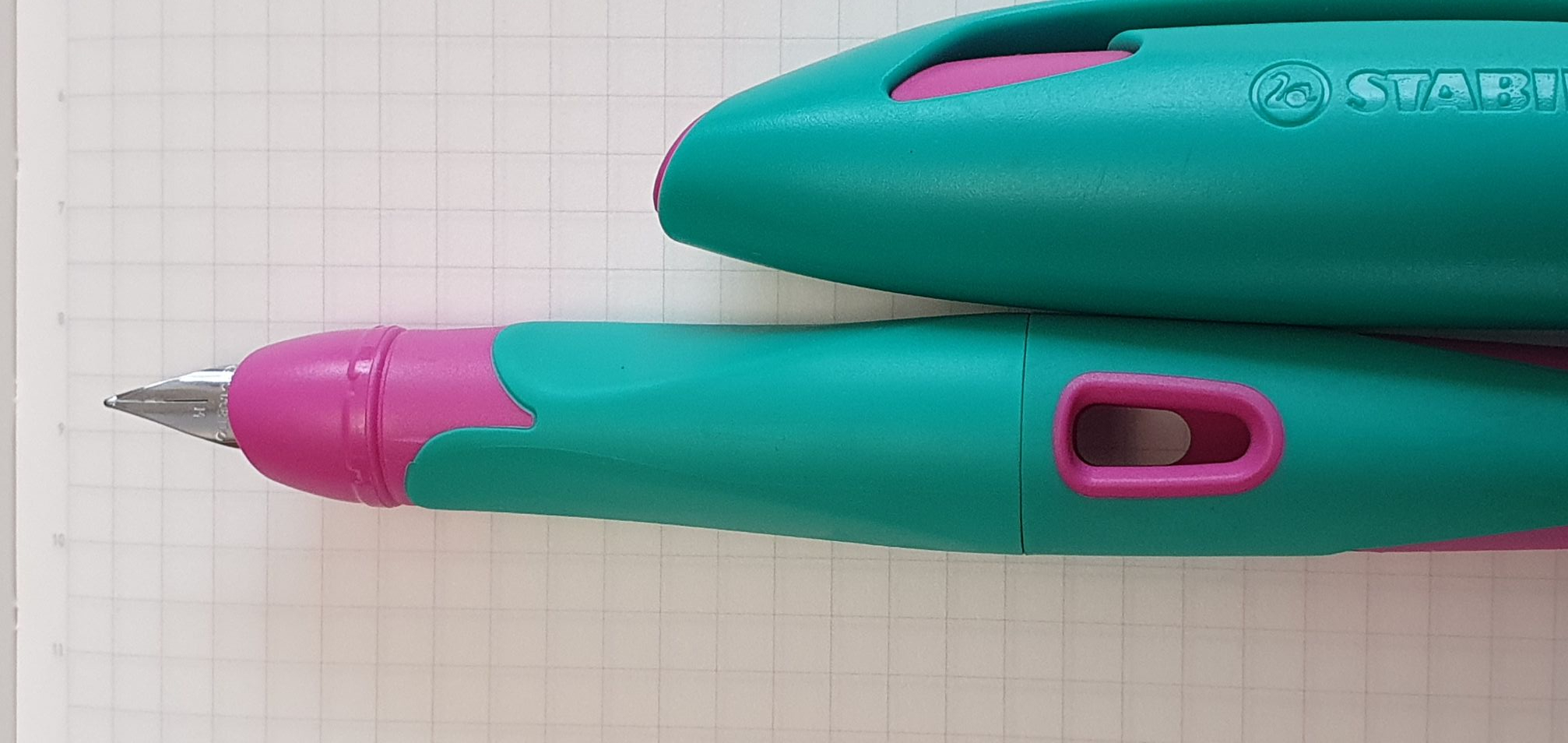
Having grasped this, I was still confused about the off-setting of the nib and why there were so many display samples in the tray. The answer is that a customer, whether left or right handed, can try writing with pens with nibs pre-set to left, right or centre, (labelled as -1, 0, and +1) to see which is most comfortable.
The retailer can then dial in this adjustment to a new pen, using his special plastic Stabilo tool (NOT sold with the pen). If not right, the pen can always be brought back for the nib rotation to be altered.
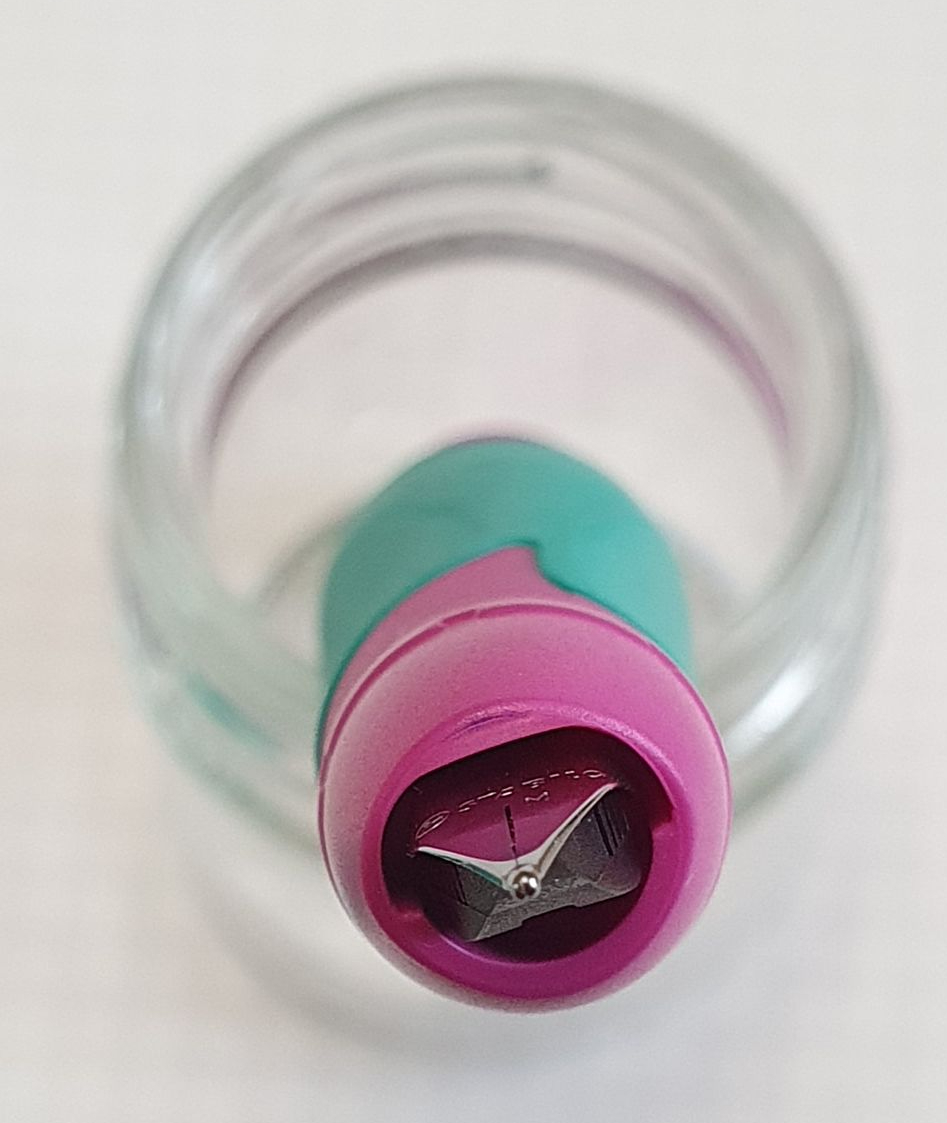
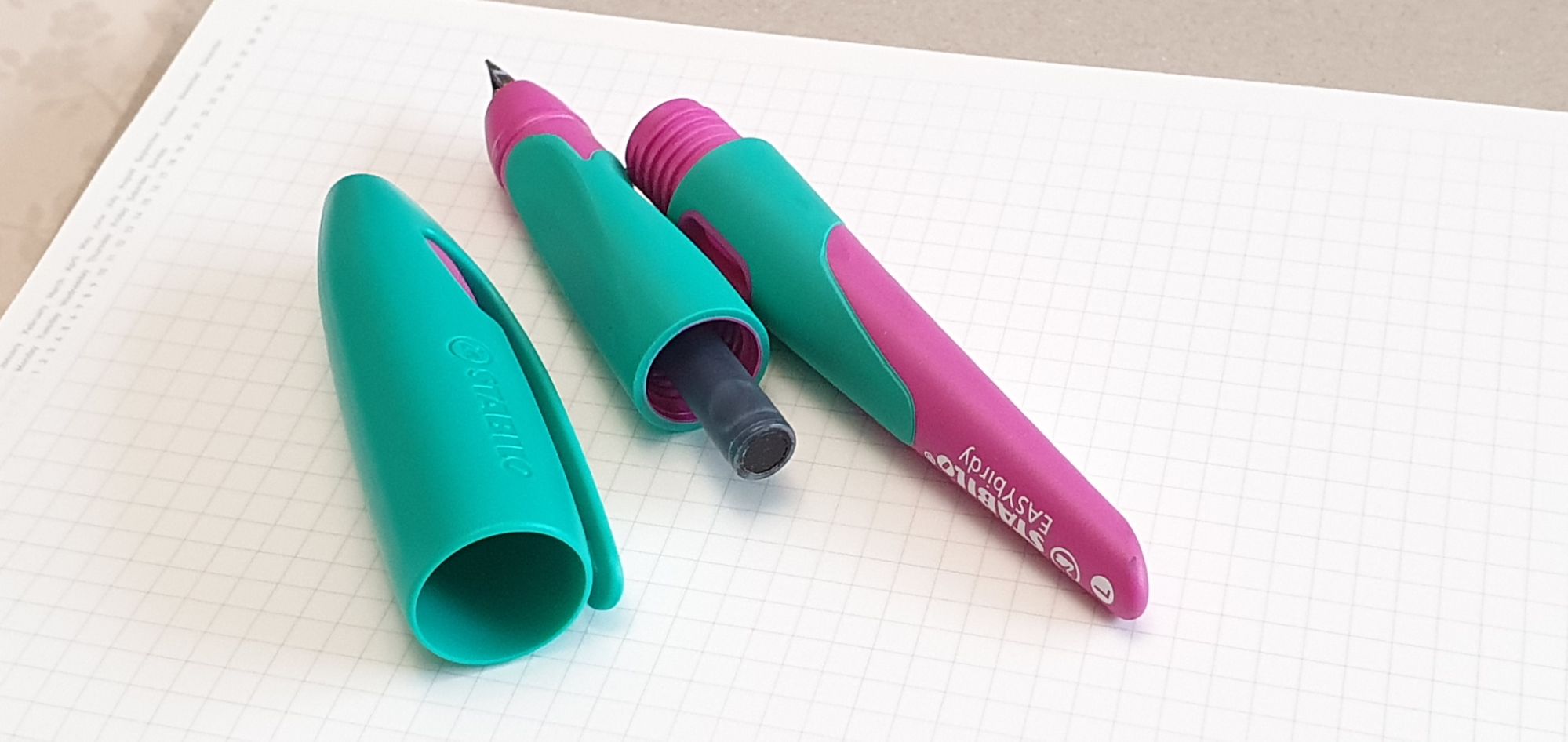
The only other fountain pen that I can think of with a faceted grip and the ability to rotate the nib, was the Parker 75 in which you simply gripped the nib and feed, and twisted them one way or the other as desired. The EASYbirdy system is different: a tool is needed. Also, you do not apply the tool to the front end of the pen, as you might expect. Rather, you remove the barrel and use the tool to loosen the housing from inside the section. Once loose, the angle can be altered and the tool is used to tighten it up and lock it in place.
Likes.
The steel nib writes smoothly and with good flow. The pen takes standard international cartridges. If using the short ones, there is room for a spare in the barrel, making for a great outdoor and EDC pen. The length of the pen uncapped, at around 133mm together with the generous girth (even allowing for facets) makes for a comfortable pen. The left and right options, together with the ability to rotate the nib, means that there should be a version and setting for everyone.
Dislikes.
The need for a tool, which is not included with the purchase, is a little disappointing. I can understand that, once set up in the shop, most people may not want or need the tool again. Personally I would like to have my own or it would be even better if the tool could somehow be built into the cap or barrel. The push-cap is secure but does not click. It does not post either, although the pen is long enough without posting. The colour scheme of pink and green is not to my taste, although distinctive. I accept that I am not the target age group.
Conclusion.
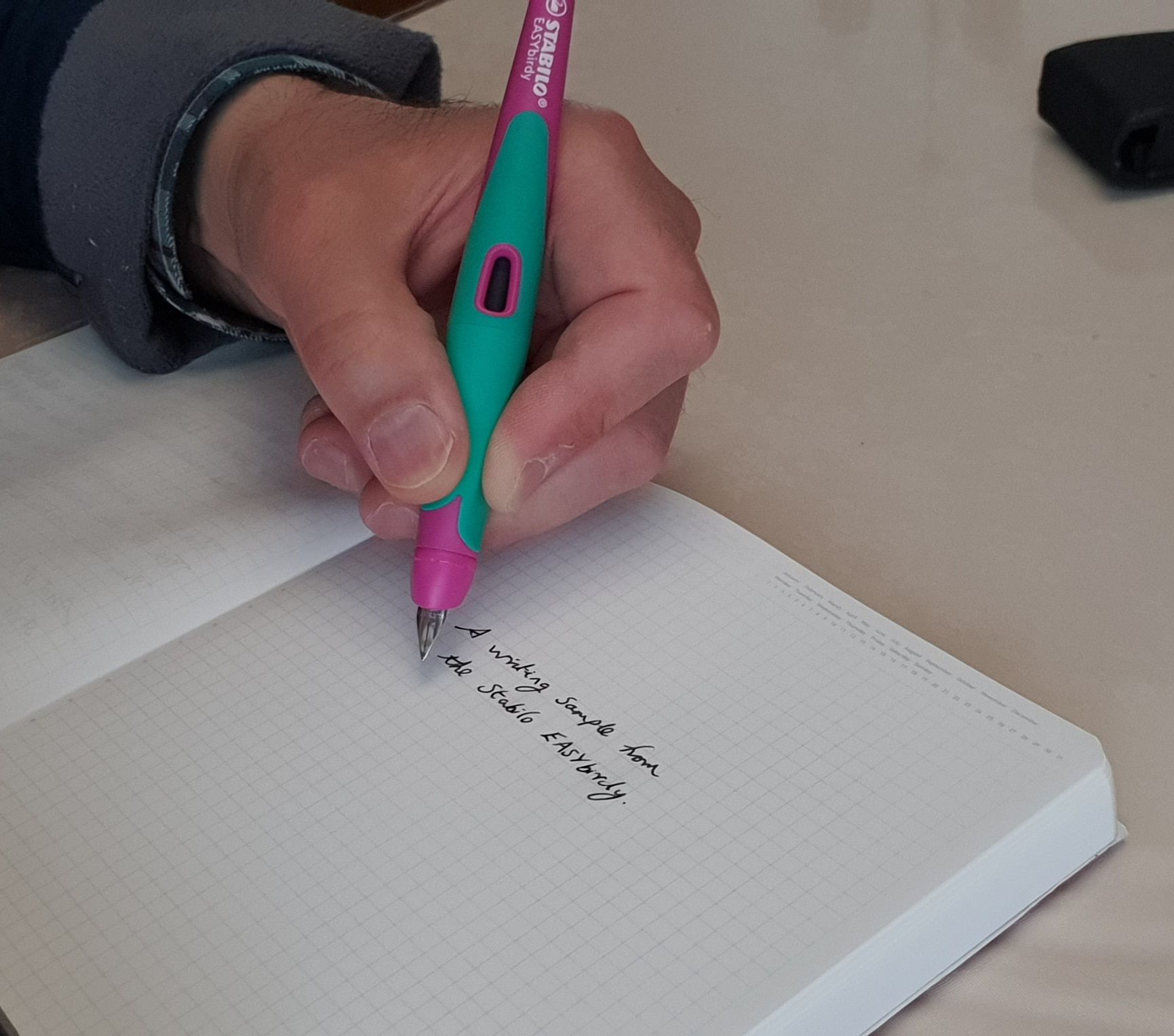
I am not generally a fan of faceted grip sections on fountain pens, which dictate how you must hold the pen to the paper and punish you with uncomfortable ridges if you do not comply. But here we have a rubbery ergonomic grip with the option to rotate the nib. The pen fits the user; the user does not have to fit the pen. I do find that I can hold the pen at the facets whilst still having my nib rotated inwards. For lefties especially, this could make writing a little more comfortable, whatever your age.


 Fountain pen blog