
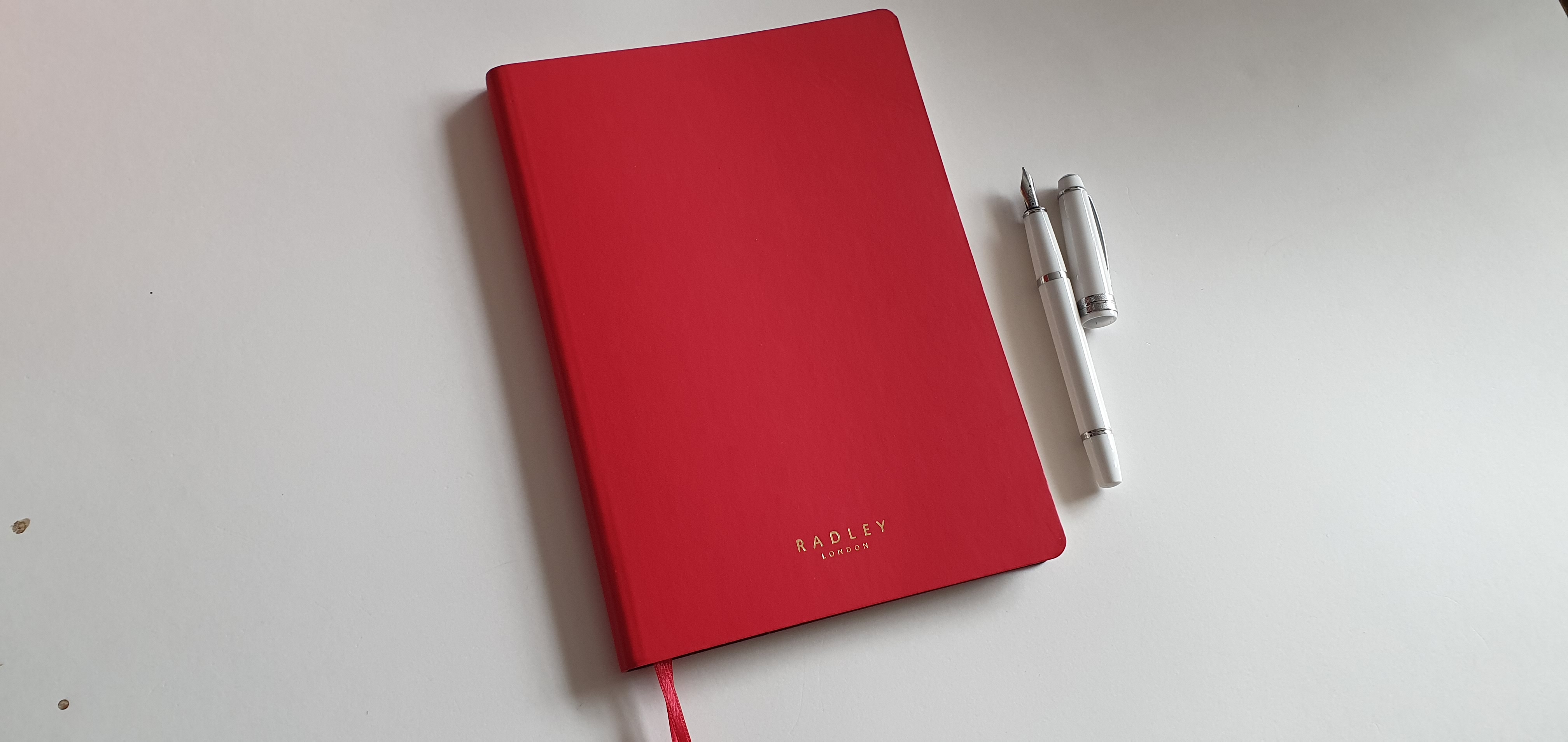
Whatever else I have in my pen cup, I like to keep one pen inked with a waterproof ink. For a few years, it was Sailor Kiwa-guro; then I tried Montblanc Permanent Blue. For the past three months, I have been using Rohrer & Klingner’s Salix in a Cross Bailey Light.
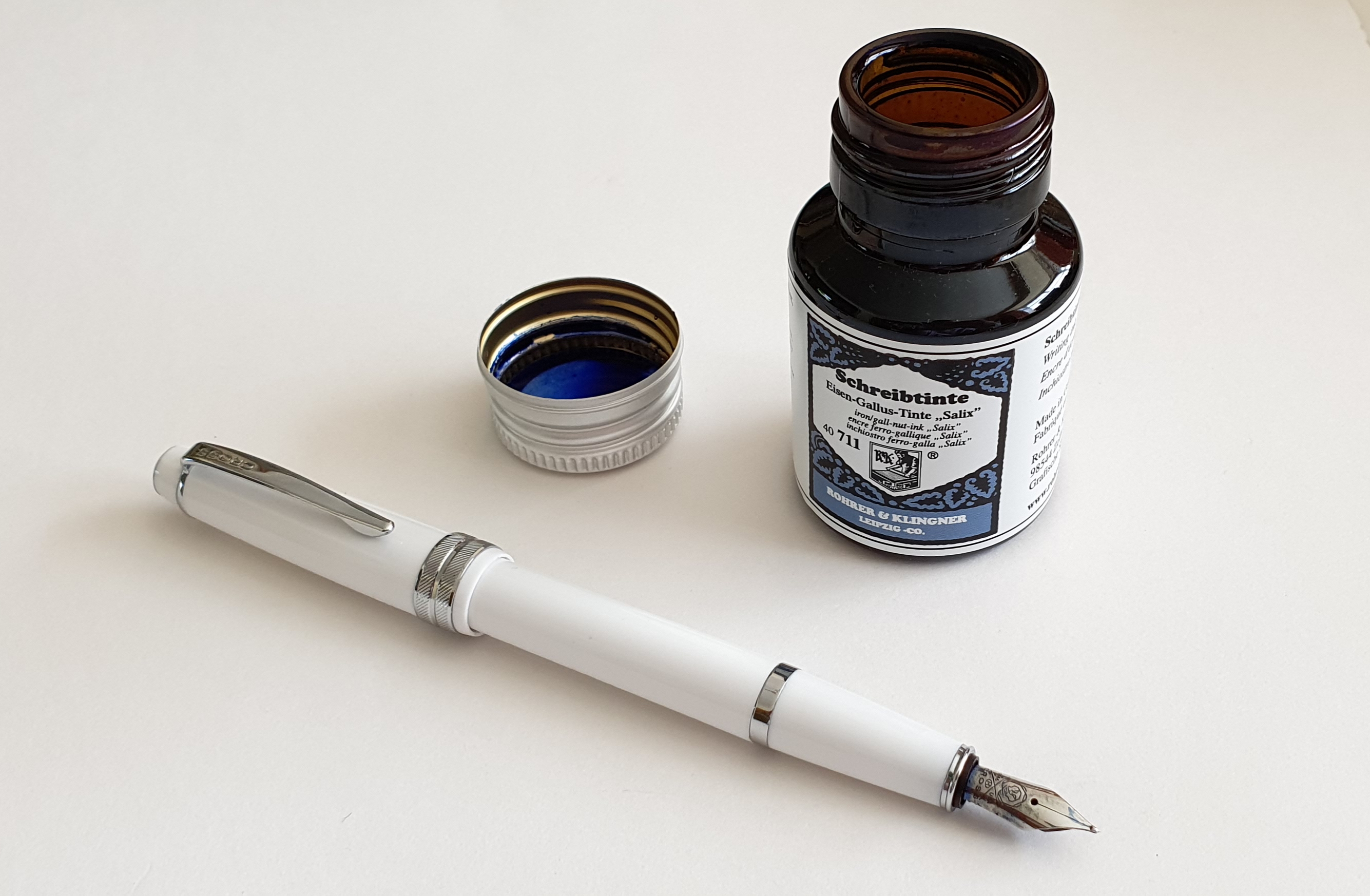
This is an ink from Germany, sold in glass 50ml bottles without a cardboard box. The label on the bottle states “For fountain pens, steel nibbed pens, dip pens and individual writing utensils for calligraphy.”
Some benefits of this ink are as follows:-
1. It is an iron gall ink.
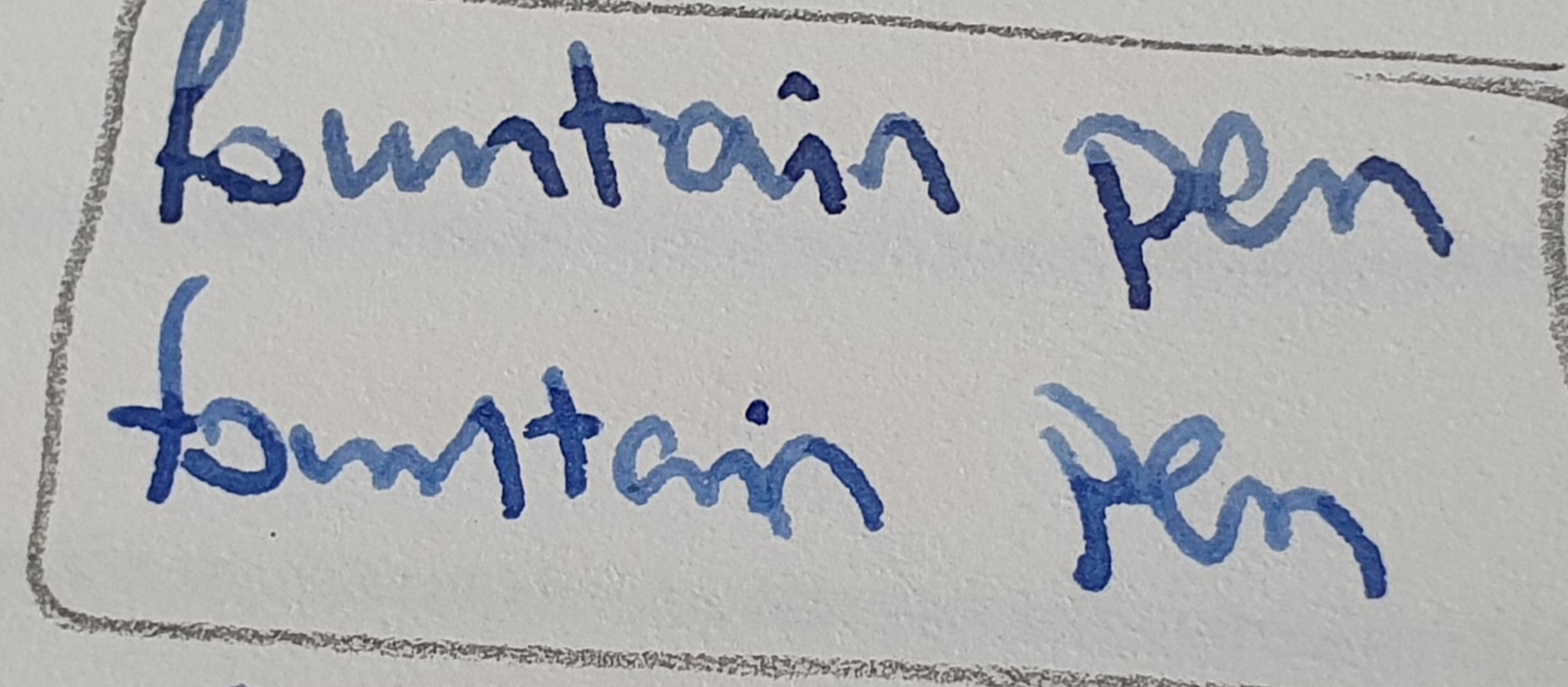
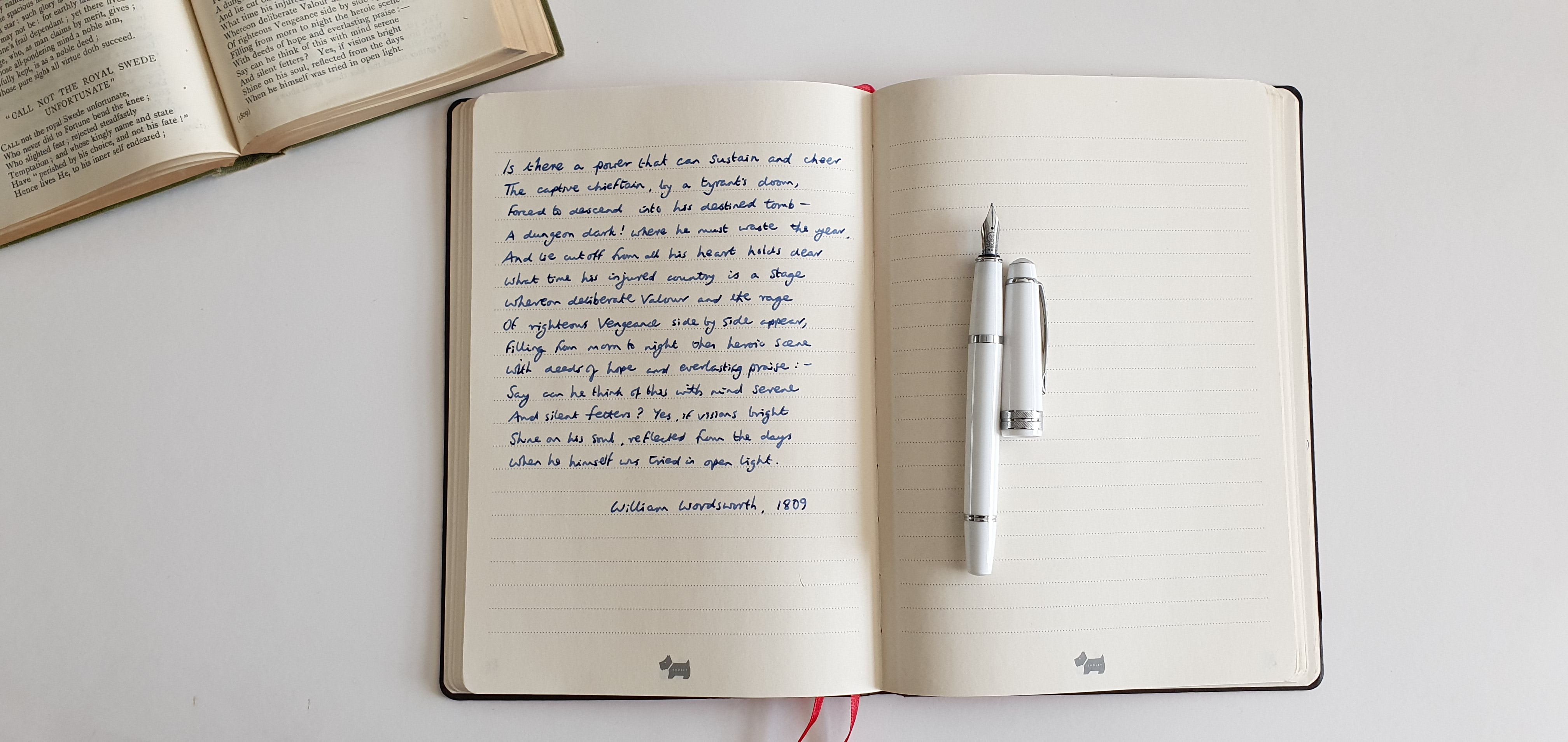
As such it has greater permanence than regular inks and should be suitable for documents which need to be kept for many years. It goes on like a pale royal blue when wet but darkens as it dries and oxidises over time, to a darker blue black. This change can be seen in both the light and dark tones:
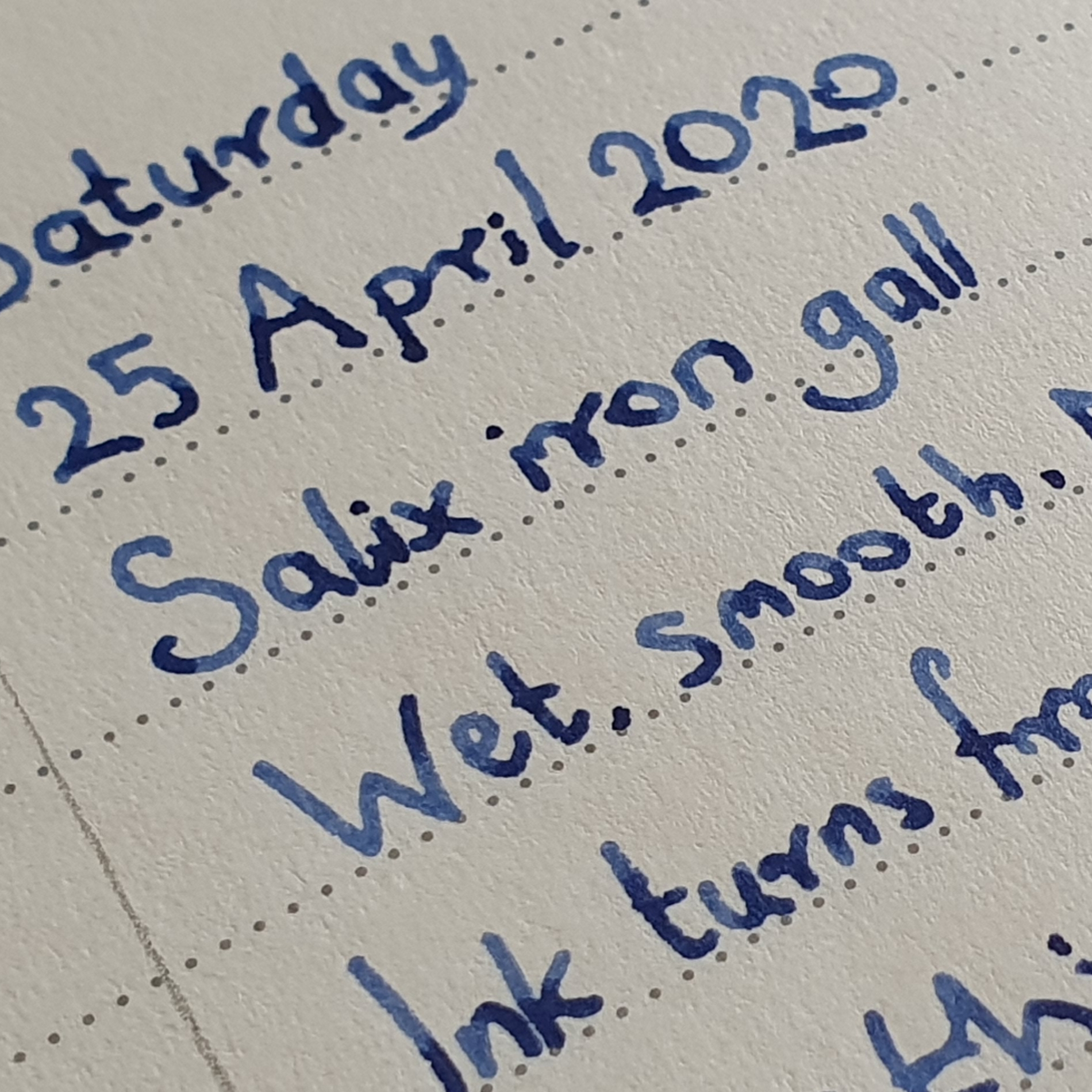
2. It shades well.
Salix has an attractive, pronounced shading in blue black tones, which has a pleasing, vintage style.
3. It is waterproof.
It is useful to have a waterproof ink when addressing envelopes but also to protect against spillages and smudges.
4. Less bleed through.
It can often be used on types of paper that would otherwise be subject to bleed through and feathering with normal inks, such as photocopying paper. Thus some notebooks that might have been put aside for being not fountain pen friendly, can be used for double-sided writing after all.
5. You can highlight over it!
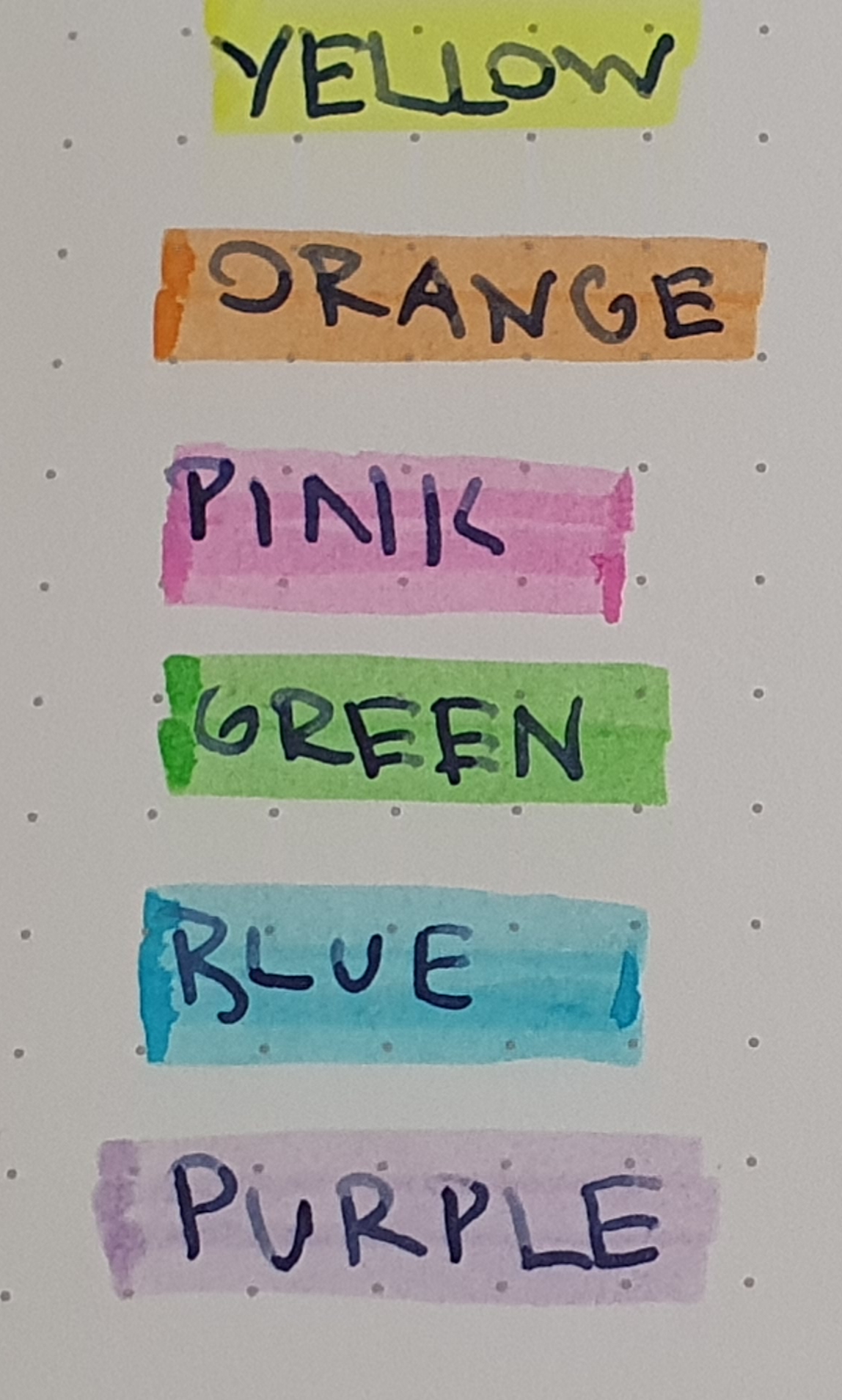
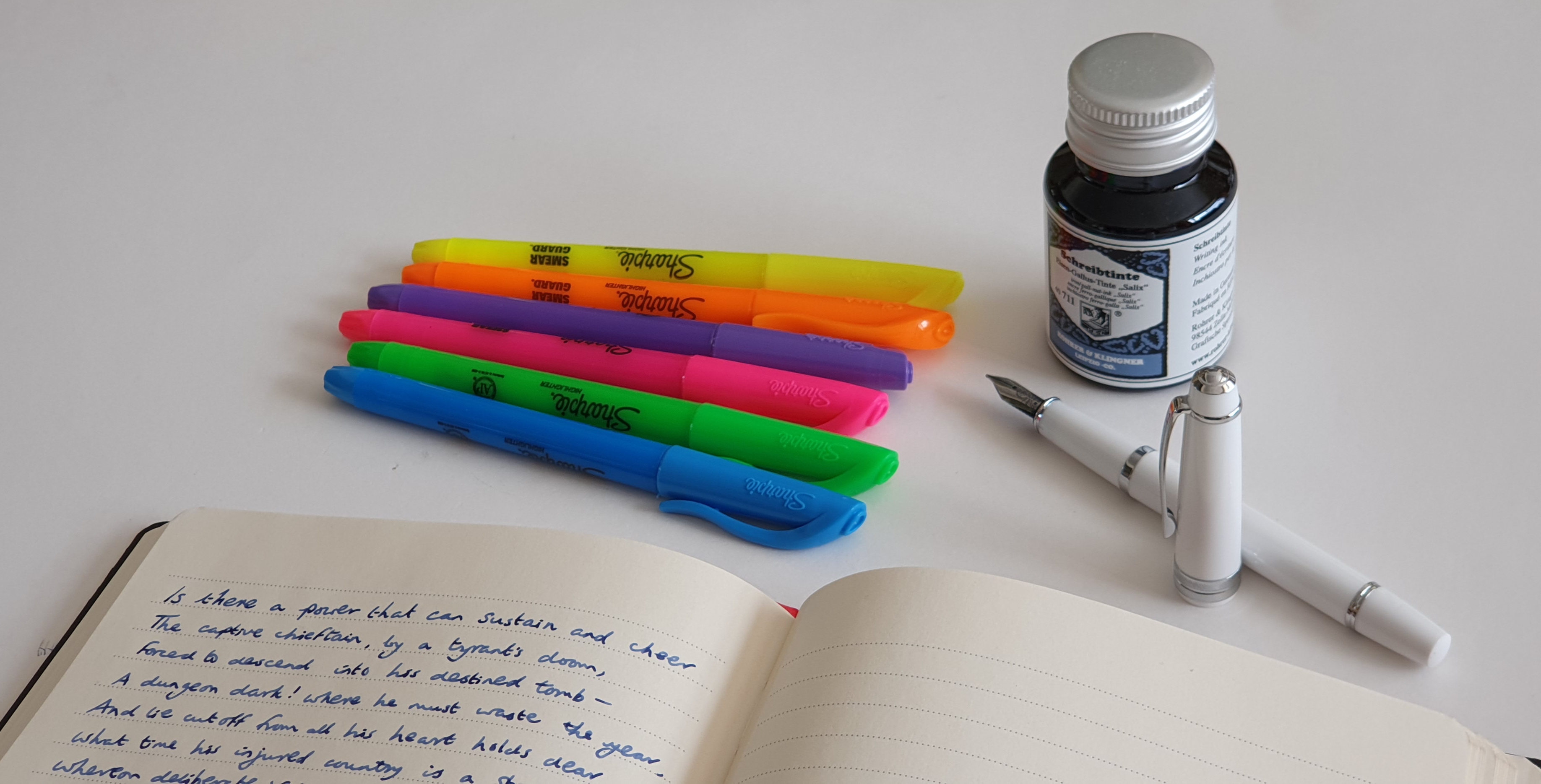
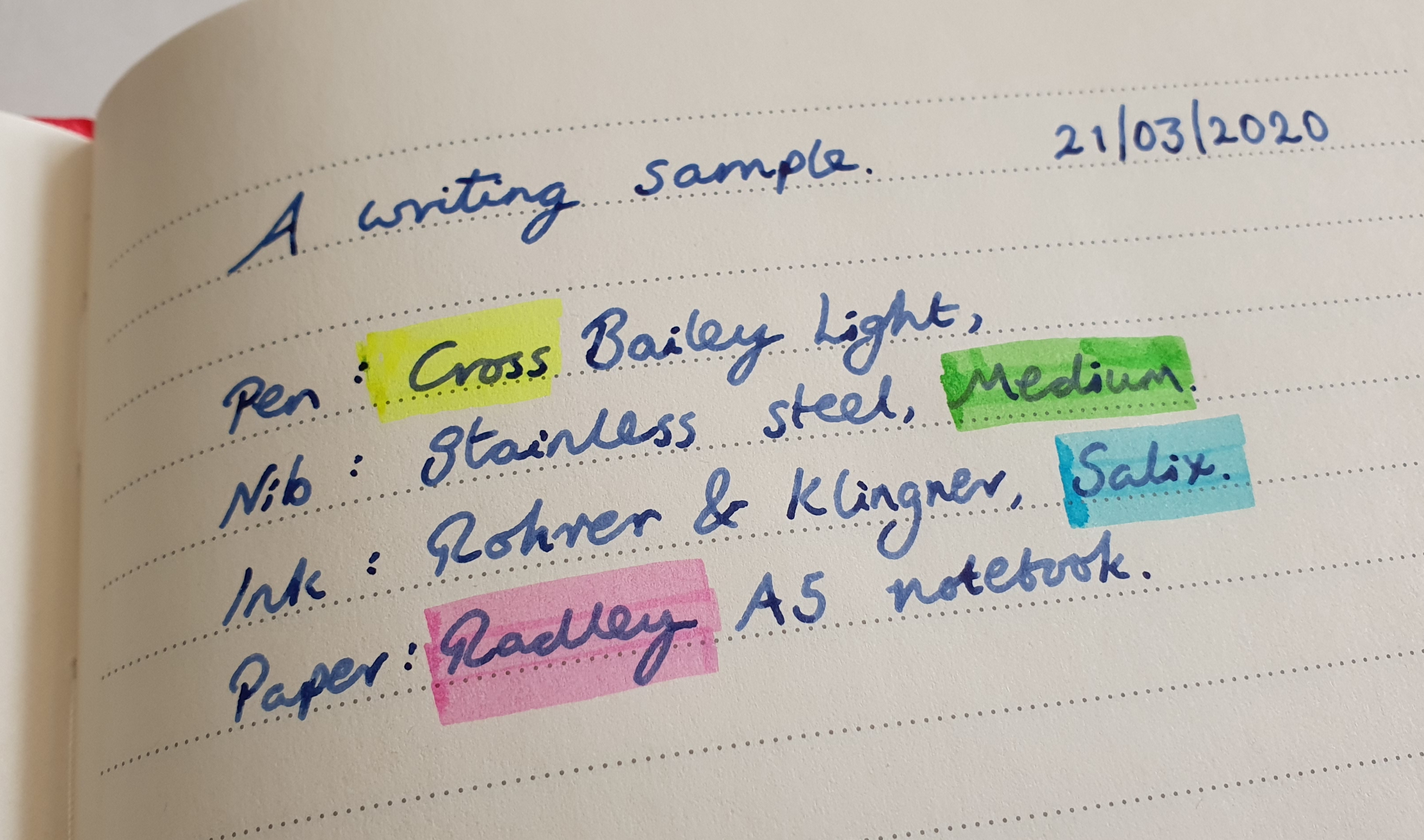
Being waterproof once dry, it does not smudge if you go over it with a highlighter pen. Ink is not transferred to the tip of the highlighter. I was excited to discover this. Being able to highlight sections of your own handwritten notes opens up new possibilities, for example for use in a work diary.
6. It is good value.
The ink is not expensive. I bought mine at Choosing Keeping, a stationery shop in London. According to their web site, their current price is £8.00 for a 50ml bottle.
The downside is that iron gall inks are regarded as being higher-maintenance than normal inks. They are more acidic and may cause staining and corrosion of steel nibs. Rohrer & Kingner recommend that you clean your pen once a week. This advice is also given by Goulet Pens on their web site. Jet Pens recommend cleaning every four weeks or so.
For this reason I have been using it in an inexpensive pen so far but I am encouraged that I have not yet noticed any ill effects. Cleaning of the pen has been quick and easy. Also, the ink flows back and forth freely in the converter, leaving a nice even film on the sides and does not get stuck at the far end. Because of concerns over corrosion and staining of the nib, the natural response is to use it in an inexpensive pen with a steel nib. However, a gold nib will actually be more suitable as gold does not corrode. I plan to try it in my Sailor Pro-Gear slim, for its next fill.
My only prior experience of iron gall ink has been with the registrar’s ink from Ecclesiastical Stationery Supplies prescribed for use on marriage registers. I learned that once opened, their ink needed to be used up within around 18 months or so. Certainly, if kept for years after opening, the ink loses its colour and turns to a pale grey. Once that happens it is time to throw it out and order a fresh bottle. I do not know whether Salix also does this but will try to make regular use of my bottle.
Rohrer & Klingner also have one other iron gall ink in their range, called Scabiosa, which is a dusty purple. I believe that it will have similar properties to the blue black Salix. I am keen to try it when I can get my hands on a bottle.

 Fountain pen blog