Early thoughts on the Duke 551 Confucius bamboo fude nib pen.

As early thoughts go, today’s are even earlier than usual as this lovely pen has been with me for barely 24 hours. However, my first impressions are very favourable: the quality and finish and the sheer fun that you can have with it, exceeded my expectations.

Duke 551 Confucius, bamboo fude nib pen.

This model has been around for several years now and I am informed by artist Terry Christopherson (Instagram @theTravelSketcher) and of peninkandpaint.com that it is big in the urban sketching community. I was already familiar with another model that I reviewed previously called the Duke 552, also featuring a natural bamboo barrel. I had imagined that the 551 would be similar, but with a fude nib and a more decorated cap. It turns out that they are quite a bit different.

Although the 551 is similar in length and has a similar look of bamboo barrel, black cap with silvertone furniture, it is girthier, heavier, has a much bigger nib and a section which is longer and made of metal. The differences are apparent when the two models are seen side by side.
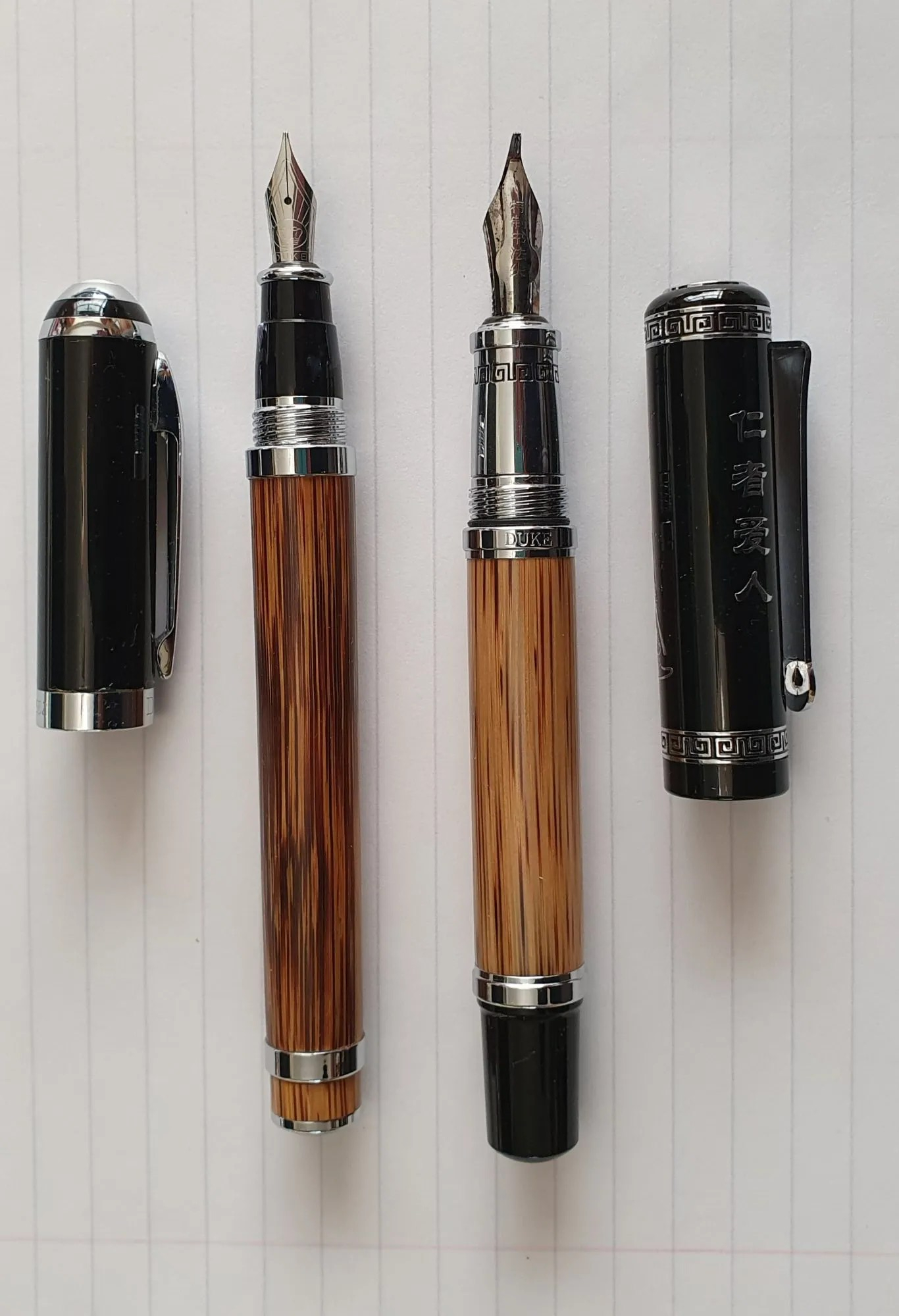
Duke 551 fude (right) with Duke 552 (left)

However, the main difference and reason to buy the 551, is for its amazing, steel fude nib. The nib looks quite alarming at first to anyone not expecting it. The tip is angled upwards, at about 45 degrees and presents a flat surface approximately 4mm long, to the paper.
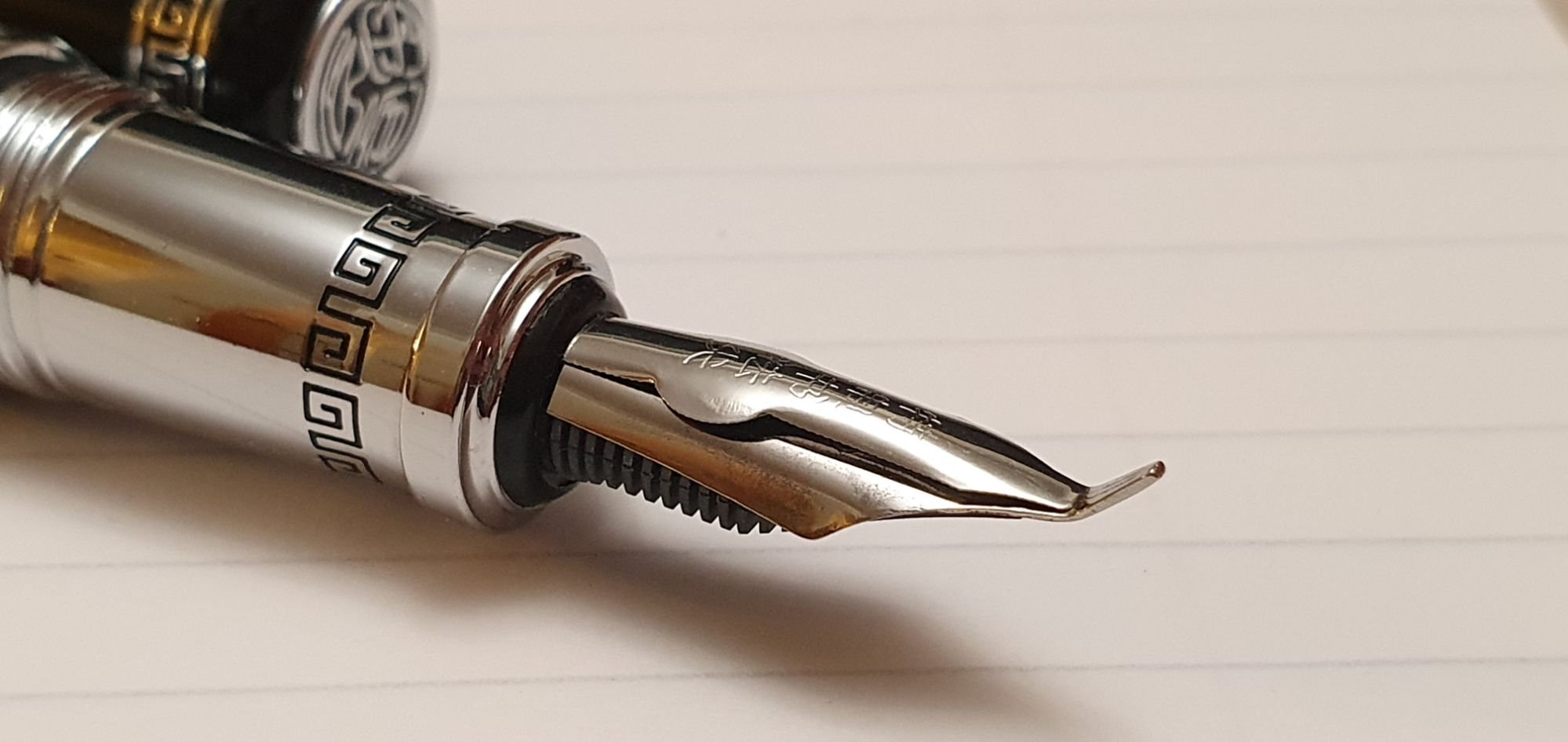
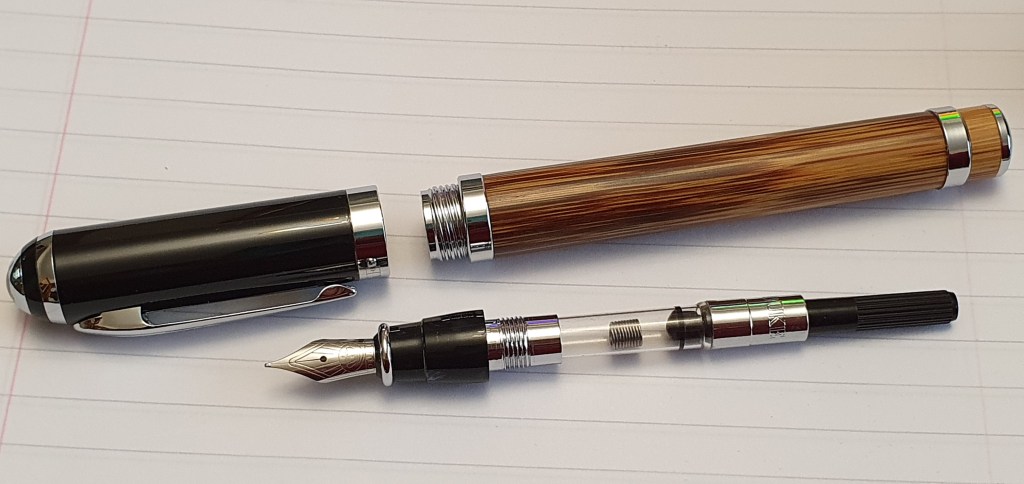
The three tine, steel fude nib with fitted ink reservoir for when dipping.

What I had not fully appreciated before the pen arrived, were two other special features of this fude nib, namely that it has two slits for improved ink delivery and an ink reservoir on top of the nib, so that when used as a dip pen, it needs dipping far less frequently. There are some Chinese characters on the nib, which my wife translated as “special calligraphy nib.”
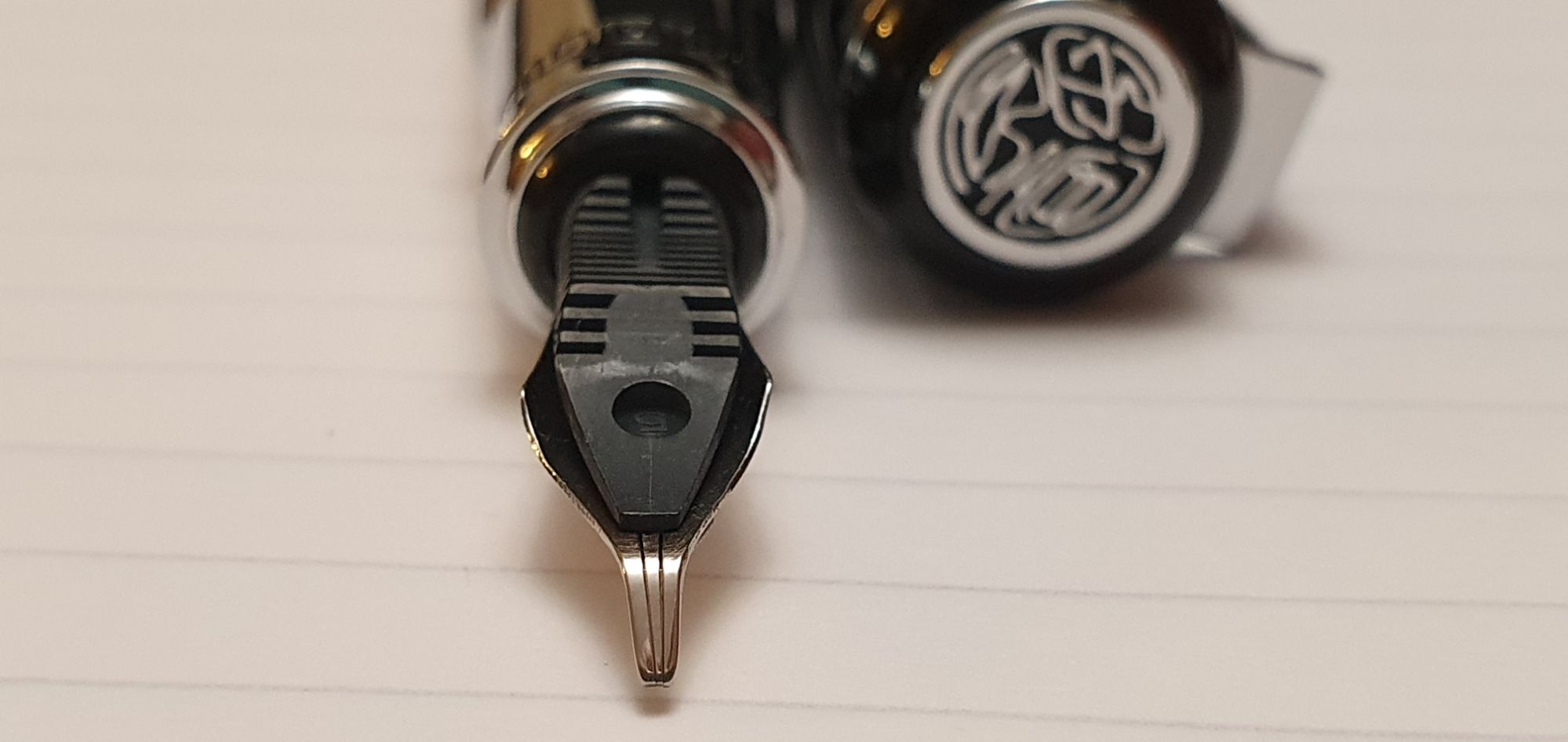
Smooth nib with three tines, like some music nibs.

As well as its dip pen suitability, it is also a cartridge-converter filler and is supplied with a push-in converter. This contains a small coil of metal to serve as an ink agitator, which can be useful. However I saw in a YouTube video review by @chrisrap52 that this little spring does make it harder to flush the converter thoroughly when changing ink colours and he prefers to remove the spring, by unscrewing the metal collar of the converter.

A Duke branded converter is included.

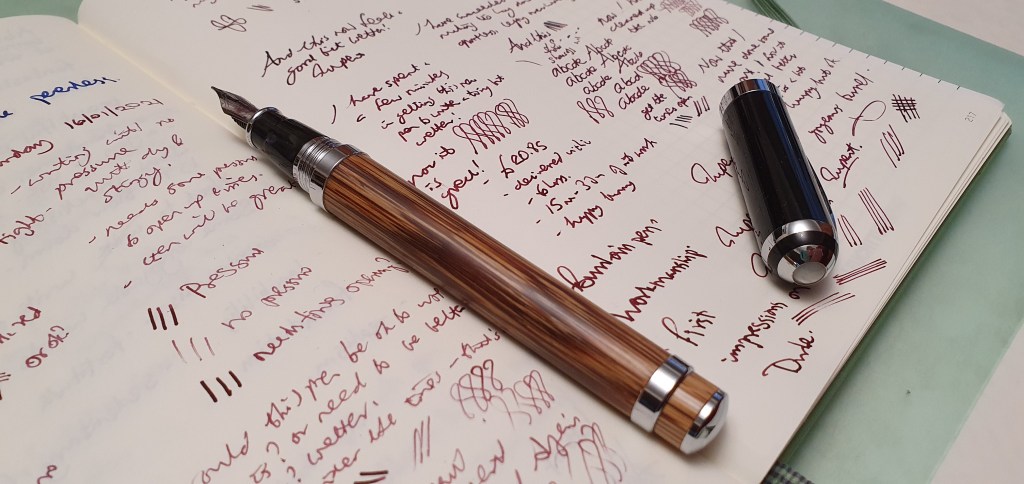
The cap features an engraving of Chinese philosopher Confucius on one side and more Chinese text on the other side. My wife translated this, approximately, as “A kind person loves everybody” which is part of a Chinese saying which continues “and everbody loves him.” There is a nicely decorated finial, a very stiff and strong pocket clip culminating in the Duke crown emblem and decorated metal rings at both top and bottom of the cap.

The cap unscrews in just over one full turn. When screwed on, it meets a rubber O ring, giving a reassuring tightness to the cap. It also makes for a good seal and, from other reviews I have read on Amazon’s site, the nib does not suffer from drying out although I have not had my pen long enough to put this to the test.
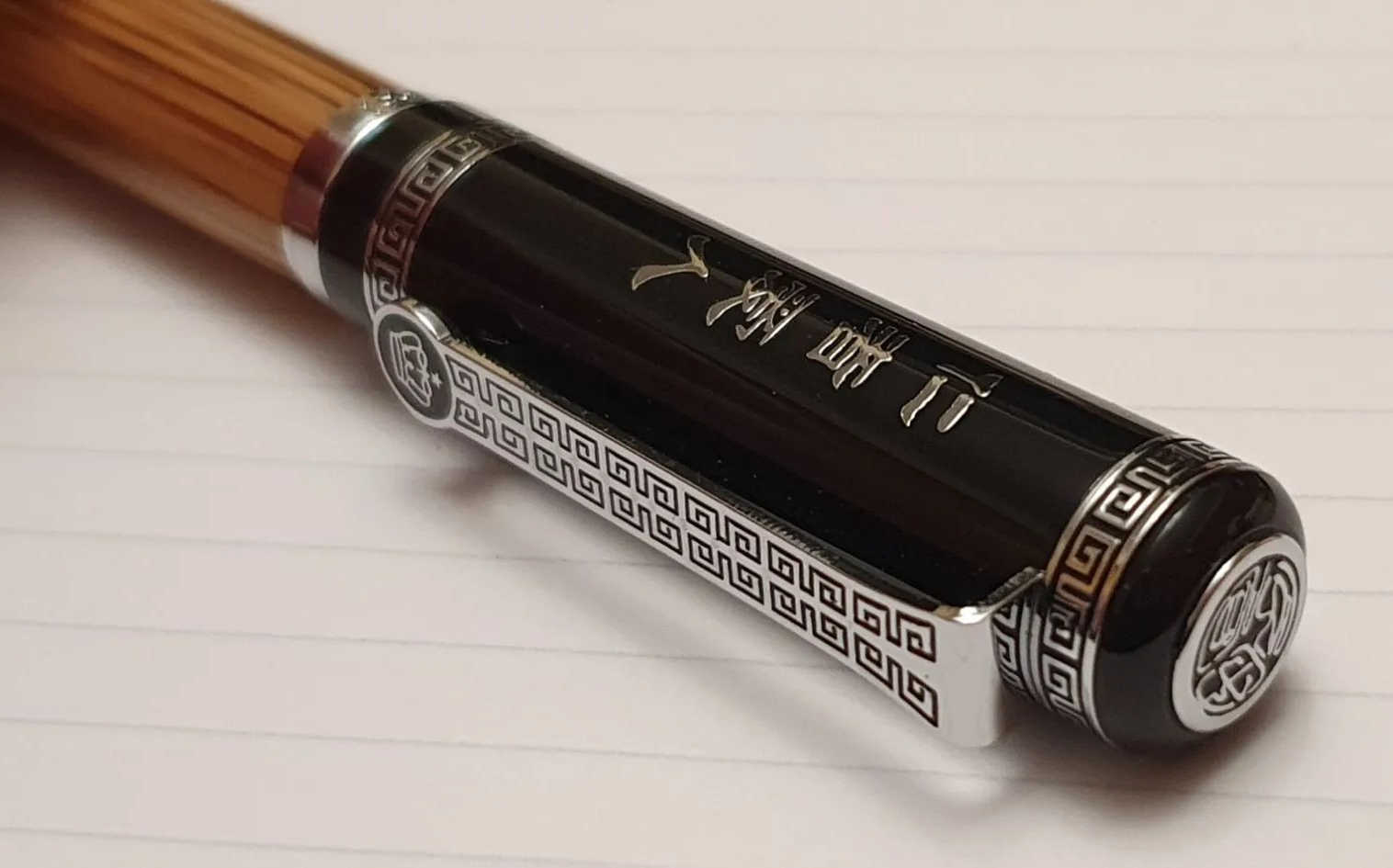
Lots going on with the cap too.

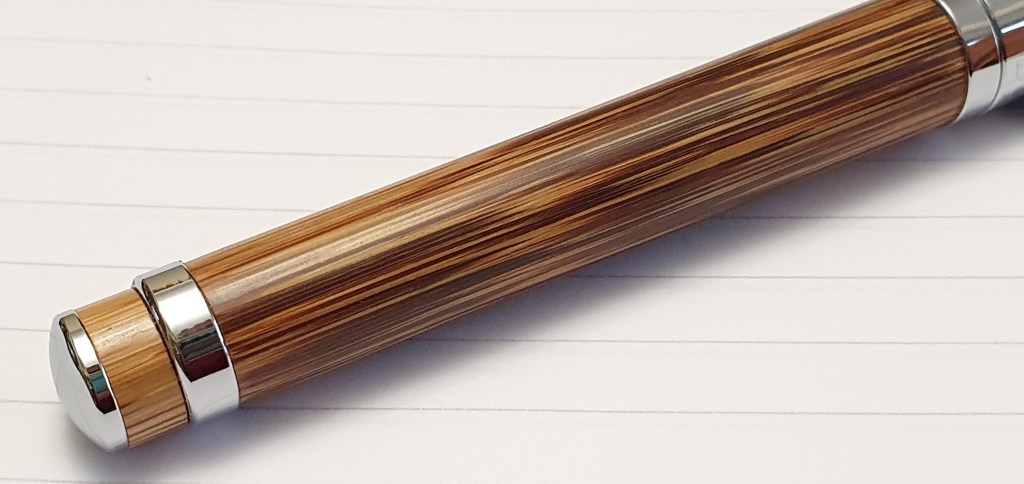
I very much like the natural bamboo of the barrel. I think the inside of the barrel may be lined in metal here, and it feels heavier than the Golden Stripe Bamboo barrel of my Duke 552 (23.5 grams as opposed to 16.5 grams).

I do not generally get on with shiny chrome sections, as they can be slippery to hold. However this one is of a substantial size. It tapers slightly towards the nib where there is some engraved ornamentation and then a step up at the end, to stop your fingers sliding onto the nib.

From my initial trials with this pen, I have not found the section to cause difficulty in holding the pen securely. I can keep my thumb on the bamboo barrel for better control. However, I am finding that where the pen rests on my middle finger, the step does feel a little uncomfortable and so it is necessary to draw your finger back from it slightly.

So how does it write? I was very excited to find out. After flushing the nib and feed and the converter, I filled the pen with Noodlers Black, a water resistant ink that would allow me to paint over the ink, once dry, with watercolours without the ink smudging.

The nib is very smooth, as I have read in other reviews. The twin slits, like a music nib, provide a more generous flow of ink to the nib, which is needed when making side strokes with that long fude nib. It covers large areas at a single stroke. It would be great as a redacting pen, for hiding confidential text from a document before disclosure.

The fude nib is designed for calligraphy, allowing for fine lines to be drawn with the tip or very broad strokes with the flat part. It is not a “zoom” nib and there is not an easy way to get a medium width line between these two extremes.

In the right hands, the pen would be great for sketching, as the line width extreme variation, and ease of blocking in areas of colour, are a real benefit. Mine are not the right hands to demonstrate this properly but I enjoyed trying.
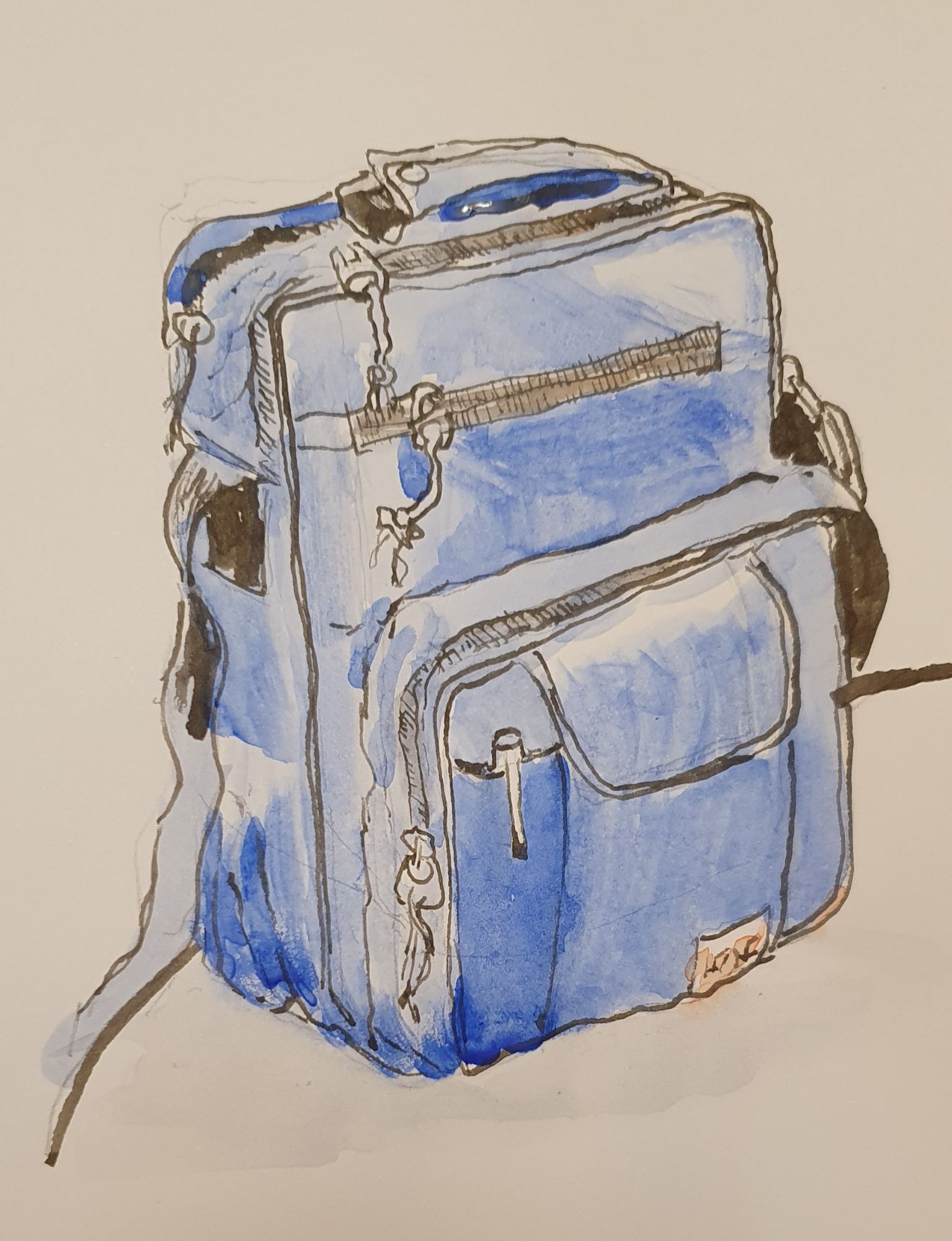
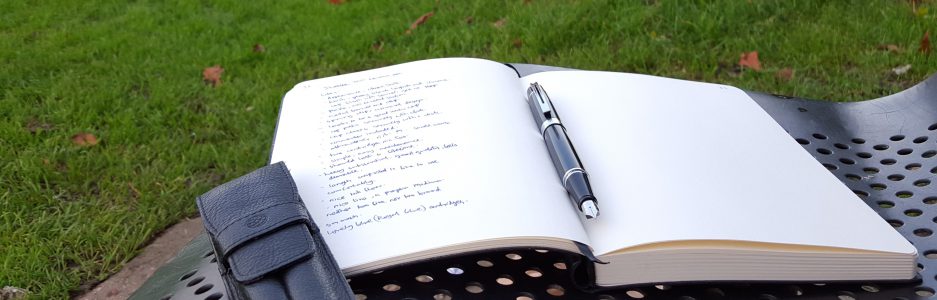
My man bag: Duke 551 fude, Noodlers Black ink and watercolours.

As for normal writing with this pen, it is possible but in order to get a fine line, the pen needs to be held upright at a steep angle, as you would for a ball pen. If the pen is allowed to lay back towards a more typical fountain pen angle, the line will be much broader and, with a 4mm line, you would need to write very large letters to avoid all the loops being filled.

It is very early days but already I am enjoying my experiments with the fude nib. It will get through a converter of ink quicker than most pens, particular if used for drawing and blocking in large areas. Before refilling it, I am keen to test out its built-in nib reservoir in dip mode.

Duke 551 Specifications:

  • Length capped: 147mm
  • Length uncapped: 132mm (I am very happy with this)
  • Length posted: 182mm
  • Weight (total) 64 grams (compared to 40 grams for the Duke 552)
  • Weight uncapped: 37.5g
  • Weight, cap only: 26.5 grams

Well, so much for my New Year pen-buying abstinence once again. I made it all the way to 18 January 2024 this time. But then this pen is quite an exceptional piece of kit and I am unrepentant.

Early thoughts on the Duke 552 Bamboo fountain pen.

It is a tradition of mine at Christmas, to convince myself that I need no more fountain pens for a while. And it is also my custom, in about the second week of January, to cave in and buy my first new pen of the year.

A few weeks ago, I spotted this Duke Bamboo fountain pen, while surfing on the Amazon. I was intrigued by the photos in particular one showing a cross section through the Bamboo which is comprised of lots of tiny hollow tubes. The description stated that the entire barrel was made of a unique, high grade, Golden Stripe Bamboo, with a high sheen finish which was super durable.

However I was in my no-buy mode and was able to put it out of my mind. Until today that is, when Amazon sent me a message asking if I was still interested in this item and mentioned that if I ordered it within the next 1 hour and 48 minutes, it would be delivered free by 10pm today. I needed only the first two of those minutes.

Description

It ships in a simple padded envelope, inside which is a little black velvety draw-string pouch, and the pen itself in a cellophane sleeve. There is no box.

Duke Bamboo fountain pen.

It is a good sized pen, about the same length as a Lamy Safari when uncapped but about a centimetre longer when capped. First impressions are very favourable. The Bamboo barrel is a beautiful stripy brown and is very smooth to the touch. It contrasts nicely with the black lacquered cap, like a black jacket with pinstripe trousers. The shiny silver coloured fittings look elegant. The barrel is flush with the cap meaning that there is a step which might be where you grip the pen.

The cap unscrews, in just over one full turn. The nib looks to be a size five which some might consider a bit small for a pen of this size, but this does not bother me. It has the name Duke and the Crown emblem and some decoration. The nib looked in good shape although lacking a tine gap at the tip.

The section is a rather unusual design, tapering with another step half way down. There appeared to be some white patches which I at first took to be glue residues and tried to scrape away, before realising that they are swirls of colour in the marbled plastic. They are described as blue and white pearlized inclusions.

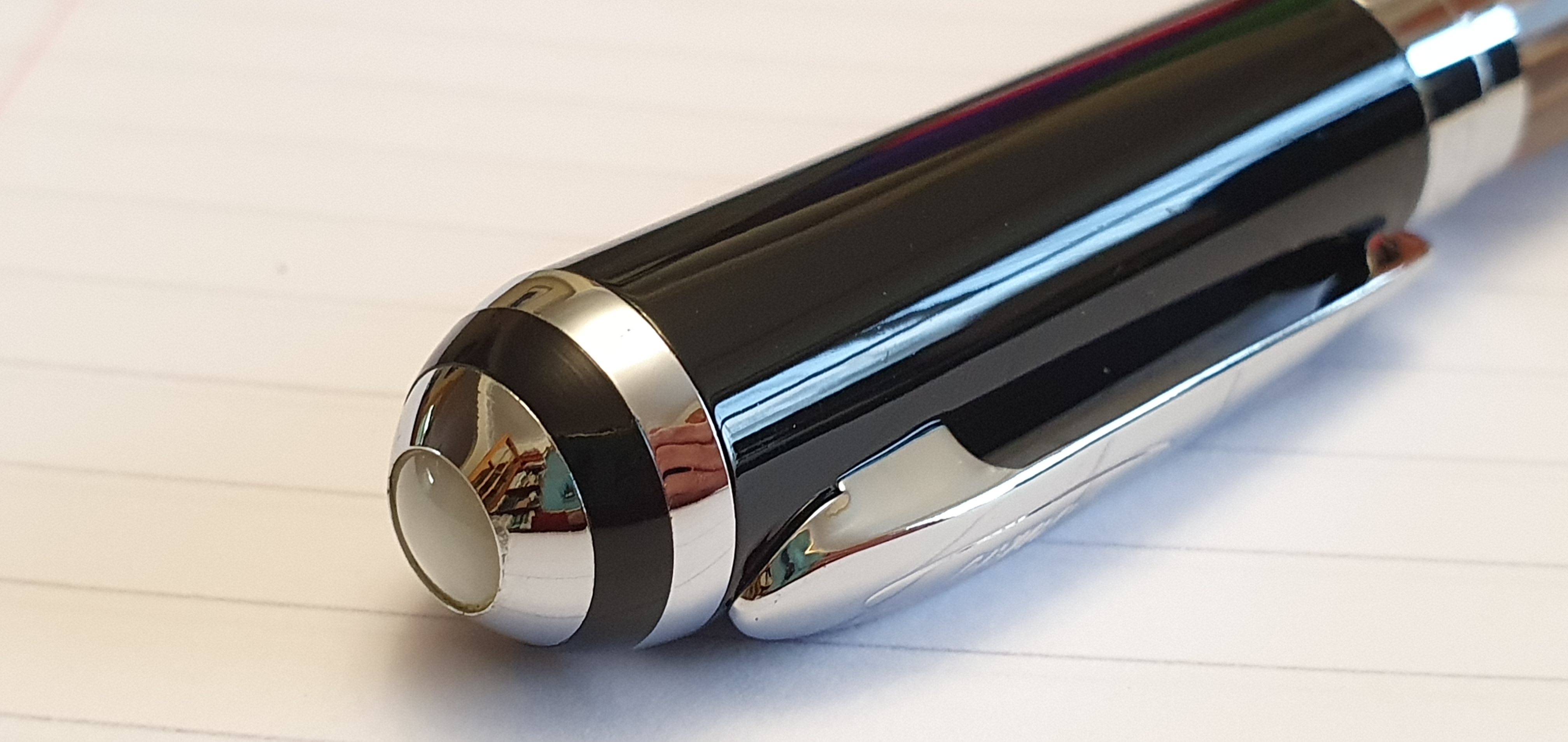
“Mother of pearl” insert in the finial.

Filling.

This is a cartridge-converter pen, taking standard international cartridges. A cartridge converter is included, with a metal coil ink agitator inside which is a nice touch. You can just hear it move when you turn the pen up and down.

Converter, with ink agitator. A good cure for ink starvation.

I enjoyed examining the pen and taking a few photos of it. I flushed the nib and feed and then filled it with Cult Pens Deep Dark Red to suit the Bamboo. The section only just fits through the narrow rim of my 30ml bottle.

Nib and writing performance.

The steel nib is a medium-fine. The first strokes were a bit disappointing: the nib wrote, with some pressure but was otherwise rather dry. I had already filled it and so was resigned to getting inky fingers in adjusting the nib but didn’t mind this, so long as it did not transfer to the barrel. I spent a merry half hour, employing a few different techniques to open up the tines just marginally, to increase flow. I used some brass shims first, then a blade and then finally tried very gently pressing and bouncing the nib tines against my thumb nail – all the time being careful not to overdo it. This had the desired effect in getting a nice easy wet flow and it then just remained to ensure that the tines were level once more.

Nib tweaking and testing.

Having a wetter nib is necessary for us lefty-overwriters and means that the pen lays down ink effortlessly, without downward pressure.

Size and weight.

This is a large pen, at 149mm capped and a comfortable 130mm uncapped. Posting is not needed but makes the pen 182mm long and back heavy. It weighs a decent 41g, around 23g uncapped and 18g for the cap alone.

Likes and dislikes.

Having thus tweaked the nib I can give a few first impressions:

Likes:-

  • Attractive and unusual Bamboo barrel;
  • Warm, natural, tactile satin finish;
  • Duke branded converter included, with an ink agitator;
  • Screw-on cap;
  • “Mother of pearl” effect insert in the finial;
  • Generous length and girth;
  • White plastic inner cap.

Dislikes:-

  • Rather lumpy step near to where I commonly grip the pen;
  • Pocket clip is extremely firm; better regarded as a roll stop;
  • Cap posts securely on the recessed area but pen becomes too long and back heavy.

I have not included in my dislikes, the need to fine-tune the nib as this was to make the pen write to my preferred wetness and is also an issue with pens across all price brackets.

Conclusions.

I particularly like the Bamboo finish and the fact that it has a screw cap – so much nicer than a snap cap. Also the cap, barrel and section all seem to screw together firmly. I have not yet had the pen long enough to test for hard starts but I am hopeful that the presence of a plastic inner cap will mean that this is not an issue.

The Bamboo barrel is the star attraction.

The flush cap has resulted in a pronounced step down from the barrel ring to the cap threads, which I find less comfortable than a stepless pen but preferable to a pen that is too slippery to hold firmly.

It is very early days (or hours) to be giving a review but the pen seems very promising and I am happy so far to have added it to my accumulation. This is now my third model from Duke and all have been designs which are interesting and unusual.