My pen of the week: the Burnham 61 lever filler.

The latest fountain pen to arrive on my doormat has been this lovely vintage Burnham 61, which I found on eBay.
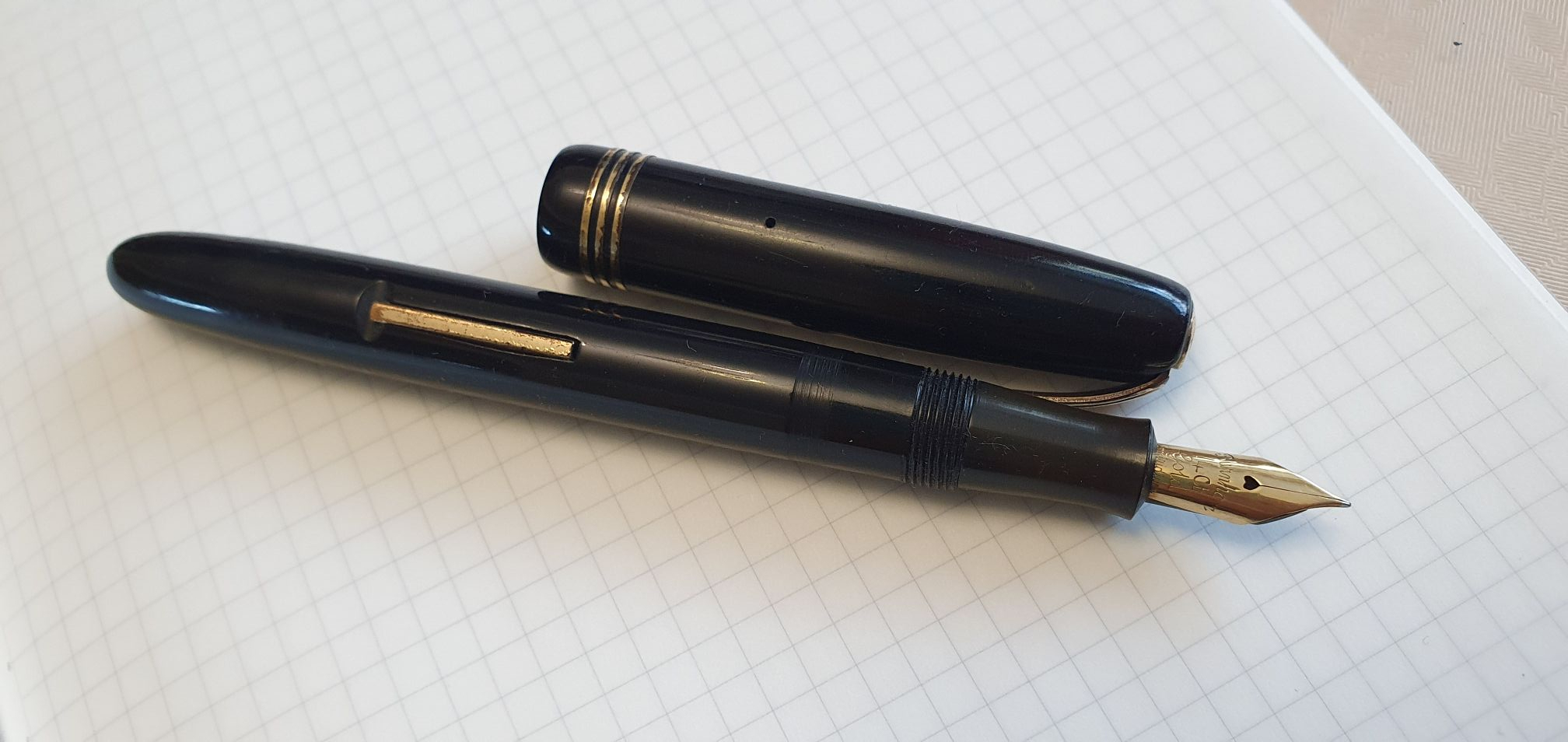
Burnham No.61

The backstory to this purchase, is that I had first bought a Burnham, a number 54, in March this year and had been delighted with it. Some photos and information on that pen appeared in my post Finding joy in small things: the Burnham 54 fountain pen back in April. That pen was much smaller than I had expected but the soft, 14k gold nib made the pen such a pleasure to use that I soon adjusted to its size.

I have been warned by a close relative in my household, to stop looking at pens on eBay as the temptation there is never ending. This, I can confirm, is true. Nevertheless, a decent interval having elapsed since my last transgression, I ventured back to the site and, sure enough, spotted this black Burnham 61 which was offered for immediate purchase. The description stated that the sac had been replaced and that the pen was in good condition for its age. The seller’s photograph of the nib proved too much for me and I was smitten.
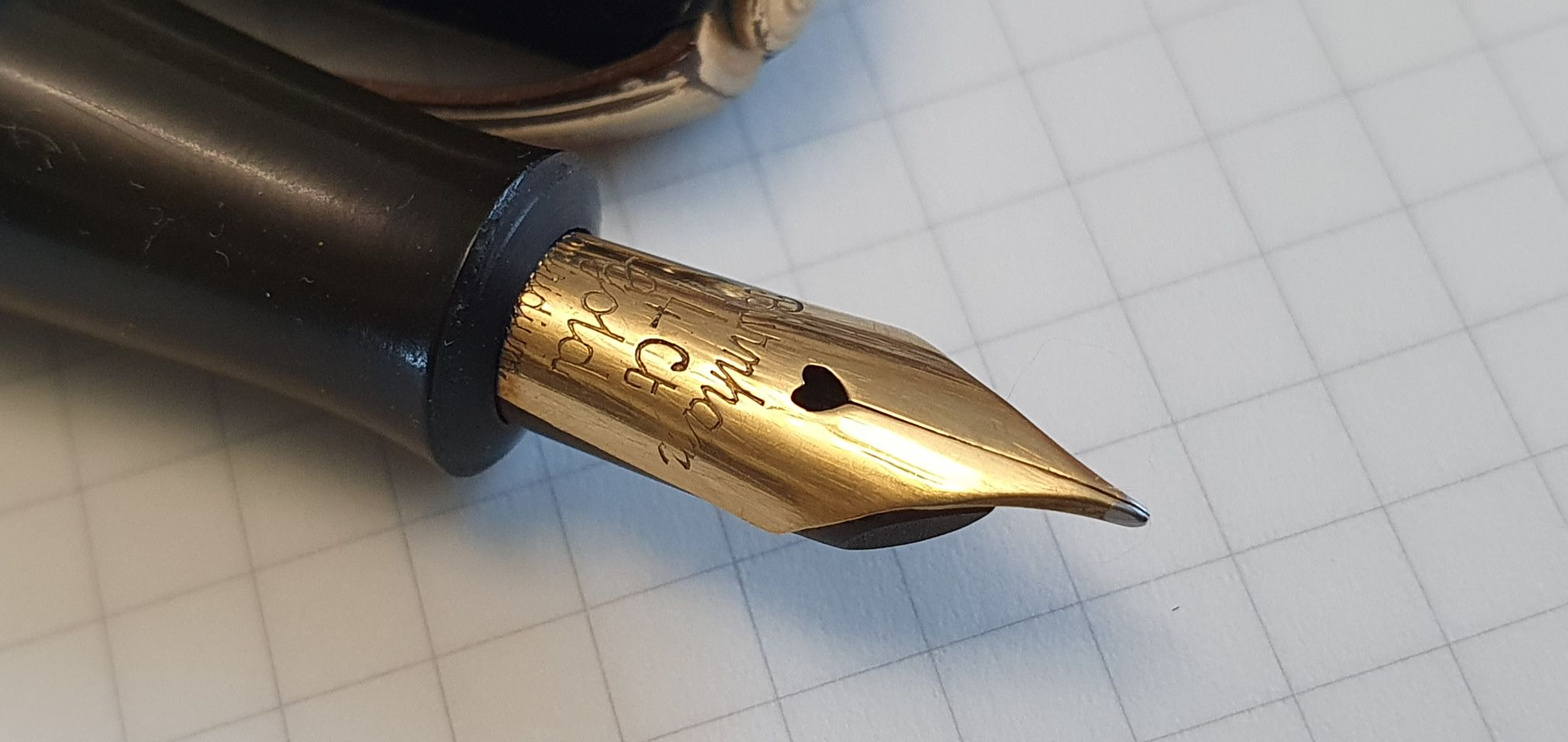
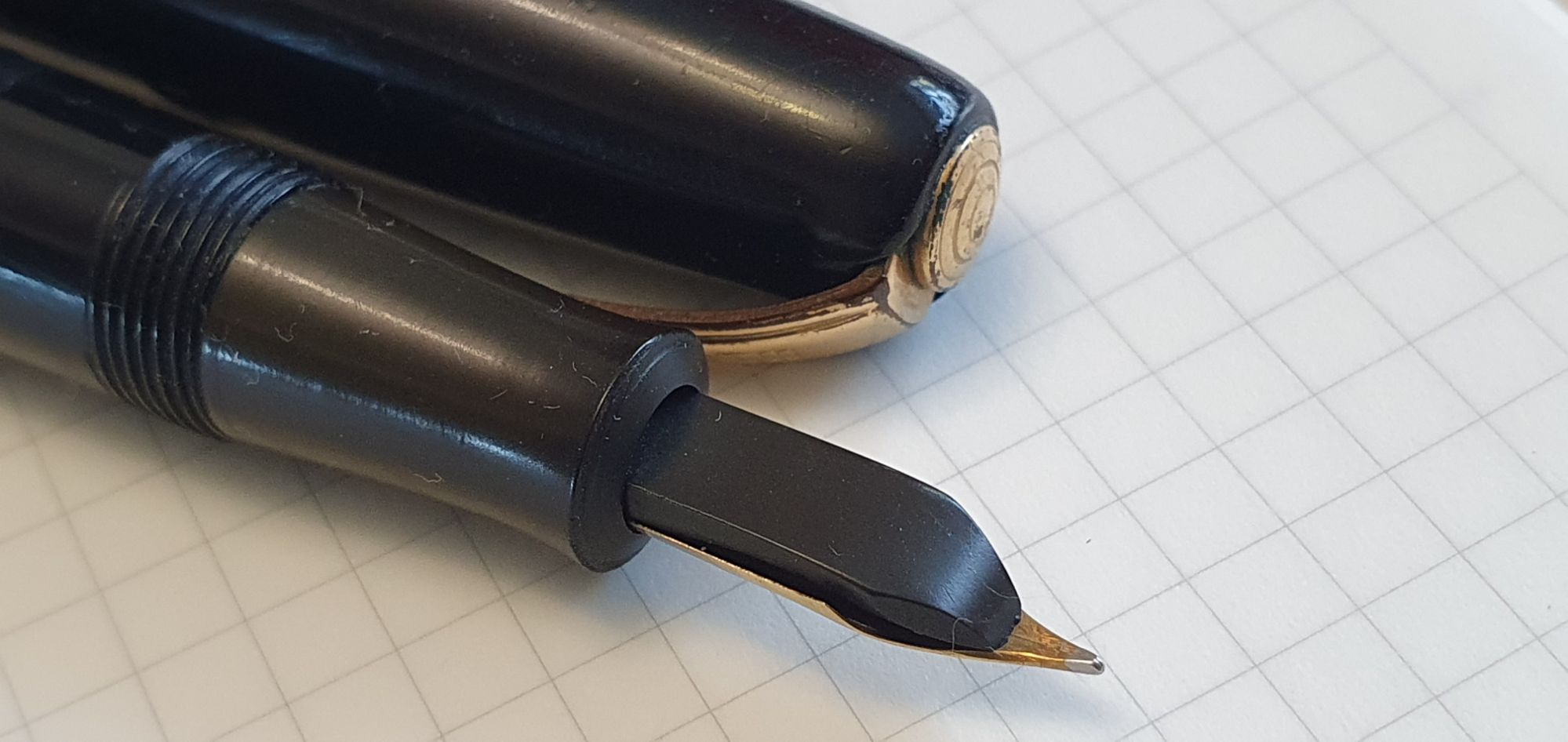
Got to love the heart-shape!
The grip section is of a lighter colour than the barrel and cap.

Once again, I had made the mistake of expecting the pen to be bigger! Although larger all round than my Burnham 54, it is still a small pen by modern standards. With vintage pens, I avoid posting the cap in case of damaging the cap rim. An alternative is to find a cap from a modern pen to post, to add length. In this case, I found that a cap from a Speedball calligraphy pen worked very well, but I found it preferable, at least for short writing sessions, to get accustomed to holding the pen unposted.
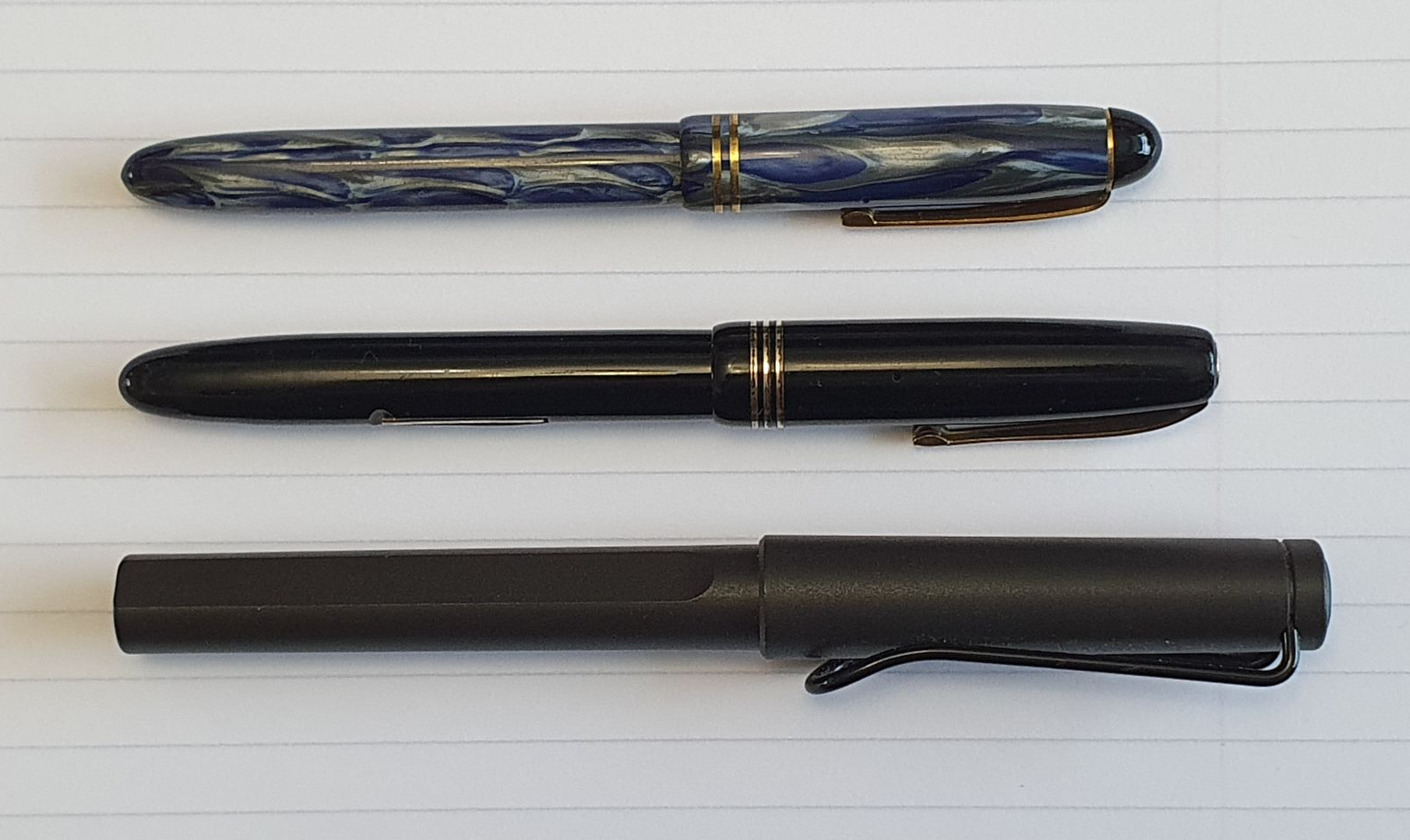
Size comparison: Top: Burnham 54; Middle: Burnham 61 and Bottom: Lamy Safari.

I flushed the pen a few times in warm water and then filled it with Waterman Serenity Blue. The pen filled well. There is no ink window of course, but if you wish to measure how much ink a lever filler draws up, you may empty it slowly and count the drops. Alternatively, for a more immediate assurance, you may decant some ink into an ink-miser with a narrow diameter, which will better show the ink level sinking, as ink is drawn into the sac. I use the plastic insert from a TWSBI Diamond 580 ink well for this.

And so to the writing. The pen wrote superbly. The nib grade is not shown but I presume it to be a Fine or Extra Fine. The nib imprint reads “Burnham 14Ct Gold Osmiridium.”
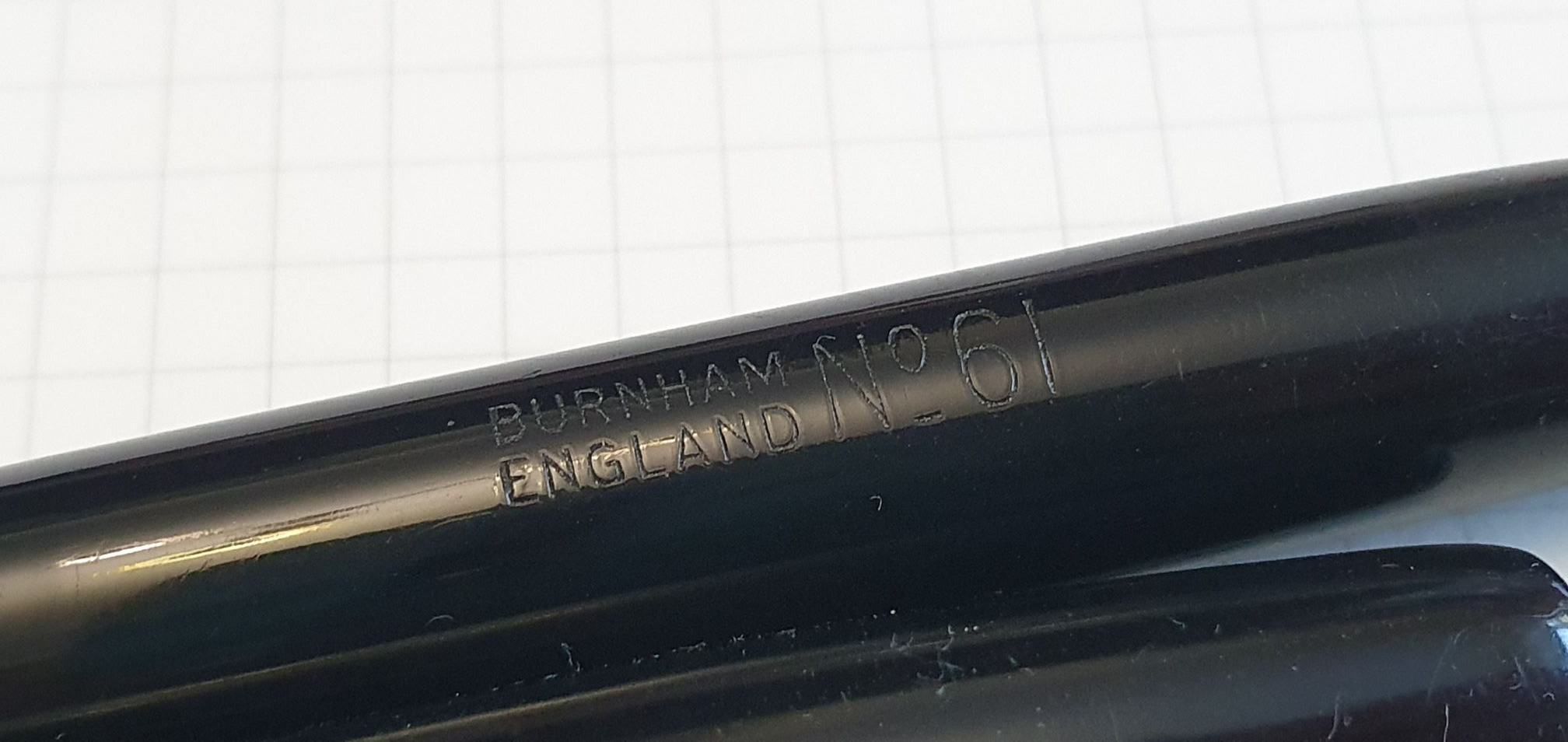
Barrel imprint

I would have been happy if this pen had simply written the same as my Burnham 54, but the fact that it wrote with a lovely precise fine line, was a bonus. Once again, the nib felt smooth on my Stalogy notebook paper, but there was a distinct feedback, hard to explain yet exquisitely enjoyable!
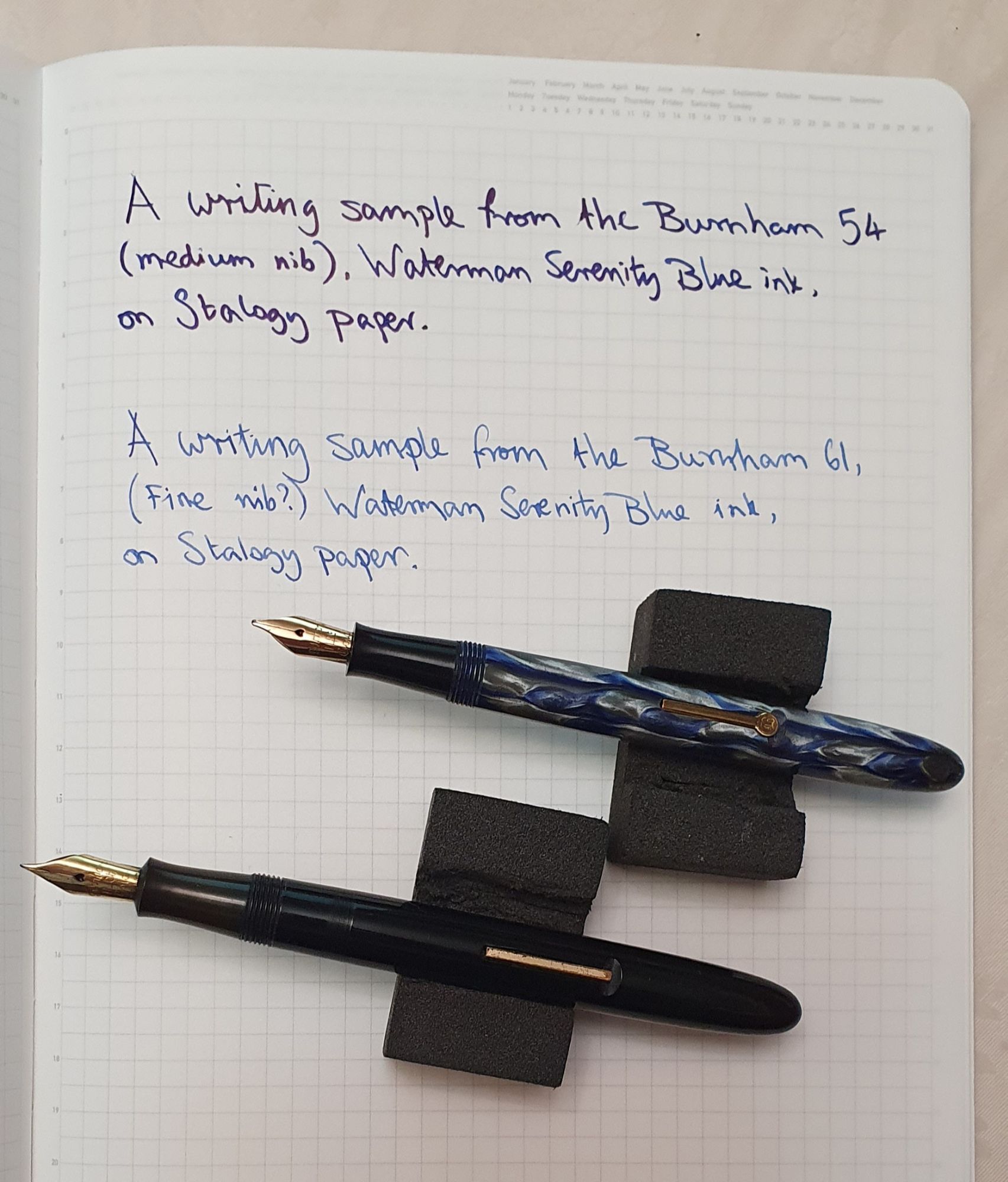
Imagine your own handwriting here.

Burnham pens do not seem to garner very much attention in the fountain pen community. I am probably not helping myself by raving about them here, with the London Pen Show just a few weeks away, but I hope to see a few Burnhams at the show. As I now have a collection of two Burnham lever filler fountain pens, (each costing me less than a Lamy AL-Star) I can attest that these can make a very satisfying buy. With some high-end, steel-nibbed pens costing around £200.00, a vintage Burnham offers a gold nib at a fraction of this amount and with a wealth of character with which a modern pen cannot compete. My advice, if a Burnham should catch your eye at the show, would be to (1) ask whether the sac has been replaced; (2) inspect the nib and if possible, try a dip test to see how it writes, and (3) save some for me.
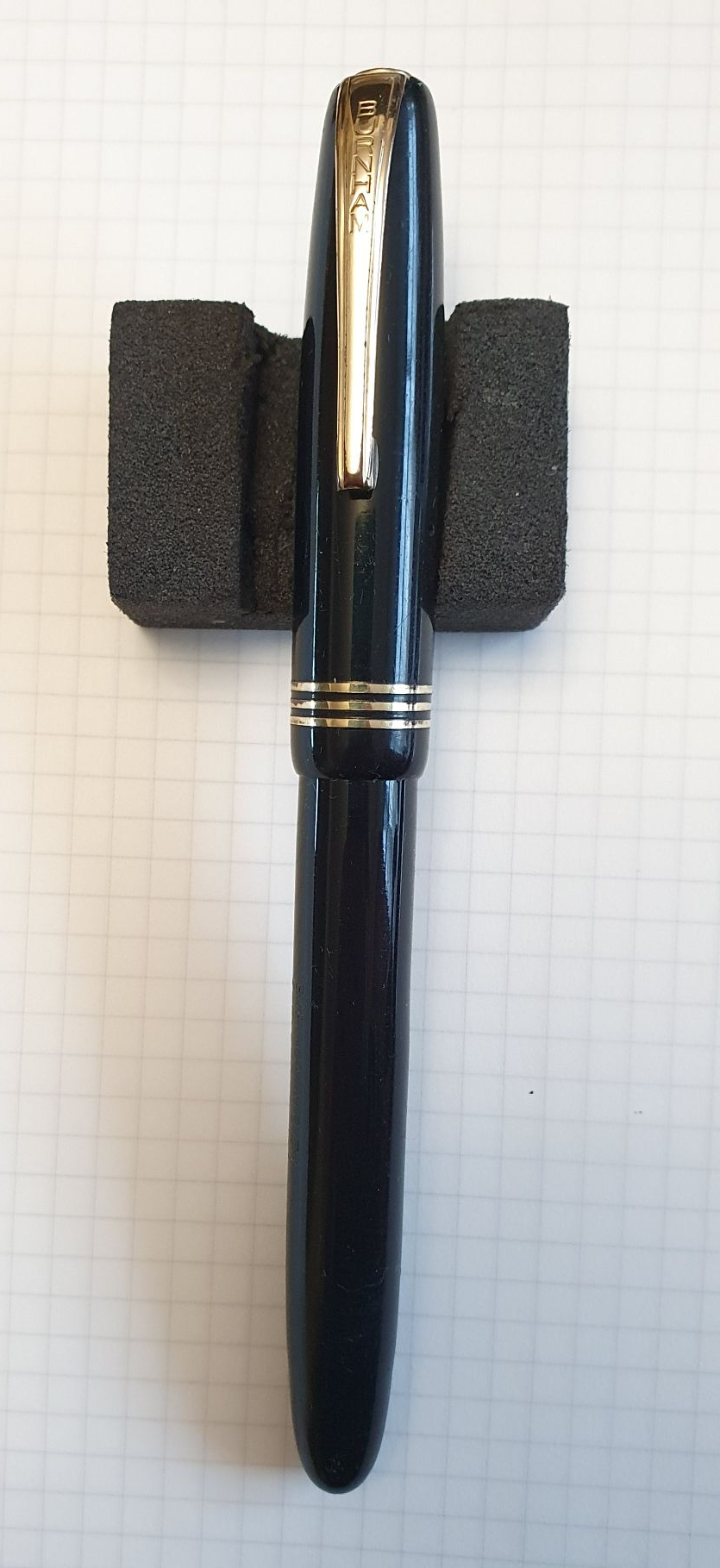
Small but perfectly formed.

Finding joy in small things: the Burnham 54 fountain pen.

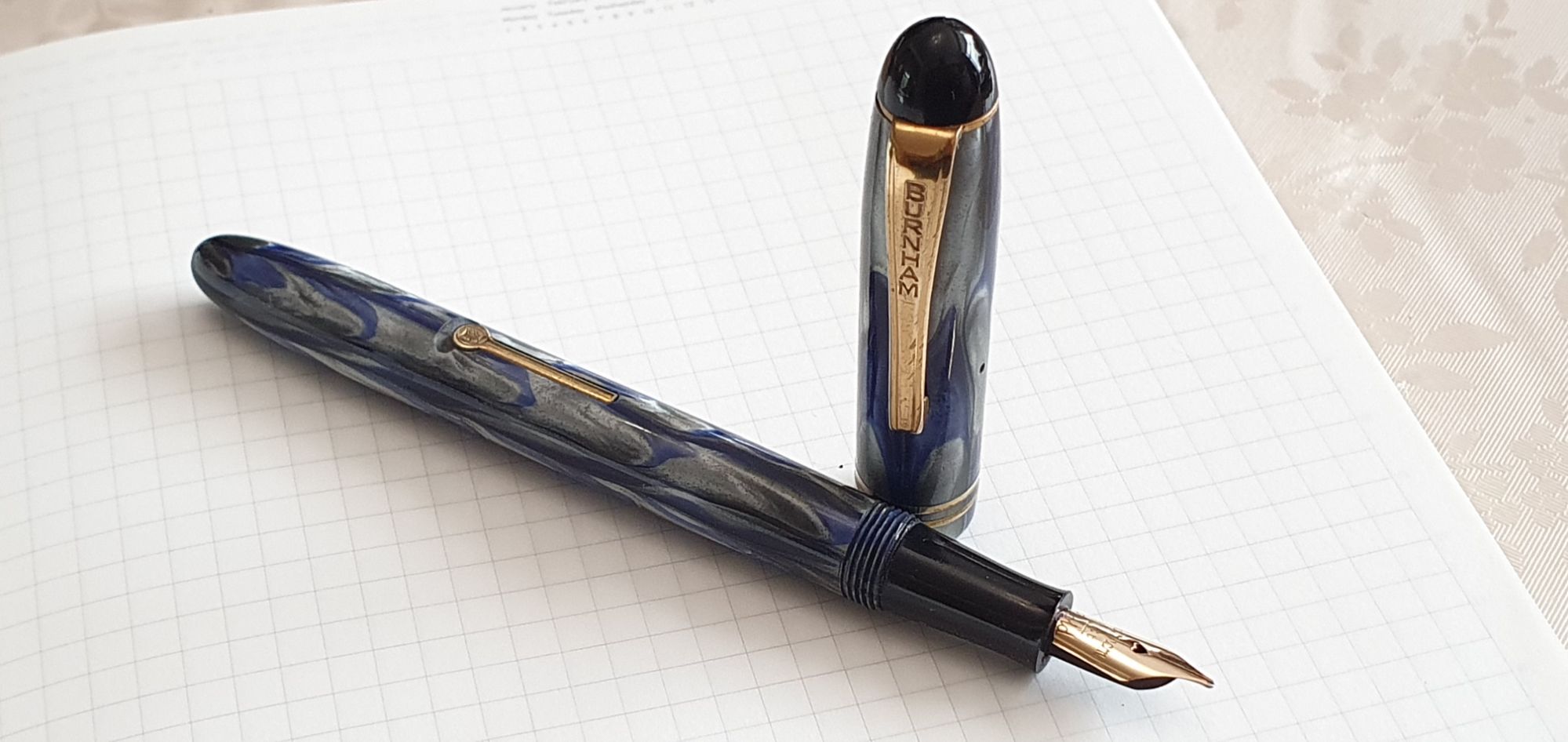
Recently, I was thrilled to win an eBay auction for an attractive, marbled blue and grey vintage fountain pen. It was a lever filler with a 14k gold nib. The sac had been replaced and it looked to be in good condition. I had looked at the seller’s photographs again and again in the week before the auction.

When it arrived, it looked even prettier in person than in the photographs, although much smaller than I had expected. I believe it to be a Burnham 54, although there is no imprint on the barrel and I know little about this brand. There were many variants of the model 54 and numerous other clues to look for in the finial, pocket clip, branding on the clip, the number of cap rings, the inscription on the nib and the shape and markings of the lever filler.

Burnham 54 fountain pen.

In his book “Fountain Pens” by Peter Twydle, (2009), he includes a few paragraphs about Burnham in his chapter on manufacturers. He writes “The pen trade has recognized Burnham, perhaps unfairly, as the poor man’s Conway Stewart.” The company was started by Harry Burnham in London in the 1920’s and continued until the 1960’s. Their pens were mostly lever fillers and used similar materials to Conway Stewart, but being less prestigious and lower priced, became thought of as school pens.

Rounded finial, branded clip and two cap rings on my version.

For a detailed account of Burnham pens, there is a comprehensive study on the WES website, (the Writing Equipment Society), wesonline.co.uk from 2011 by Alan Charlton, on Burnhamography. Meanwhile, my post here is more of a “show and tell” since I know little about this pen.

Uncapped. The classic proportions mask its diminutive size.

Had I known how small the pen was by current standards, even though beautifully-proportioned, I would probably not have bid. This would have been a great shame as I have found the pen very comfortable and enjoyable to use. As I have tended to avoid pens which I thought of as too short or too slim, this was an exciting revelation with a potential to extend the already vast rabbit warren.

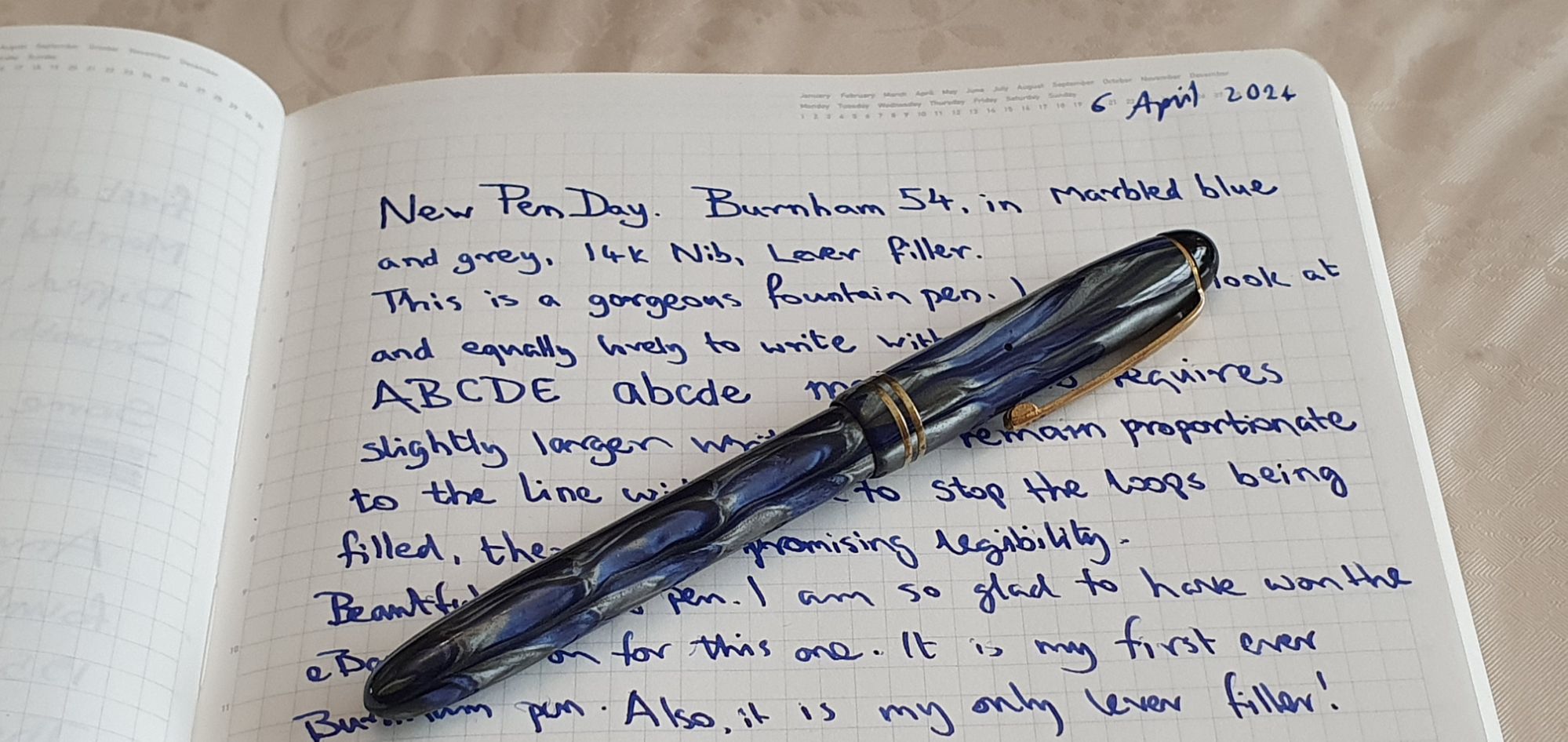
After flushing the pen, I filled it with Waterman Serenity Blue. It filled well. The writing experience from the 14k gold nib was a joy: silky smooth, broad, with an optimal flow and just a little bounce, that you might call semi-flex. This more than compensated for any shortness or skinniness of the pen. I cannot tell you whether the barrel and cap material is celluloid or plastic, or whether the feed is ebonite or plastic. I have avoided posting the cap and instead have grown accustomed to holding this little pen unposted.

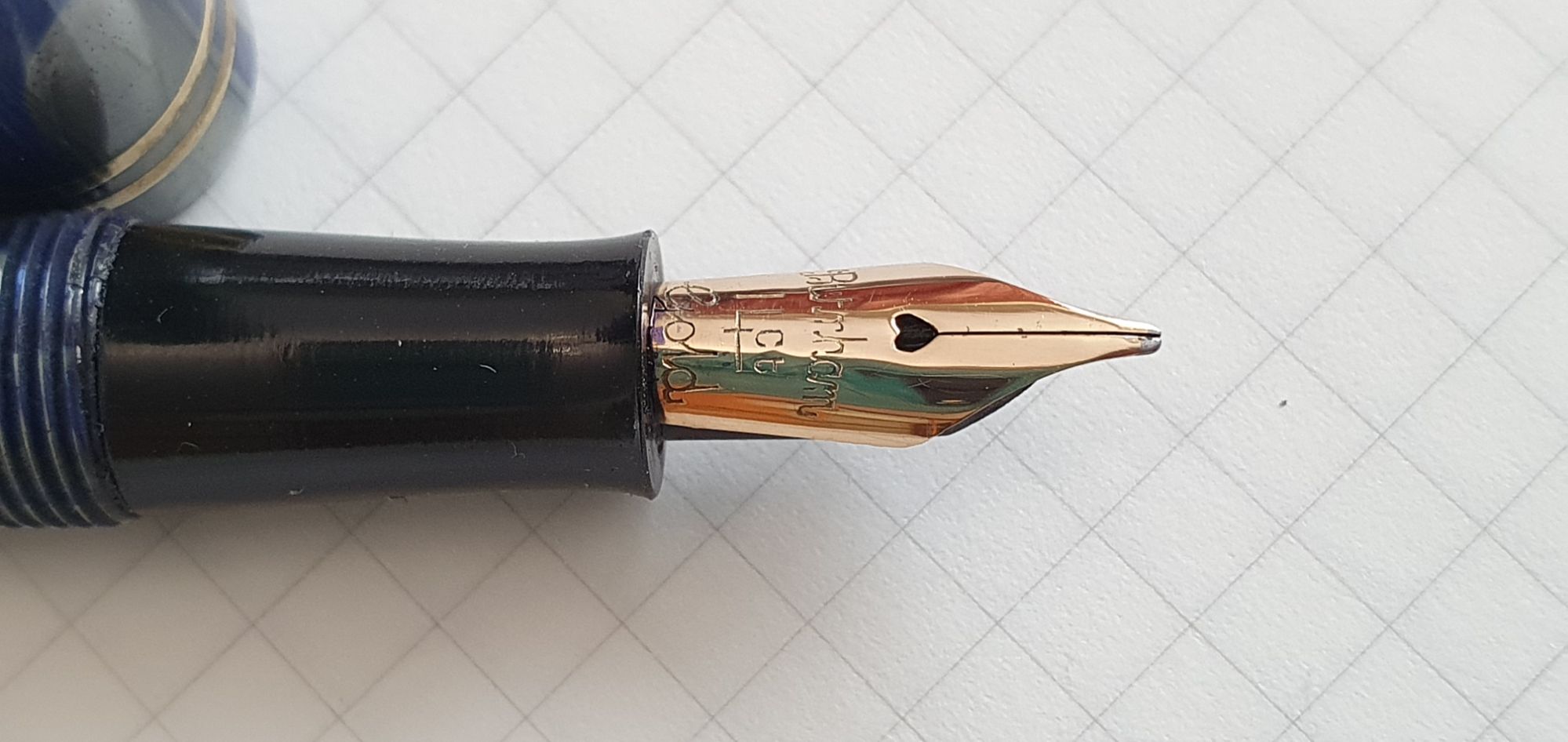
Very clean nib, marked “Burnham 14 ct Gold.”
Smooth feed. Ebonite, I think.

The screw cap comes off in just over two full rotations. The cap threads are multi-start and I found that by inserting the pen (nib up) into the cap, pocket clip up, and turning the pen one click the wrong way before tightening, the lever almost aligns with the clip.

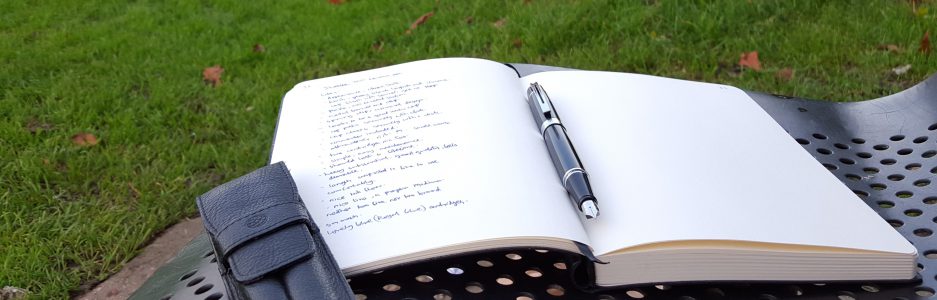
On a recent short break in the beautiful Shropshire countryside, I took the Burnham and used it every day for some holiday journaling in a Leuchtturm A5 notebook. The nicely-tuned vintage nib, with its heart-shaped breather hole, performed as well as any other nib I have ever experienced, at any price. One fill managed more than 12 pages, before it was time to enjoy the lever-filling experience again.

Size and weight:

Capped, the pen measures about 121mm and uncapped, only 109mm. The weight is about 11.5 grams capped, comprised as to 7 grams for the pen and 4.5 grams for the cap. These figures are pretty minimal and might sound off-putting but my experience has been that what the pen lacks in size and weight is more than made up for, by its cuteness and the sensation of writing with the smooth and bouncy nib.

Trying out my new old pen. Waterman Serenity Blue; Stalogy 018 Editor’s Series 365 days notebook.

The moral of this tale is that you might surprise yourself, using a pen that goes against your usual criteria. This is good news, unless like me, you are trying (weakly) to resist more pens incoming.

Edit: Here is a photo to show the comparative size of the Burnham 54, against a Parker 51 Demi, a Parker 51 standard and a Parker 45.

Size comparison.