The Benu Euphoria Bourbon fountain pen: early thoughts 7th blogiversary post.

In my recent post about my pen show haul, I mentioned my Benu Euphoria Bourbon and the fact that it deserved a post of its own. Well, here it is.

I first laid eyes on this pen at the London Pen Show in October 2023, on Derek Bambrough’s Stonecott Fine Writing table. The pen just calls to be picked up and looked at. Also on the same table were inks from Diamine’s Shimmering Fountain Pen Inks range, including Caramel Sparkle and it did not take me long to imagine them together.

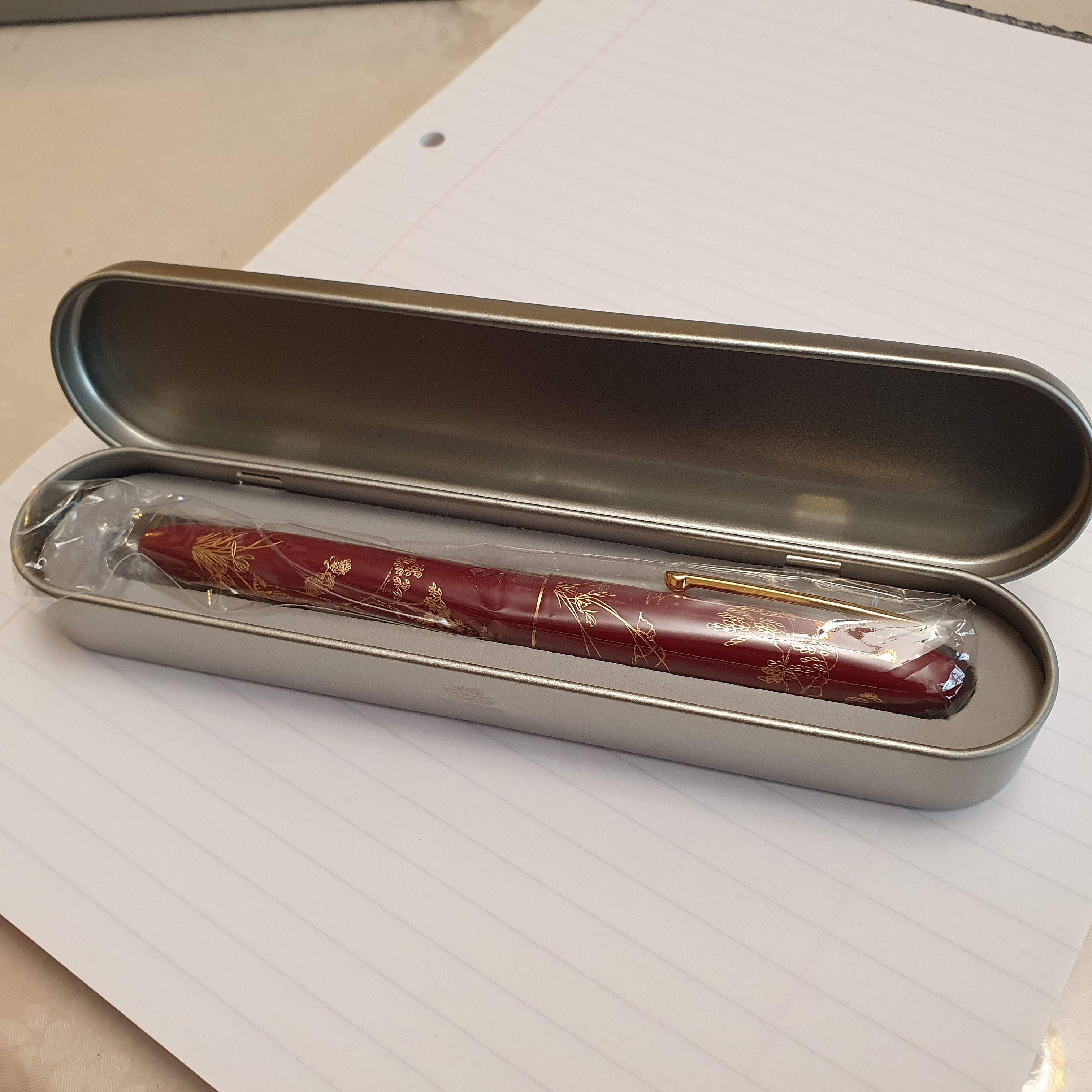
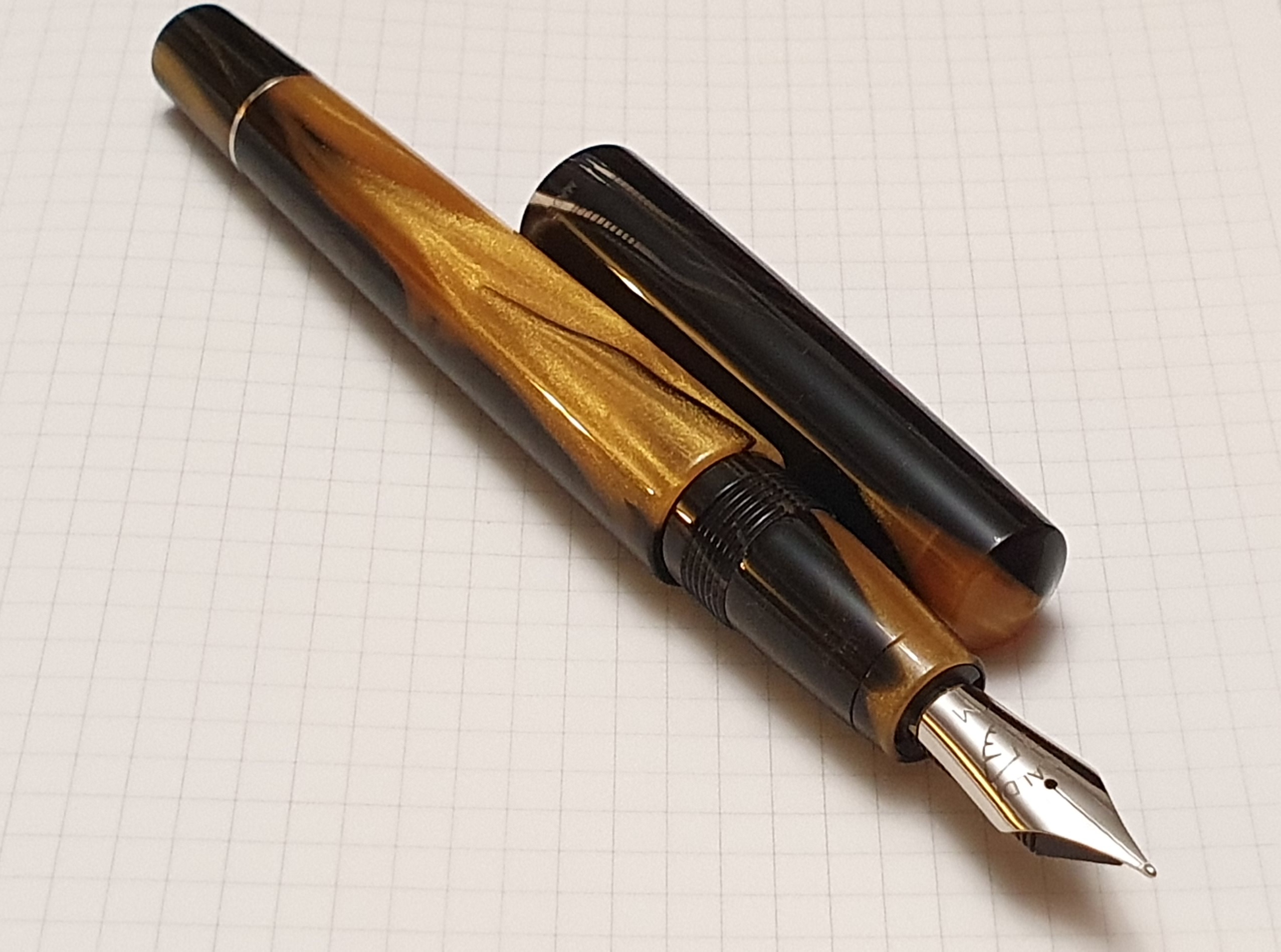
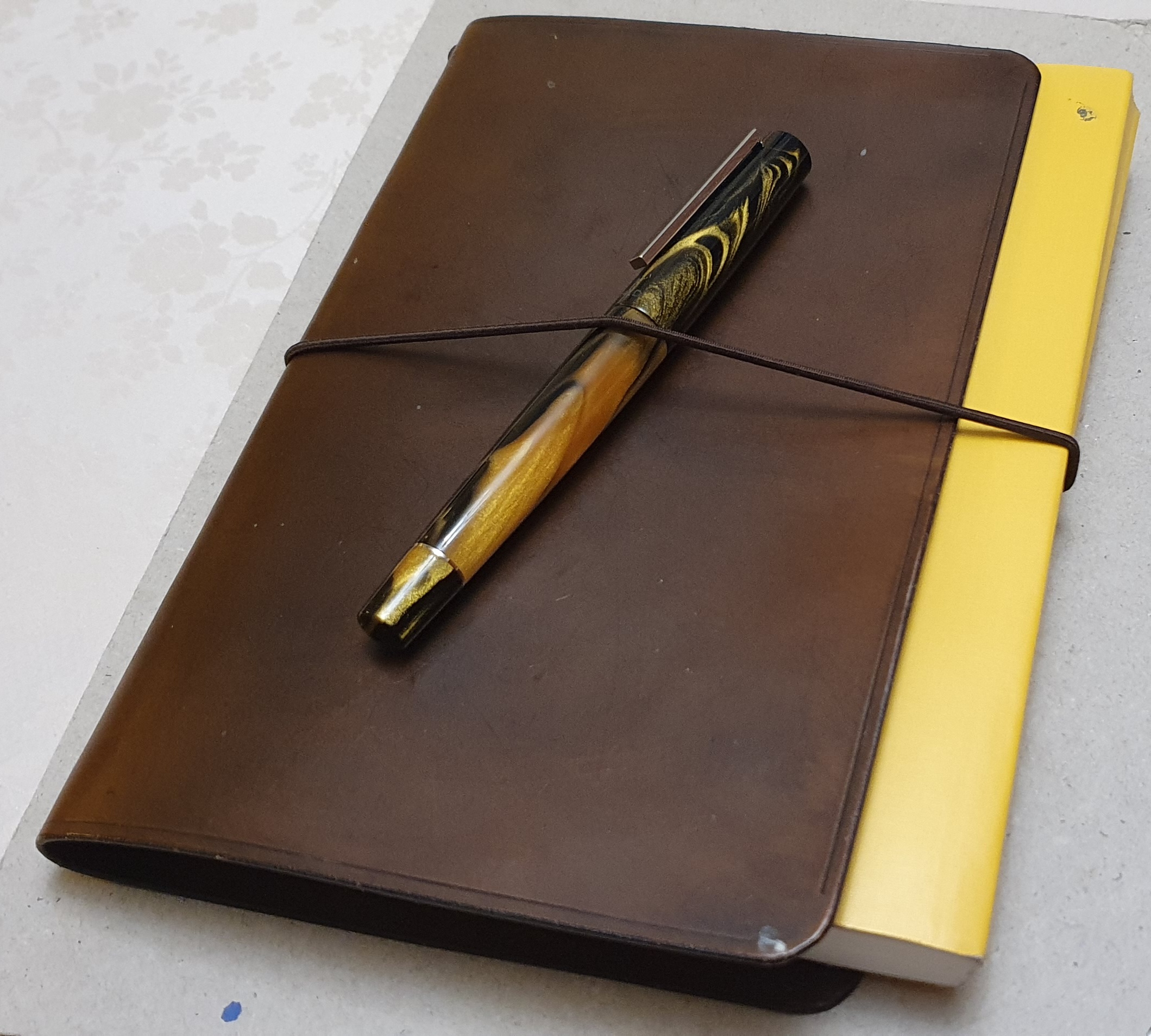
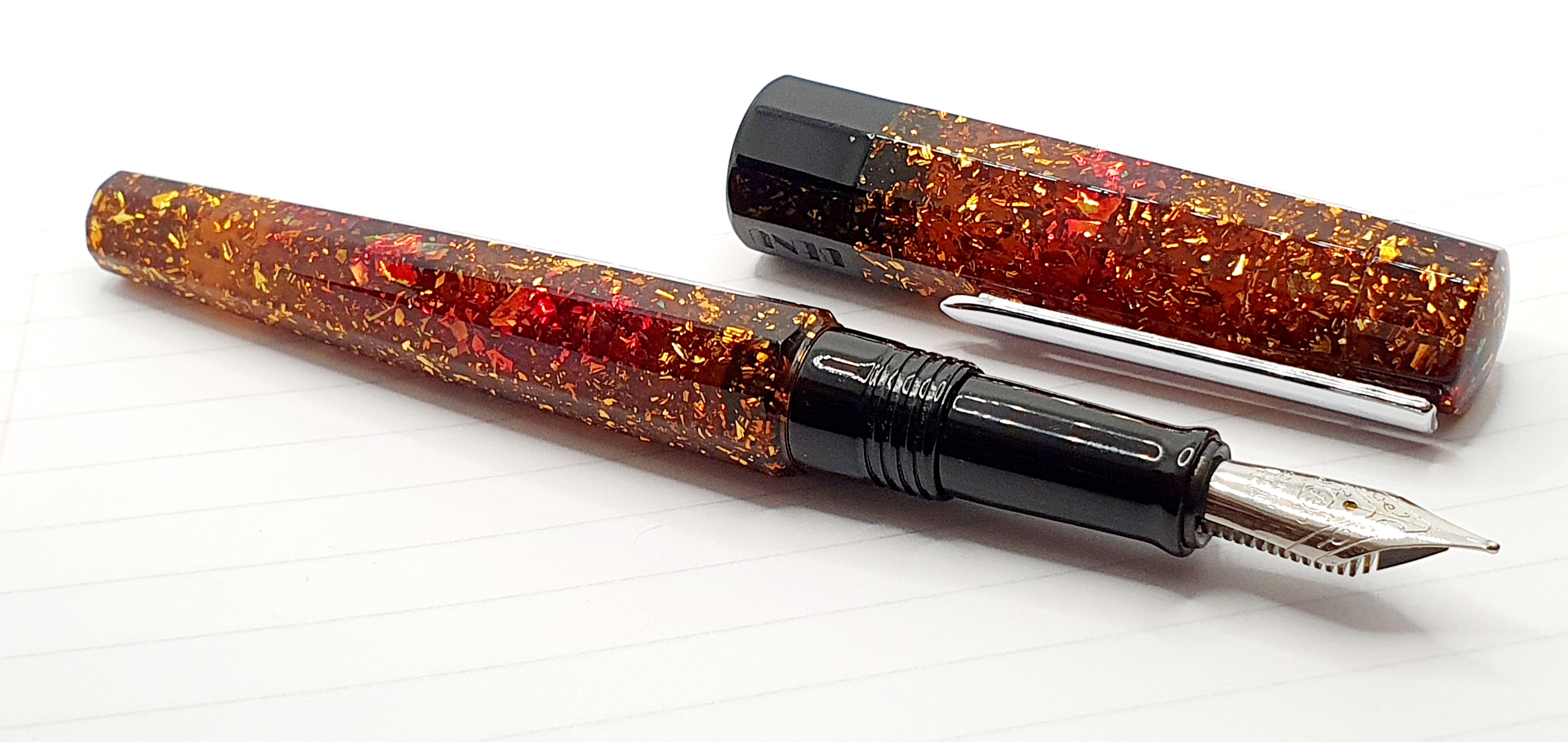
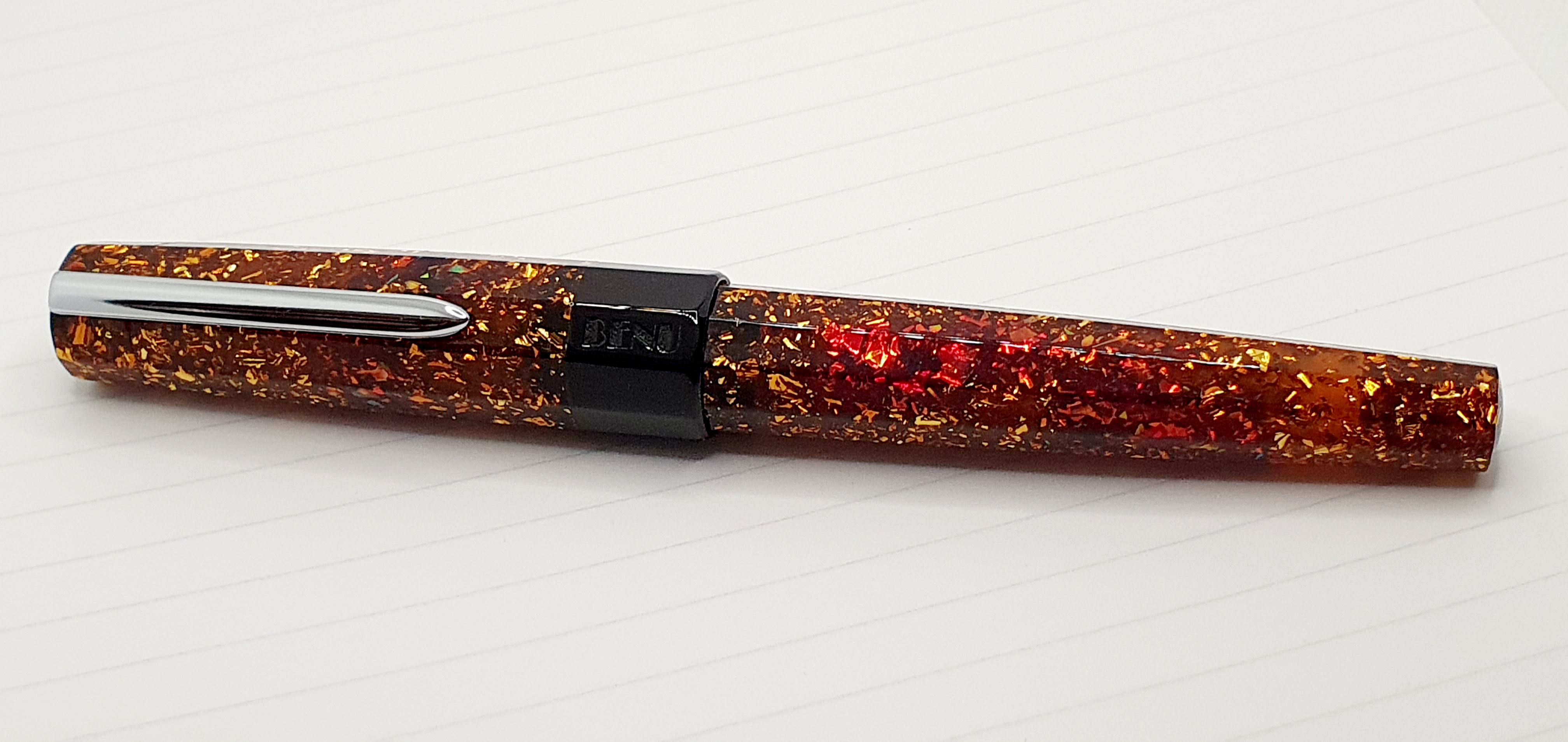
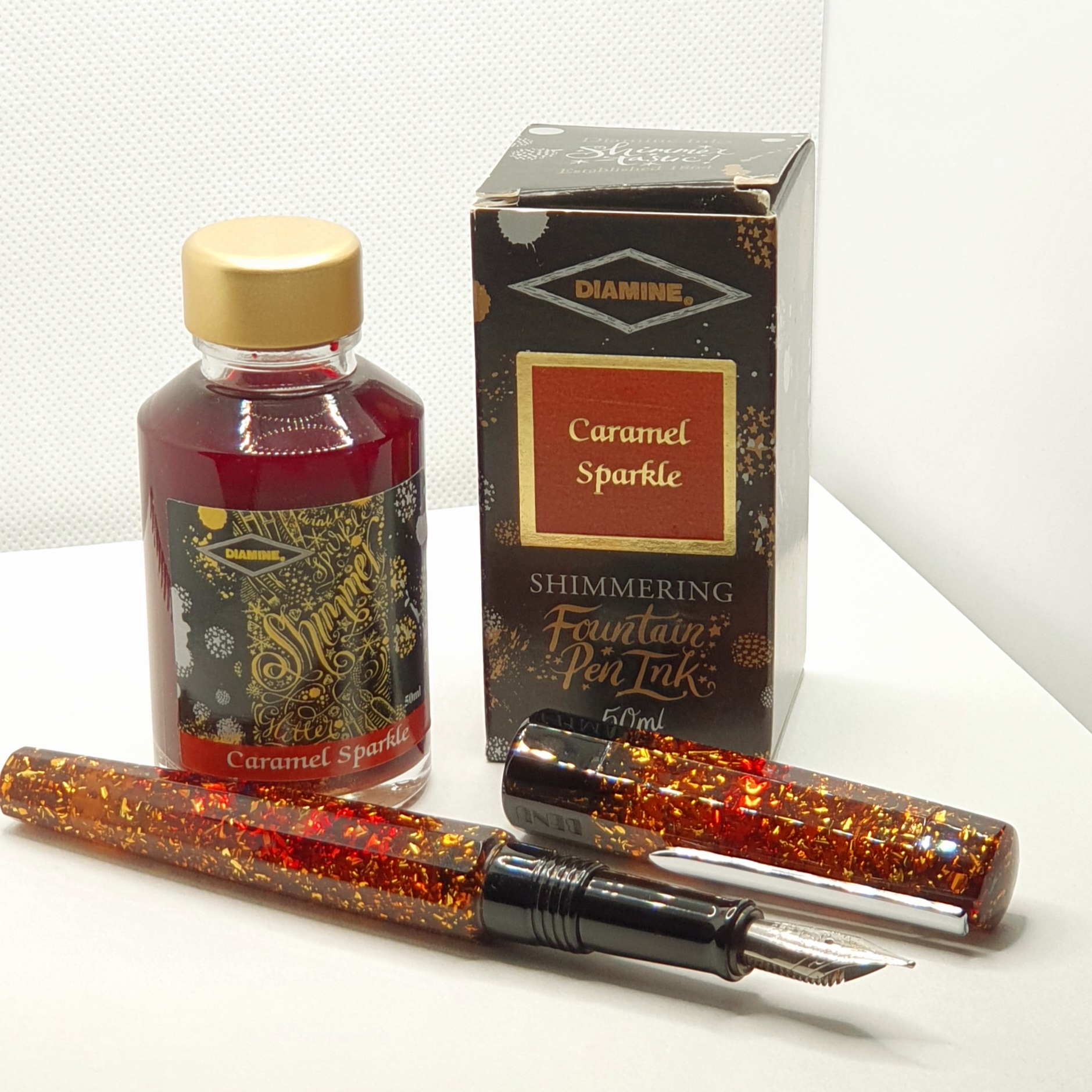
The Benu Euphoria, Bourbon edition.

All of this surprised me, because I was not previously drawn to fountain pens that are sparkly, nor had I any urge to use glittering inks. I thought that I would have no use for them and that they would clog my pens. As recently as 31 July 2023 in my post on the 21 plus 5 pen questions, I had been dismissive of sparkly pens and inks, although mentioning that if I were to buy a sparkly pen, it would be a Benu Euphoria. This name-dropping suggested a knowledge of sparkly pens which was a little disingenuous, as I had been shown a Benu only the day before, at a pen club meet.

I later read on Cult Pens’ site, that Benu was created in 2016 and that the Euphoria range celebrates life and things that bring us joy. This particular model celebrates Bourbon, a whisky (or whiskey in the USA) distilled from maize and rye and named, according to The Concise Oxford Dictionary, after Bourbon County in Kentucky where it was first made. I have not found any suggestion that the pen celebrates the Bourbon chocolate biscuit, named after the French or Spanish House of Bourbon. Details of this pen range as well as some special editions and the other lines can be seen at http://www.benupen.com.

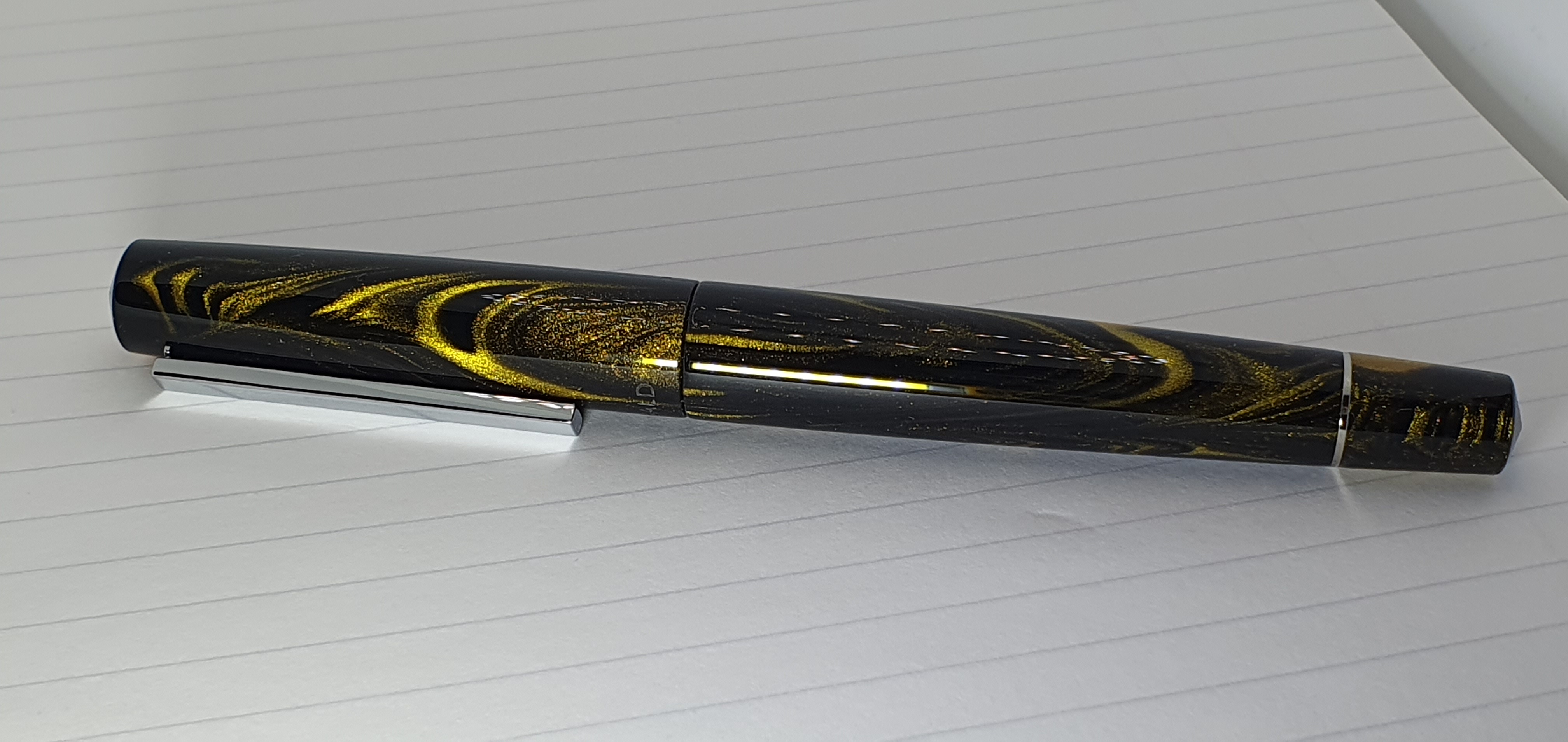
Ten facets on the cap and barrel.

Handling this pen at the pen show, the material did not suggest whiskey to me, but rather a woodland carpeted with sun-lit autumn leaves. As you turn the pen in the hand, areas of red appear, like pools of blood at a crime scene. Not exactly a joyful image I agree, and I do not mean to spoil the pen for anyone, but I thought of Armenia and its troubled history. Benu pens are hand-made in Yerevan, Armenia. I found the pen both poignant and beautiful and, having some Armenian ancestry myself, of course I had to buy it. And a bottle of Caramel Sparkle.

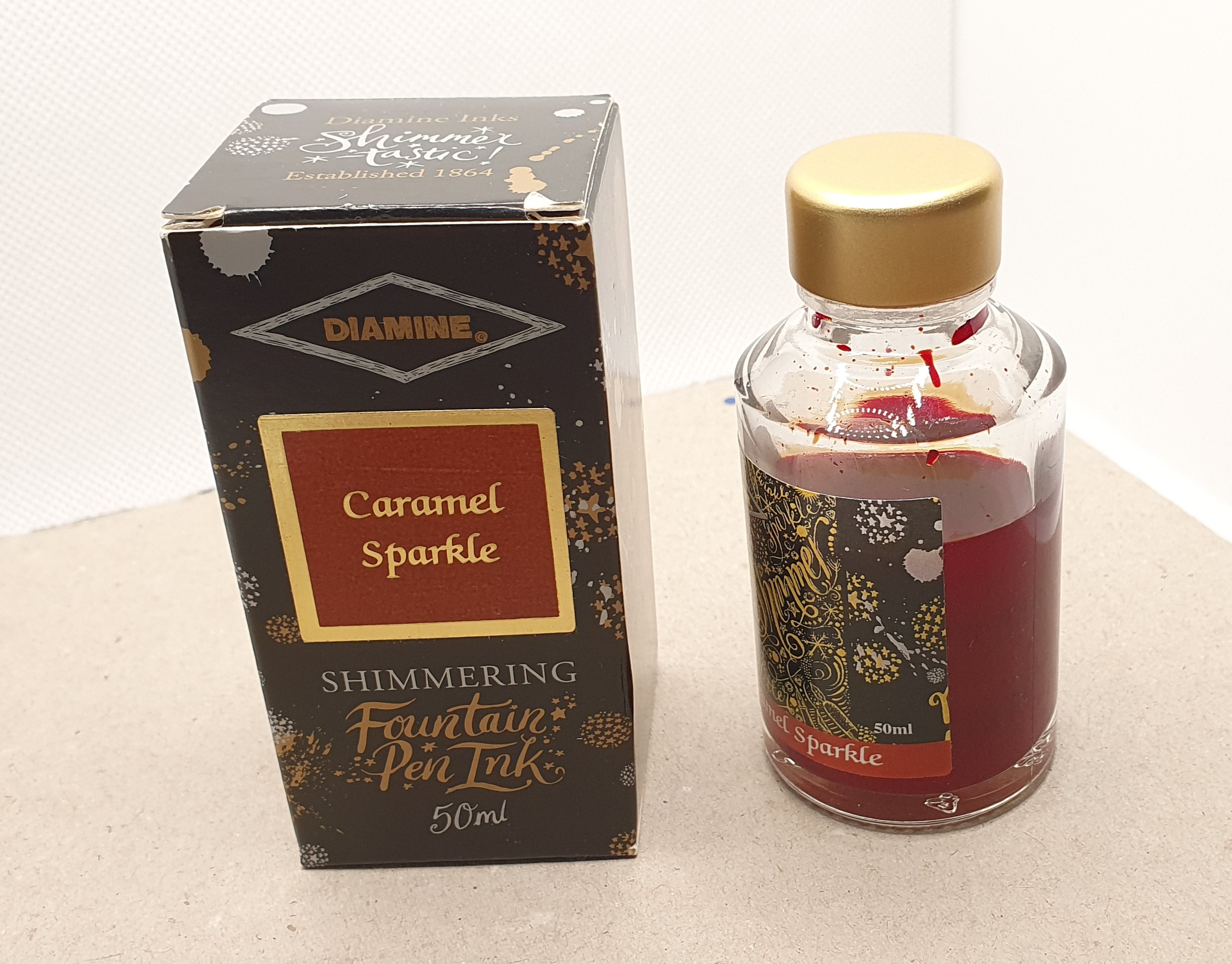
Diamine’s Caramel Sparkle, shimmering ink.

The pen appears to be made of a transparent acrylic, generously infused with fragments of glitter which catch the light and give the pen its richly golden-brown depth, with areas of red in the cap and the barrel. It was really the patches of red that sold it for me. The grip section and cap threads are black, as is the broad cap band, on which the name BENU appears. The pen is faceted (although not the grip section) with ten polished sides. The facets of the cap align perfectly with those of the barrel, which is both impressive and very pleasing.

There is no separate finial at either end, just slightly convex or domed acrylic ends which, like the rest of the pen, are beautifully smooth and polished.

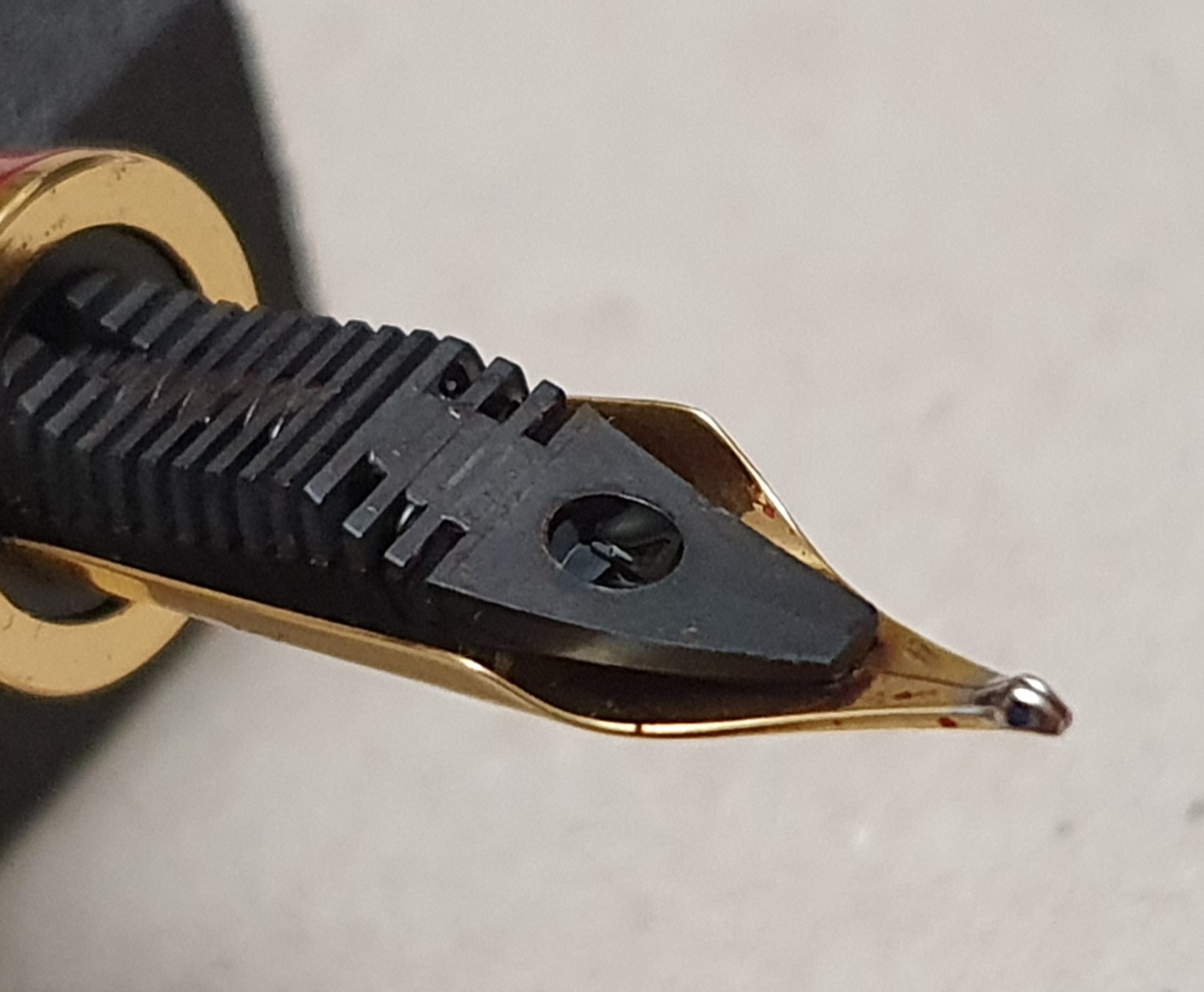
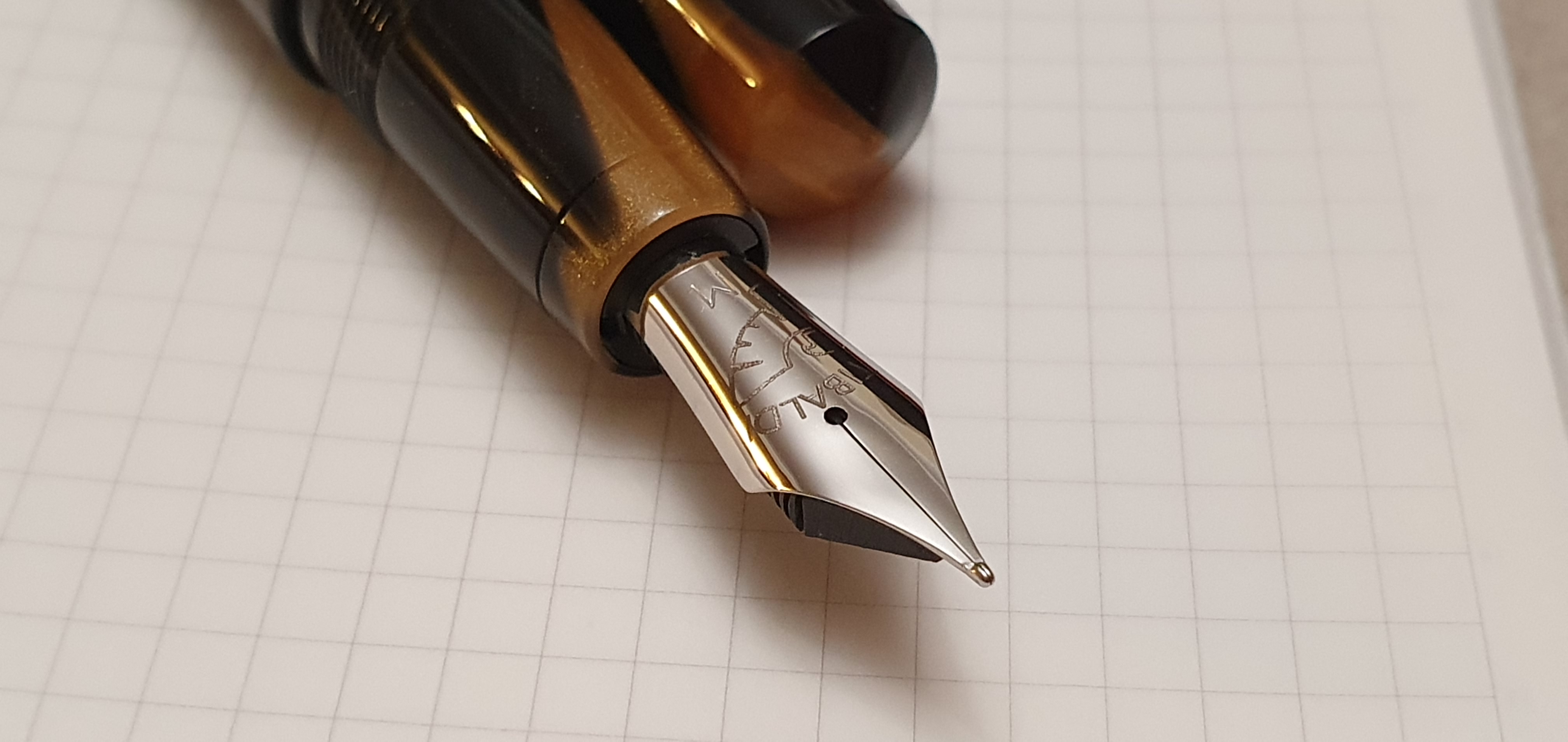
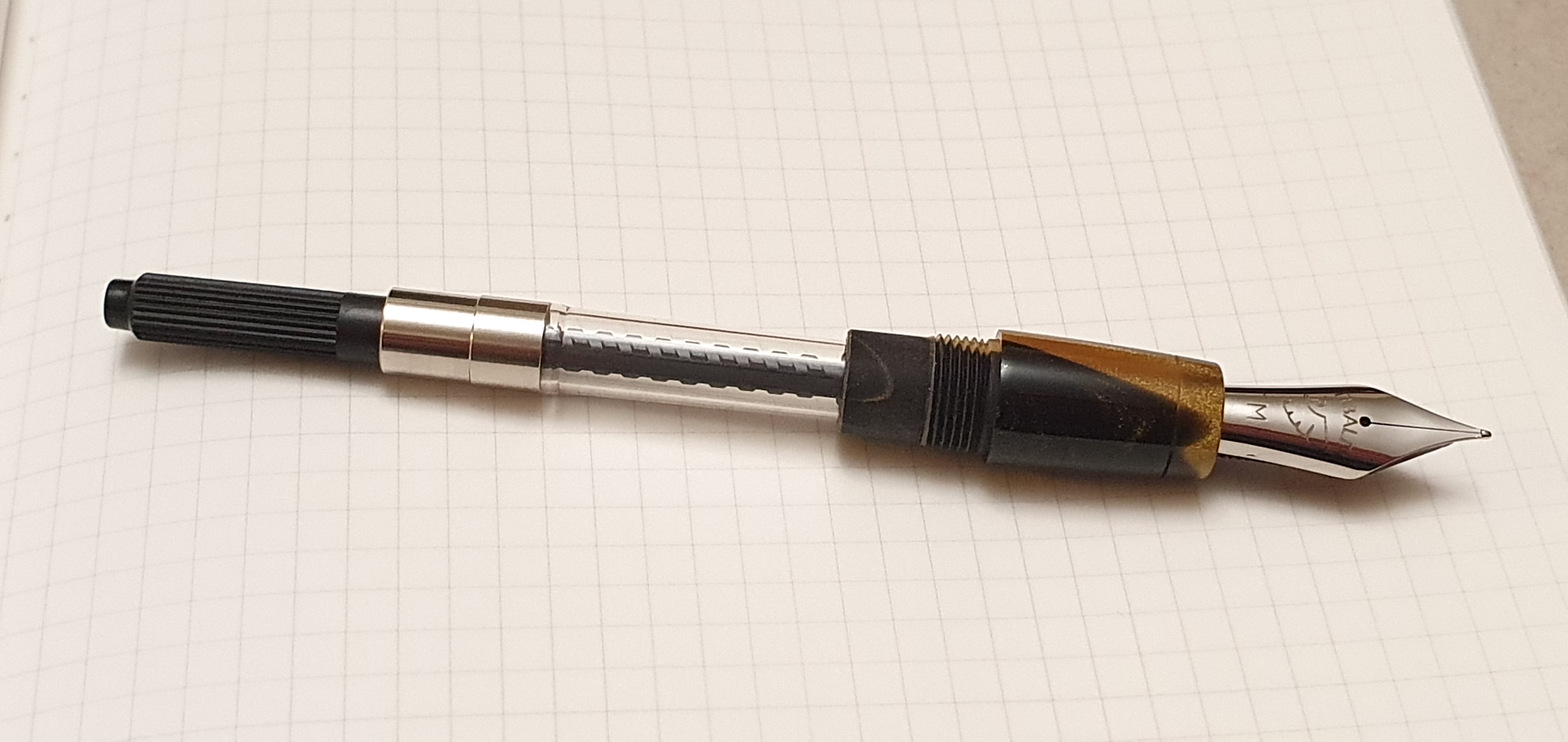
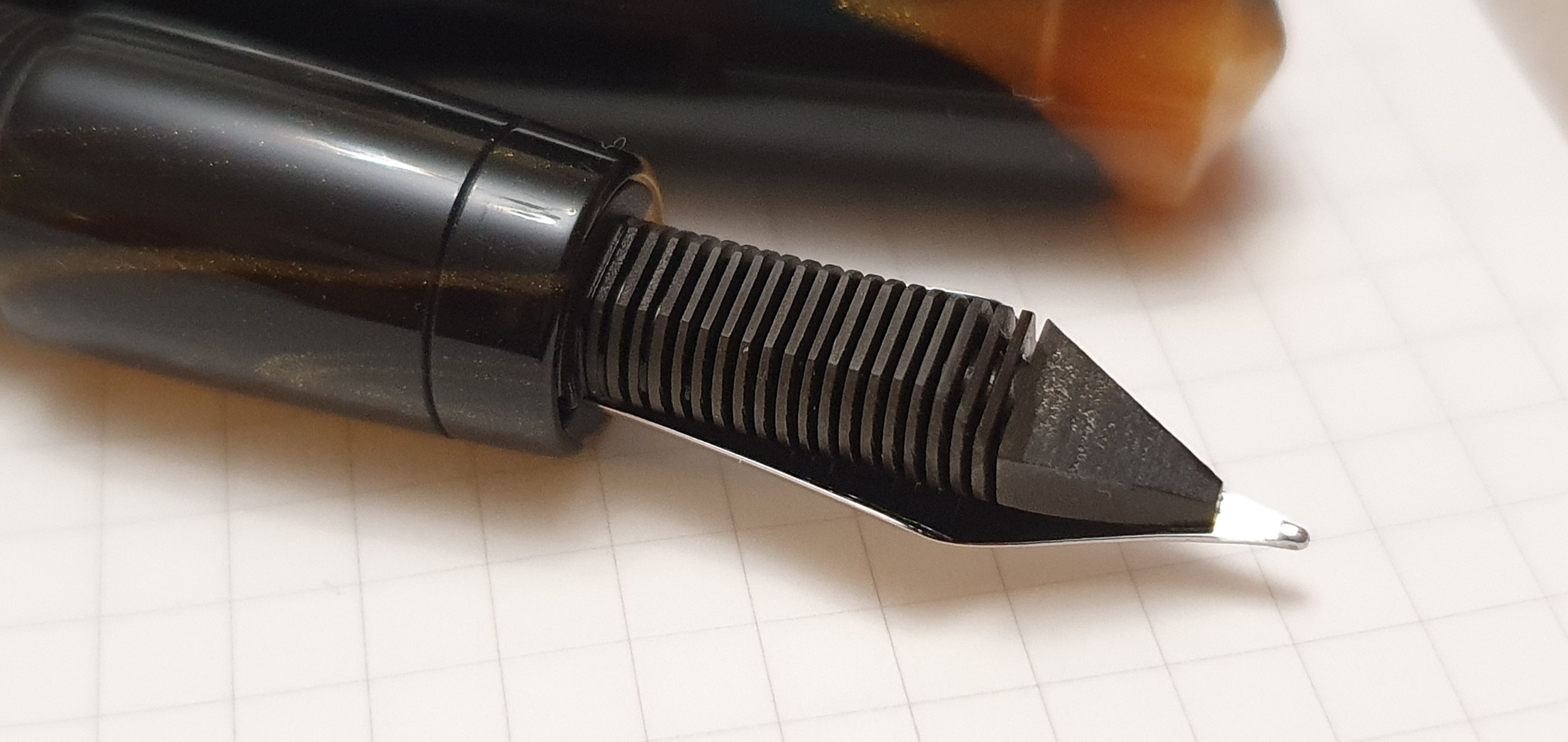
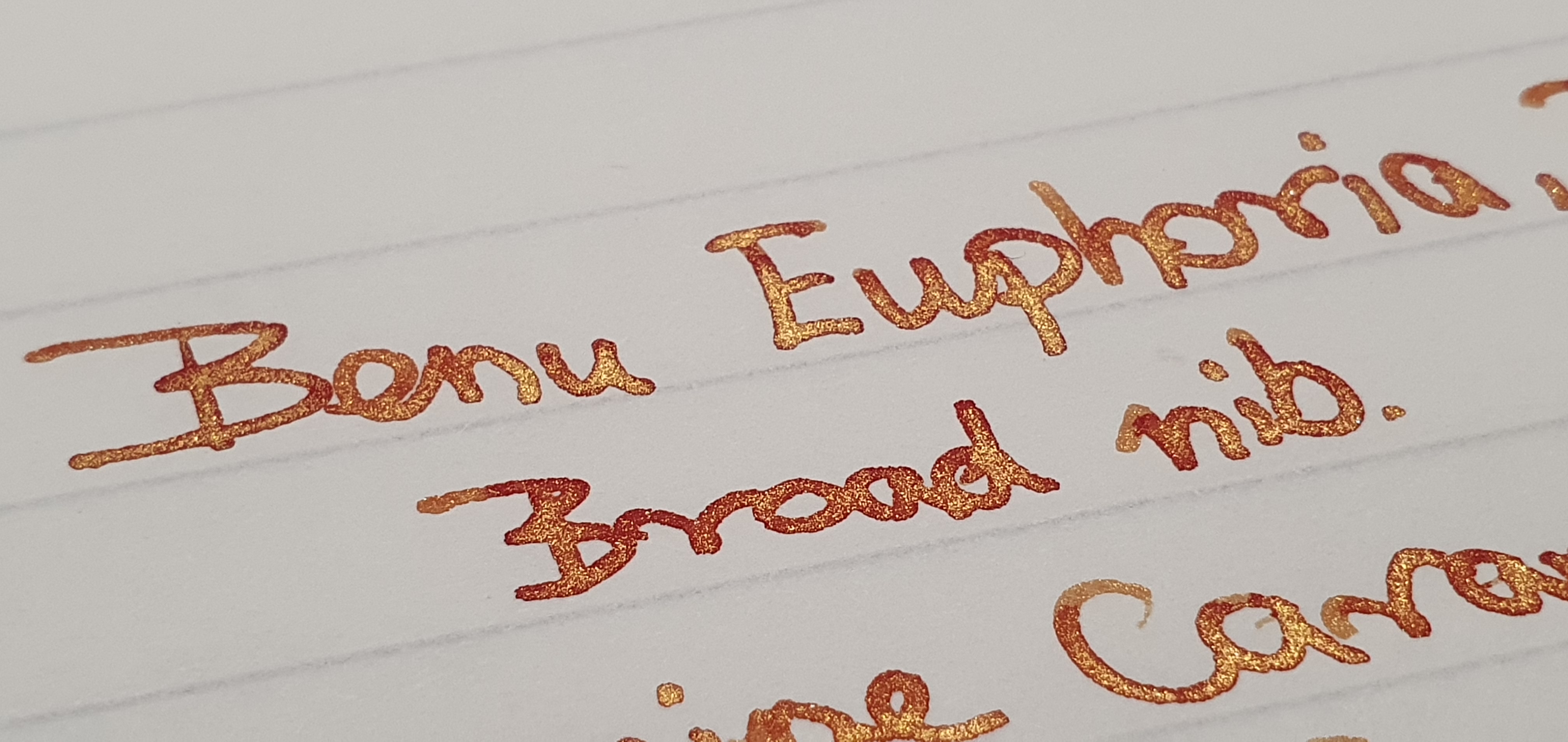
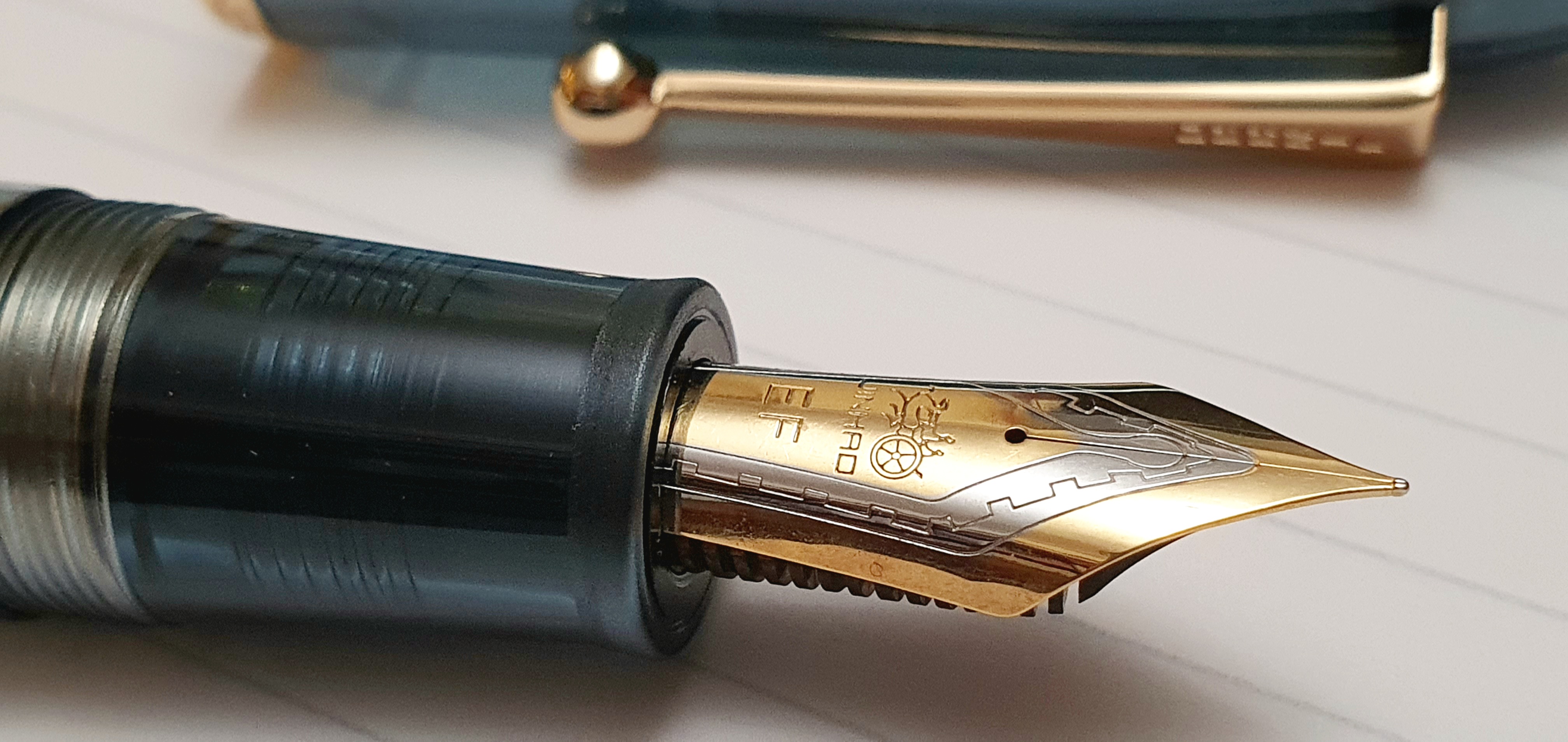
The nib is a number 6 sized Schmidt, in stainless steel. Mine is a Broad, marked with an ornate “B” in the centre of the imprint. It writes beautifully smooth and wet but not too wet. The pocket clip is also stainless steel and sprung, to lift when the top end is squeezed, to enable the clip to slide easily over a pocket.

Faceted barrel. Broad nib writing sample.

Uncapped, the pen is a very good length, around 137mm, being well above my preferred minimum of 130mm. The grip area is also of a good length offering plenty of space for different grips. If, like me, you grip the pen quite high up, then you may find your thumb resting on the cap threads but these are heavy duty and not sharp. Further up the section, there is a step where the coloured material begins which allows the cap to be more flush with the barrel, although not completely. The cap takes about two and half rotations to remove although I had not even noticed this before now. The cap can also be posted although the pen becomes ridiculously long and back-weighted.

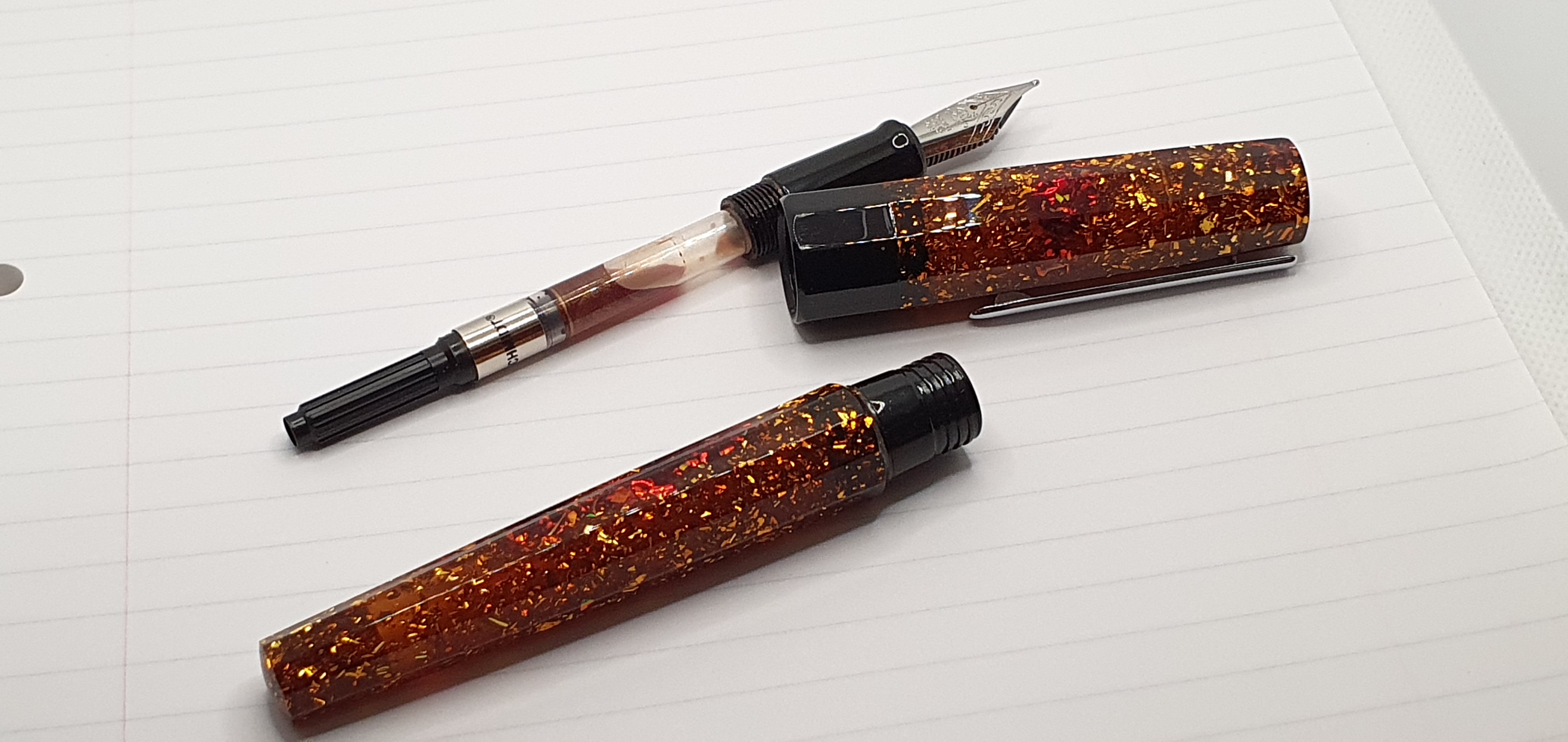
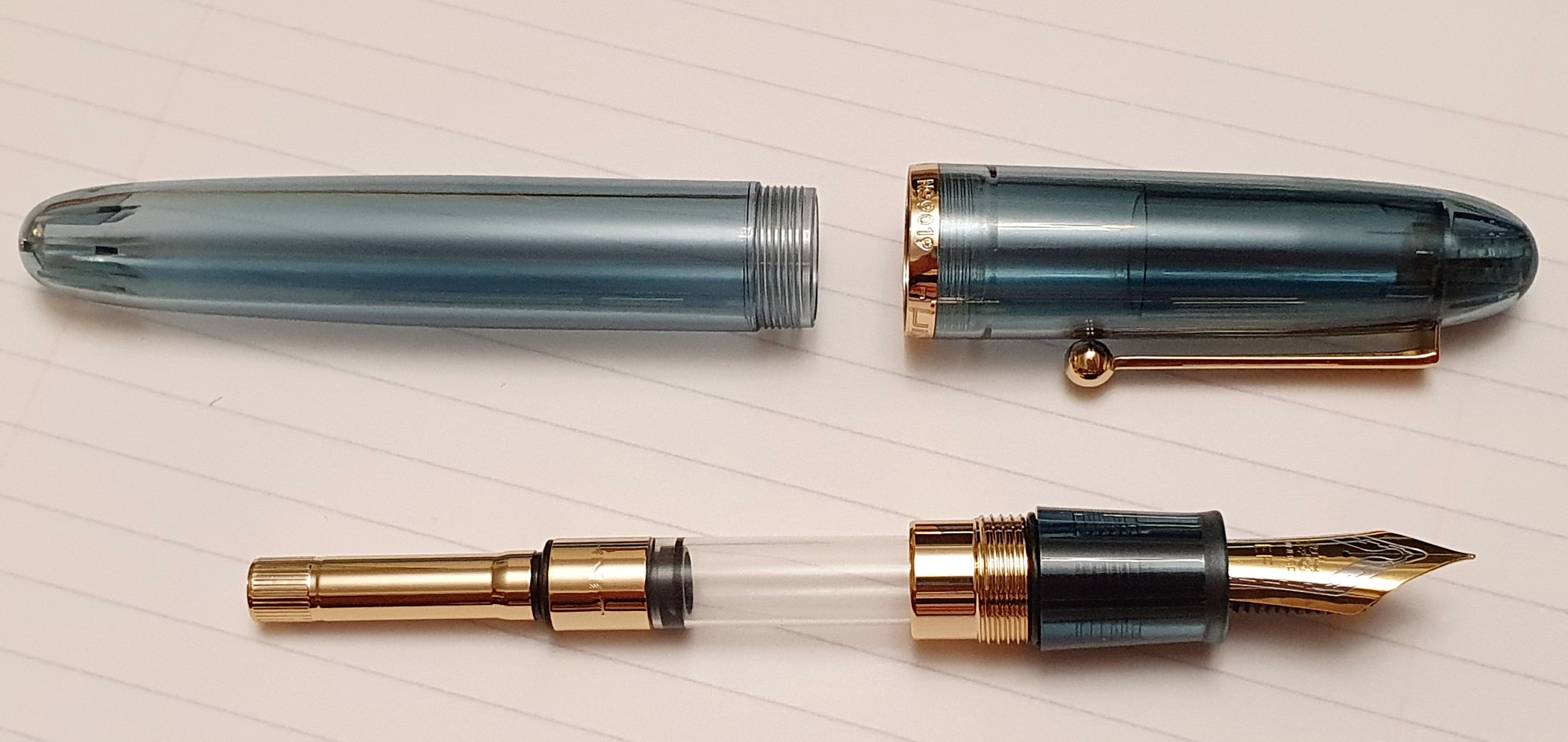
The pen came with a Schmidt converter but can also take standard international cartridges and could be eye-droppered, although I have not tried.

Schmidt nib and converter too.

Naturally, I was eager to try out the pen and also the Caramel Sparkle ink. I was delighted with both! The ink makes for an excellent combination with the Bourbon. The ink is a joy in itself. Gold glitter settles at the bottom of the bottle like sediment in a wine and the bottle needs shaking before filling the pen. Then it is entertaining just to watch the glittery ink swirling in the bottle. At our recent pen club meet, the ink drew much interest and I gave samples to five of our group.

I have not had any trouble with ink clogging the pen or causing hard starts. I give the pen a little shake before writing to wake up the glitter although I am not sure that this is necessary. The ink is a lovely golden brown and dries with a gold sheen. It is marvellous to watch fresh ink on paper via an illuminated loupe, as the tiny glitter particles swim around like pond life, until the ink dries and the sheen appears.

Woooh, sheeny!

I am very glad to have found this pen and to have made the purchase. Coincidentally, like Benu, this blog also started in 2016. As I write this, on 5 November, it is the seventh blogiversary. I take this opportunity to thank everyone for reading, liking and commenting over the years. I love the interaction that the blog brings, in this wonderful, global community. Special thanks also to those who have been kind enough often to include my blog in their own weekly lists of links, notably The Gentleman Stationer in his Sunday Reading posts, the Pen Addict in Sunday’s Misfill posts and The Well-Appointed Desk in their Link-Love posts. Recognition from these far larger blogs across the pond, is very gratifying.

Today’s post is my 248th of this blog. The blog has drawn 546,000 views to date and the number of new subscribers has roughly kept pace with the number of posts. Am I losing interest in the pen hobby, after seven years? Not at all. As my latest venture into sparkling pens and inks shows, I am still discovering new things.

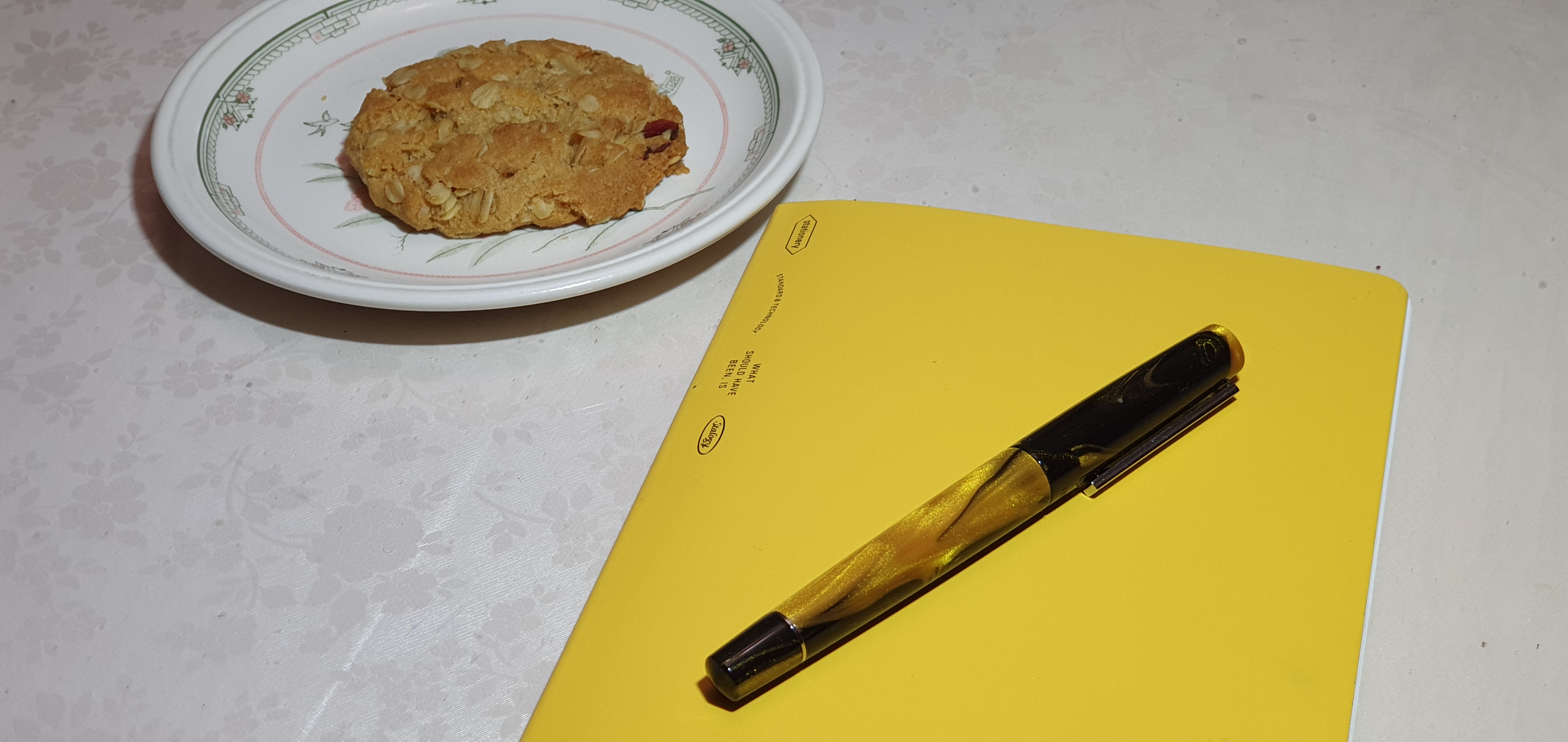
When pen, ink – and facets – are perfectly aligned.

My Parker 61 Flighter fountain pen: a cautionary tale.

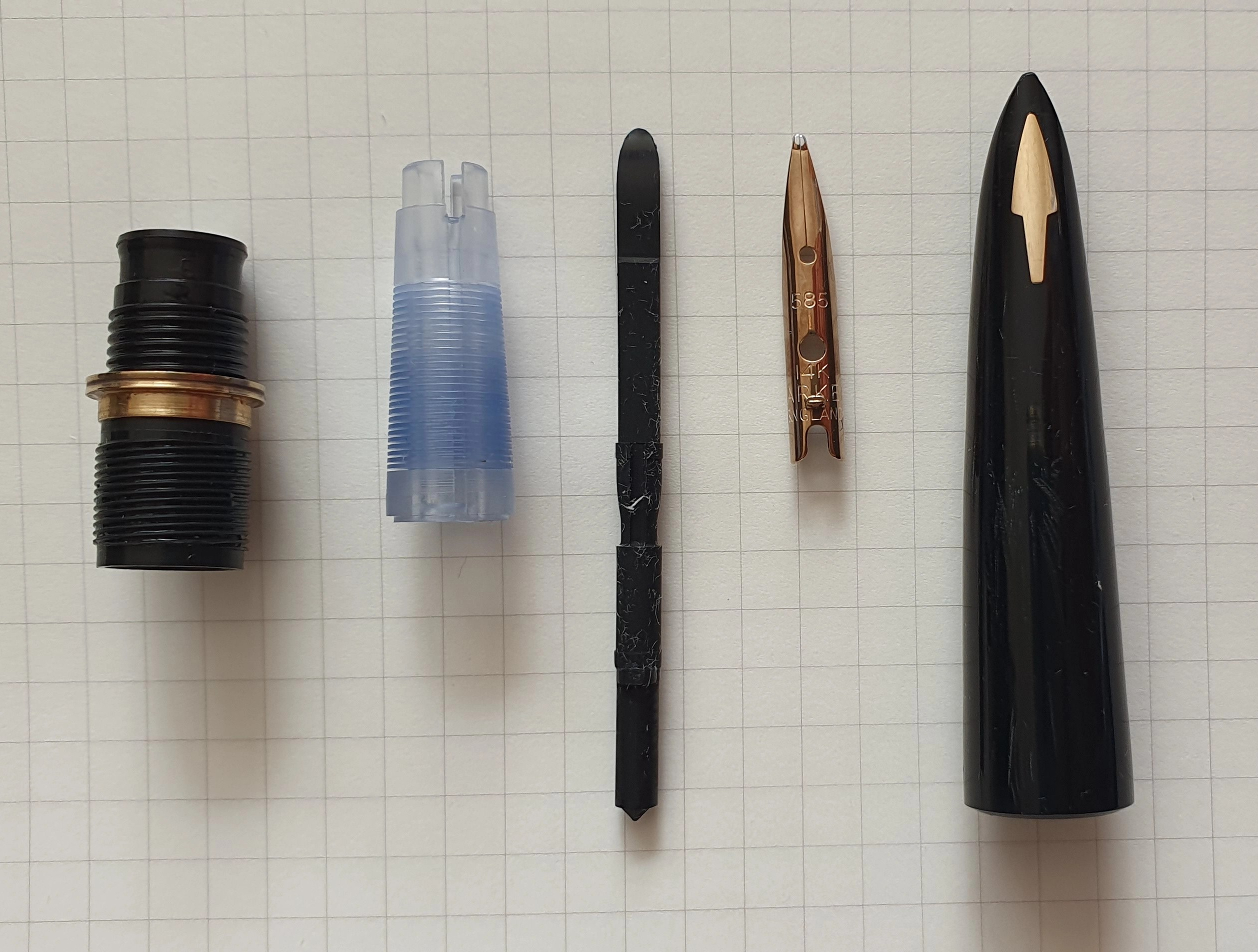
In my post of 21 September 2023, I wrote about my eBay purchase of a Parker 61 Flighter and my initial tinkering as I got to know its anatomy. I had been pleased to discover that the connector was not glued into the section, as I could remove it and the feed, ink collector and nib for cleaning and maintenance.

Parker 61 Flighter.

There was a downside to this. Not having the connector glued meant that when trying to remove the barrel, the connector unscrewed itself from the section (shell) instead. The section threads were looser than the barrel threads. Also, applying silicone grease to the section threads might have made things worse. I was wary of over-tightening the shell in case it should crack.

I had filled the pen and enjoyed writing with it. But I then discovered that, on tightening the barrel, it did not stop tightly at the end of the threads, but kept going round and round. I wondered whether the fine plastic threads were stripped.

I thought perhaps the problem was not damaged threads, but that (what I presumed to be) a threaded, plastic collar inside the steel barrel, was loose and turning freely inside the barrel. This lead me to decide that the solution would be to apply a little Loctite superglue, to the rim of the plastic collar, in the hope that the glue would seep behind it.

The connector screws into the shell and can then connect it to the barrel.

This operation (even if it had been the right one) did not go particularly well. I applied too much glue and got some on the threads too. But I left the glue to harden for several hours.

Returning to see the results, I tried re-attaching the barrel. This time, the threads were much stiffer and needed a lot of effort, as well as care to avoid the barrel going on cross-threaded. I tried removing some of the build up of hardened glue with a small blade, without much success. Also, once sure that it was not cross-threaded, I worked the barrel back and forth quickly, many times, trying to loosen up the threads.

Having the barrel threads so tight and difficult, meant that whenever removing the barrel, the connector would instead unscrew from the shell. This is no good. The pen was all but unusable. I contemplated buying a replacement brushed steel barrel.

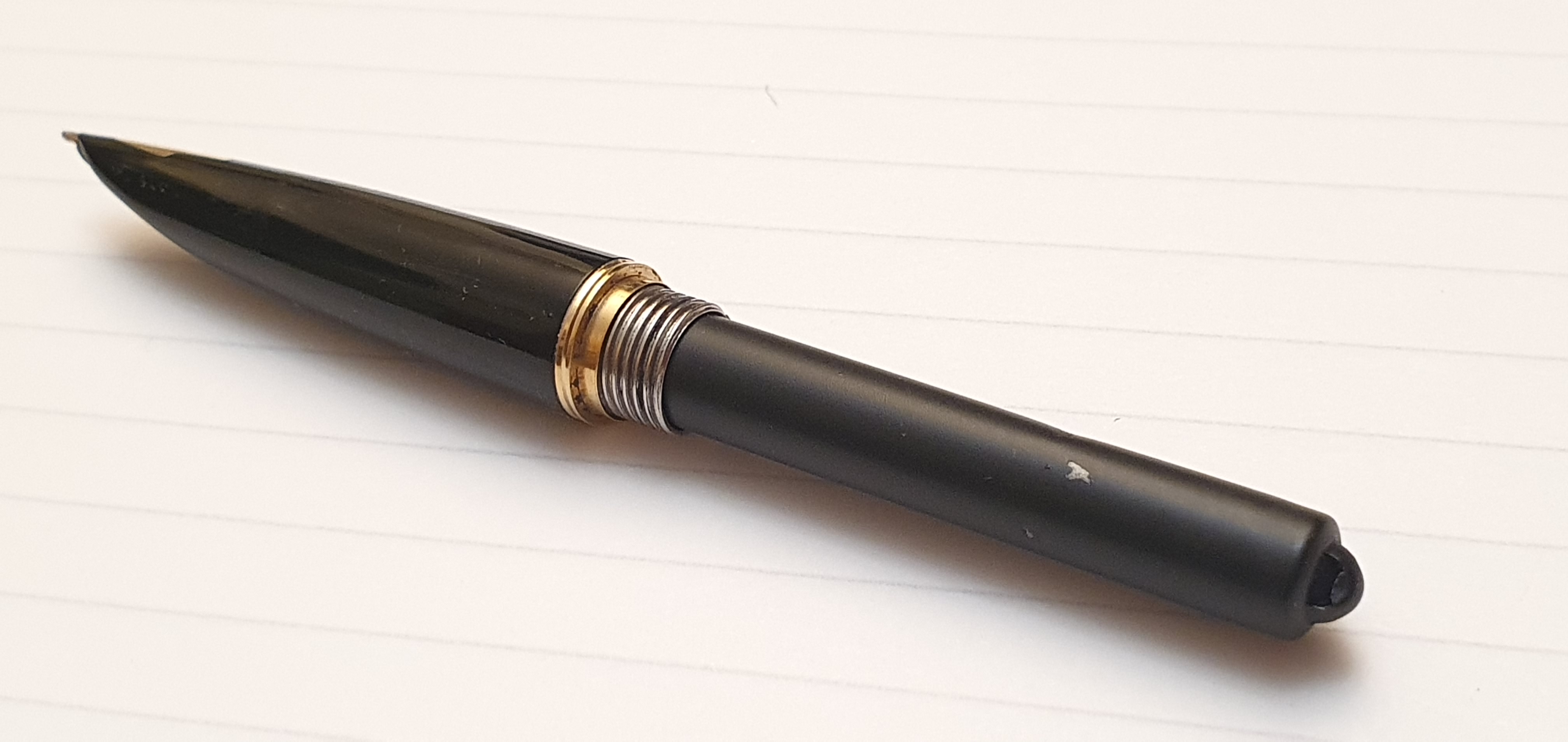
But then, whilst wrestling with the barrel threads again, I made a surprise discovery. The barrel threads were not a plastic collar at all, but were part of a black plastic barrel liner, which went the length of the barrel. I only learned of this, because it came out.

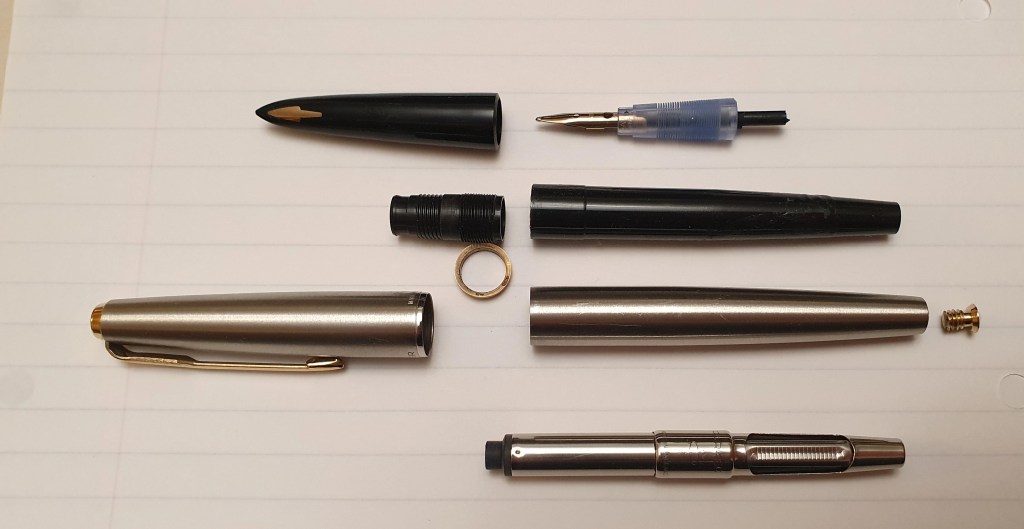
Showing barrel liner, barrel and securing screw.

The barrel liner should be secured in the barrel by a metal screw, which forms the barrel finial. It has a decorative, conical top but no groove for a screw driver, which makes it very difficult to tighten. Also, from the look of the barrel liner, it appeared to have been glued in the past, as there were residues of hardened glue on the outside.

With the barrel liner out, it was easier for me to work on removing my glue. Scraping with a blade and working the threads back and forth, did not seem to help.

I looked up online, how to remove Loctite glue. The answers depended on the surface. For plastics, there was a suggestion, as a gentle approach, that you apply skin moisturiser to soften the glue first. Alternatively, white vinegar might work. Failing this, there was a suggestion to try pure Acetone.

I tried the moisturiser trick but do not think it helped much if at all. I did not have any vinegar to try, let alone Acetone.

At our local pharmacy, I casually enquired whether they had any nail varnish remover. Whilst the lady located some, I explained that I did not want it for removing nail varnish, but hoped that it might contain Acetone, to remove some glue!

To my surprise, the lady said that she could instead sell me some pure Acetone. I had no idea that this could be bought over the counter. A small, 50ml bottle was just £1.20.

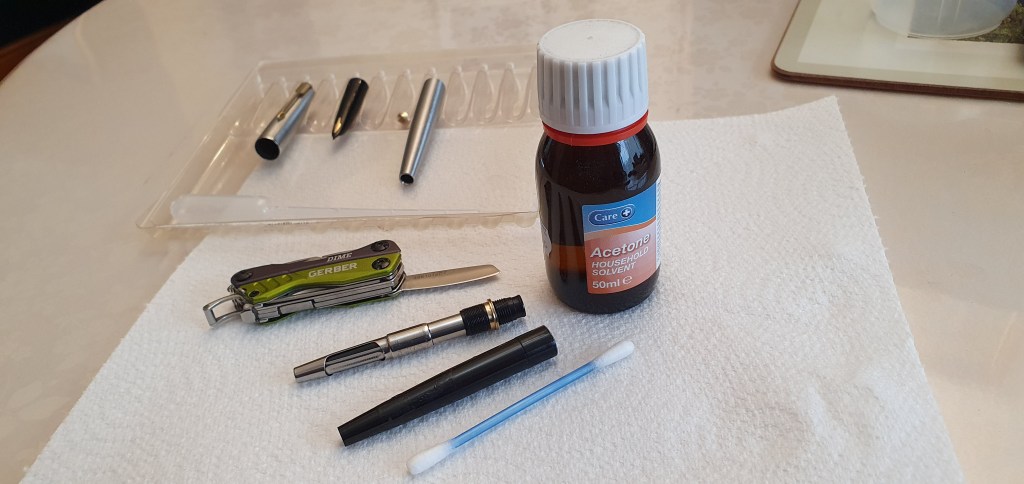
Preparing to remove glue, using Acetone solvent.

I was a bit frightened of the Acetone as the bottle label was peppered with warnings. I had read that with plastics, you should try it on a small unobtrusive area first, but skipped that. I dipped a cotton-bud into some Acetone and applied it to patches of my hardened glue at the threads. Rather alarmingly, the cotton-bud came away quite black. I feared that it had dissolved the plastic, completely removing the threads in the process.

Fortunately, this was not the case. I washed the barrel liner thoroughly in soapy water and tried the threads again. Better! They were getting looser. I then smothered the threads in moisturiser, to soften the glue, and left it for 24 hours, before having another couple of attempts with the Acetone.

After this, although glue residue was still evident, I felt that the threads were probably as loose as I could get them without overdoing it.

Re-assembling the pen, I did not use silicone grease in the shell this time. The barrel threads were now looser. Unfortunately however, the barrel liner could still rotate inside the barrel.

This has been a learning curve for me, making mistakes along the way, whilst learning about the penatomy of the Parker 61 Flighter. I have not given up yet. I have just ordered a small bottle of shellac to apply a little to fix the connector into the shell, plus a little to the outside of the barrel liner, to secure this into the steel barrel. If this succeeds, I will be able to use and enjoy this lovely pen with more confidence.

Update: 23 October 2023.

Sorry for this cliff-hanger ending. But since writing this post, I had another idea to stop the barrel liner from rotating by wedging a slip of paper between it and the barrel. I cut a piece of paper and wrapped it around the back end of the barrel liner before re-inserting it and doing up the screw/finial. This worked! I also screwed the connector into the shell a little more tightly than before. Now, I can unscrew the barrel without the connector coming out instead. Also, when putting the barrel back on, it stops at the end of the threads, in the normal way. To celebrate, I have inked the pen with Montblanc William Shakespeare Velvet Red!

The London Autumn Pen Show, 2023: my haul.

Here in London, our autumn Pen Show has just taken place on Sunday 8 October, at the Novotel, Hammersmith.

I had been eagerly looking forward to this event as always. The last two shows had set me on a path of seeking out vintage Parker fountain pens. I had bought several more on eBay, in the arid months between shows. I did not have much specifically in mind to look for this time, other than to find a cap jewel for my Parker 51, which I had bought on eBay without one.

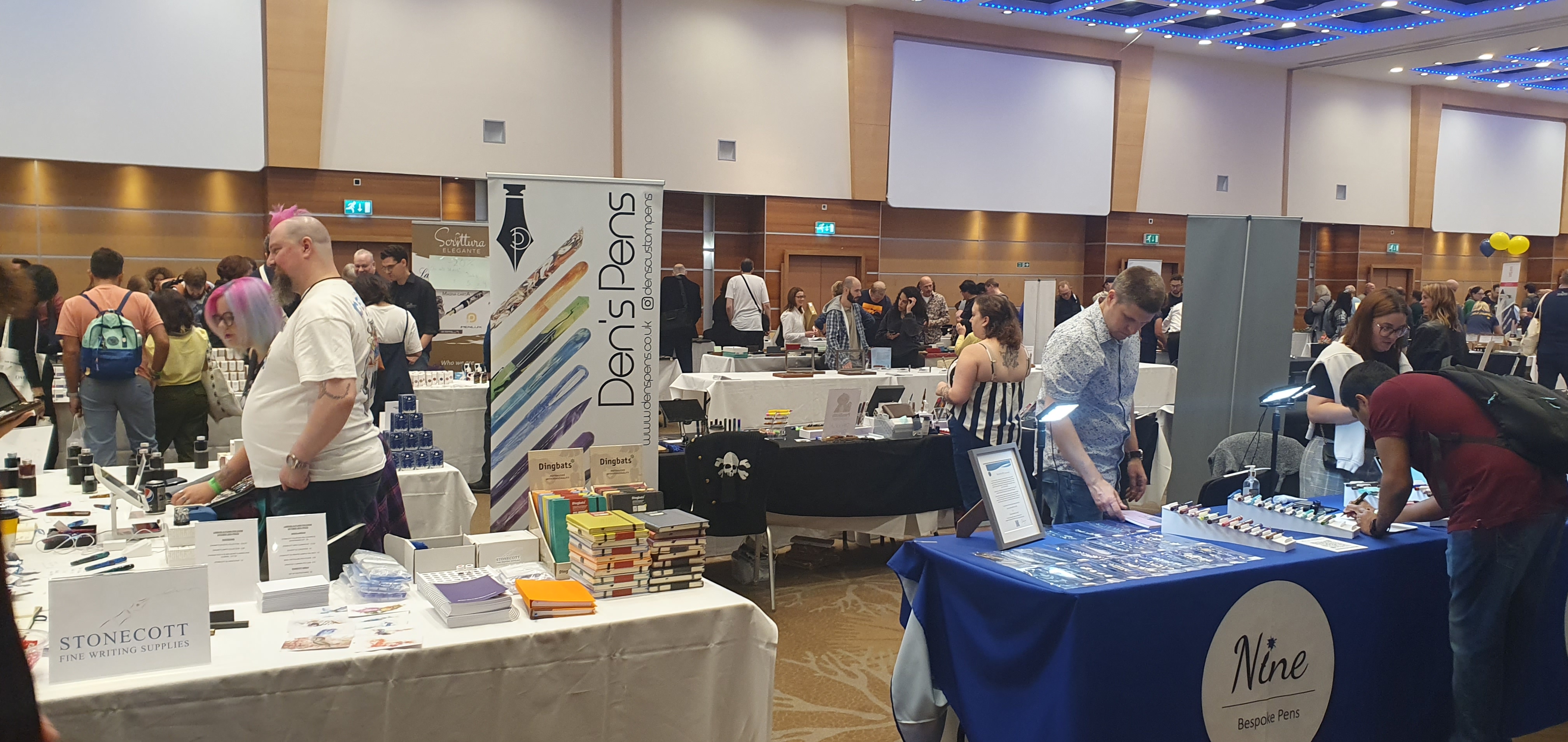
The show was well attended. There were more vendor tables than in March although the venue provided ample space without feeling crowded. I cannot list everyone but for many great photos and videos from the day, head over to John Foye on Instagram, @stjohnspens.

Claire and Derek sporting pink hair at Stonecott Fine Writing.

It was wonderful to see and chat to numerous friends from the pen community throughout the day. My fellow blogger Gary dapprman had his own table, aiming to release some pens from his collection back into the wild. It was good to see Jon of pensharing recruiting plenty of new members for his unique service for the community. I enjoyed chatting to many vendors, including John Hall, John Foye and Kirit Dal, and the lady from Pen Friends whose name I did not catch.

Kirit Dal’s Aurora table is always enticing.

My first purchase of the day was at Mark Catley’s Vintage Fountain Pens table, where I found the cap jewel that I wanted. My Parker 51 is now complete.

For vintage Parkers, there were hundreds for sale in the room. At Graham Jasper’s Pen Estates tables, I handled a wonderful, mint condition Parker 51 in a sumptuous Forest Green, but this was one that got away.

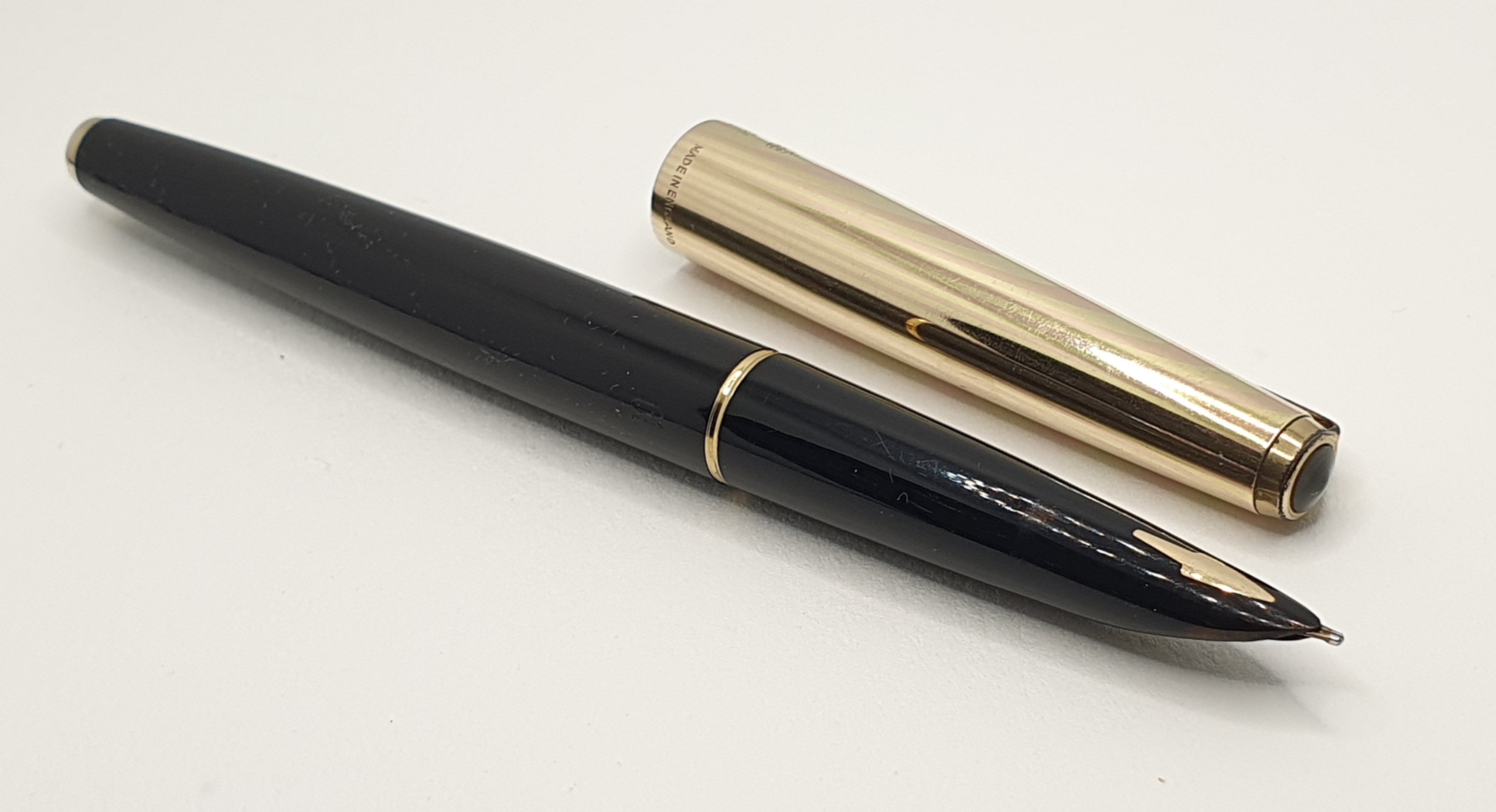
I was keen to take a look at some Parker 61 pens, particularly an early model with the ingenious capillary filling system, which I wrote about in my recent post. After looking at a few tables, I found a tray of Parker 61s, and unlike on eBay, had the luxury of inspecting them and dip-testing them in Quink blue black. I decided on a gorgeous classic, black model with a rolled gold cap and deliciously smooth nib.

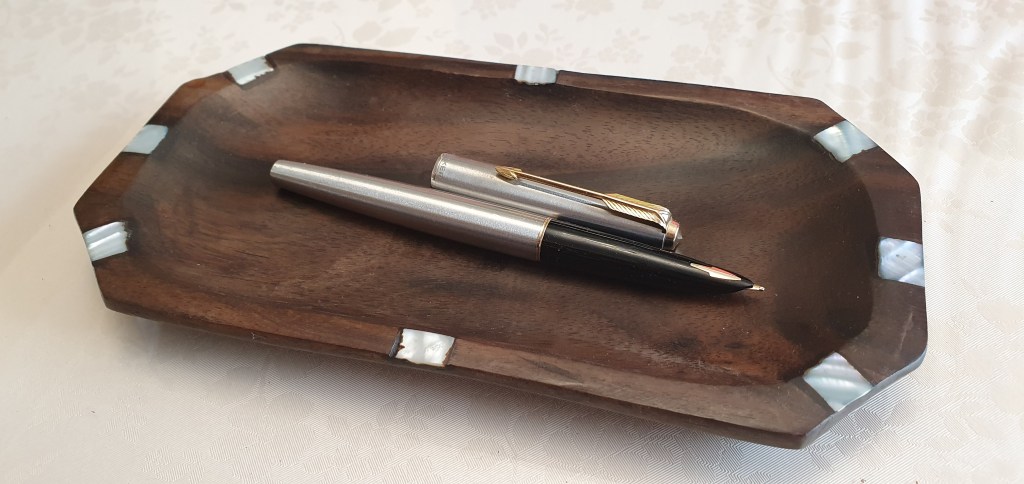
My newest, but oldest Parker 61.
The Teflon-coated, capillary filler, or “cell.”

I caught up with my friend So-Jin, who mentioned that I had been rather negative about sheening and glitter inks in my blog post, on the 21 Pen Questions that did the rounds a few months ago. Having written that such inks were not my thing, it was strange that within minutes after our conversation, I found myself at Stonecott Fine Writing Supplies’ table, drawn to a very glittery Benu Euphoria Bourbon in gold and brown with tantalising patches of crimson. As I turned the pen in my hands, I envisaged filling this pen with Diamine’s Caramel Sparkle, available at the same table. I chatted with @claire.scribbleswithpens who was assisting Derek for a while. I did not purchase the pen immediately, but the temptation proved too much for me and I returned to buy it, along with a bottle of Caramel Sparkle soon after. Benu are based in Yerevan, Armenia, from whence my distant ancestors came.

Benu Euphoria Bourbon.

My final pen purchase of the day, was a Jinhao 82 in a pretty pastel jade green. I already have one in Caribbean Sea Blue with a fine nib and am very impressed with it. This pale green version has a medium nib and makes a great, inexpensive, EDC pocket pen.

Jinhao 82 in a particularly lovely, Jade green.

Finally, having largely resisted the many notebooks available, I weakened at the sight of an Endless Recorder A5 journal with Tomoe River at Louise’s table. Newer versions now come with Regalia paper. TR paper may sadly become extinct.

Endless Recorder, A5 journal.

Back home I felt that I had, broadly speaking, heeded my wife’s instructions not to go mad and not to stay too long. I enjoyed inking the Benu (which deserves its own post later) and the Jinhao 82, which I paired with Pelikan Edelstein Olivine. The new cap jewel and brass bush, found their place in the Parker 51.

But the biggest thrill of all was the Parker 61. The seller had removed her sticker from around the pocket clip and I had not noticed until later in natural daylight, that my pen was an edition called the Parker 61 Heirloom, featuring a rainbow pattern in two tone rolled gold on the cap. Given that my pen was made in England, I believe this pattern dates it between 1964 and 1967, from what I read on parkerpens.net. My pen remembers The Beatles.

The rainbow cap of the Parker 61 Heirloom.
Markings on the cap and barrel.

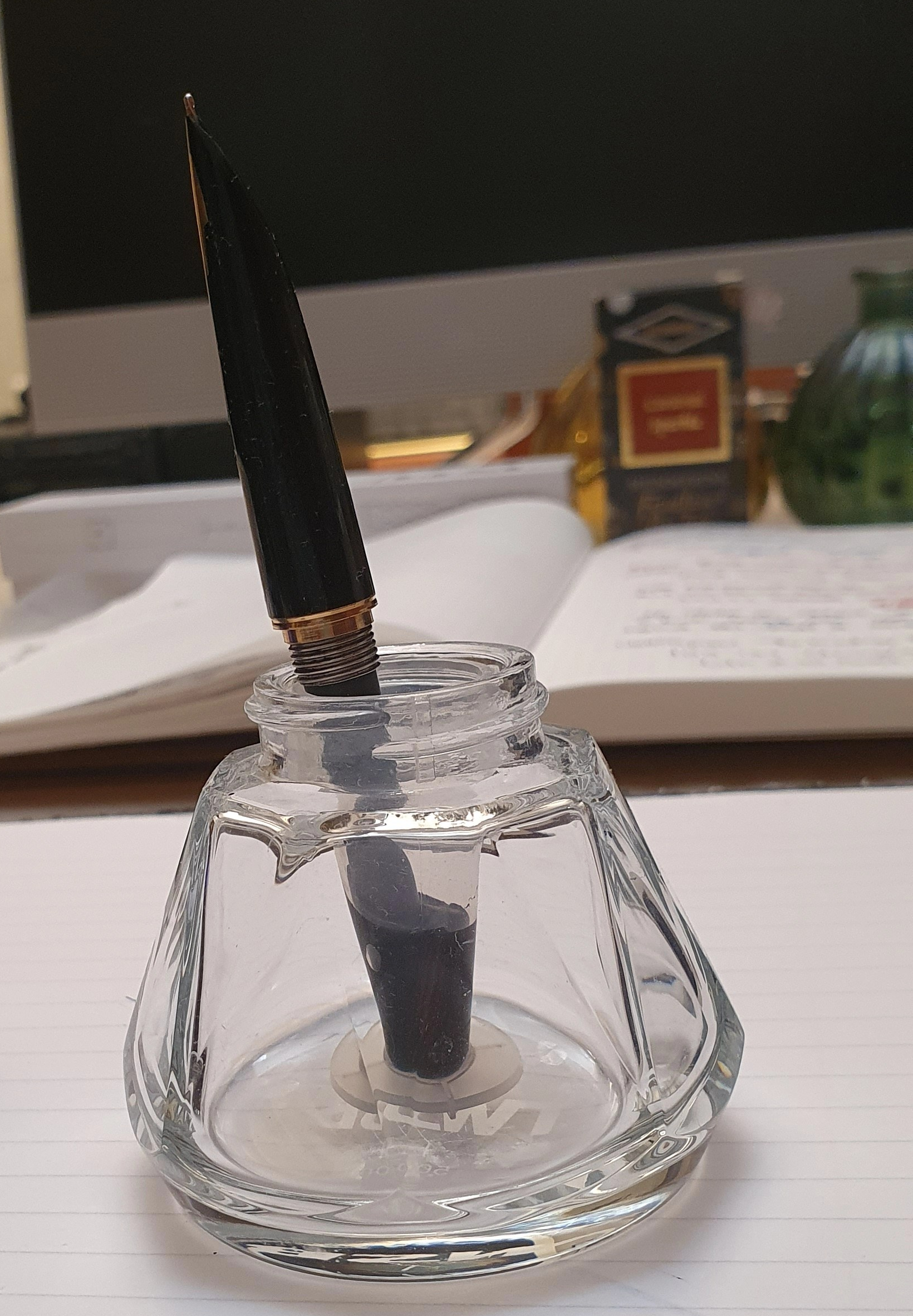
I rinsed the nib and polished the gold cap. Without attempting any cleaning of the capillary filler, I thought I would first try to fill it and see if it worked. I decanted a little Waterman Serenity Blue into the plastic ink receptacle in a TWSBI ink well. I then placed the capillary filler in the ink, and took a photo of the ink level at the start of filling and another one about three minutes later. The ink level had gone down significantly. I found this enormously exciting.

Preparing to try out the capillary filler for the first time!
Physics in action.

However, the pen did not write initially. I gave it a few gentle shakes downwards, but this did not appear to have much effect. Fearing that there may be a blockage from decades-old dried ink in the feed, I dipped the pen and began to write with the ink that the nib had retained. Once again, I revelled in its smoothness, but with a worry that this might last for only a paragraph before the nib ran dry.

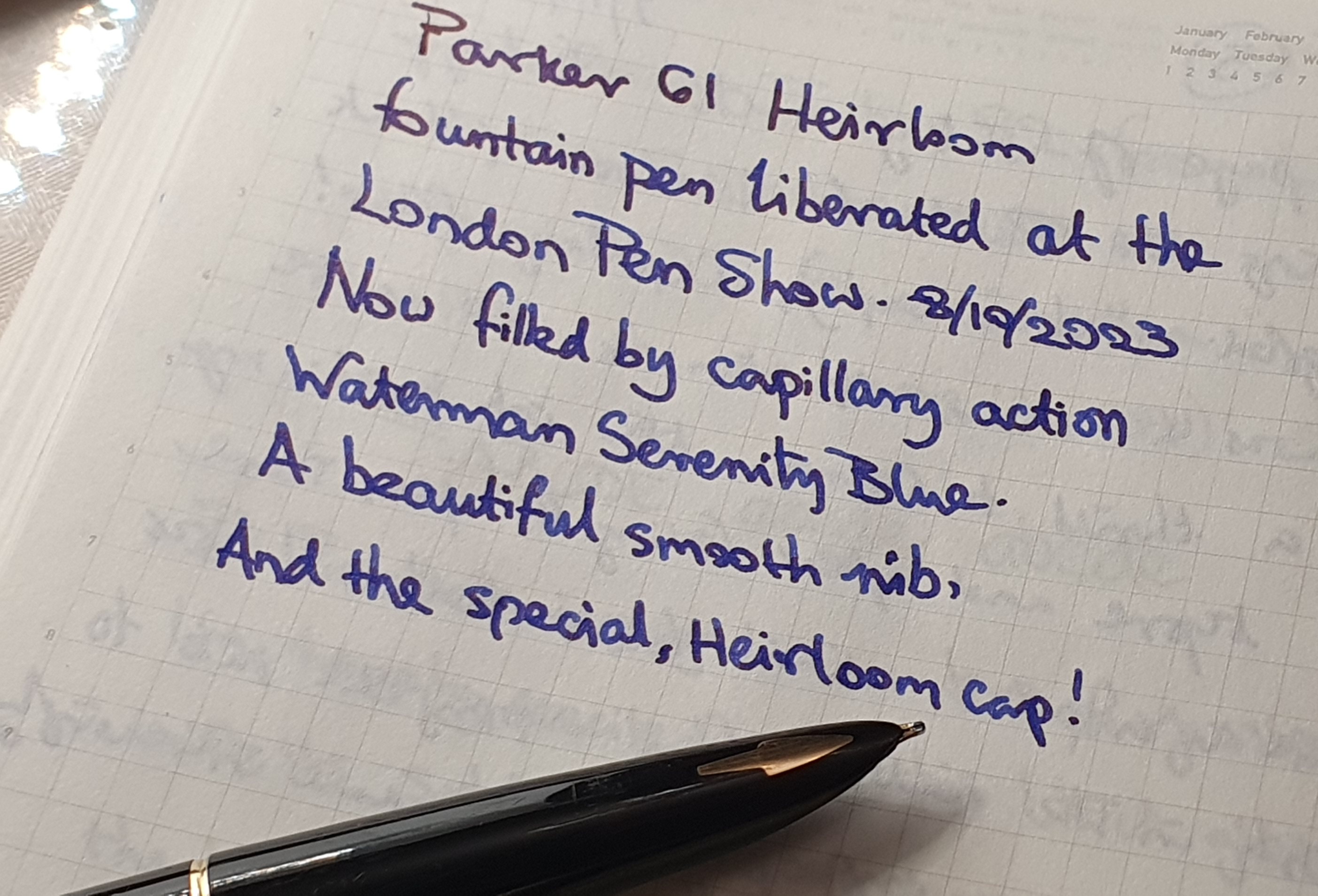
But to my growing relief and exhilaration, the pen continued to write for a full page, then a second, a third and fourth page of my A5 Stalogy notebook, by which time I was certain that the ink I was seeing on the page was ink that the capillary filler had drawn up.

The nib writes a smooth medium-broad.

I am hugely pleased with the Parker 61 Heirloom and everything about it. It looks and feels great and writes like a dream. The filling system is unique. It was heralded as “the pen that fills itself” and, as I read, took 12 years to develop! Also, as a party trick, this pen can write upside down, on a wall or ceiling, because the flow of ink to the nib is a product of capillary action and not gravity. And the price of all this enjoyment? A modest £45.00. I recommend anyone who might be hesitating, to take a look at vintage Parkers.

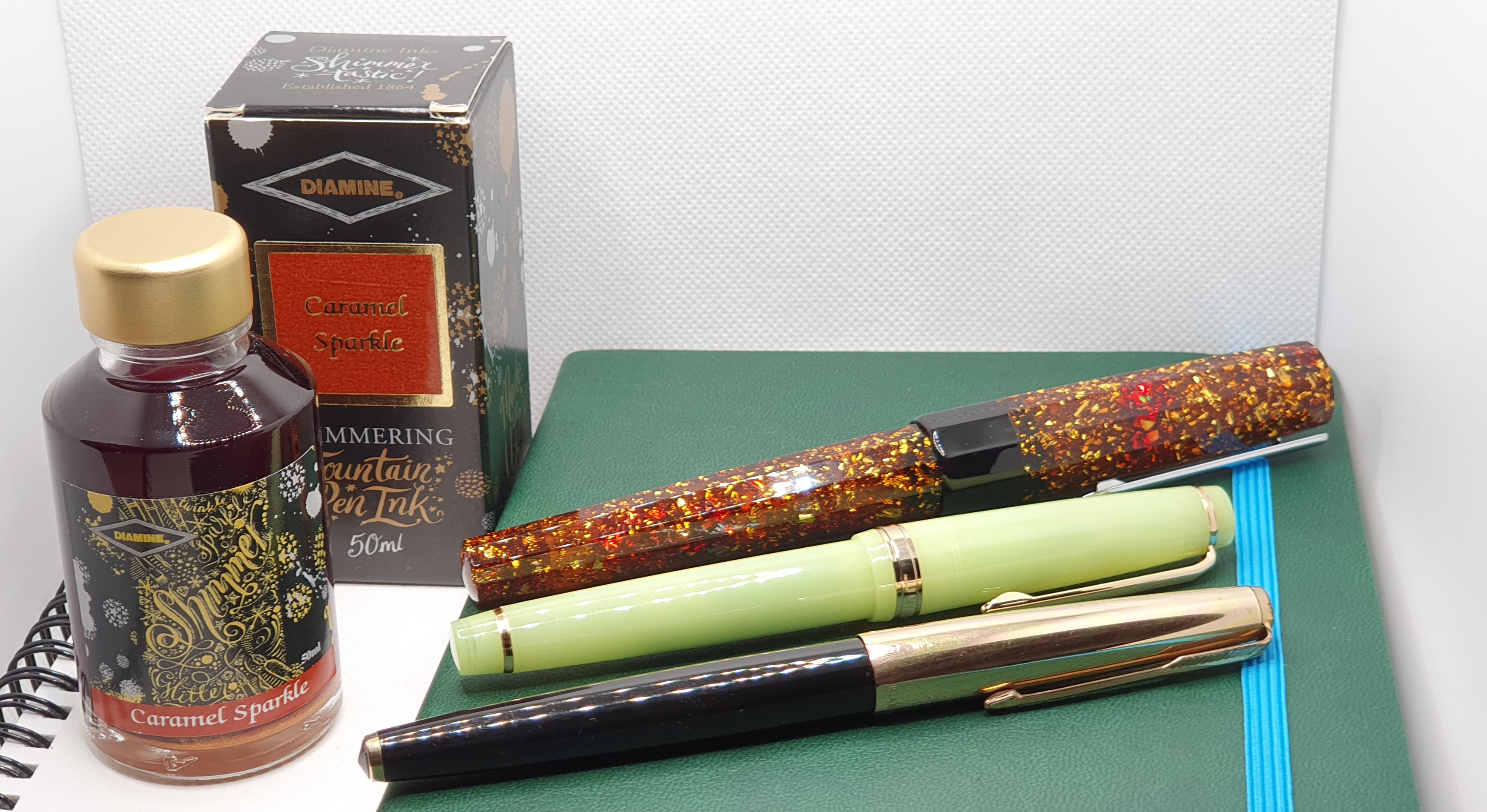
My haul.

My new (to me) Parker 61 Flighter fountain pen.

Lately I have got a bit hooked on buying vintage Parker fountain pens on eBay. I have been fortunate in finding some classic pens with gold nibs and plenty of life left in them, at attractive prices.

The latest to arrive was a Parker 61 Flighter. This was an impulse buy after receiving one of eBay’s thoughtful emails, that an auction of a pen I had viewed, was soon to end and inviting me to make my bid. By the time I read the email, the auction had barely 60 seconds left to go. I made a quick decision to bid and watched nervously as the final seconds ticked down. I did not have long to wait. The outcome was that three people had bid in the final minute. By a stroke of luck, my bid of £31.36 had won, by just 85p.

Parker 61 Flighter.

The pen arrived this morning. Although I have enjoyed Parker pens since the 1970’s, I had not owned a Parker 61 before. I recall being very enamoured with Parker’s Flighter pens, as a ten year old boy.

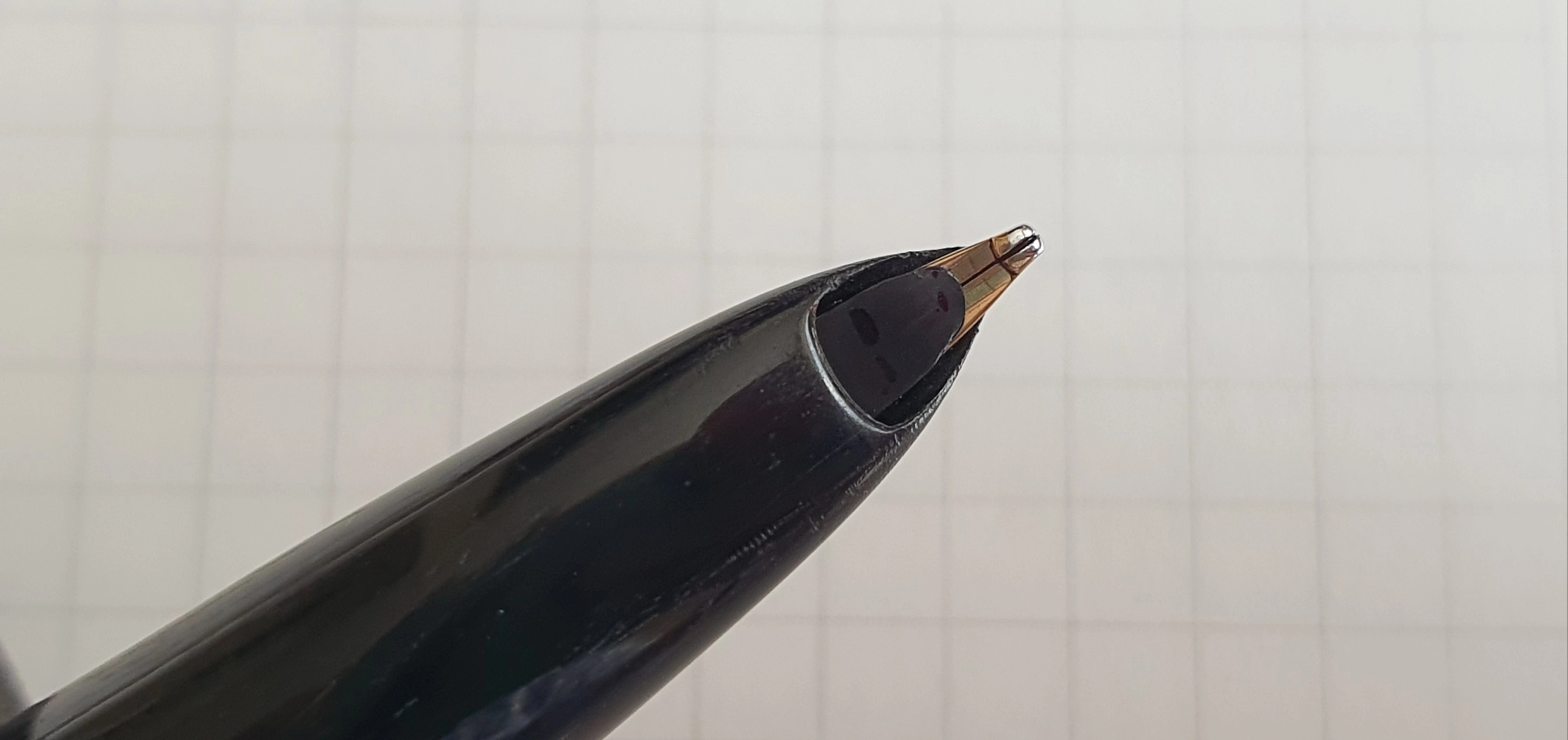
First impressions were good. The brushed stainless steel finish feels smooth and luxurious. The slip cap pulls off silently and easily yet feels secure enough when on. The pen is more sleek and tapered than my Parker 51, and slightly shorter overall, yet the grip section is about 1cm longer. The Parker 61 has a distinctive inlaid arrow on the section, introduced to help people know which way the tiny nib was facing, although these are known to fall off.

The Parker 61 was first introduced in the USA in 1956 but not in England until the early 1960’s. The early models featured an innovative new capillary filling system. This was part of the quest for a convenient method of refilling a fountain pen without the mess. This new system consisted of a cylinder coated in Teflon, a non-stick finish. To fill the pen, the user had simply to unscrew the barrel, place the pen, nib up, in a bottle of ink, and wait about 30 seconds for the cylinder to fill itself by capillary action. Then the pen could be lifted from the bottle and, in theory at least, ink would not adhere to the Teflon coating. The barrel could be screwed back on without a need to clean the cylinder.

In practice the Teflon would flake off eventually and some cleaning was necessary. It seems that the system was not as popular as hoped. Also, there was a tendency for the cylinder to get clogged up, if the pen was not cleaned out from time to time. Before long the system was dropped and instead, later versions used Parker’s new cartridges or else a detachable aerometric-style cartridge-converter.

My model has the cartridge-converter. I do not know the date of it. It was made in England, which puts it before the closure of the Parker Pen factory in Newhaven in around 2011. But I read on Tony Fischier’s site, parkerpens.net that the Parker 61 range was discontinued in 1983 and so my pen is at least 40 years old. It does not have the “Quality Pen” date code on the cap, introduced in 1980 and so I can narrow the date down to 1960’s or 1970’s. I suspect that there are other clues to discover.

The squeeze bar, cartridge-converter version.

On its arrival, my pen still had traces of blue ink and I gave it an initial flush in water, using the converter. On squeezing the converter, a healthy stream of air bubbles was emitted from the nib, an encouraging sign.

Then as I removed the converter to wash out the section, I noticed that the connector was loose and rotating. I carefully unscrewed this, whereupon I could take out the nib, feed and ink collector, separate them and give them a clean.

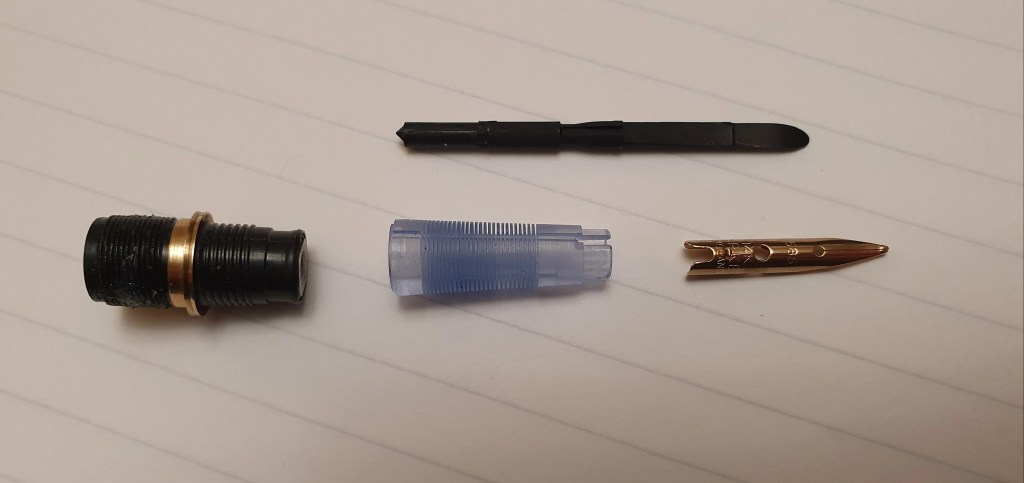
Connector, ink collector, feed, nib and shell, after their bath.

I was careful not to lose any small parts. In my excitement, and after cleaning and photographing the pieces, I forgot the sequence for reassembly and watched an informative YouTube video from Grandmia Pens, which set me right. Steff advises against unscrewing the shell in the Parker 61s, as they are prone to cracking and shrinkage. It is not advisable to apply heat to them to soften the adhesive, (as you might with a Parker 51) for this reason.

Although the pen in his video was the capillary filler version, the principles are largely the same, as follows:

  • first find the channel in the the ink collector. This should be aligned with the nib;
  • insert the nib carefully into the collector, pushing it in as far as it will go.
  • slide the black plastic feed into the ink collector from the back, all the way into the nib, which leaves a small part of the nib protruding beyond the feed;
  • insert the nib, feed and ink collector into the shell, or section; notches will align them correctly;
  • preferably, apply a little silicone grease to the threads, before screwing the connector inside the shell with the end of the feed passing through the hole in the connector;
  • push the converter back onto the section.

This all went very smoothly. I was pleased that the connector was not glued, enabling me to take the pen apart safely and clean the components. For those with the capillary version, there will be a retaining washer gripping the cylinder on the connector. This slides forward onto the ink collector, for the cylinder to be removed for cleaning, then later slides back over the end of the cylinder again to secure it. Note also that the plastic feed is much longer in the capillary fill version.

On examining the nib, there was no date code on it. The gold cleaned up very easily. The nib appeared very slightly bent and the tine gap was rather wide, such that the pen was likely to be a gusher. Rather rashly, I squeezed the sides of the nib together, to narrow the tine gap a little, which had the desired effect. After this it was necessary to realign the tines, for smooth writing.

At the end of this exercise, I filled the pen with Waterman Serenity Blue, and tried writing on a Stalogy A5 notebook. Success! The pen writes very nicely. Whilst the generous blob of tipping suggested a Broad nib, the line is closer to a Medium.

I have much enjoyed my first day with this pen, tinkering, cleaning, photographing and writing with it. For the pleasure it gave me today, I have already got my money’s worth and so every new day with my Parker 61 will be a bonus.

14k gold, smooth and juicy.

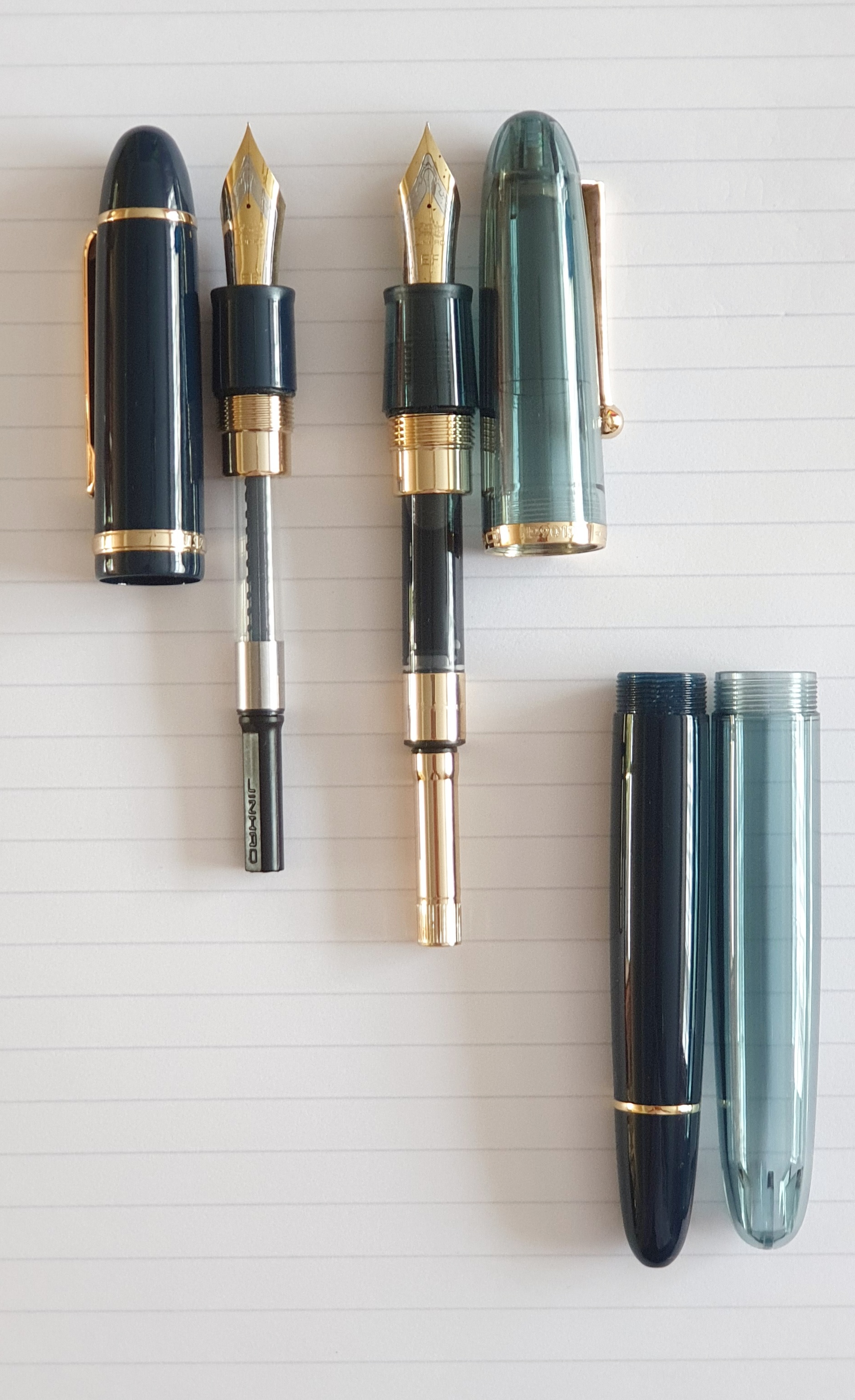
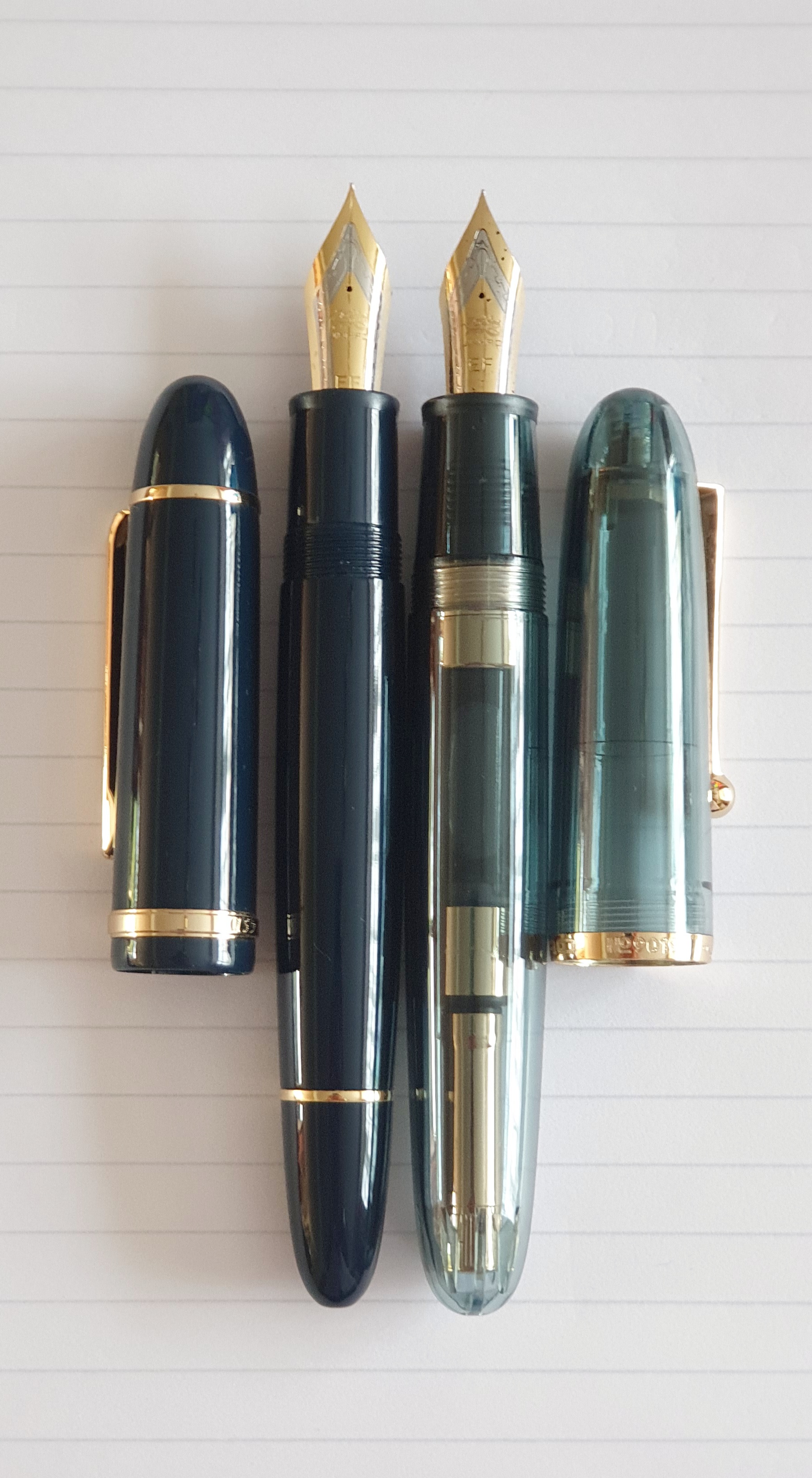
Early thoughts on the Jinhao Dadao No. 9019 fountain pen.

This will likely be a shortish post, because there are many similarities to the Jinhao X159 which I have reviewed recently. The short version is that I like this pen very much.

Jinhao Dadao No. 9019

But whilst this pen might at first glance look like the X159, there are several notable differences, most evident when comparing the two pens side by side. These points, in no particular order, are as follows:-

  1. As well as the opaque versions, in black, blue or burgundy, the 9019 is also available as a demonstrator in clear, blue or pink.
  2. Although it still features the large, number 8 steel nib in extra fine, fine or medium, the body is different. The cap is shorter. The pocket clip sits higher up the cap. The clip itself is different. The means of attaching the clip to the cap is different, being a nut and bolt inside the cap, so that the cap and finial are seamless.
  3. The grip section is significantly longer on the 9019.
  4. The foot of the barrel is still rounded, but more bulbous and cigar shaped, than the bullet shaped X159. This is to accommodate the larger turning rod of the converter.
  5. The converter is larger capacity than that of the X159, and is now a screw fit instead of push fit.
  6. The converter is also considerably more fancy than the X159’s, having a gold coloured turning rod, which is rather impressive and a nice touch, given that it is always on show in the demonstrator editions.
A number 8, two tone steel nib, extra fine. You get a lot of nib for your money.

I first tried the 9019 at our pen club, (the “London Pen Fountaineers”) and was instantly smitten. For the features included, at the current price (£10.49 from Erofa, via Amazon) the purchase is a no-brainer. The nib unit alone and the converter alone, each seem worth more than that.

Note the longer section and larger converter on the 9019.

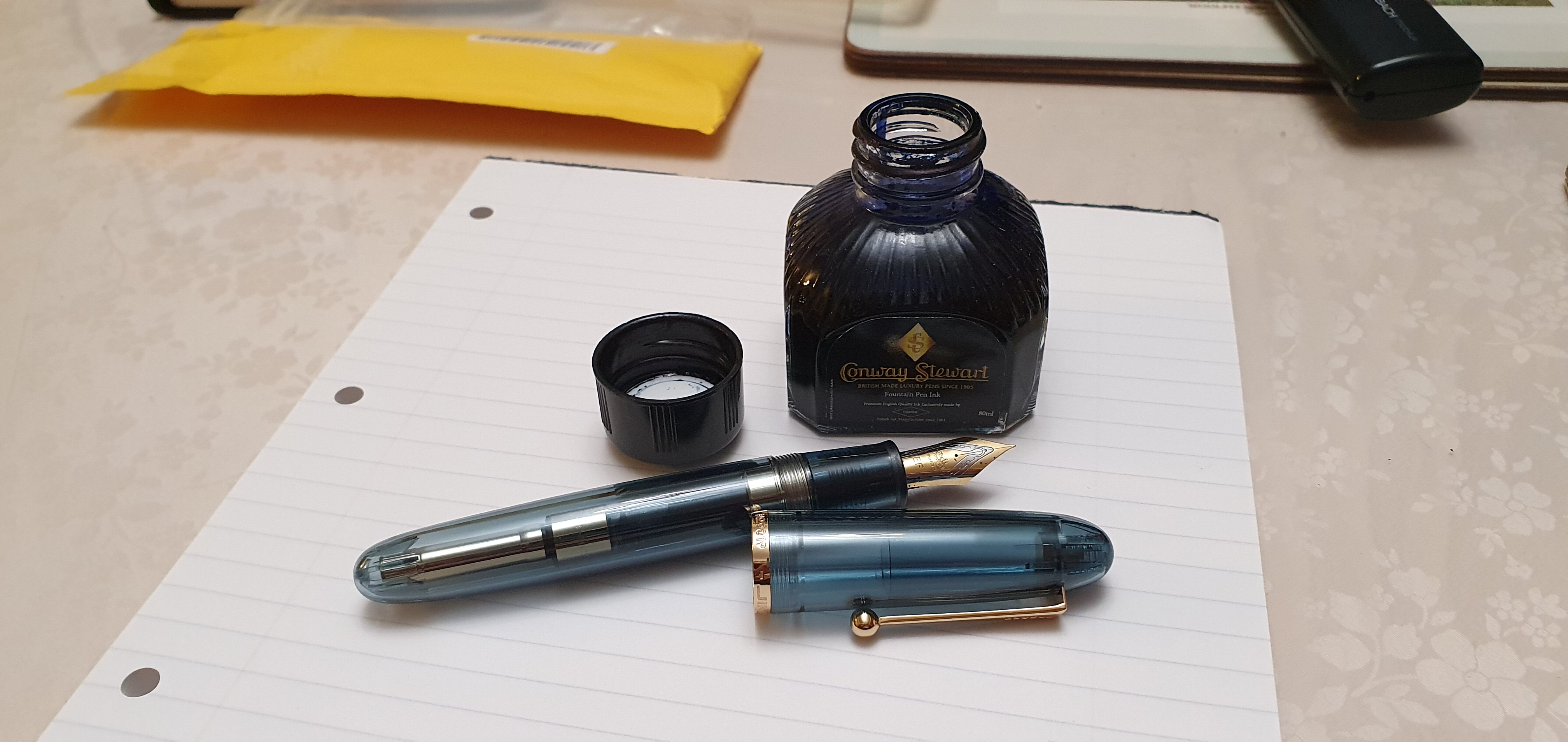
I ordered the blue demonstrator model, with an Extra Fine nib, having found the EF nib particularly enjoyable on my X159s. My pen was delivered the next day. It comes in a simple polythene sleeve inside a small brown padded envelope with no box or papers but arrived in perfect condition. The only adjustment that I made was to push the nib very slightly over to one side so as to be more accurately centred over the feed, but this was minimal.

I filled the pen with a blue black ink, Diamine’s Conway Stewart Tavy, which flows and lubricates well and is a dark, pleasing shade. I have lately been enjoying a Stalogy 018 Editor’s Series, A5 notebook and like the paper very much. The nib performed admirably, with just the right flow and feedback, that makes you want to keep writing for ever. For an extra fine nib, the tip is smooth and pleasant to write with, although firm. I was very pleased with my initial choice of ink and plan to stick with it.

Differences in barrel, cap and clip too.

It appears that there is no inner cap, but instead, a moulding in the shape of one as part of the cap design, so that the nib seals nicely once the section meets the inside lip in the cap. I have had absolutely no issues of hard starting or skipping.

I appreciate that the enhanced ink capacity is rather unnecessary, particularly in a demonstrator body where you can see the ink remaining and can top up at any time. Nevertheless, I find it strangely exciting to think how many pages I could write on one fill, paired with such a fine nib. We shall see!

Freshly filled with blue black ink and expectations.

Travelling with ink: Birmingham, August 2023.

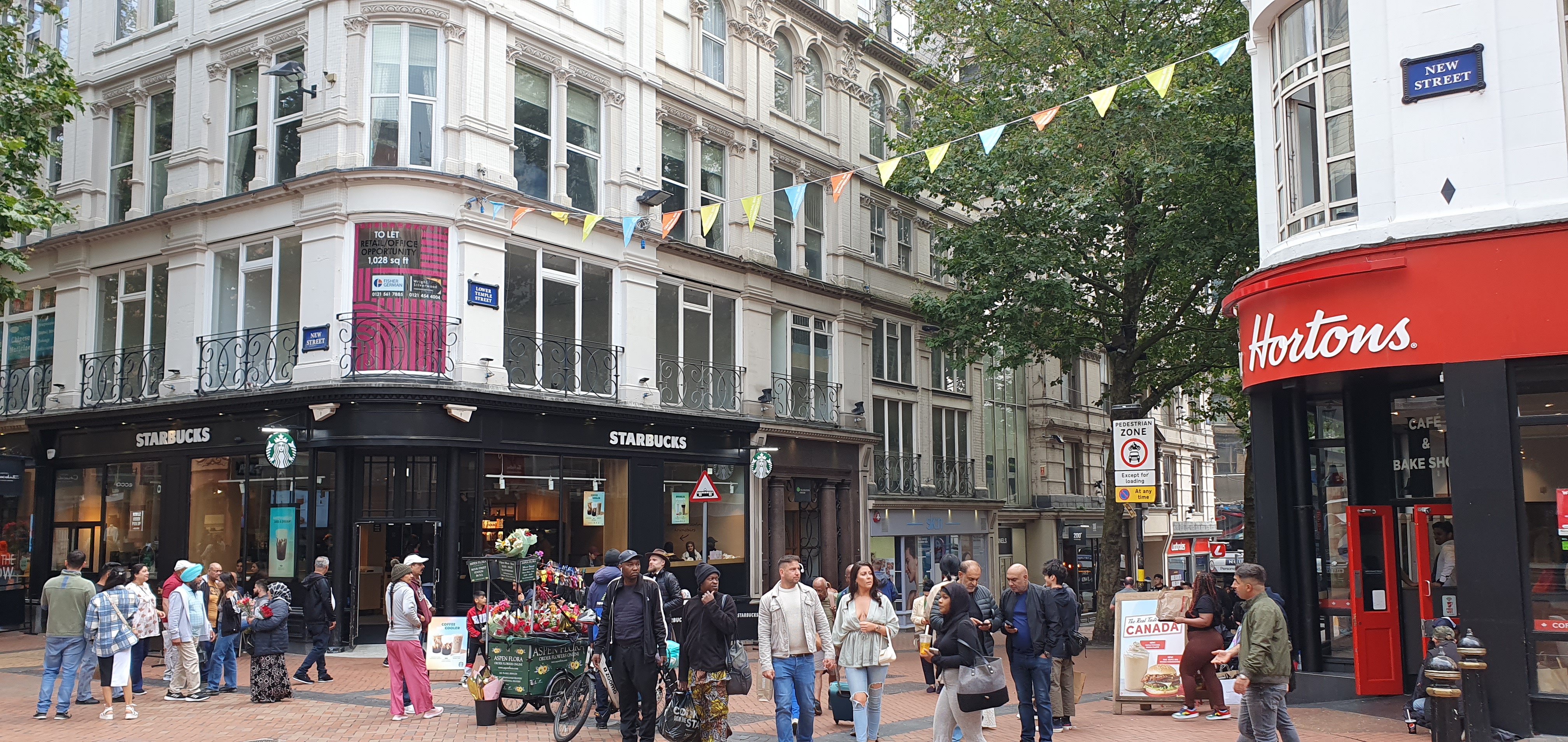
One of my recent Parker 17 acquisitions from eBay included the original box and user guide. On this, the purchase date of 22-10-66 had been written, and an ink stamp read “H.P.Pope Ltd, Pope’s Pen Corner, 114 New Street, Birmingham.”

As I was due to visit Birmingham, I was keen to see whether this pen shop still existed, 57 years on. An online search using instant streetview showed the building but the site was now occupied by Starbucks. I found an old image of the fountain pen shop. I still went to find the site, feeling pleased with my detective work.

Pope’s Pen Corner, 114 New Street, Birmingham, UK. (credit: unknown)
The shop is now a Starbucks.

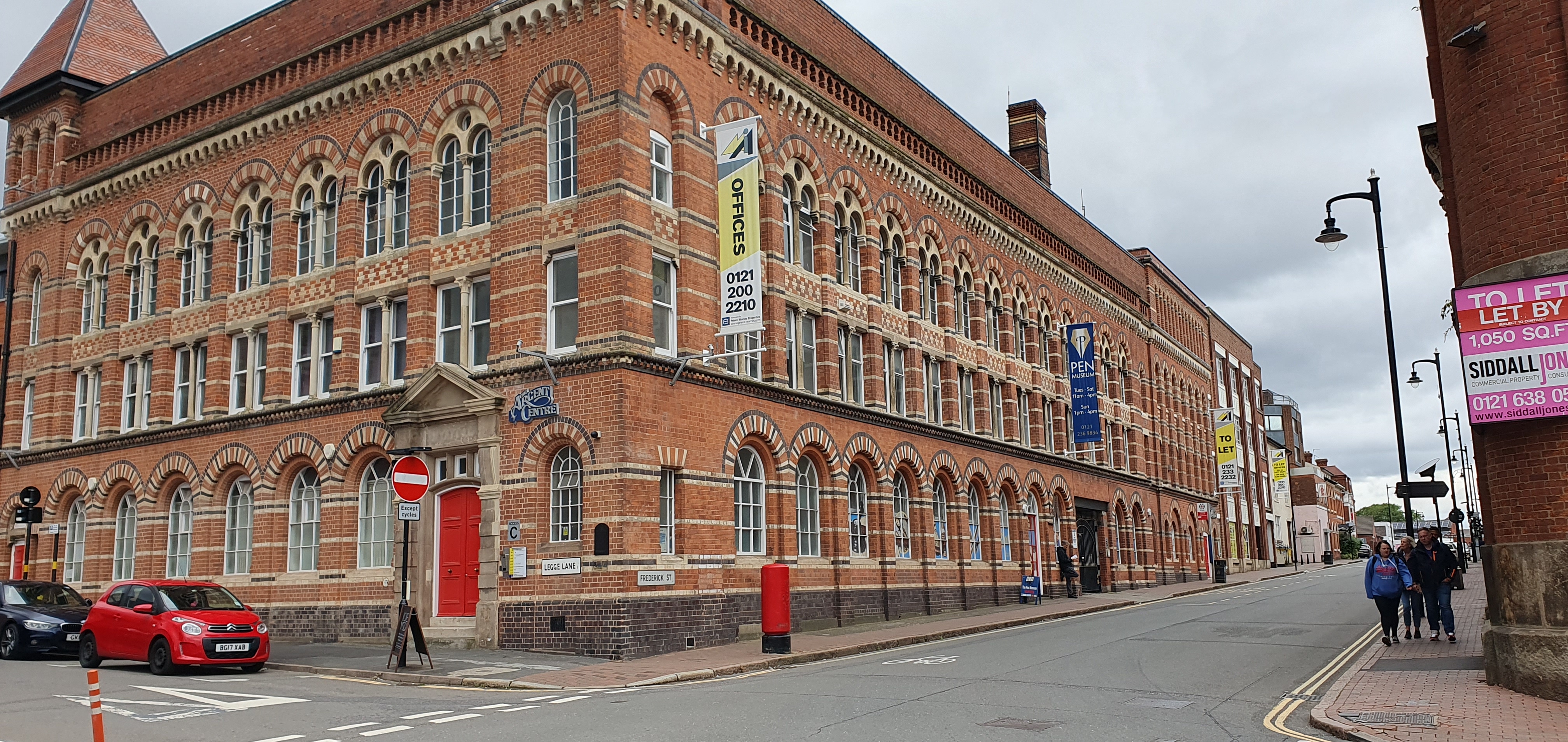
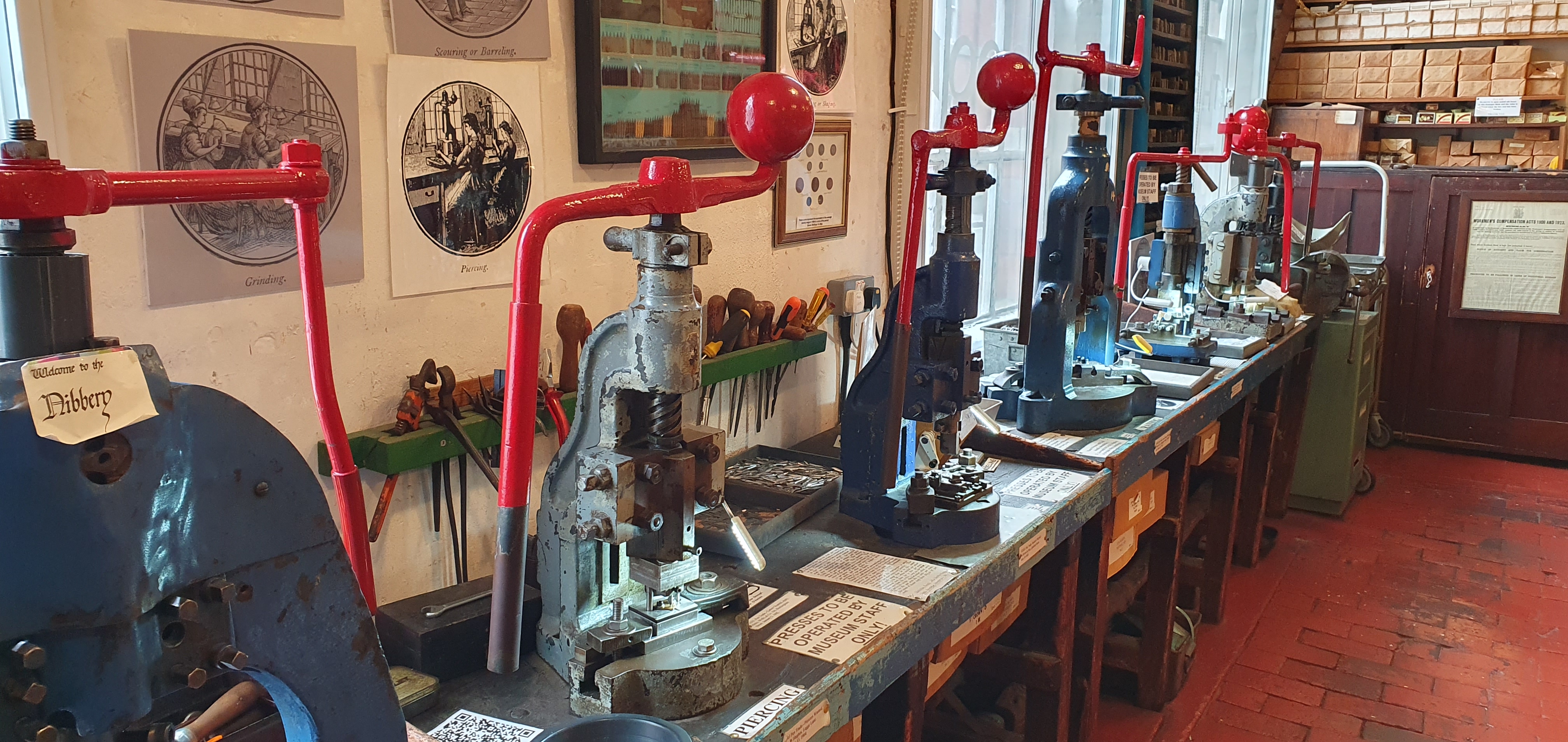
However, during my two day visit, I discovered that Birmingham’s pen history contains rather more than that, to say the least. The city map shows a Jewellery Quarter, which includes a Pen Museum. Fortunately it was open. The Museum is located in a former pen factory, on Frederick Street. This particular one was the premises of W.E.Wiley, gold pen makers. I learned that the large scale production of steel pens, or what I call dip pens, had flourished in the nineteenth century, particularly from around the 1820’s.

The Pen Museum, in a former pen factory.

There was a lot of information to take in, from the displays in the Museum, spread across three large rooms. The figures were staggering. As the industry grew to a worldwide export trade, there were at one time 129 pen manufacturers in Birmingham, producing 75% of all the pens in the world! The industry employed 8,000 people in Birmingham, and a large proportion were women operating the hand presses to carry out the various steps in producing a nib, or other tasks such as grinding, or “looking over” which we now call quality control.

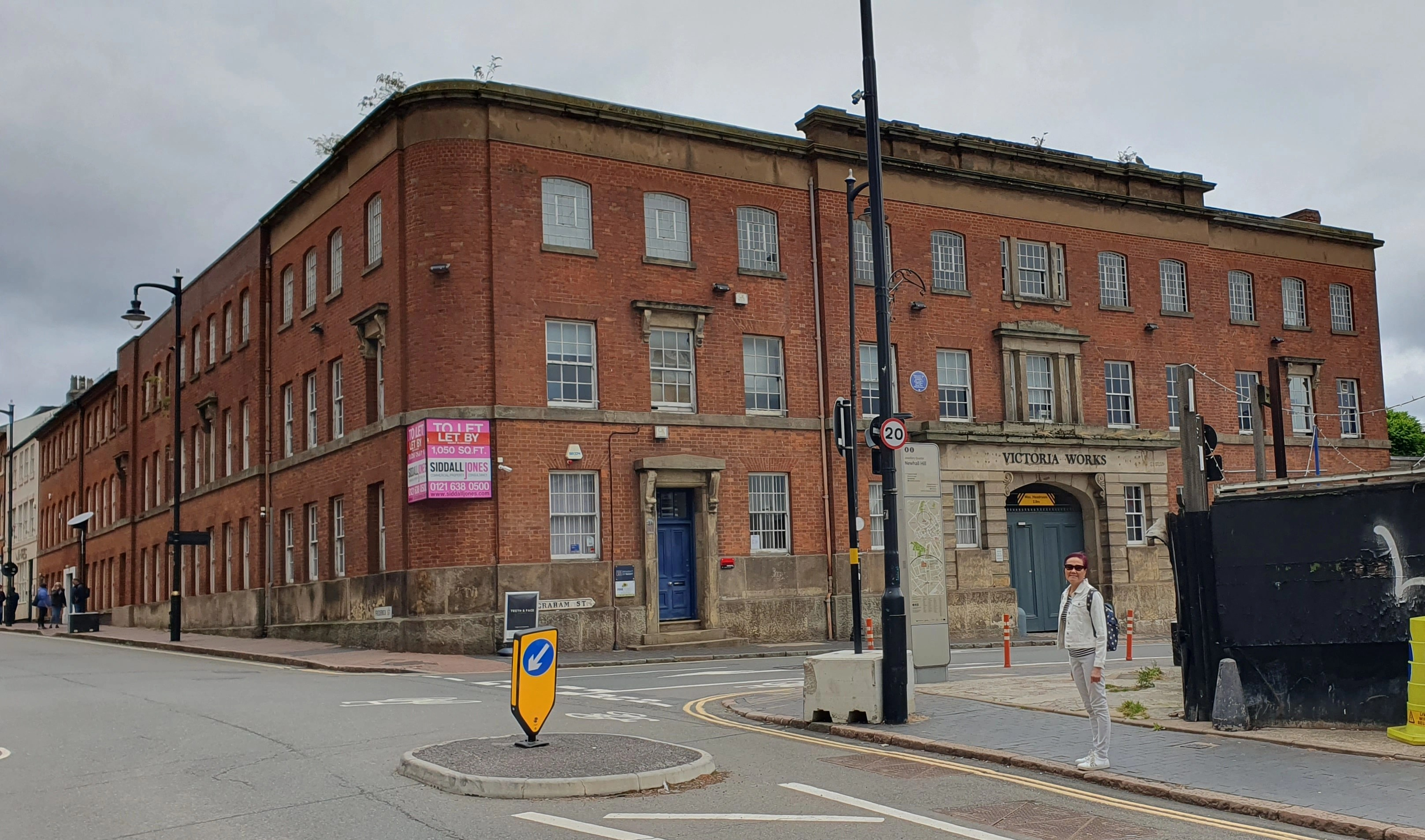
Across the road, another former pen factory, the premises of Joseph Gillott (1799-1873).

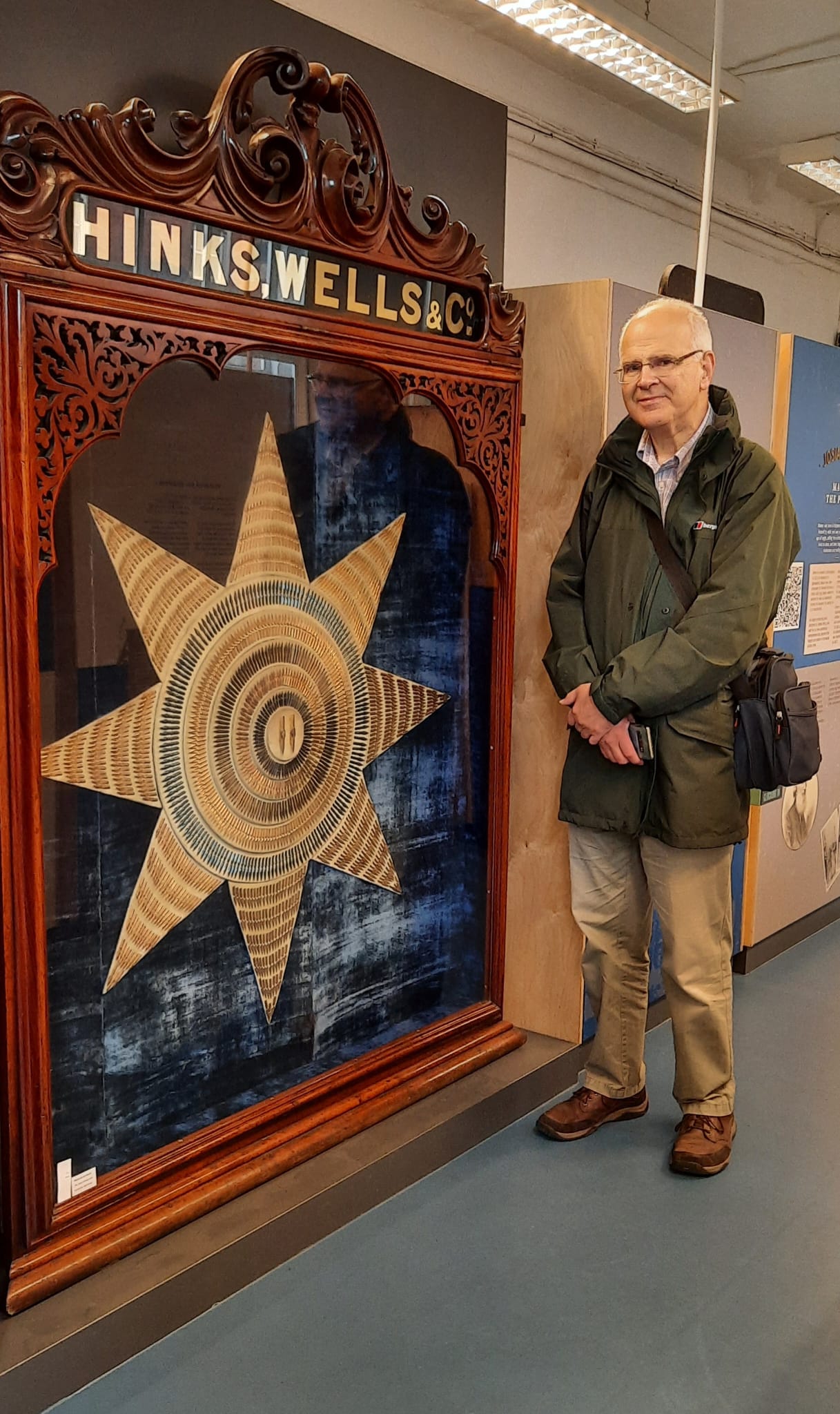
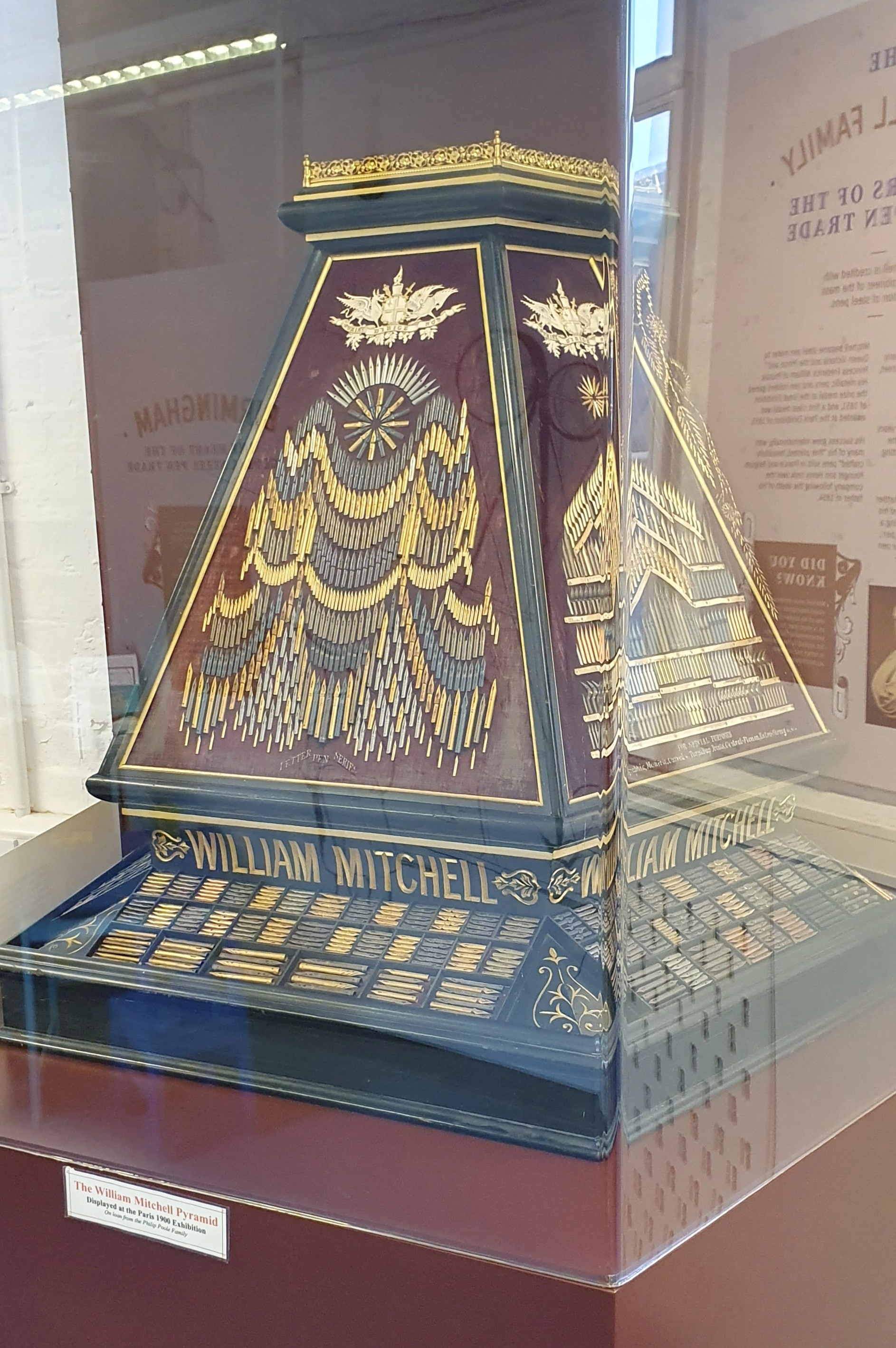
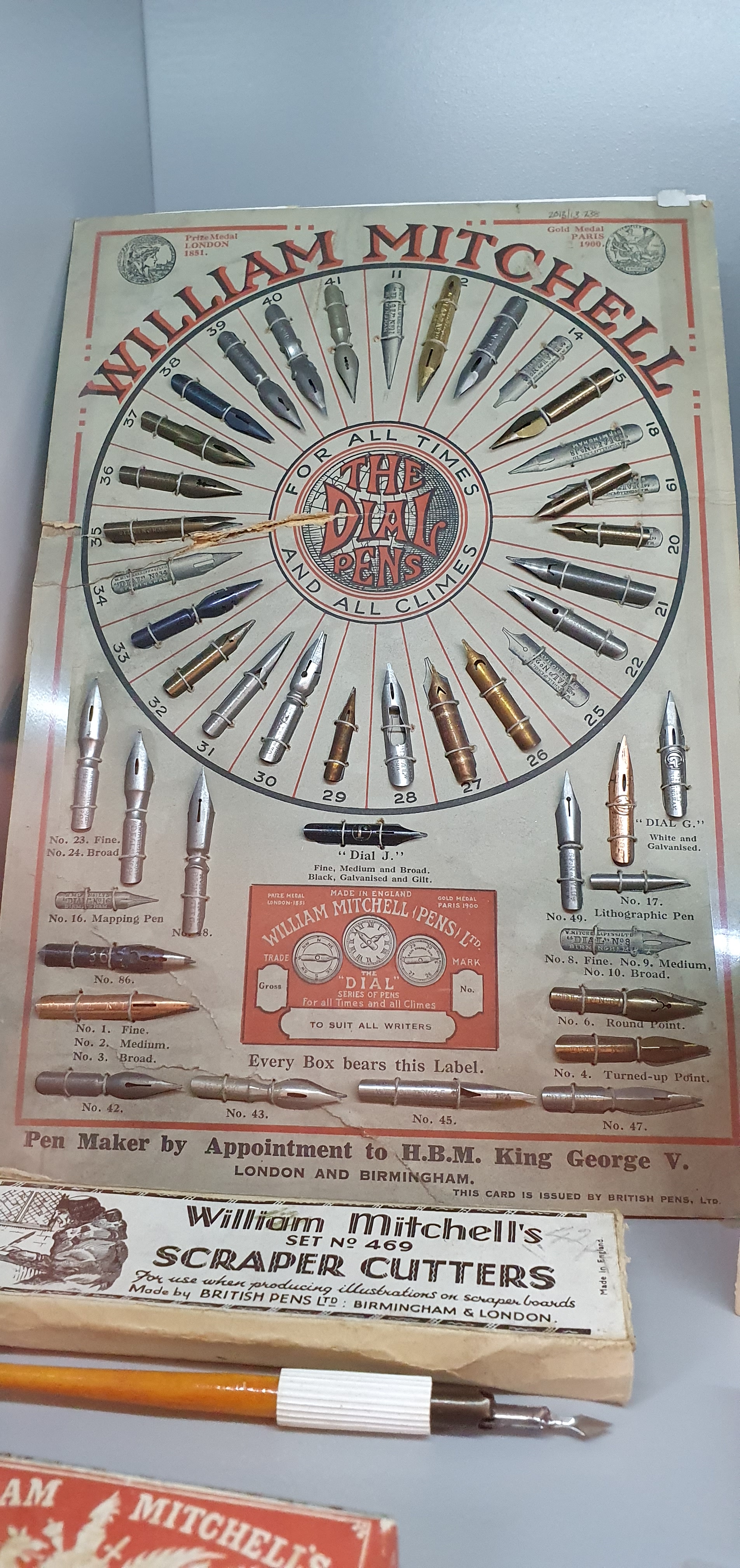
Hundreds of different types of nibs were made. We saw the Hinks, Wells & Co Star, from the 1866 Birmingham exhibition, showing nibs from the company’s stock of pens in daily use at that time. The museum also contains The William Mitchell Pyramid, shown at the Paris 1900 Exhibition.

The Hinks, Wells & Co Star.
The William Mitchell pyramid.

A helpful guide showed us a few of the stages involved in producing a pen, such as

  • Blanking: where a sheet of steel is fed through a press and, one by one, the operator punched plain blanks, or flat pieces of steel to form the nib;
  • Piercing: where another press punches a hole in the nib; this is to add elasticity and to prevent the slit (added later) from extending further, as well as for ornamentation;
  • Stamping, or Marking: where text is pressed into the pen;
  • Raising: where another press forms the blank into a curved shape;
  • Slitting: where a press cuts a slit, to form two tines.

We had an opportunity to try our hand at these stages and to make our own nib. There is some skill involved in operating the press with the right amount of force to get legible text. Getting the hole in the middle is not as easy as you might think. I found Slitting to be particularly fiddly and awkward. As there was space for the pen to move from side to side, it was difficult to ensure that the slit would be central. Mine was not. We had been warned of the risk of spoiling our nib at this stage and that we could skip it if we wished. Happily, our guide later gave us each a good one as a souvenir, at the end of the demonstration.

I have some pressing business to attend to.

Having spent a few minutes trying out these vintage presses at a leisurely pace, it was a shock to learn that a woman operating a press was expected to make 18,000 nibs in a 10 hour day. This is one every 2 seconds. It would take me several seconds just to pick up a blank from the heap on the workbench, then several seconds more to position it centrally in the press and get my fingers out of the way, before pulling the heavy handle. I suppose they got very fast with practice, but imagine how tiring and monotonous it must have been, doing that all day, every day.

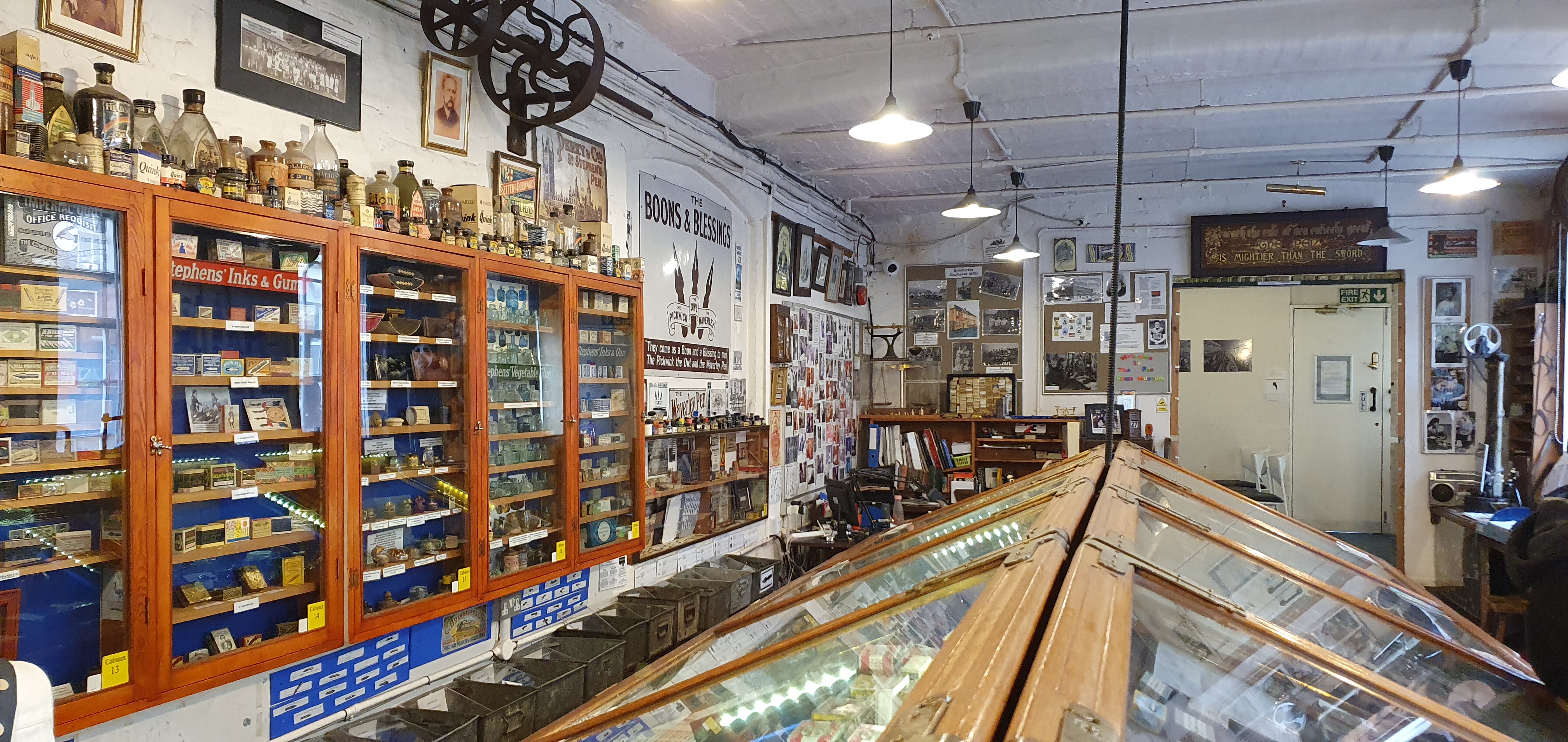
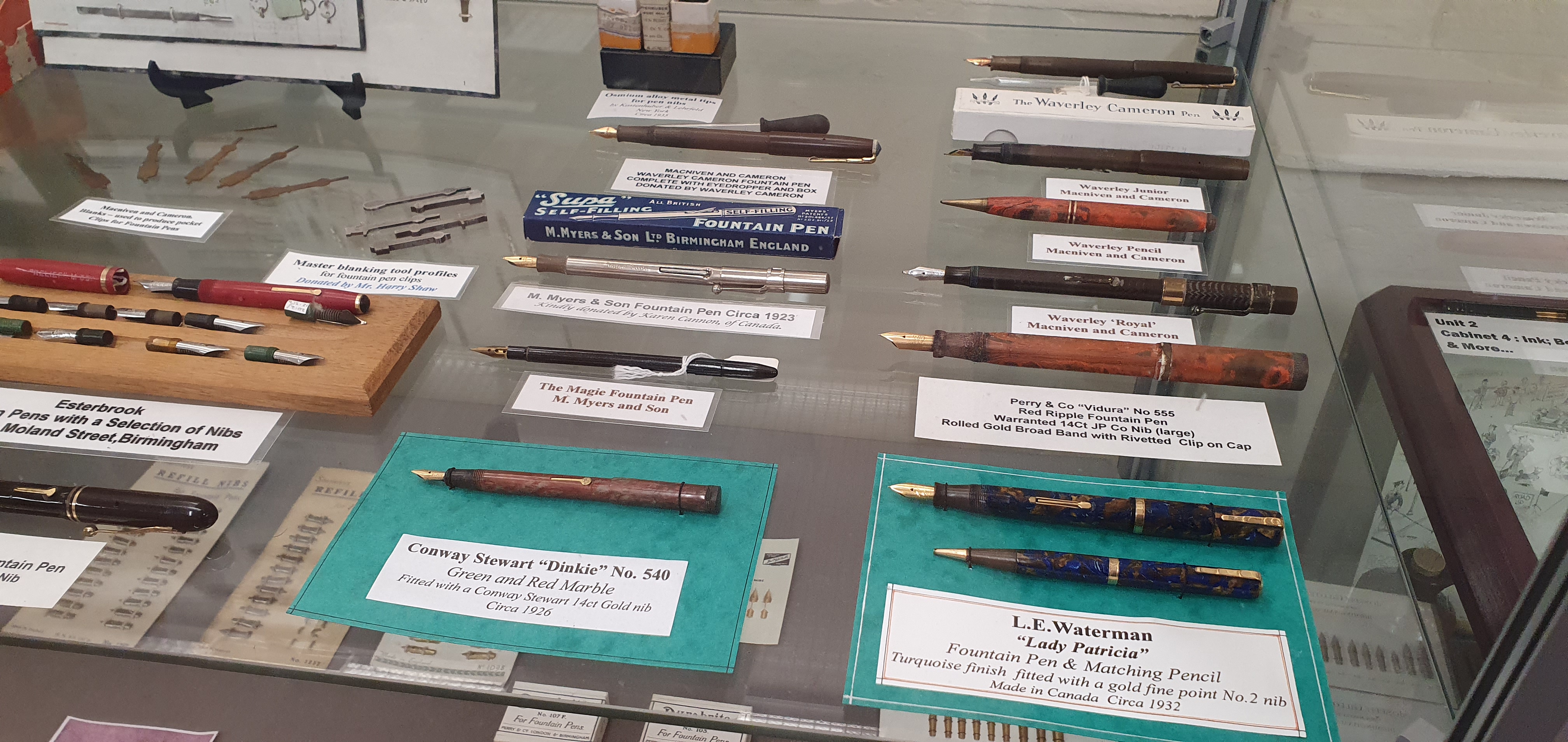
The Museum is mostly concerned with steel dip pens although there were a few vintage fountain pens on display, as well as ink bottles, tins and boxes, advertisements, signage and other memorabilia.

An Aladdin’s cave of vintage pen memorabilia.
A selection of pens from William Mitchell (established in 1825).

It was news to me that Birmingham played such an important role in the history of pen making. Although this provided employment and enabled the entrepreneurs to become very wealthy, this new, large scale production of pens at low cost, including for schools, was very important in improving literacy around the world.

A display of vintage fountain pens.

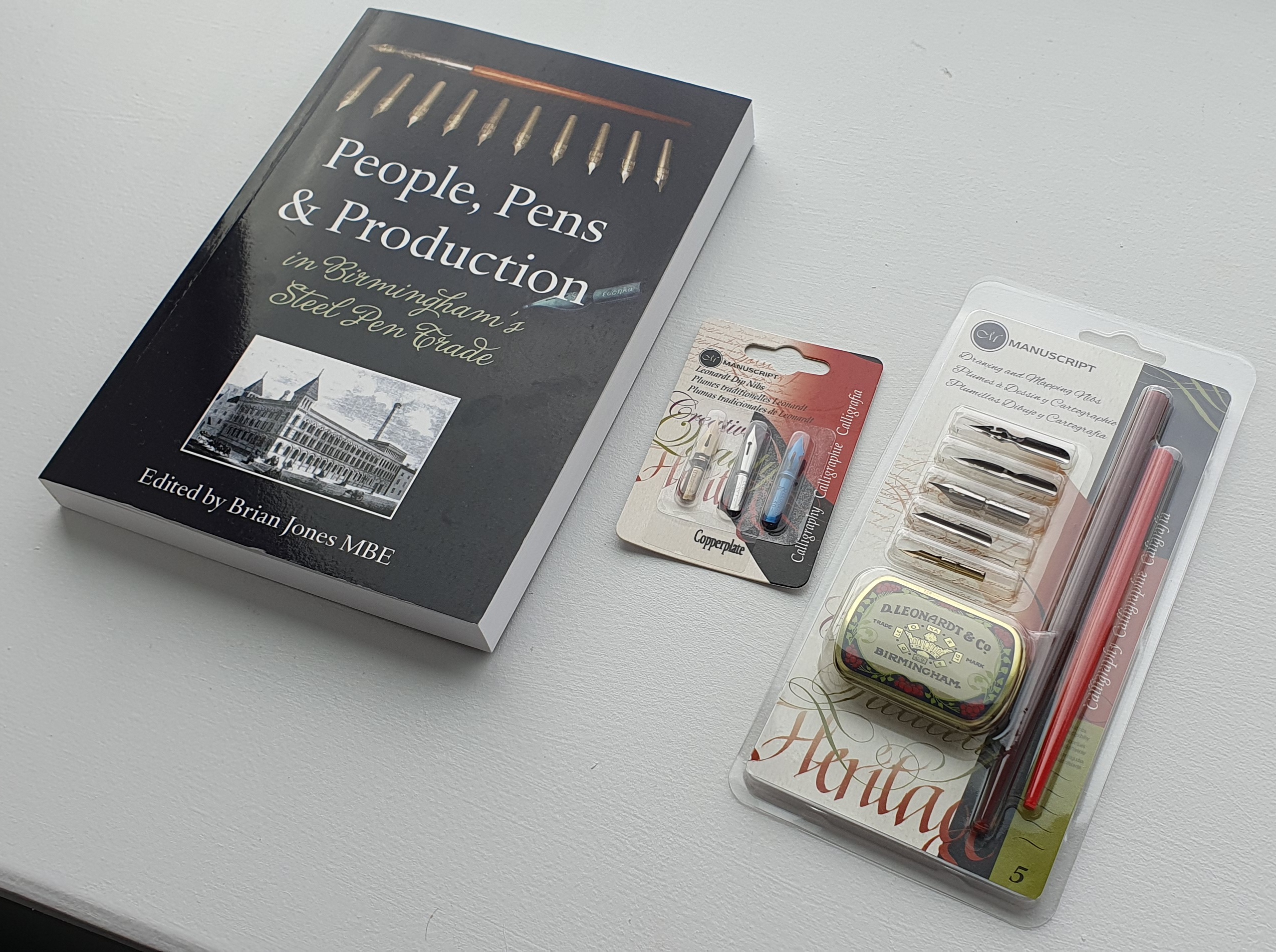
The story of Birmingham’s past as a world leader in pen manufacture, is told in an authoritative book “People, Pens & Production in Birmingham’s Steel Pen Trade”, edited by Brian Jones MBE, which I bought in the museum gift shop. Also I could not leave without buying some nibs, including a set with two pen holders and a vintage-looking tin. There were few fountain pens for sale. I could have bought a Manuscript Clarity, demonstrator pen, but I already have two of them.

My merch from the museum shop.

Needless to say, I found that using a dip pen can be a frustrating business, the nibs being scratchy and needing to be dipped frequently. It was a relief to pick up a reliable, smooth fountain pen again. But having been inside this former factory, where hundreds of people laboured, from 160 years ago, I have a new appreciation for the art of pen making and the pioneering work to industrialise the process.

The Pen Museum were happy for me to take photographs and use them in my blog. As the museum is run by volunteers and has limited opening times and visitor capacity, booking is recommended, at http://www.penmuseum.org.uk. Tickets are £7.50 for adults.

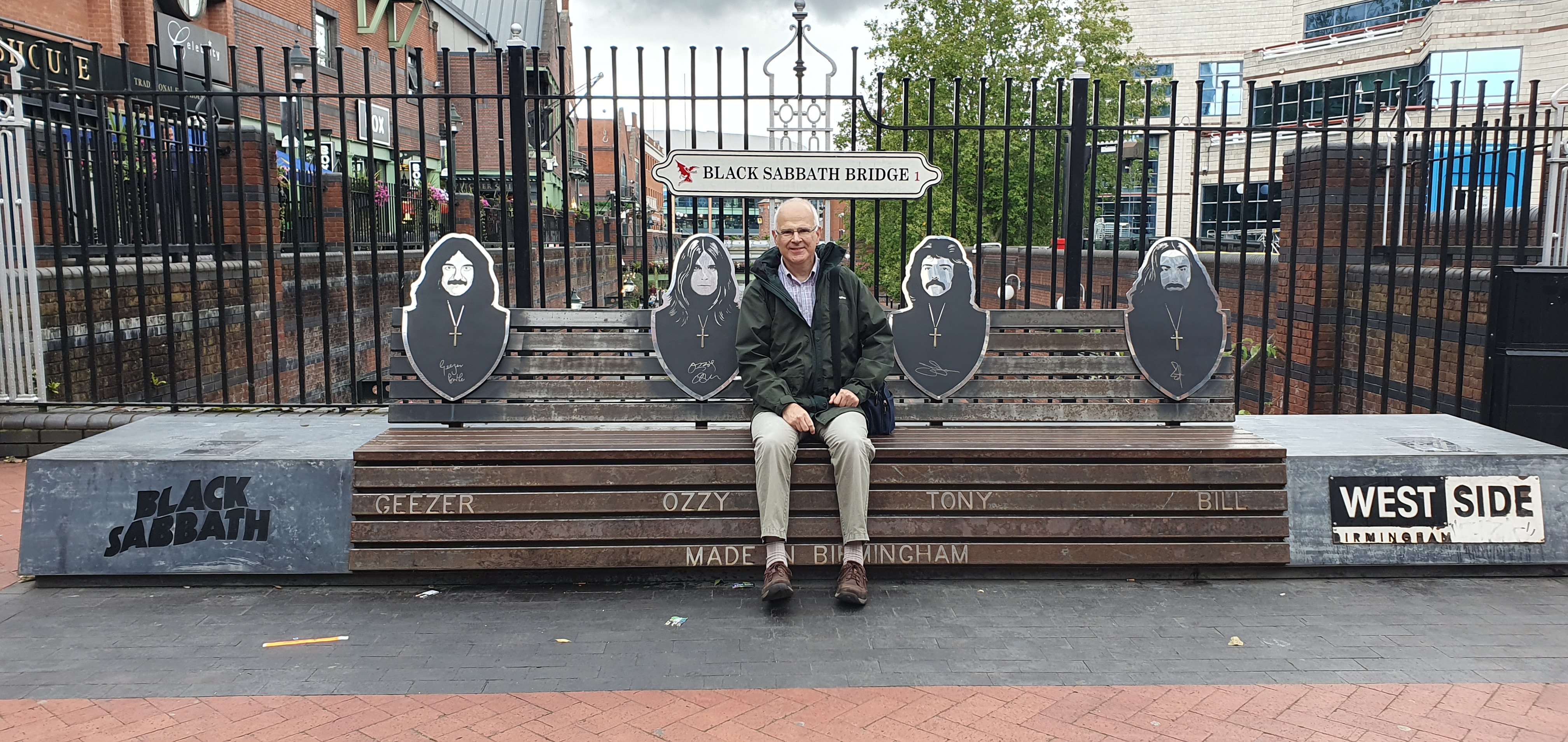
A Birmingham tribute to another of its famous products.

“Two Supes.”

Since discovering the Parker 17 range less than a year ago, I have accumulated seven of them. Two are small, Parker 17 Lady fountain pens. Of the five full size models, three are standard models and two are Supers, or Parker 17 Super Duofolds, to give them their full title.

My Parker 17 fountain pens. The two on the right are the Super Duofolds.

These Super Duofolds are distinguished by their wide gold cap band and decorative metal ring (called a tassie) at the end of the barrel. Otherwise, they are the same. All have the fixed squeeze-bar filling system known as the aerometric filler, although more basic than in the Parker 51 which is more enclosed and may also be larger capacity.

My red Parker 17 Super Duofold is the early model which was made from 1962 to 1964 only. This has an open nib, known as the beak nib, in an unconventional triangular shape. After that year, production switched to hooded nibs for the remaining run of the 17 range, ending in 1972.

Left: Early model with open nib. Right: Later model with hooded nib.

I had read good reports of these early, beak nibs and was keen to get my hands on one. When I saw this one for sale in an eBay auction I set my heart on winning it. The seller provided a series of good close up photographs. I looked at these many times in the days leading up to the auction, particularly the images of the nib, front and back. It looked in tip-top condition. It also occurred to me that the pen had some similarities to an old Sheaffer that my late mother had used, at least in its burgundy colour and wide gold cap band.

Parker 17 “Beak nib” (1962 – 1964 only).
And again.

After a tense finish to the auction, the pen was mine! The final price was £59.00 and I appreciate that you can buy a Parker 51 for that, but the early version Parker 17 commands a higher price than the later ones due to its rarity.

The package arrived just in time for me to bring on a weekend away, where I enjoyed cleaning it and trying it out with Parker Quink Royal Blue. The only visible markings on the nib are “14K, PARKER, ENGLAND.” It may be that there is more to see if the nib is removed but I have not done so. The nib writes beautifully. I would guess it to be a Fine. It is very smooth, fairly firm and has an ideal flow, all making for a very enjoyable writing experience, especially on my Stalogy notebook paper.

On close examination of the pen body with a loupe, I did find two hairline cracks, one on each side of the cap. These are not noticeable unless you look hard for them and do not affect the pen’s performance. I could run a little glue along these to seal them but there does not seem to be any real need. Crucially, I have not experienced any hard starts. The nib does not dry out, even though there is a round air hole in the cap, through which the nib can be directly seen. There is no inner cap. I am delighted with this purchase.

My green Parker 17 Super Duofold was another recent eBay purchase. On arrival, this did seem a problem pen. The slip cap was very stiff. There appeared to be a residue of adhesive above the cap band. Uncapping the pen, the grip section appeared slightly misshapen, as if deformed by having the cap pushed on too far or maybe, just by being capped tightly and left for years in a warm place. It could also be some chemical degrading of the plastic: I don’t know. It is some 50 years old, after all. But the pen filled normally and wrote with a buttery smooth feel. This nib could be a Broad or a Medium.

Unfortunately I found that the main issue with this pen was that, once the ink in the feed had been exhausted, it would dry up and stop. Ink was not getting to the feed. I suspected that this may be due to a blockage stopping air getting into the sac. I tried flushing and refilling the pen several times and changed inks but the problem persisted. Eventually, after a week or two, I disassembled the pen. Using a hairdryer, I warmed the section to soften the shellac to unscrew the section. However I was not able to remove it and suspected that it might have been glued with something stronger. Perhaps I should have persisted with my hairdryer to make sure.

Instead, I found that I had loosened the shellac holding the sac cover and, beneath this, the ink sac. I removed them both. This revealed the breather tube, which I pulled out of the section. But as well as this, there was something else in the sac: a loose, plastic rod. I gather that this is an ink agitator, to break any surface tension which may stop ink moving. It seemed a bit too long and I trimmed a bit off.

Parker 17 Super Duofold partly disassembled. The rod near the top is the ink agitator.

At this point, an ultrasonic cleaning bath would have been useful. As I do not have one, I washed the nib section by hand, also jetting some water through it with a syringe and then left it to soak in a jar of water for a few days.

Then, after reassembling the pen, I filled it with Waterman Serenity Blue, probably my favourite ink and a sort of “Pen-icillin” for pens. I was not holding out much hope that my efforts had solved the ink/air-flow problem but I began to write, in a Stalogy A5 notebook. Once again, the writing experience was super-smooth and silky. But this time, it kept going! I carried on writing for five pages, just to make sure. The problem of ink starvation had been resolved.

I am very happy with all my Parker 17’s. I gave a blue one to my niece recently, but promptly replaced it with an identical model from eBay, although every nib feels slightly different. I love the look, feel and writing experience, as well as the affordability of these pens.

A Parker 17 and a Stalogy A5 Editors Series half year notebook. Lovely paper!

Finally, for the benefit of anyone reading who was not around for 1980’s British tv comedy, the title of this post was a reference to the famed “Two Soups” sketch, starring Julie Walters and written by Victoria Wood, well worth a Google if you have three minutes to spare. I appreciate that this may be unfamiliar to many, but the pun seemed too good to waste.

My mum’s old Sheaffer (left) and the Parker 17 with a fine nib, that she would have liked.

On pens and pensions.

I have mentioned before that I have a long-standing affection for Parker pens, which I can trace back to childhood well over 50 years ago. I can still recall a time when I became aware that a Parker ball point pen cost perhaps ten times the price of a disposable Bic Crystal. I associated seeing a Parker arrow pocket clip with wealth and thinking that anyone carrying more than one Parker pen must be very rich. My French teacher even had a Parker ball pen just for red ink, which seemed very decadent. On receiving my first Parker fountain pen, I had the idea that the 14k gold nib could eventually be sold to support me in retirement or if I fell upon hard times.

Parker 17 cap.

Now as I approach retirement age, I have long been aware that my understanding of relative values was somewhat distorted. It turns out that a Parker pen nib won’t go very far in covering one’s living expenses, after all. Learning this is one of life’s hard lessons.

Yet I still have my life-long interest in fountain pens. If my fountain pen journey were likened to a stationery-themed board game of Snakes and Ladders, then you now find me lingering on the Vintage Parker Pens square. A glance of my currently inked pens, of which there are 14, shows that five of these are vintage Parkers, all acquired in recent months as eBay purchases. Oh, and there is one other Parker 17 currently in bits, with the section soaking in a jar of water.

My fountain pen hobby continues to give me a huge amount of enjoyment. How can a value be put on this? In the BBC news, the newsreaders’ first question to their special correspondent is often an open question to quantify the unquantifiable: “So, how worried should we be about…” or “How much of a problem is this?”

As I am now at the age when retirement looms, I am getting to grips with my personal pension plans. The fund value of one of these in particular, has fallen by many thousands of pounds over the last couple of years, which is a depressing thought. But whilst a vintage gold nib will not fund my retirement, I have noticed that the enjoyment of the hobby does go a long way towards compensating for such financial losses, which gives a sense of worth to the hobby. I am constantly grateful for just how much pleasure I get, for relatively little expense, in wonderful combinations of pens, inks and paper. Perhaps my childish sense of relative values was not so far off, after all.

A Parker 17 and a Stalogy A5 notebook.

Early thoughts on the Sheaffer Icon, Lustrous Chrome fountain pen.

On a recent visit to my old stomping ground of Uxbridge, in the north west outskirts of London, I took the opportunity to check out the options if one were looking to buy a fountain pen. From my brief reconnaissance, I found three shops: WHSmiths for some entry level Parker and Lamy pens and a few own brand cheapies; Ernest Jones, jewellers for a few Montblancs and finally, F. Hinds, another high street jeweller for some mid-range Parker, Cross and Sheaffer.

It was in the Bracknell branch of F. Hinds in April, that I had first seen a Sheaffer Icon, but did not know its name at the time. I had been struck by the gleaming chrome finish and the contours which harked back to the Sheaffer Legacy, a pen that I admired but never owned.

Sheaffer Icon, Lustrous Chrome edition.

Here in Uxbridge, I spotted the same model Icon in the shop window, displayed next to a matching rollerball. The fountain pen was reduced from £85.00 to £63.75. I went inside to have a closer look.

The sales assistant, a helpful lady named Vaishali, came back outside with me so that I could point out the pen in the window. Ah, the joys of buying from a bricks and mortar shop, which I have missed lately!

The steel nib is tiny, firm, smooth and a joy to use.

I had a close look at the nib, using the magnifying app on my phone. The pen felt very comfortable to hold with a generous wide girth and no step or cap threads. The nib certainly looked unusual and small in relation to the large pen but appeared to be perfectly aligned over the tiny feed. The tines and tipping and the tine gap all looked spot on. Without needing to try it, I decided that I would take it. Vaishali went to get the box, which she found with impressive speed, unlike my recollections of Paperchase or Rymans where this often means a long wait!

Unusual semi-hooded nib.

The pen came with a converter fitted but the gift box also contained two Sheaffer cartridges, one black and one blue. On a nearby public bench I inserted the black cartridge. I had a Stalogy A5 notebook with me and eagerly put pen to paper. Within a few seconds, ink reached the nib. The nib was very smooth. Ink flow was just right. However the Sheaffer black ink was feathering and bleeding through, even in my Stalogy notebook which normally resists this.

A push-in converter included.

Later at home, I ditched the black cartridge, flushed the pen and filled it instead with Diamine’s Gibson Guitar Series Pelham Blue. This was much better: no feathering or bleeding on Stalogy. Indeed the pen felt so enjoyable that I wrote for five pages. I revisited reviews of the pen on The Pen Addict and SBREBrown.

Unboxing. Two cartridges and a converter included.

Size and Weight.

Length capped134mm
Length uncapped125mm
Length posted145mm
Weight capped / or posted44g
Weight uncapped29g
Weight of cap alone15g
I only found the M later when I got the pen home.

Likes and Dislikes.

Likes:

  • Unusual, sporty design with elements from the Legacy and the Taranis;
  • Striking, bold grip section and semi-hooded, tiny nib – which is exquisite;
  • Comfortable grip, generous girth, no step, no cap threads;
  • Tough, metal barrel and cap; Nib would be protected if the pen were dropped or stepped on;
  • Long enough to use unposted and with a decent heft, without being too heavy;
  • Small nib, (marked as “M”), beautifully set up and which writes a smooth, medium/fine line; A Fine nib is also available;
  • No branding on the outside, except the Sheaffer white dot and, if you look very closely, the name Sheaffer on the far end of the pocket clip;
  • On close examination under a loupe, I found that the red stripe in the cap band and the red portion of the grip section, are glittery!
  • Converter included;
  • Inside, there is a long metal collar to support the cartridge or converter; (this was lacking in my old Sheaffer Connaisseur, where a cartridge could wobble about);
  • Metal threads on the outside of the cartridge collar, meeting plastic threads inside the barrel;
  • Two cartridges included (although the black ink may bleed through)
  • Lifetime mechanical warranty;
  • Comes from Sheaffer, a brand for which I have a long-standing affection (albeit now part of A.T.Cross Company);
  • Nicely presented in a lidded cardboard gift box, with padded pen bed, a clear plastic protector cover, and a compartment beneath for cartridges or converter and the care and guarantee booklet.
  • Is photogenic!
Doesn’t this look a bit like a racing car or an aircraft?

Dislikes:

  • Polished chrome looks great but is a bit slippery when you uncap the pen;
  • The cap posts deeply but not securely (at least, mine didn’t) – although Stephen Brown did not have this problem;
  • Cap is quite stiff to pull off;
  • The metal collar which supports the cartridge or converter, is so long that it leaves little of the converter’s ink reservoir on view;
  • Another reviewer commented that the rim of the cap is sharp, although this did not trouble me;
  • Black ink cartridge included is so wet that it feathers and bleeds badly.

Conclusion.

Overall, I am delighted with the pen, glad that I bought it and happy that it was on special offer. The nib is tiny but a joy to write with. Although the design might not appeal at first sight, I have quickly come to appreciate it.

Travelling with ink: Audley, near Stoke-on-Trent.

We recently enjoyed a relaxing long weekend break, on a farm. Our accommodation was annexed to the impressive Georgian farmhouse, facing a delightful courtyard. This is a working dairy farm, with 240 acres of land and 400 cows.

Our cottage was annexed to this farmhouse.

During July, I had an outbreak of Parker Pen Purchasing on eBay. The first of these was a Parker 17, in black with a medium nib, which I wrote about earlier. This was followed by a Parker 51 also black, but with an oblique nib which I was very keen to buy. Next, there were two more Parker 17 fountain pens, each for sale by auction. There were no competing bids and I got both 17’s at their opening prices of £16.99 each, plus p&p.

The final purchase was rather more dramatic. I had seen a Parker 17, burgundy red fountain pen, with the open, “beak” nib, made only from 1962 to 1964 and harder to come by. I read that these command a higher price than the later, hooded nib models but had heard good reports of the nibs.

The auction was still several days away. For most of this time, mine was the highest bid but I made a maximum bid, of £59.90. In the tense final few seconds, I watched my screen helplessly as a flurry of increased bids were placed. I was successful! Afterwards, I found that another bidder had offered £58.00 with just four seconds remaining: eBay then bid one pound higher for me automatically, so it was a close shave.

Three more Parker 17 fountain pens. I am hooked on these.

These last three Parker 17s arrived just as we were setting off for our break, so I was able to bring them with me to clean and try out, with a bottle of Parker Quink Royal Blue.

Pen Time on the farm.

It was wonderful to get away and have a change of scene. We were in a rural area with views of fields and trees. Our comfortable cottage had vintage furniture, a large kitchen with an electric AGA and a lounge/dining room which included a grand piano, which I enjoyed playing.

Having a full sized, concert grand was a bonus!

There was time to inspect my three new Parker 17’s. The blue one was a basic, standard model with a medium nib and wrote very nicely, with a pleasing bit of feedback. The green one was the Parker 17 Super Duofold, which featured a wider gold coloured cap-band and a ring on the end of the barrel. However this one had a few issues. The cap-band appeared to have been glued but with glue residue around the edge, on the cap. Also the cap was unusually tight. The grip section was misshapen, as if it had been forced into a cap that was too small. The pen filled normally and the nib was glassy smooth and felt like a broad.

The four colour options of the Parker 17.
The nibs turned out to be Fine, Medium and Broad.

However, the pen would write only for a paragraph or so before drying up and suffering “ink starvation.” A check inside showed that the ink had not got stuck at the back of the sac and so it was not obvious why ink flow had stopped. I suspect that it may be an issue with the air replacement to the sac, rather like trying to pour from a carton of milk with only one opening.

Talking of milk, we were invited to watch the cows being milked in the afternoon. This was a highly informative and memorable experience. The owner had farmed here for 53 years, taking over from his father who came in 1930. These days, the milking process is highly computerised with the milk piped to a large holding tank. The milkman comes to collect, every day including Christmas Day. The milk from this farm, goes to make cheese. Whilst being milked, the cows eat from a hopper of grain, which is automatically piped into the milking sheds from a big silo outside. Each cow is identified on the computer system, which monitors how much milk they yield and how much grain to give them. We were shown the harvester, which cuts grass for silage, the cows’ winter feed. It was quite an education for us city dwellers.

The view from our bedroom window.

We explored the nearby city of Stoke-on-Trent. We browsed the shops and bought some clothes and shoes and enjoyed a meal. There was little in the way of fountain pen action, aside from a WHSmiths with Lamy and Parker pens for the “back to school” season. Looking at these, I felt that my vintage Parker 17s with their 14k gold nibs were a better buy.

Returning home, I found that my Quink bottle had leaked. It was only around the cap and had not done any harm except that I got it all over my fingers. Fortunately it was Washable blue, but I might not chose Quink bottles for travel next time.

The Parker 17 with beak nib (1962-1964 only).