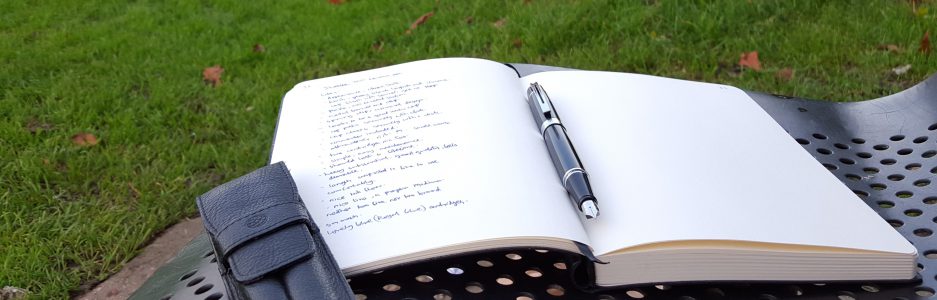
I have been conscious for a little while that this little blog was approaching a milestone. Having launched with tentative steps in November 2016, this is my three hundredth post. The name “Fountain pen blog” was only meant as a working title whilst setting it up, but went live before I had thought of a better one and I kept it.
To mark the occasion, I thought that it may now be a suitable moment to share where I am in this hobby, or journey. Like many of us, I have always had an interest in fountain pens, which I can trace back to the age of about 9 or 10 years, when we started to use them at school, instead of dip pens. At that time, I remember using Osmiroid or Platignum pens, available from my local stationery shop. Parker pens were out of my league.
At the time of my entrance examination for a secondary school in 1970, I was using an Osmiroid lever-fill fountain pen. I remember this because (and I have told this story before), prior to the exam another boy to whom I was talking, picked up my capped pen and played with the lever. I discovered this when the exam commenced, as I uncapped the pen and poured ink all over the exam paper. We both got into the school and remained friends for many years.
For my new school, my mother took me to buy a Parker fountain pen. I no longer have it (it got lost or stolen) but it was dark green with gold trim and a nib in 14k gold: my first gold nib. I think the pen was a Parker Duofold Lady. I still get a bit nostalgic when I see them at pen shows. Soon after this acquisition, I remember being fascinated by magazine advertisements for the Parker 45 Flighter, in brushed stainless steel. My parents did once again indulge me and bought me one. I was desperately homesick for the first month at boarding school, but adapted to it eventually.
Throughout my school days I remained loyal to Parker and used Parker 45 cartridge-converter pens. Buying a new one was a rare treat.
For the next 30 years or so, my use and enjoyment of fountain pens continued, at a wholesome level, insofar as I mostly bought a new pen only when I needed one. While in college I used the Sheaffer NoNonsense cartridge-converter pens, but did go through about half a dozen of these in three years, as the tipping would wear down from taking notes in lectures. I also liked a change of pen colour from time to time.
Around the 1980’s I did buy a few other pens – always imagining that it would be a life-long companion. I remember buying a Parker 75 Laque, a Sheaffer with a stainless steel inlaid nib, and a Sheaffer Connaisseur, (all of which, at the time of writing, I still have). These were all steps along the journey of trying new things. But finding a “pen for life” is not straightforward and quite likely doomed to failure as (1) we might not know what design we like until we try; (2) our tastes and needs may change as we get older and so the goal-posts are moving and (3) there is no perfect pen for all occasions.
One of the most successful pen purchases that I ever made, was the Waterman Expert. I chose the marbled blue barrel and it was a favourite for many years, early in my working life. I later added a black one and a red one. More recently, I bought one in the lovely l’essence du bleu range. So, my little fountain pen stash was expanding slightly. I did not yet have or need, any system to keep a record of fountain pen acquisitions.
At some point, I started to desire a Montblanc although this would have represented a considerable jump in price from my usual buys. Eventually, my wife surprised me with a lovely Montblanc Meisterstuck 146, from Heathrow Airport’s duty free shopping. This was in 1997 at a time when the price was £187.00, which was still a lot of money then.
It was with the arrival of the internet and the rise of the online stationery community, that my interest (call it obsession if you like) really took off. I recall discovering SBRE Brown’s YouTube reviews and others. My favourite pen blog was Fountain Pen Follies, by Laura Solon, which I loved to read for the entertaining, informative and thorough pen and ink reviews and also for its humour and great writing. Another early influence for his inspiring, attractive pen photography was Vaibhav Mehandiratta (@mehandiratta on Instagram).
At some stage, the hobby snowballed. I cannot tell you how many pens I have bought since the mid 2010’s and I am not even sure myself, but it escalated into the hundreds. I discovered pen shows, the Pelikan Hub and my first pen club and found the friendly fountain pen community – both in real life here in London and online all over the globe. And with this, came the never-ending discovery of exciting pen brands, inks to acquire and an addiction to buying notebooks.
I have been attending the London Pen Show for over 10 years. I think my first may have been in 2014, when I bought a TWSBI Vac 700 (still a great pen!) from The Writing Desk, and immersed myself in disassembly videos.
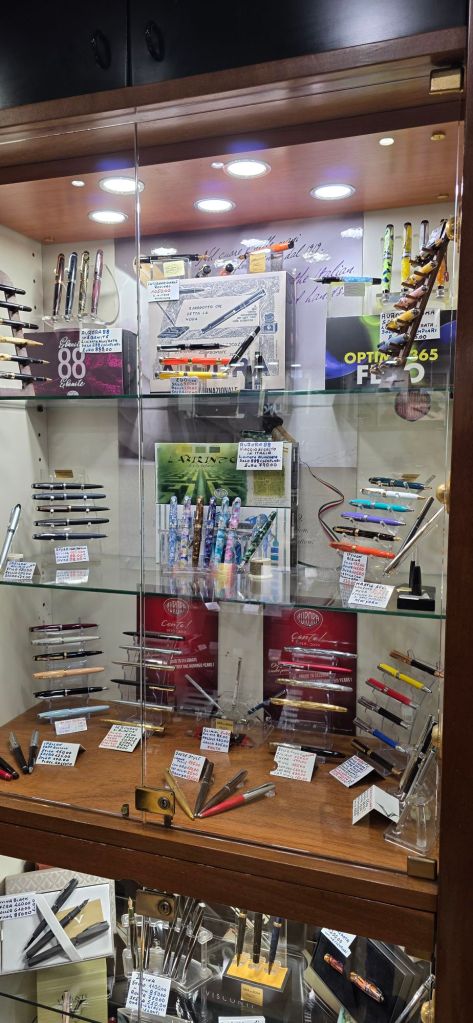
My horizons were broadened and I began to discover pens from overseas brands: Japan’s Platinum, Sailor and Pilot; Italy’s Aurora, Montegrappa and Visconti, plus Leonardo and Tibaldi and now Radius, and dozens of other brands.
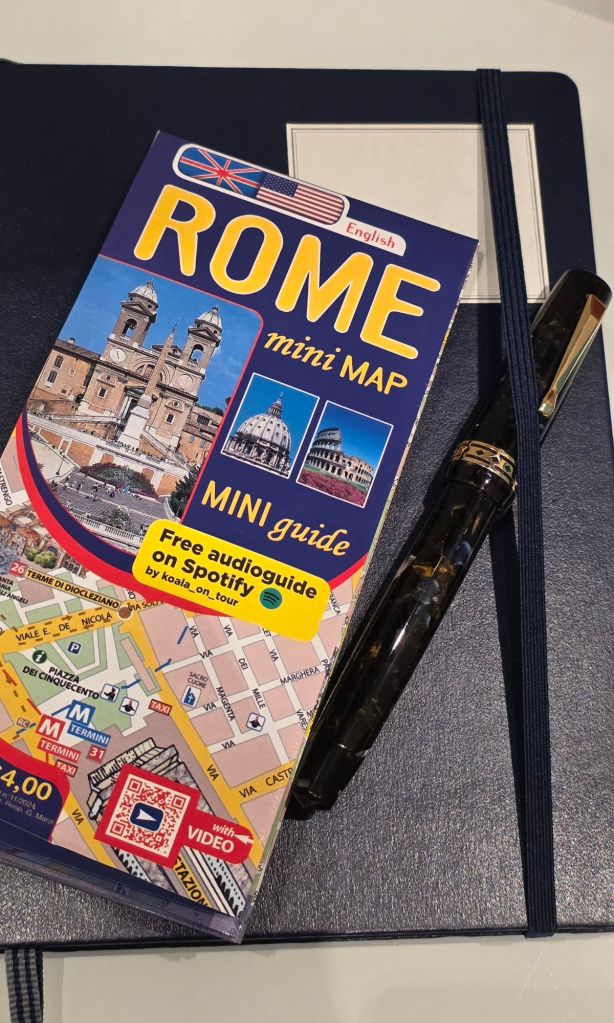
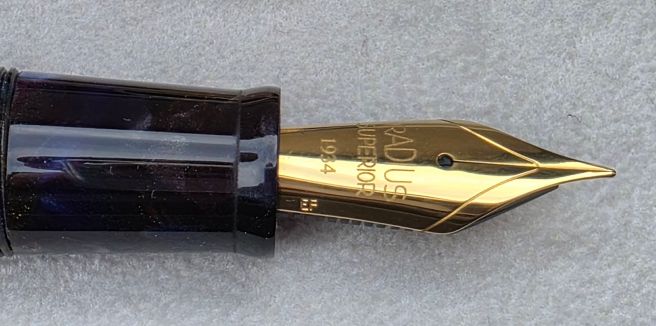
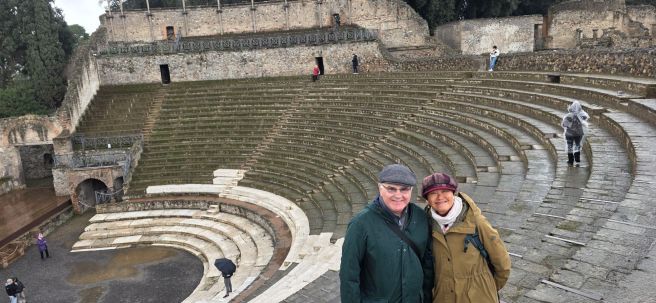
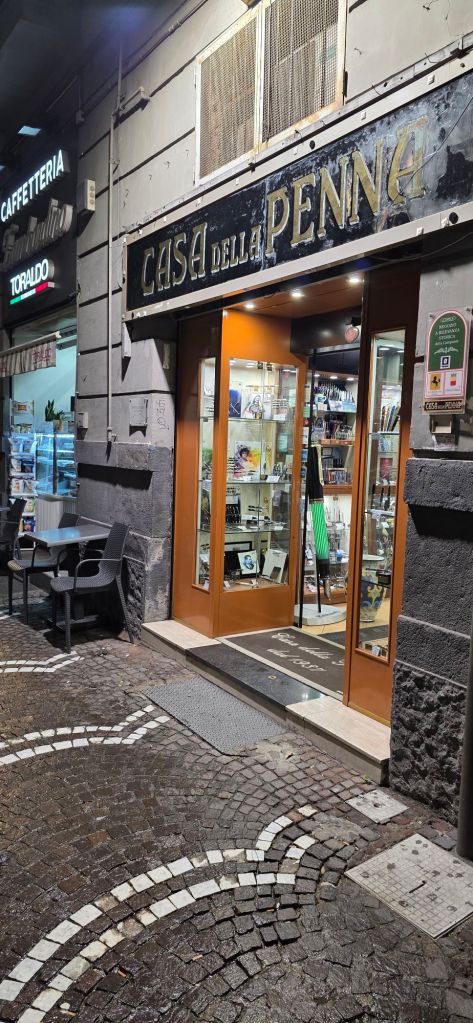
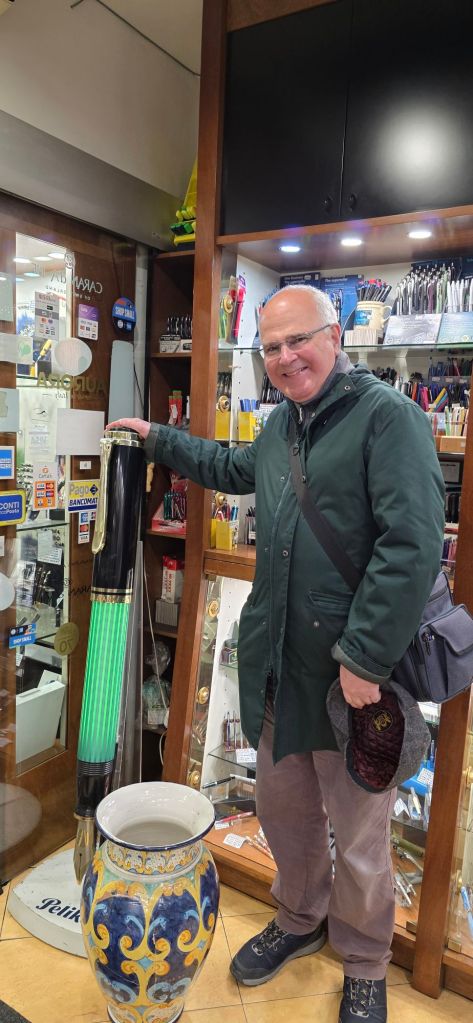
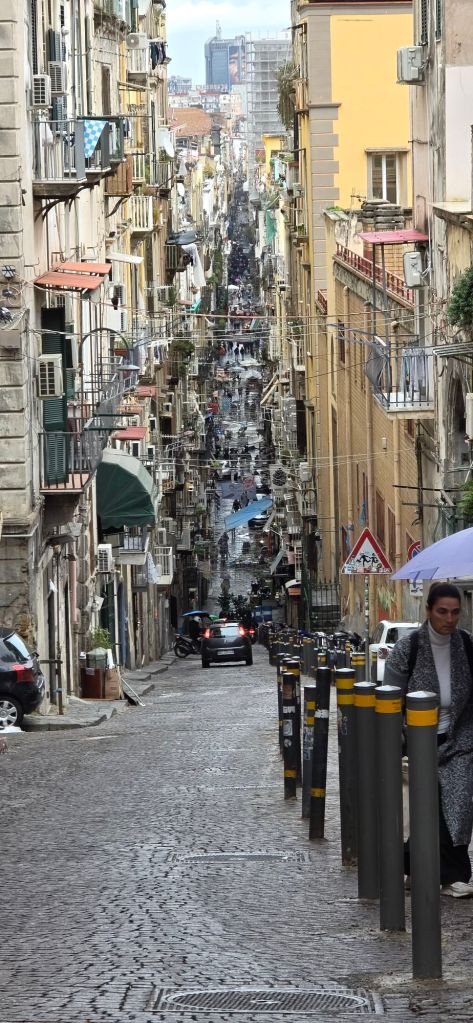
One of my most recent purchases, a souvenir from a trip to Rome last month, was the Radius Settimo, which I love and now use every day. Although made in the same workshops as Leonardo, the pen is a bit simpler and less ornate than Leonardo’s Momento Zero, but somehow I prefer it. In the shop (Novelli) I was struck by the subtle colours in the resin: the pen appears almost black at first glance but under bright lights or sunlight, the resin comes alive with marbled flecks of blue, white, brown and gold. The nib is a steel extra fine and is firm but writes smoothly with a consistent, even, reliable ink flow. I soon discovered that it is not suitable to carry upright in a pocket as it then hardstarts, but I have other pens to use for that. I am perfectly happy to accommodate this slight weakness, although that term seems harsh. The beauty of the Radius for me, is that it writes well, is extremely comfortable, is reliable, and attractive without being flashy. Above all, I can pick it up and write without being distracted by it.
Lately I have often found myself using a fountain pen and thinking, “This pen is so good, I could use this all the time and it could be my only pen.” Last year, I used an inexpensive WingSung 699 vac filler, for my diary (A5, page a day) and so wrote with it for the whole year. Also I have been introduced, through my pen club, to the Chinese brand Asvine. Their V800 model is an oversize vac filler with a number 8 nib – which is well made and great value.
Another stage in my fountain pen journey is that I now find myself drawn more to vintage pens than modern ones when visiting pen shows. Pens such as the Parker 45 from my school days, or the Duofold models in the various sizes, can be found in good condition with 14k gold nibs and can prove to be excellent value.
Here our Spring London Pen Show takes place on 1st March 2026. For the first time, I will attend as a vendor with the aim of moving on some of my lesser-used pens. I am sharing Table 82 with a few friends from my pen club and look forward to seeing the pen show from the other side of the table! Parting with some of my pre-loved pens will be bitter-sweet. It makes sense to release them back into the wild if they are not being used, yet I will be sorry to see some of them go. I think of myself as a user rather than a collector, but realistically, no-one can use several hundred fountain pens as they should be used.
If you are visiting the London Pen Show, come and say hello!



 Fountain pen blog