Inky Pursuits is my occasional series of posts on topics which individually might not be quite blogworthy, but hopefully when combined together may be greater than the sum of their parts.
Thoughts on completing the WES Pen Repair Course.
This month saw our group complete the third and final module of the Pen Repair Course, available to members of The Writing Equipment Society. I was one of a friendly group of four attendees for the London classes, held at the Harrow Arts Centre and led by Ray Walters. Details of the course, topics covered and joining instructions are on the WES website (the Services tab) or via the link here.
The course had been highly recommended to me by a pen club friend who had attended the previous year. I am very glad I joined. Ray, who is also a regular vendor at pen shows, is an excellent tutor. On my arrival for the first module back in November, Ray had already laid out his tools and equipment including a large green canvas roll containing dozens of implements from section pliers, bionic pliers, hammer and drifts, to dental picks and pieces of bicycle tyre inner tube for gripping. The table resembled a field hospital.
During the course, which was very much hands-on throughout, we were shown how to assess a pen, refurbish its filling system and deal with bodywork issues. But aside from the specific techniques needed for various types of vintage pen, Ray’s general wisdom and his advice about the tools and how to use them correctly, was equally useful. By watching, listening and doing, we were soon able to service some of our own fountain pens and gain practical experience and confidence.
In particular, I was thrilled to return home after my first day, with two very elderly fountain pens, bought in a sorry state from a local antiques shop with no sacs and badly bent nibs – now back in full and joyous working order. The course had already paid for itself!
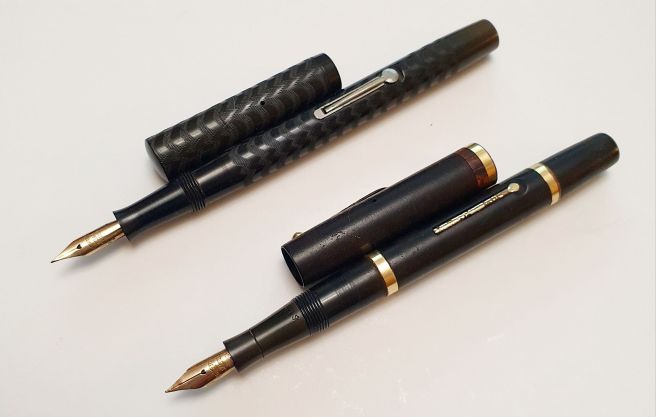
Both pens were lever fillers, from around the 1930’s. Their rubber sacs had long since perished and crumbled to dust. These pens proved to be an ideal example of how to go about a sac replacement. As for their nibs, Ray possessed an impressively heavy and shiny block of steel with tapering semi-circular ridges and channels, for burnishing nibs into shape. After watching Ray tackle one of my nibs, it was my turn to do the other one.
After lever fillers, we moved on to button fillers, Parker vacumatics and aerometrics and then Sheaffer touchdown fillers and “snorkel” fillers. Although Ray showed us how to disassemble and service these, I got the impression that snorkel repairs are best avoided if possible. They just do not seem to have been made with ease of servicing in mind.
In the final module we covered other filling systems including Onoto, Conklin, Montblanc and Pelikan. I had brought along my Montblanc Meisterstuck 146, a present from my wife 28 years ago. Although I cherished it, it had mostly stayed in its box as the piston was very tight and awkward to use. But with Ray’s Montblanc nib and piston removal wrench, I was finally able to introduce some silicone grease to the piston which made a world of difference. The pen is now filled and in daily use.
The whole course was very enjoyable and worthwhile. One caveat though: the new temptation to buy more tools opens up a whole new rabbit hole.
One Month One Pen.
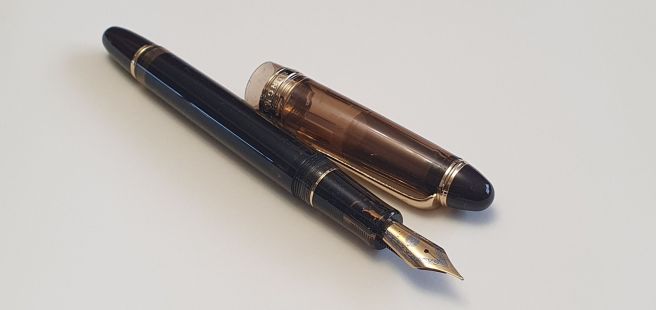
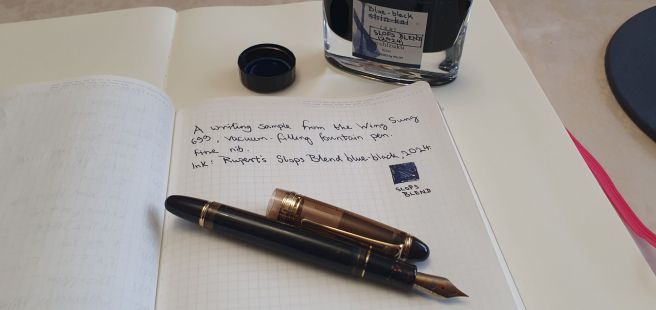
In my previous post A new month, a new plan, I wrote of my intention to use just one fountain pen for the month of February. So, how is that going? The pen I chose was a Wing Sung 699, an inexpensive Chinese vac filler bought over five years ago. I wanted to remind myself what it was like to have only one fountain pen, to see whether I was content with this or whether I still craved other pens.
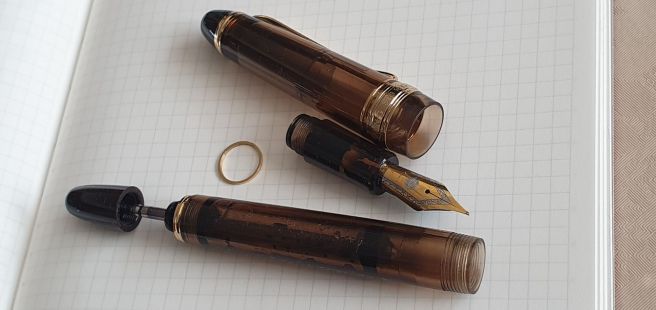
Overall, I think the exercise has been a success. I flushed out a whole bunch of pens. I enjoy using the Wing Sung very much. Used daily, I am a little more conscious of the need to unscrew the blind cap a little to raise the plunger, otherwise the pen ceases to write once the ink in the front end is exhausted – but this is no hardship. I find the pen very comfortable. I like the way it writes, with its firm, steel Fine nib, adjusted slightly to increase flow. Filling the pen with one downward push of the plunger, is always exciting to see.
One issue to be aware of is that the section of the Wing Sung 699 can be unscrewed for cleaning. That is a good thing. But you do need to ensure that it remains tightly done up when the pen is inked! A few days ago I found ink on my fingers and realised that the section had loosened slightly. This required me to empty the pen, clean it and grease the threads (as well as the main ink reservoir) and refill it. Another lesson that I learned is that the gold ring between the barrel and section will slip off without you noticing whilst you are bathing the pen in the wash basin. Luckily I spotted it gleaming in the water, before pulling the plug.
I have enjoyed this more concentrated spell of using the Wing Sung. I could probably use it exclusively if I had to. However, I have cheated a bit over the month with a few extra pens creeping into use. First there was the Montblanc that I serviced in the repair class and then filled. (My teacher made me do it). I have enjoyed having this special pen inked again. Then there was a Cleo Skribent Classic, with a steel nib that I had an urge to tune. Having done so successfully, I could not resist filling the pen and adding it to the pen cup.
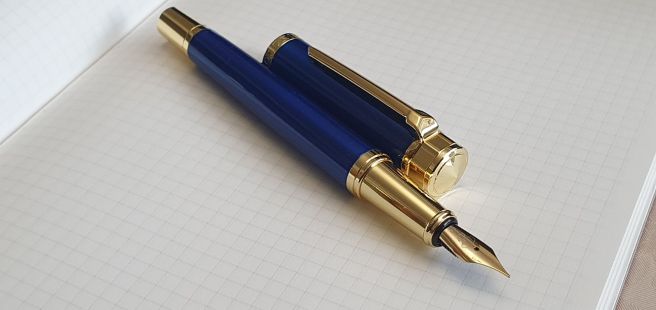
This week, I received a surprise gift of an Ellington Nautilus fountain pen in the post from my brother, with an extra fine nib. I filled it up right away and it writes beautifully.
A 2025 no-buy.
This was another intention, voiced in my last post. It is too early to judge whether this will be a success or not. I am qualifying this to say that it relates only to fountain pens, as I have already bought several gel pens and notebooks as well as other stationery supplies.
As for fountain pens, I have not purchased any since buying the perfect pen on 4 December 2024. No, I do not mean that it was so perfect that I ended my pen-buying journey. Rather, it was a vintage pen called the “Wyvern 81 Perfect Pen.”
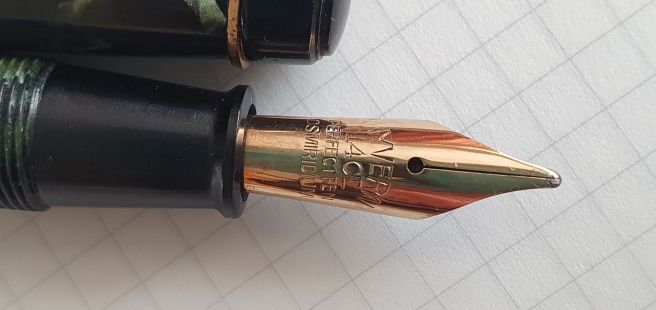
But having said that, I have still struggled with the usual temptations to buy other pens. Since meeting up with my good friend Jon of Pensharing.com, his Majohn P139 has played on my mind. This is a chunky, black and orange, piston filling fountain pen, a homage to the Montblanc writers’ limited edition Ernest Hemingway of 1992. The Majohn costs only around £52 with a number 8 nib, but I am bravely resisting for now.
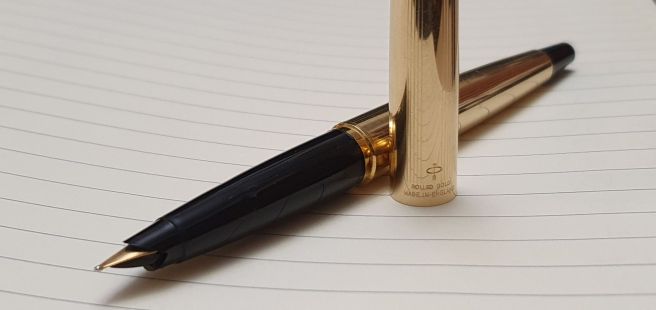
I have received unexpected life-lines. A generous friend in Australia recently sent me three interesting vintage Parker fountain pens, which he had found in charity shops there. I have dip-tested them all but not yet put them into use and am looking forward to doing so. And then there was the lovely surprise gift from my brother too.
I am not expecting my will-power to survive the onslaught of the coming London Pen Show. The best I can strive for is sensible moderation and to hold tightly to my Wing Sung.
 Fountain pen blog