Getting inside the Wyvern Perfect Pen No.81.

As mentioned in my recent posts, I have been attending a practical course on fountain pen repair. Although very much a beginner, it has been fascinating to learn the correct ways to use the various tools involved and very satisfying to restore a vintage pen to life, when it goes well.

In between the sessions we are encouraged to “practice, practice, practice.” It is sensible not to go straight in with a valuable pen as there is a risk, or even a likelihood, of making mistakes and breaking your pen.

One of my recent early practice exercises was a Wyvern fountain pen, bought on eBay at a modest sum, advertised as for spare parts or repair. The pen was not in working order and the seller had been unable to remove the barrel. Nevertheless, it was an attractive pen in marbled green celluloid (I think), a lever filler with a 14k gold nib. Also, what was especially appealing was that the pen still bore its original paper price band stating “Wyvern No.81, 14ct Solid Gold Nib, Broad” and the price, including tax, of 22 shillings, 7 and a half pence. As a reminder for younger or overseas readers, there were 12 pennies to a shilling, and 20 shillings to a pound (therefore, 240 pennies to a pound). This pen therefore sold for roughly £1.13 when new. We switched to decimal currency on 15 February 1971.
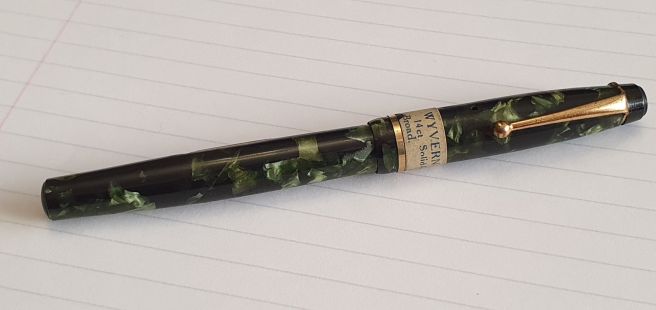
Wyvern 81 “Perfect Pen” complete with price tag.

This is my first Wyvern fountain pen. I was aware that this was a British brand, beginning in 1896 and lasting until 1955. From brief searches online, I believe that my pen may date from around the late 1930’s.

When the pen arrived, the body appeared to be in good condition with no apparent cracks. The barrel imprint (always pleasing to find!) was still clear. The nib was caked in dried ink but on cleaning this in water with a soft toothbrush, it came up gleaming.
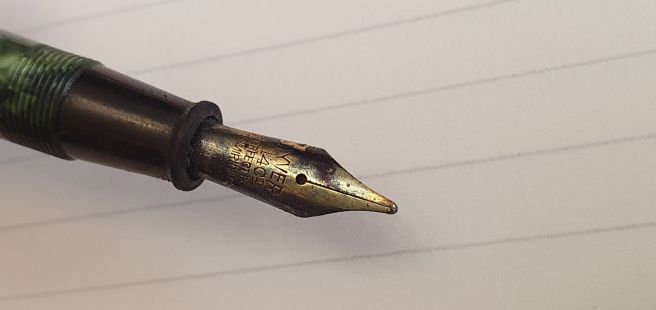
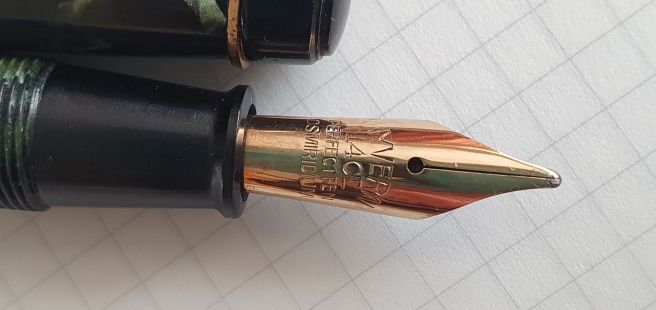
I am a sucker for a pen that needs cleaning.
Wyvern nib, after a good bath.

The lever for the filling mechanism would not move, suggesting that the sac had perished and hardened inside the barrel. Fortunately, I was able to remove the barrel, by gripping it with pliers, with the jaws shielded by rubber (from a bicycle tyre inner tube). On this pen, the barrel unscrews from the section.

I was expecting to find the rubber sac hardened and cracked into loose debris, to be shaken out of the barrel. To my surprise, very little debris did come out initially. I could see hardened sac material stuck to the inside of the barrel, at the opening. The challenge was how to get this out as it was stuck hard to the barrel.
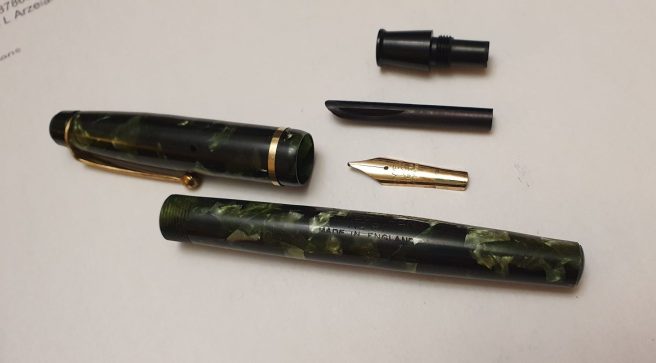
With nib, feed and section removed.

After establishing from a pen club friend that the barrel was not made of Casein (which must not be soaked in water as it will disintegrate), I was then confident to leave the barrel to soak in a jar of water overnight. I then tried scraping out the rubber residue, using a straightened out giant paper clip (carefully avoiding the pressure bar). Some fragments of rubber then started to come away. Patiently, I left the barrel to soak again for another night, before resuming my scraping. As well as tiny fragments and dust, a few larger bits of solidified rubber eventually came out, to my immense satisfaction.

Eventually, I was satisfied that I had removed all vestiges of the rubber. Inserting a brush, I was able to rotate this and clean the inside of the barrel nicely.

I had ordered a selection of replacement ink sacs, from The Pendragons. I also bought from them, some rubber-jawed section pliers, a pair of barrel-cleaning brushes and a nib knock-out block!
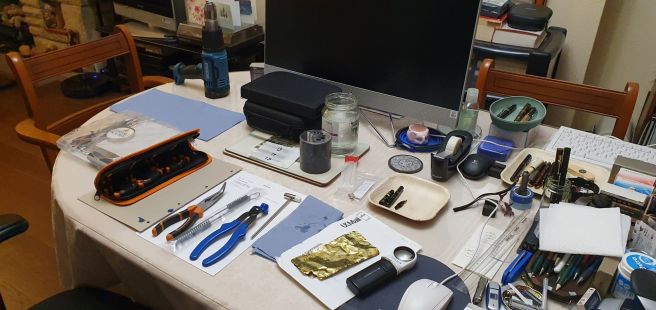
The dining table in workshop mode.

Fitting a new sac is a fairly straightforward but very satisfying task, for a beginner like me. Sometimes, removing the barrel is the trickiest part and soaking and/or heat is required. This was only my fourth such repair. Identifying the best size sac, if you have a few different sizes, is most easily done by introducing the sac to the barrel to find the largest diameter sac that fits, touching the sides lightly but without resistance. The length then needs to be trimmed, measuring from the sac nipple, to the end of the barrel, then shortening it a bit to allow some clearance at the back. To attach the sac, you apply shellac adhesive around the sac nipple. You also need French Chalk, (talcum powder) in which to roll the sac before it goes in the barrel, to prevent it from sticking to the sides.

However, before attaching the sac, there was another factor to bear in mind. As I said, the barrel was threaded, not friction fit. This meant that there was a risk of the sac being caught and twisted by the barrel. To avoid this, the nib and feed are removed from the section before fitting the sac. Assuming that the nib and feed cannot easily be pulled out, they are knocked out with a hammer and drift, using the knock-out block, having soaked the section in water first.

This leaves the section open whilst you attach the sac. You can then insert a rod (something not sharp) through the section and up into the sac, to keep it from twisting as you screw the section back into the barrel.

With the nib, feed and grip section separated, these can be cleaned. It is useful to floss the nib with a brass shim at this stage and check that the tine gap is as you like and the tines are level.

I was worried that the nib and feed would be difficult to push in, since they had been so tight to remove. I applied a little silicone grease to the outside of the feed, whilst trying to avoid any grease blocking the feed channel. It was still a tight fit to get the nib and feed back in, but all went well. Finally, I heat-set the nib and feed, dipping them in freshly boiled water for about a minute, squeezing them together for about half a minute and then cooling in cold water.

I was then finally able to test nib and fill the pen. I had deliberately refrained from writing with the nib beforehand, saving this treat until the new sac was installed and the pen ready for use.

I was surprised to find that the nib was much firmer than I expected and also that the line was not broad, but closer to a medium. However, the pen writes well, with a distinctive pencil-like feedback.
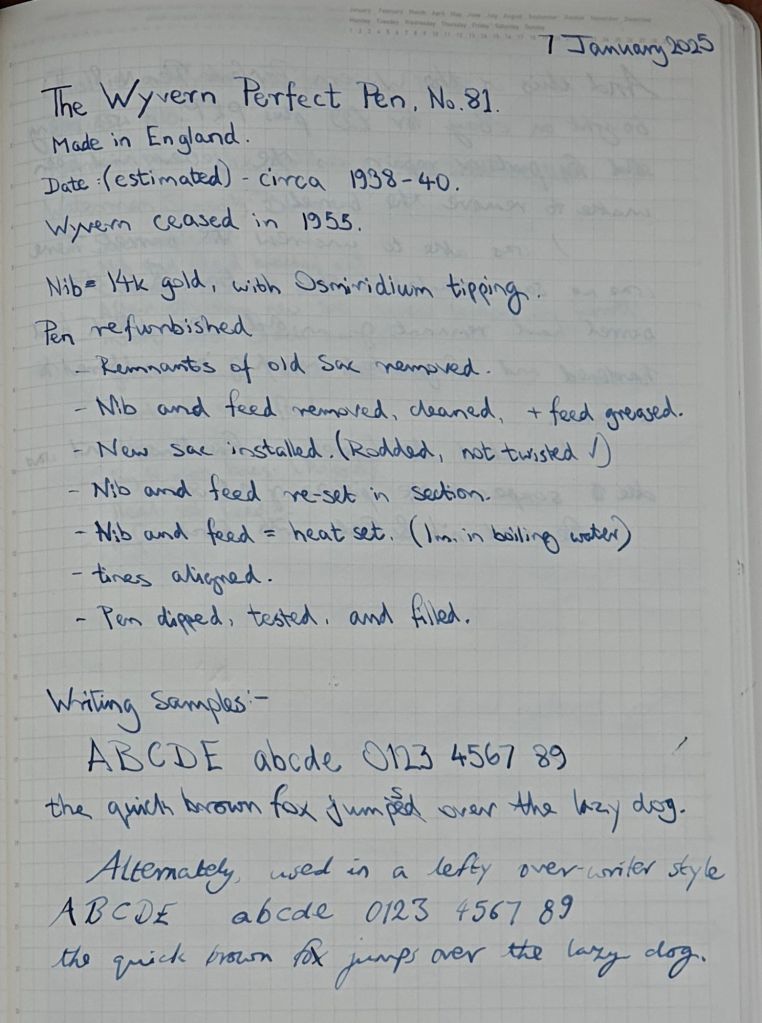
Writing sample, Wyvern 81 with Waterman Serenity Blue on Stalogy paper.

With every successful repair, one gains experience and confidence. I wish I knew more about this pen’s life and owners, during the last 80 years or so. I suspect that it had not been doing very much as the nib and sac could both be original. This will remain a mystery but I am happy to have the pen in use once again.
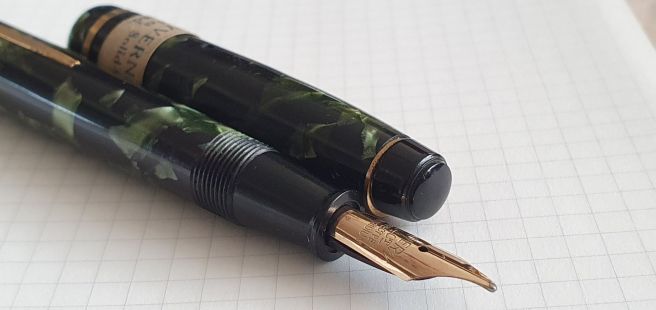
An 80 year old pen, back as good as new.

2024: some of my fountain pen highlights.

I have been meaning to post a round-up of my fountain pen activities over the past year and had better get on with it, before January is over. This tardiness is in no way indicative of any waning of my passion for fountain pens, which remains as strong as ever.

Pen acquisitions.

Let me begin by ‘fessing up to my annual spend on fountain pens. A look back at my handy Memento database app of pen acquisitions, shows a total of 52 arrivals last year, of which three were gifted to me. One of my purchases, a Parker 51 demi “Cocoa” fountain pen and pencil set was sold on to a lady in our pen club who had asked for help in finding one. Deducting this, I am left with 51 arrivals and a total cost of £1,828, which is up on the previous year.

However the total cost includes one grail pen namely my Scribo Write Here Africa, with its juicy broad 18k nib, purchased from the Write Here shop in Shrewsbury. This accounted for £440.00 of my annual total. If I deduct this, the total spend drops to £1,388 and 50 pens averaging just around £27 each and an average monthly outlay of around £115. This might not sound a lot to a fellow pen enthusiast, to spend on a hobby but I am mindful that I began the year (as I do this year), with a genuine intention to acquire fewer pens, not more!

Approximately one half of my pen acquisitions were vintage, which explains the modest average cost.

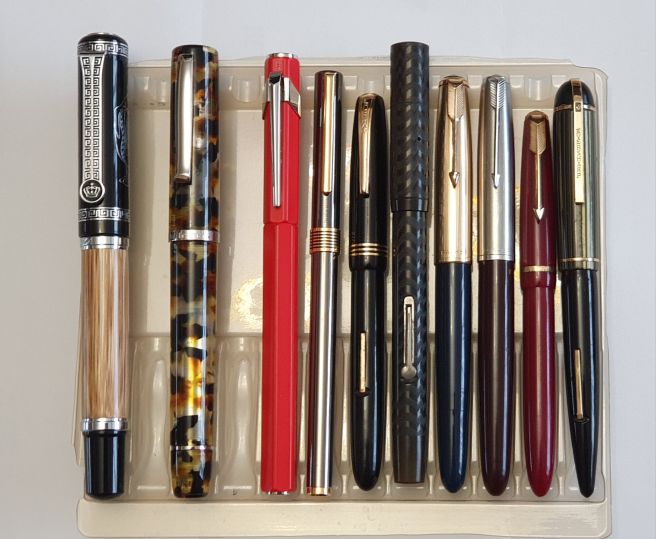
It is difficult to pick favourites, but here in no particular order are 10 of my pen purchases from 2024, which have given the most enjoyment. These are, from left to right: 1. Duke 551 Confucius bamboo fude nib sketching pen; 2. Scribo Write Here Africa; 3. Caran d’Ache 849; 4. Aurora Marco Polo; 5. Burnham 61; 6. Pitman College lever filler; 7. Parker 51 vacumatic; 8. Parker 51 aerometric; 9. Parker Slimfold; 10. Eversharp Skyline.

My top ten from 2024.

Other pen-related activites.

Aside from acquiring pens, my year has been punctuated by numerous events, including the London and Birmingham pen shows, the Pelikan Hub and our monthly pen club meets. Then there are the daily solitary hours spent in journaling, pen, ink and paper sampling, pen cleaning and tinkering, letter-writing, screen-time in following the global pen community online, reading blogs and “researching” pens on YouTube, eBay, Amazon and various online pen dealers.

As for this Fountain pen blog, WordPress informs me that in 2024 I added just 24 posts, writing 25,800 words, generating 270 likes and 252 comments. The all-time stats show a total of 276 posts (not including this one), and all-time views of 777,452. (Come on, let’s get this to a million!). I continue to be amazed at the reach of this blog, which arose in 2016 from and continues to be an extension of an innocent hobby. I do value the online interactions that it brings.

It is hard to list all the pen-related activities that one enjoys, without them sounding like a list of symptoms of an obsession. Perhaps it is. But I do have others as well, such as reading and listening to (and making) music. Having retired from work in 2024, I am wondering how I ever had time for it.

Towards the end of last year, I began the Pen Repair Course, organised by the Writing Equipment Society (WES) and led by the excellent Ray Walters, whom many will know as a dealer at pen shows. I have enjoyed his classes immensely and have one more session to attend, next month. Thus I have added pen repairing to my leisure activities and find this very satisfying and rewarding. There is a risk that the acquisition of some necessary tools can lead to marital friction. Buying a heat gun took a little bit of persuasion. But it keeps me out of mischief.

As always, I thank everyone for reading. Special thankyous go to The Pen Addict, The Gentleman Stationer and The Well-Appointed Desk who often include links to my posts in their weekly round-ups, giving my viewing figures a welcome boost. I wish you all much penjoyment in 2025 and beyond.

The new year diary, 2025.

It’s time to wake up this blog for another year and, where better to start than with a brief review of the diary that I plan to use?

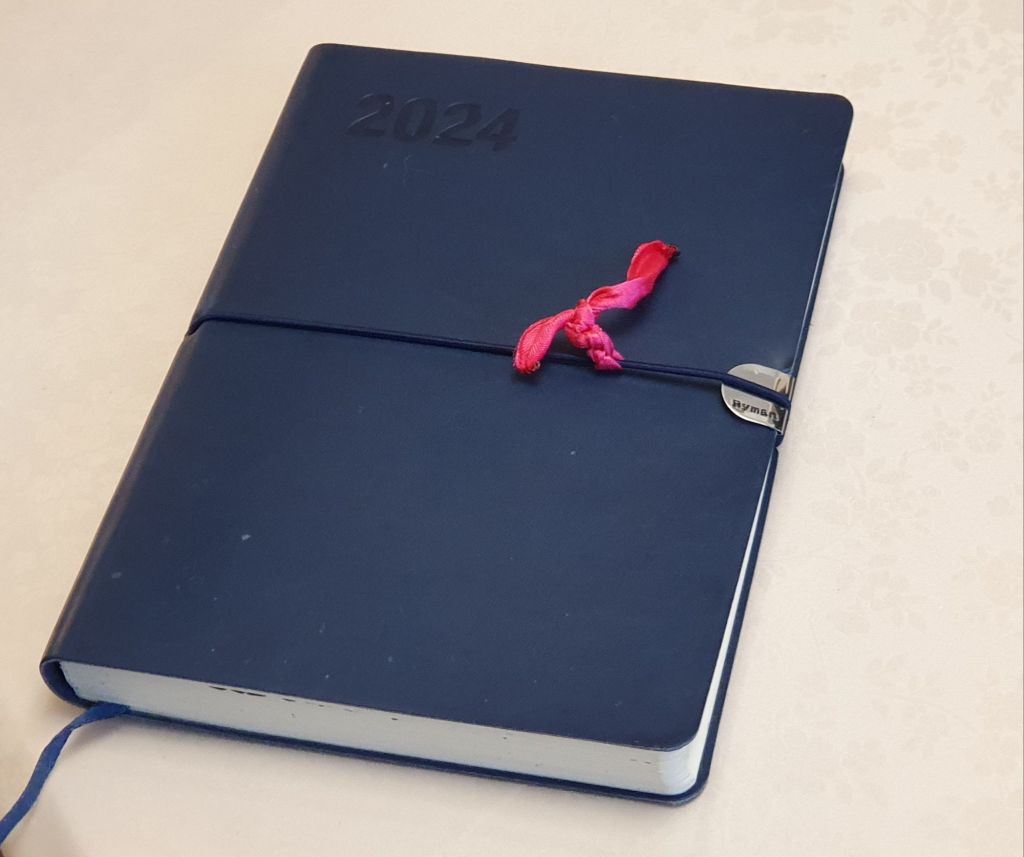
For 2024, I used a Ryman A5, soft cover, flexi, Page A Day diary for my daily journaling, summarising what I did with the previous day. Occasionally, this might include a list of things I am grateful for (if I can be unselfish enough for a few moments, to remember). My post on the new year diary, 2024 can be re-read here.

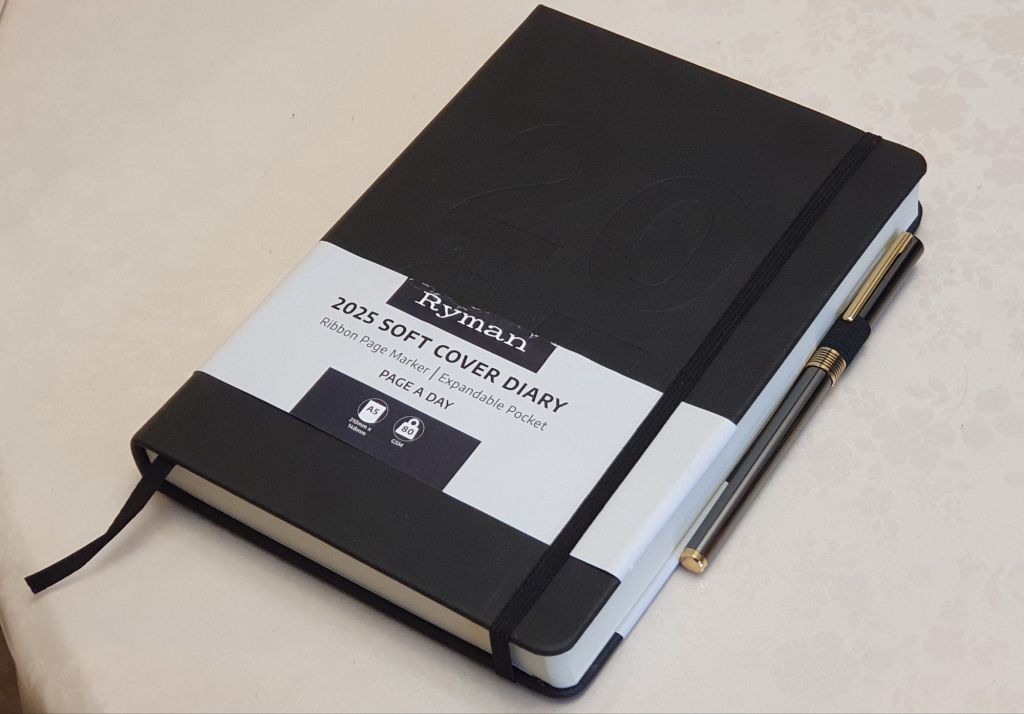
This year, I went for the closest equivalent that I could find, which was again from my local Ryman stationers. Whilst seemingly much like last years, I was glad to notice several subtle improvements have been introduced. These are as follows:-

  • Instead of last year’s horizontal thin elastic closure, we now have a more conventional, vertical ribbon elastic closure. I disliked the old style, since with short finger nails, it was fiddly to lift the elastic to open the book – an issue for which I designed a simple hack, namely tying a piece of pink ribbon to the elastic.
  • Whilst retaining the same soft texture of the covers, last year’s flexible cover has been replaced with a stiffer cover, which I like. It also does away with the need for the little metal reinforcement tab on the edge of the front cover to protect it from being worn by the elastic. Over the year, that piece of metal had lifted, leaving a sharp edge which was a danger to adjacent books.
  • A Pen loop has been added, to the back cover. I don’t actually use it (other than for this photo) but it could be useful.
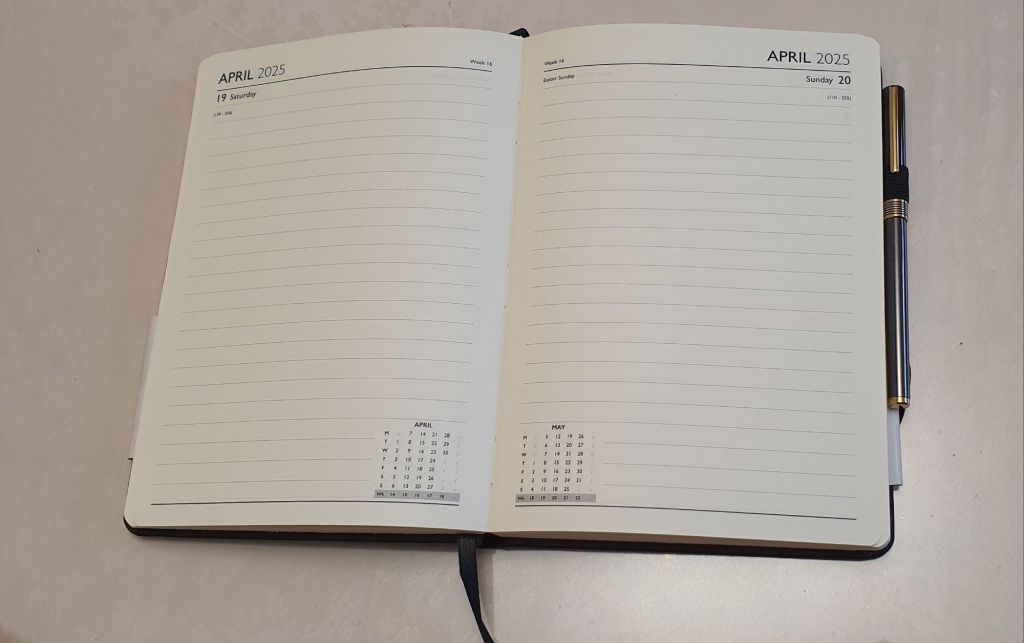
  • Something that I have only today noticed, the row height has been increased very slightly from 7.6mm to 7.9mm. I must admit, I was assuming that they were both 8mm until I checked.
  • Best of all, the 2025 edition now includes a Page A Day for Saturdays and Sundays, whereas last year they shared a page.

Otherwise, the two editions are much the same, with a ribbon page marker, cream paper which is fountain pen friendly and with sewn binding, to open flat without damage.

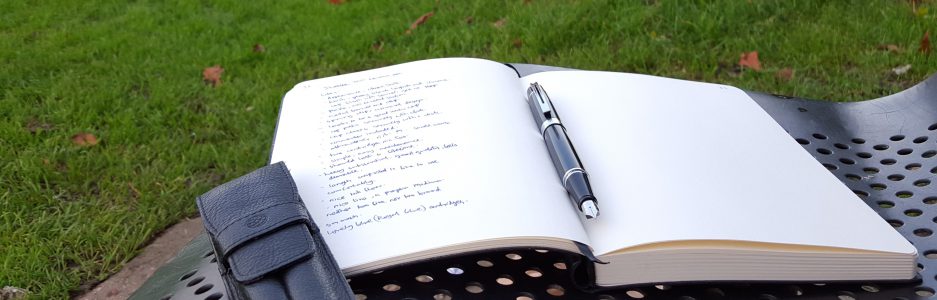
This suits my needs very nicely. For longer entries, such as holiday journaling, I use a separate Leuchtturm A5 notebook, with either plain paper or dot grid. Day to day pen and ink sampling and therapeutic pen time is done in a Stalogy A5 Editor Series 4mm grid, 365 page note book, a product which I have now used and enjoyed for several years.

For bullet-journaling, I upgraded my old Ryman A4 notebook to a WHSmiths Moderna Ruled A4 Leather Notebook, with 96 ivory sheets of 100gsm paper. I have set this up with monthly spreads, for the years 2024 to 2029 inclusive. It is very useful to log dates which are a year or more in advance, such as car and house insurance renewals, guarantee expiry dates, or investment product maturity dates. As well as these grown-up uses, I also like to include books read, albums listened to, trips to the gym and other day to day life admin.

So there you have it. Here’s wishing everyone a Happy New Year and hoping for happy events to plan and record in our diaries for 2025!