Back in June, I attended the Birmingham Pen Show for the first time. My decision to go was made only a day before, on a long drive home to London from a week’s holiday in North Devon. It meant an early start but I could rest on the two hour train ride to Birmingham.
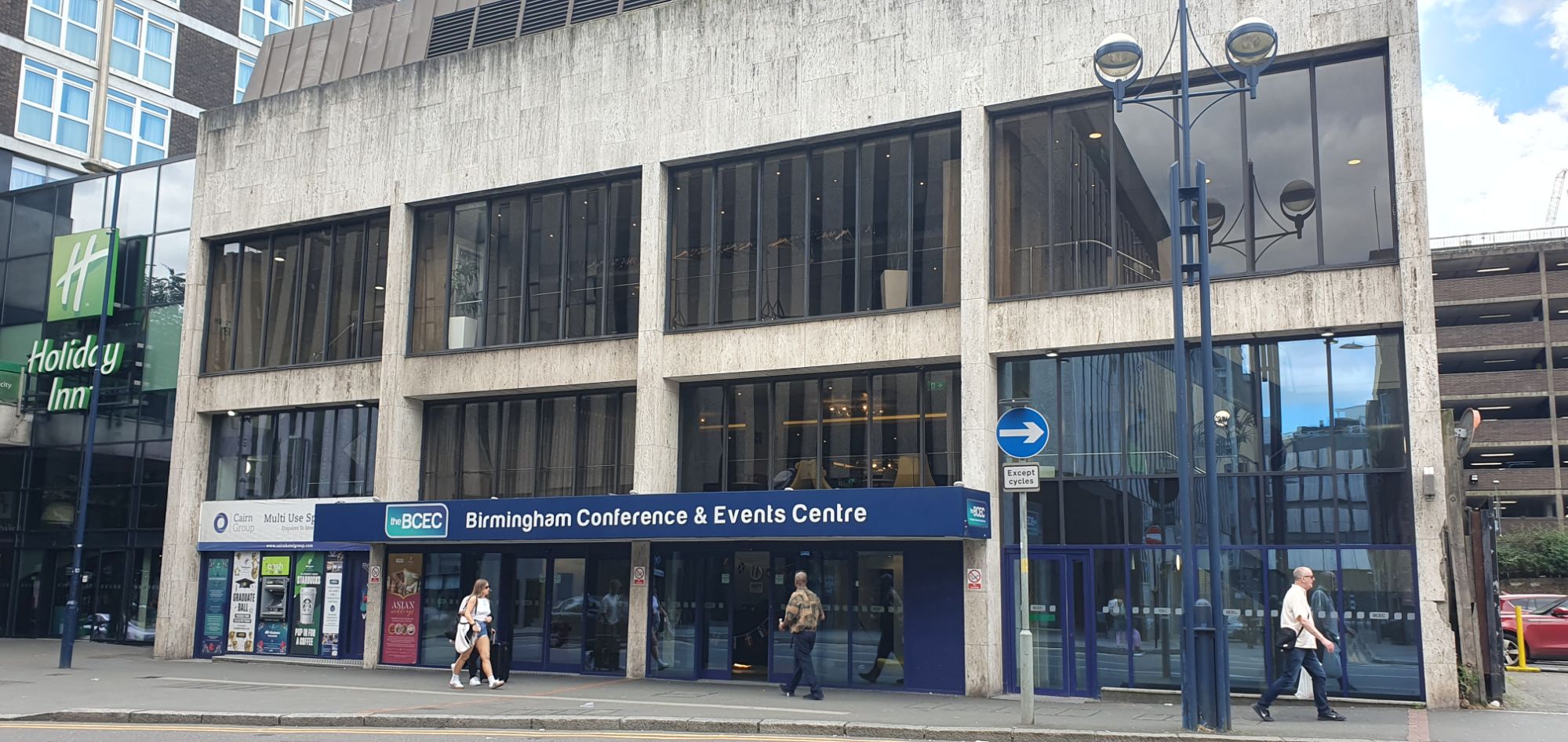
My train got me to Birmingham city centre by 10.20am and it was a short walk to the venue, the Birmingham Conference and Events Centre. The show is smaller in scale than the London pen shows, but bridges the gap between the London Spring and Autumn pen shows held in March and October.
The website for UK Pen Shows promised “lots of vintage pens and new pens from world famous brands, ranging in price from £2.00 to many hundreds of pounds.” Sure enough, I found a table with Manuscript Calligraphy pens at £2.00. Unfortunately I do not recall the sellers’ names. Apparently, the pens been acquired for calligraphy classes at school but were surplus to requirements. The pen I chose was fitted with a Fine italic nib and came with two Medium italic nibs (complete grip sections with nibs and feeds). This was an irresistible bargain but the seller was pleased to clear them out of her cupboards.

As I came away with a few other pens and inks, it was a few days before I got round to inking the Manuscript. I filled it with Diamine Oxford Blue, using a standard converter that I had already. Otherwise, the pen takes standard international cartridges.
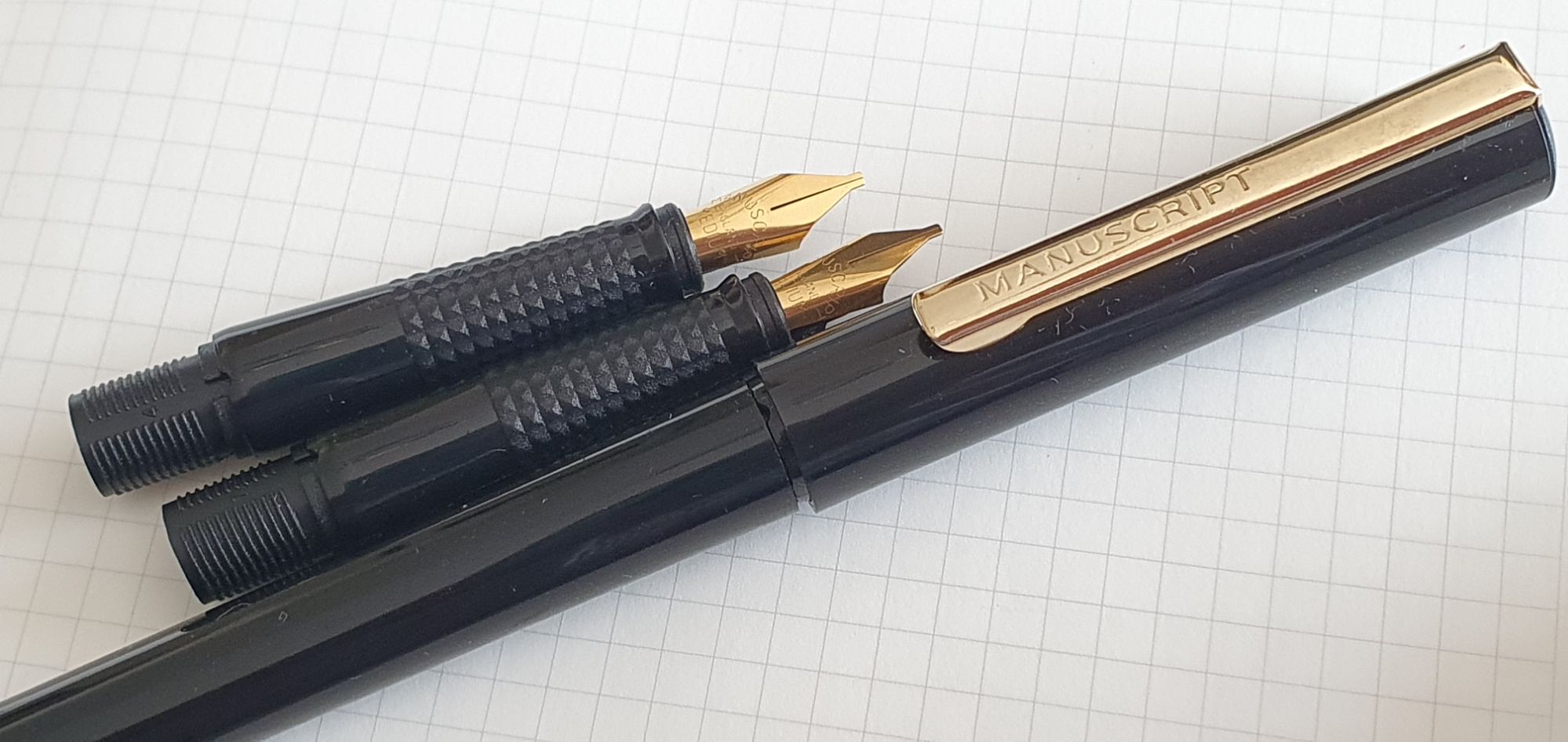
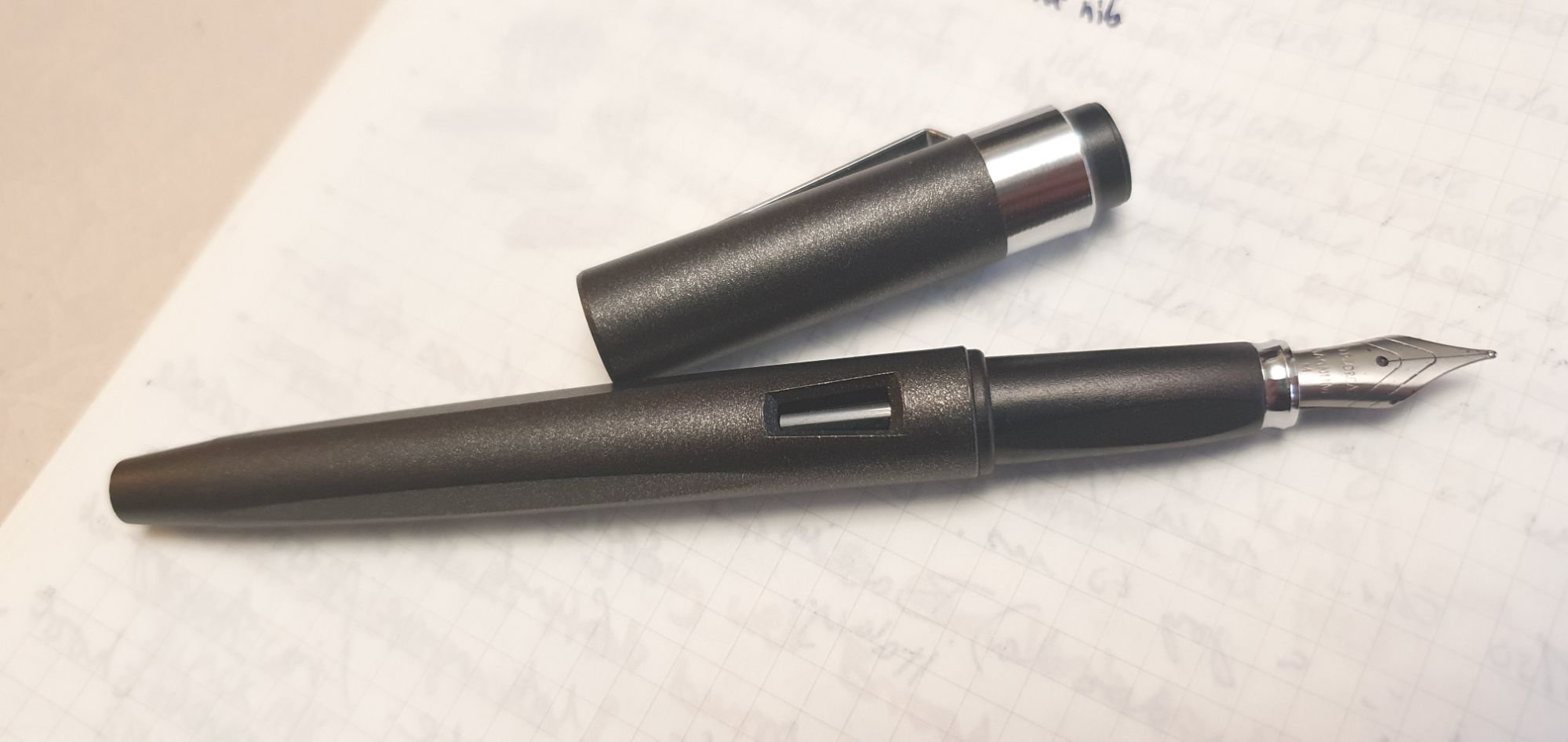
I have had a few Manuscript fountain pens before, with varying degrees of success. They are made in England. This one is a simple cylindrical shape in glossy black plastic with a snap cap and a metal pocket clip bearing the name MANUSCRIPT and plated in a gold colour. The clip is firm and would fit over thick materials if need be. Also the clip is attached at the top of the cap so that the pen will not protrude out of a pocket.
The cap finial is also black plastic and has six holes arranged in a circle, like petals. The cap is not airtight. You can blow air through it and feel it coming out at the other end. Perhaps this is an anti-choking measure for young calligraphers, or else a breather hole to avoid pressure changes to the ink reservoir on capping or uncapping the pen.
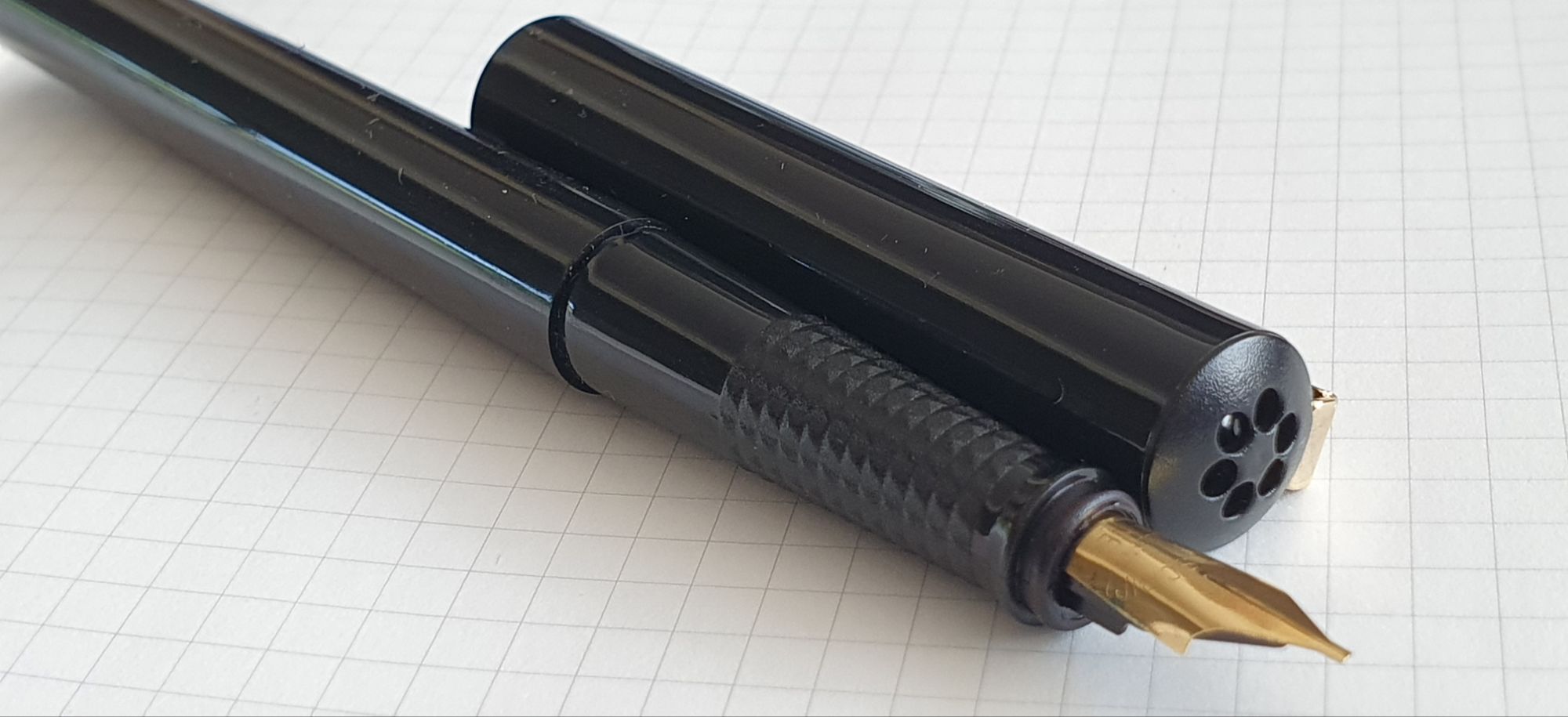
This is a smallish pen, at 135mm capped or 123mm uncapped. It weighs just around 13g in all, (8g uncapped and 5g for the cap). The cap can be posted (with a bit of pushing) but then makes the pen very long at 172mm. I prefer to use it unposted. The grip section is on the slender side but is decent enough, with no annoying facets. The knurled section (knobbly bits) provide a secure grip. There is a little flange at the end of the section, to secure the cap firmly with a click.
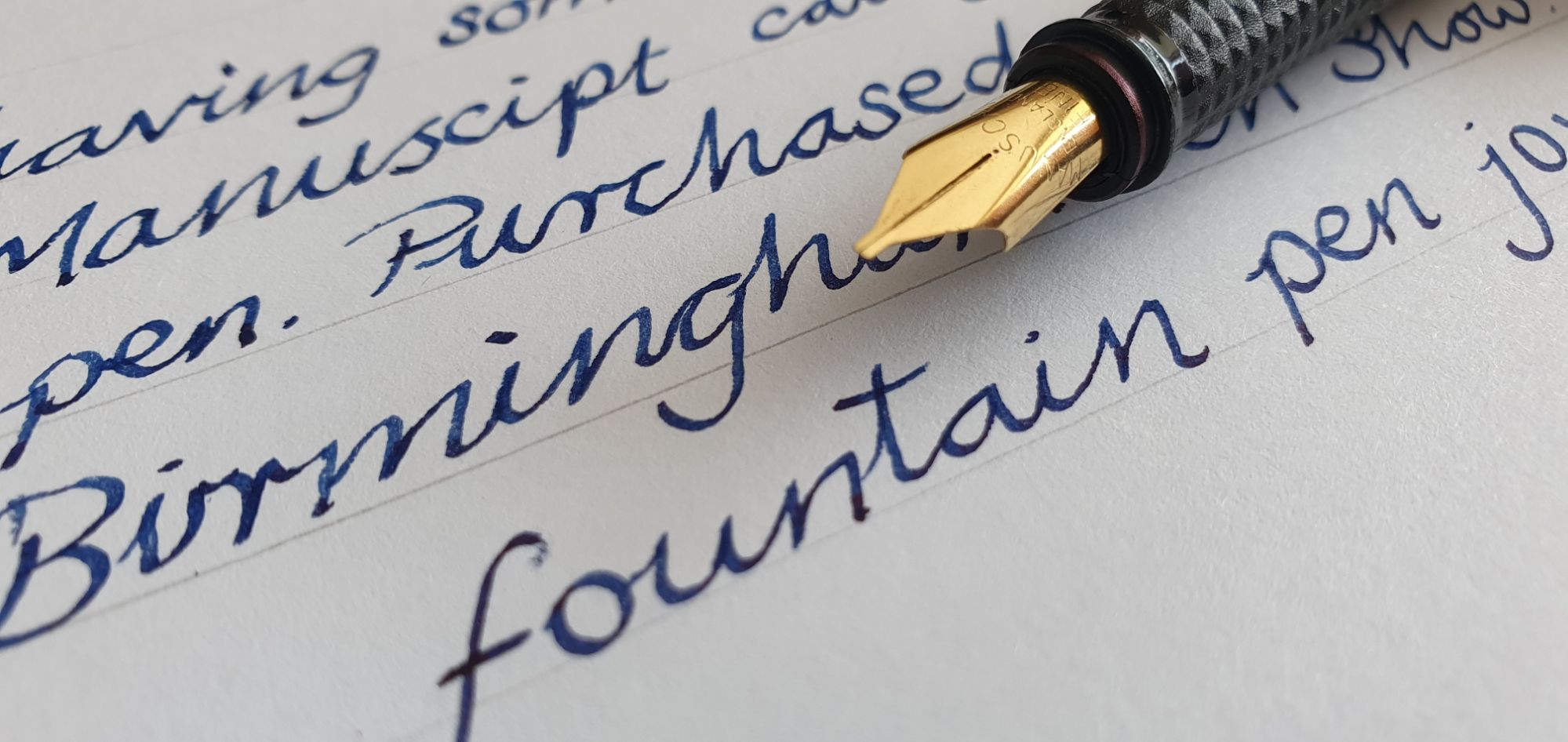
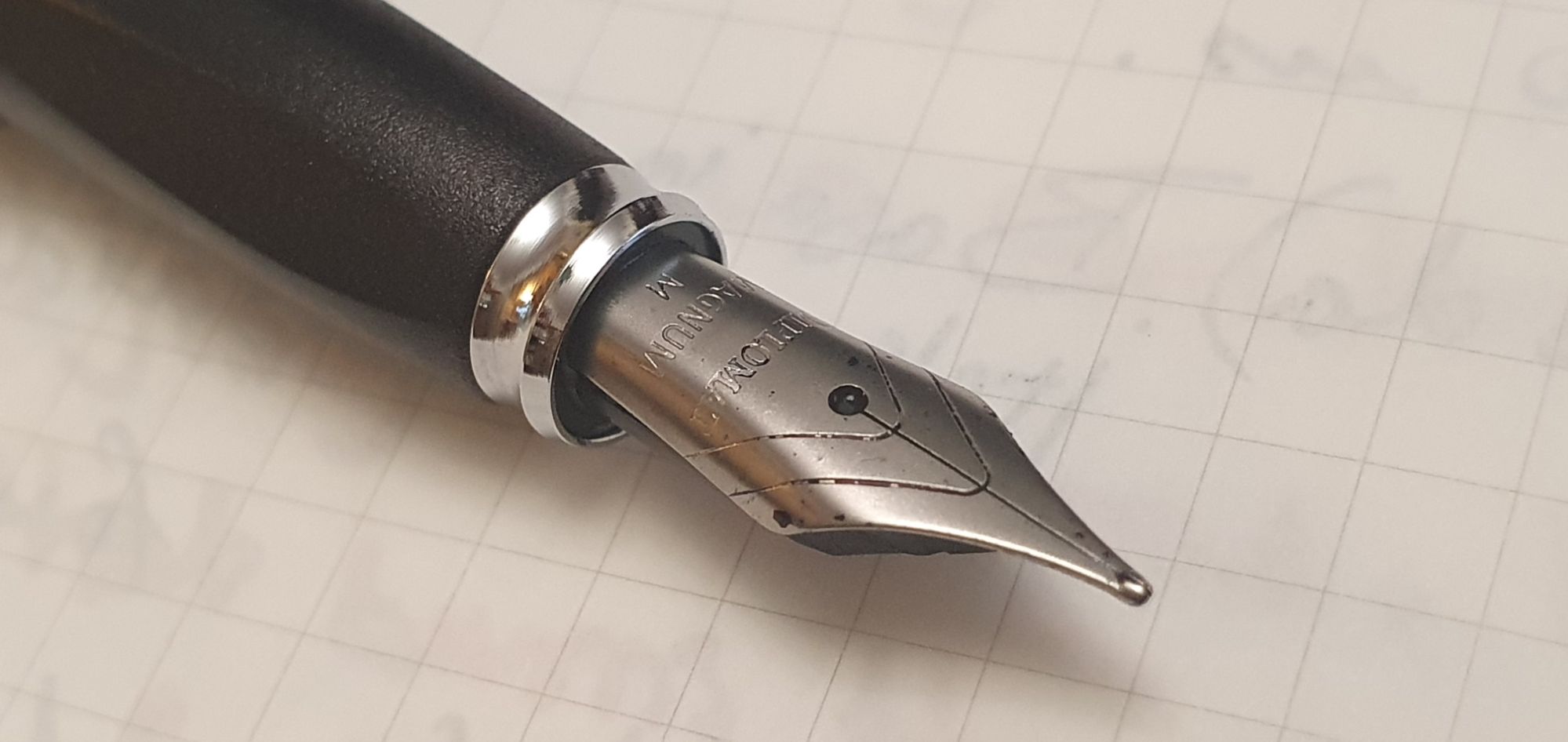
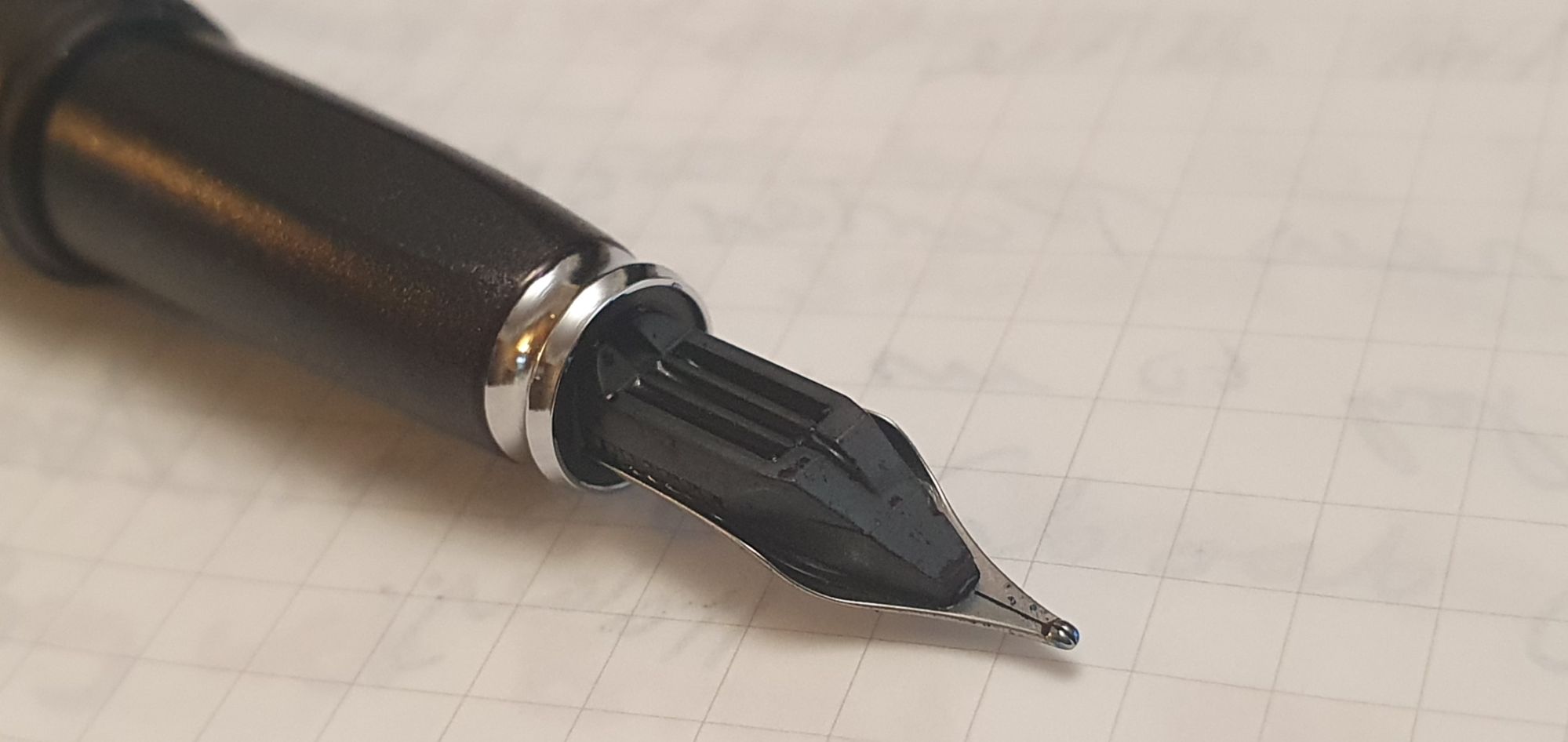
A Fine italic nib is a lovely thing to have and is a popular choice of fountain pen enthusiasts as it can be used for general writing, adding distinction to one’s handwriting through the natural line width variation between the broad down stroke and fine cross stroke. The broader lines show off the ink colour to good advantage, as well as any shading that the ink provides.
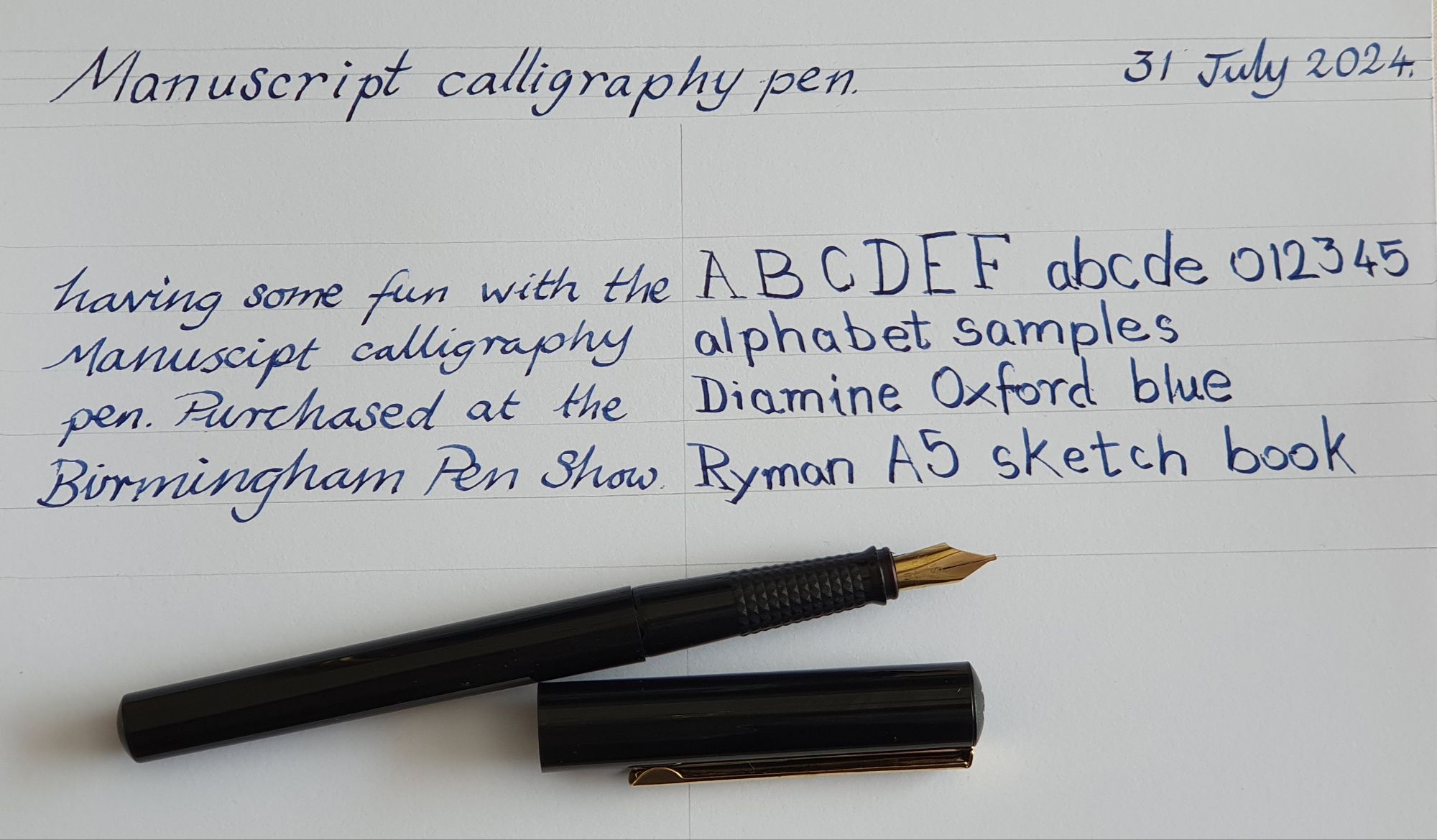
The disadvantage of an italic nib is that the corners of the nib are sharp and can dig in to the paper if you are not careful. Hence it is necessary to write slowly. But slowing down is perhaps the single most effective step in improving one’s handwriting: the benefits are
- allowing the nib to be kept in the same orientation with the sweet spot flat on the paper to avoid catching;
- more time to form each letter correctly, paying attention to keeping the loops open, keeping to the row guides, keeping ascenders and descenders parallel, keeping letter height (the “x height”) consistent, keeping spaces between words consistent and
- writing at an even, measured pace, not in fast and slow bursts, but at rate which allows time to think what you are going to write next, to avoid mistakes (particularly in skipping or adding pen strokes) and also remembering the other tips to improve neatness and legibility above.
Thinking of all these things as you write with a pen, is a form of mindfulness, the practice of which calms the mind. You may also think about your posture (are you sitting with your back straight, not hunched?) and your breathing.
I do not profess to be a calligrapher but I do believe that in general, we write better with a fountain pen. A calligraphy pen such as this one may “help you to create beautiful writing” (as the box proclaims) and may also help you to relax in the process. For just £2.00 this was a no-brainer but even at full price, a calligraphy pen is a useful addition to your kit.
 Fountain pen blog